

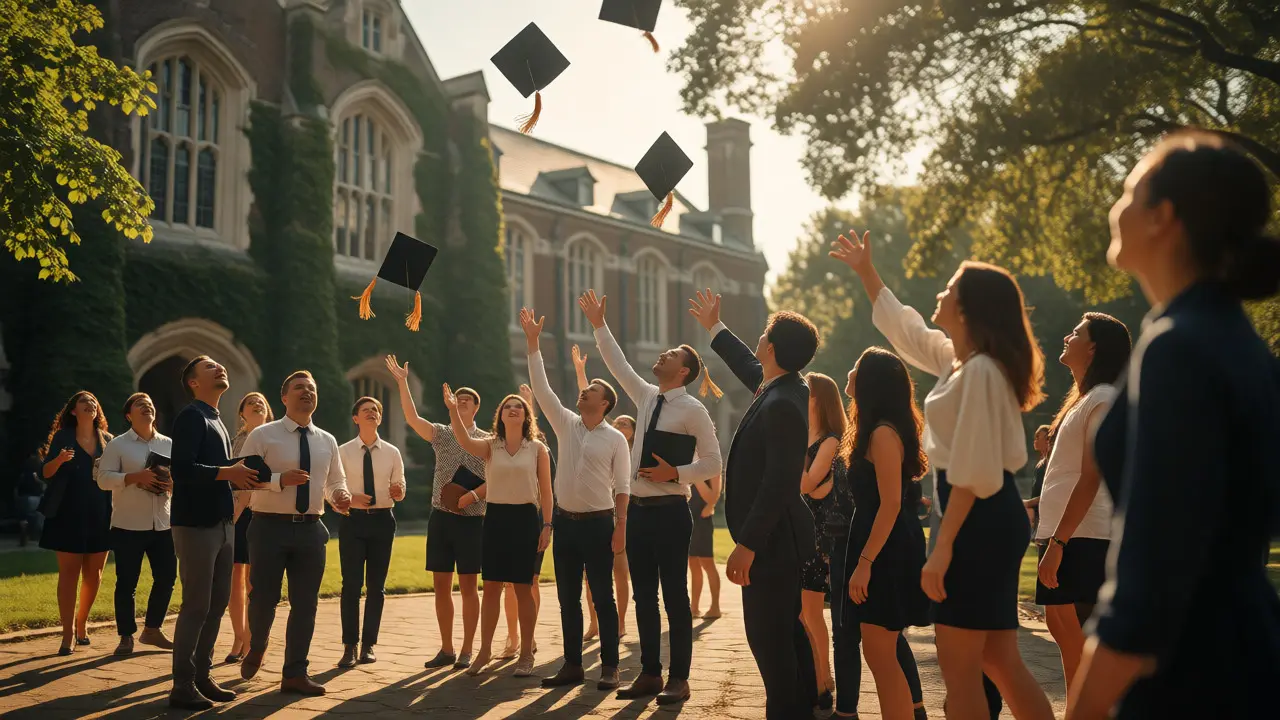
You graduate. You throw your cap in the air. You take a job. And then? For many, the connection to their alma mater fades into a vague memory, interrupted only by an occasional donation request or a generic newsletter. But what if that relationship didn't have to end at commencement? What if it actually got better?
Alumni communities are structured networks of graduates from a specific institution who engage in ongoing social learning, mentorship, and professional collaboration long after their formal studies conclude. They aren't just about nostalgia or reunions; they are active hubs for social learning, where knowledge is co-created through peer interaction rather than top-down instruction. In a world where skills become obsolete every few years, these communities offer a lifeline for continuous growth.
The Shift From Transactional to Relational
Think about how you learned in school. It was mostly transactional: you paid tuition, received lectures, took exams, and left. This model works for foundational knowledge but fails miserably for keeping up with rapid changes in tech, healthcare, or creative fields. Alumni communities flip this script. They move the dynamic from "institution-to-student" to "peer-to-peer."
This shift aligns perfectly with the principles of connectivism, a learning theory proposed by George Siemens. Connectivism argues that learning happens by forming connections between nodes-people, databases, organizations. An alumni network is essentially a living map of these nodes. When you join one, you aren't just getting a directory; you're accessing a distributed brain trust. If you're stuck on a coding problem, you don't wait for a professor's office hours; you post in the community Slack channel and get three different perspectives within an hour.
Why Social Learning Beats Solo Study
Most people trying to upskill do so alone. They buy an online course, watch videos, maybe take notes, and then quit because it gets lonely or hard. Social learning fixes this by adding accountability and context. When you learn alongside peers who share your background but have different current roles, the insights become richer.
Consider the difference between reading a case study on digital marketing versus discussing a failed campaign with a former classmate who is now a CMO. The book gives you theory. The conversation gives you nuance-the politics, the budget constraints, the human element. This is why alumni groups often outperform general professional associations like LinkedIn groups. There’s a shared baseline of trust and educational history. You already know they understand the jargon, the rigor, and the values of your training. That shortcut saves months of building credibility.
Structuring Your Community for Value
Not all alumni groups are created equal. A Facebook group with 10,000 members where everyone posts job links is noisy. A curated cohort of 50 professionals meeting monthly for deep dives is valuable. To make an alumni community work for lifelong learning, it needs structure.
| Feature | Passive Directory | Active Learning Hub | Mentorship Circle |
|---|---|---|---|
| Primary Goal | Networking leads | Skill acquisition | Career guidance |
| Engagement Level | Low (sporadic) | High (weekly/daily) | Medium (monthly) |
| Content Type | Job postings, news | Workshops, Q&A, projects | 1-on-1 advice, feedback |
| Best For | Quick contacts | Lifelong learners | Early-career grads |
If you're building or joining a group, look for the middle column. Active learning hubs thrive on reciprocity. One week, a data scientist might host a webinar on Python updates. The next, a writer might lead a critique session. This rotation keeps the content fresh and relevant to real-world problems, not just academic theory.

Practical Ways to Engage Right Now
You don't need to wait for your university to launch a fancy app. You can start leveraging your existing network today. Here is how to turn a dormant contact list into a learning engine:
- Create Micro-Cohorts: Don't try to manage 500 people. Pick five classmates from your program who are in similar industries. Meet virtually once a month. Share one article, discuss one challenge. Small groups sustain engagement better than large ones.
- Host "Office Hours": If you've mastered a new skill, offer free 15-minute slots to help others. Teaching reinforces your own knowledge (the Protégé Effect) and builds your reputation as a helpful expert.
- Use Specific Channels: Move beyond email chains. Use platforms like Discord or Slack with dedicated channels for #ask-for-help, #job-opportunities, and #industry-news. Organization reduces noise and makes searching for past answers easy.
- Focus on Problem-Solving: Stop posting "Congrats on the new job!" Start posting "I'm struggling with X in my new role, has anyone dealt with this?" Vulnerability invites useful responses.
The Role of Institutions in Facilitating Connection
Universities often fail here because they treat alumni relations as a fundraising arm, not a learning department. The best institutions are changing this. They are hiring community managers whose sole job is to spark conversations, not sell merchandise. They are offering "lifelong learning credits"-discounted access to courses for graduates-which keeps people logged in and engaged.
Some schools are even integrating alumni into the curriculum. Current students might interview recent grads for case studies. Recent grads might return to teach a module. This circular flow ensures that the education stays grounded in reality. It also gives older alumni a reason to stay connected: they feel needed, not just remembered.

Overcoming Common Pitfalls
What kills these communities? Usually, it's one of three things: ghost towns, spam, or elitism.
A ghost town dies when there's no initial momentum. Fix this by seeding content. Have the organizers ask questions before waiting for users to arrive. Spam happens when the platform becomes a billboard. Enforce rules: if you post a link, add two sentences of context. Elitism creeps in when senior members ignore junior ones. Combat this by creating mixed-level discussion prompts, ensuring that value flows both ways.
Also, beware of echo chambers. If everyone in your alumni group works in finance, you'll only hear financial perspectives. Actively invite cross-disciplinary interactions. Pair a designer with an engineer. Ask a lawyer to explain a contract to a marketer. These collisions generate the most innovative ideas.
Measuring Success Beyond Likes
How do you know if your engagement strategy is working? Ignore vanity metrics like member count. Look for behavioral signals instead.
- Reciprocity Rate: How many people who receive help go on to help someone else? High reciprocity indicates a healthy culture.
- Retention of Activity: Do members stay active for more than six months? Or do they drop off after landing a job?
- Concrete Outcomes: Track stories. Did someone find a collaborator? Did a group solve a client problem together? Qualitative wins matter more than quantitative volume.
Ultimately, the goal isn't to keep people talking; it's to keep them growing. When an alumnus says, "I couldn't have solved this without my network," you've succeeded. That is the true power of social learning-it transforms isolation into advantage.
Do I need to pay dues to join an effective alumni community?
Not necessarily. While some exclusive clubs charge fees, many of the most vibrant communities are free digital spaces hosted on platforms like LinkedIn, Slack, or Discord. The value comes from the quality of participation, not the price tag. However, paid memberships sometimes offer curated events or deeper access to mentors, which can be worth the investment if you are early in your career.
How is an alumni community different from a general professional association?
The key difference is shared history and trust. In a general association, you are strangers competing for status. In an alumni group, you share a common educational foundation and institutional values. This pre-existing bond lowers the barrier to asking for help and sharing vulnerable challenges, fostering faster and deeper social learning.
What if my university doesn't have an active alumni network?
You can build your own. Start small by reaching out to classmates on LinkedIn. Create a simple group chat or meet-up series focused on a specific interest or industry. You don't need institutional backing to create value; you just need consistency and a clear purpose. Many successful networks started as informal gatherings of friends.
Can introverts benefit from these communities?
Absolutely. Digital-first communities allow introverts to engage asynchronously via text, giving them time to think before responding. Many alumni groups offer low-pressure formats like reading circles or project collaborations, which focus on tasks rather than small talk, making them ideal for those who prefer depth over breadth in social interactions.
How does social learning improve career mobility?
It exposes you to opportunities and skills you wouldn't encounter in your daily job. By seeing how peers navigate promotions, switches, and layoffs, you gain strategic insights. Additionally, being known as a contributor in a trusted network increases your visibility for referrals, which account for a significant portion of hires in competitive industries.