

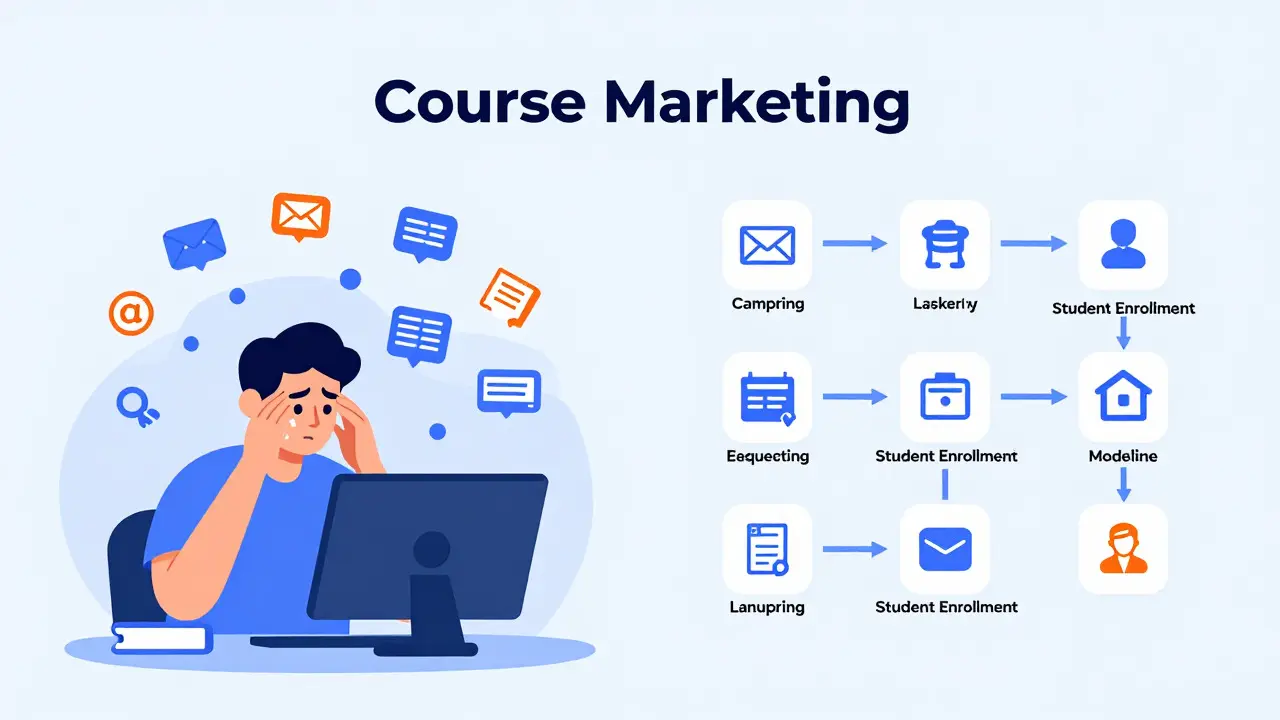
You spend hours crafting the perfect email sequence. You tweak your landing page copy until it shines. You even run a targeted ad campaign that looks great on paper. But when you look at your sales dashboard, you have no idea which of those efforts actually brought in the student who just paid. This is the classic problem in course marketing: knowing what worked is often harder than doing the work itself.
This is where attribution comes in. It’s not just a buzzword; it’s the difference between guessing and knowing. If you are selling online courses, understanding how different touchpoints contribute to a sale can save you thousands in wasted ad spend. Let’s break down how attribution modeling works, why standard methods fail for education products, and how you can build a system that actually tells the truth about your revenue.
What Is Attribution in Course Marketing?
Attribution is the process of identifying which marketing interactions contributed to a final conversion, such as a course enrollment. In simple terms, it answers the question: "Who gets credit for this sale?"
Imagine a student named Sarah. She sees a Facebook ad for your Python programming course. She clicks through but doesn’t buy. Two days later, she finds your blog post about "5 Common Python Errors." She signs up for your newsletter there. A week later, she receives an automated email with a discount code and finally buys the course.
Without attribution, you might think the email was the only thing that mattered because it was the last click before the purchase. But if you ignore the Facebook ad and the blog post, you might stop running ads or writing content, killing your top-of-funnel traffic. Attribution helps you see the whole picture of Sarah’s journey.
Why Standard Models Fail for Education Products
Most marketers start with basic models provided by their analytics tools. These models are easy to set up but often misleading for complex sales cycles like online courses.
| Model Type | How It Works | Best For | Weakness for Courses |
|---|---|---|---|
| Last-Click | Gives 100% credit to the final interaction before purchase. | Low-cost, impulse-buy items. | Ignores research phase; undervalues content marketing. |
| First-Click | Gives 100% credit to the first interaction that started the journey. | Brand awareness campaigns. | Ignores nurturing; overvalues top-of-funnel ads. |
| Linear | Distributes credit equally across all touchpoints. | Simplified multi-touch analysis. | Treats a casual browse same as a high-intent demo request. |
| Time-Decay | Gives more credit to interactions closer to the conversion date. | Medium-length sales cycles. | Better, but still assumes recency equals importance. |
Online courses usually have longer consideration periods. Students compare options, read reviews, and consume free content before committing. A last-click model will make your retargeting ads look like heroes while your educational blog posts look like zeros. This leads to bad decisions, like cutting budget from content creation because it “doesn’t drive direct sales.”
The Student Journey: Mapping Touchpoints
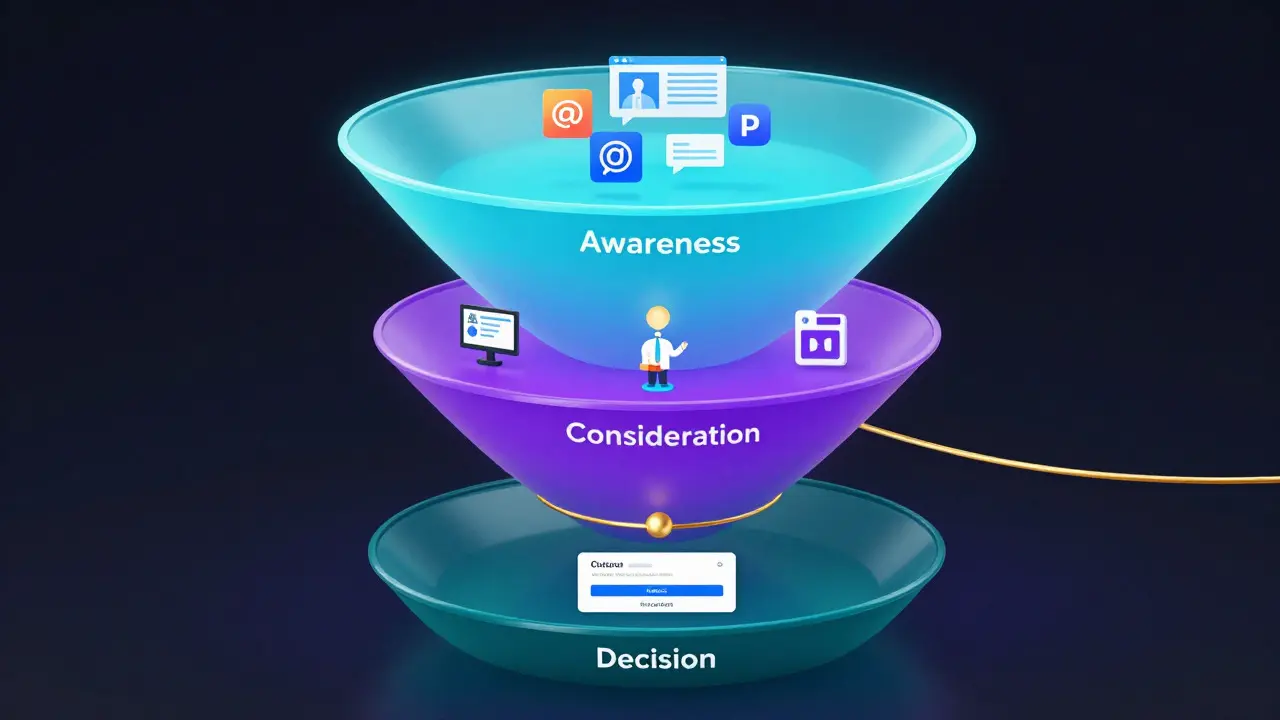
To build effective attribution, you first need to map out where students interact with your brand. In the world of course marketing, these touchpoints fall into three main buckets:
- Awareness: Social media ads, guest podcast appearances, SEO-driven blog posts, and YouTube tutorials. The goal here is visibility.
- Consideration: Free webinars, downloadable cheat sheets, newsletter sign-ups, and trial access to course modules. Here, the student is evaluating your expertise.
- Decision: Sales pages, limited-time discounts, live Q&A sessions, and checkout processes. This is where the money changes hands.
Each stage requires different tracking mechanisms. For example, you can track social media clicks using UTM parameters. You can track email opens and clicks using your ESP (Email Service Provider). You can track on-site behavior using Google Analytics 4 (GA4) or similar tools. The key is ensuring all these data points feed into one central view.
Implementing Multi-Touch Attribution
If you want to move beyond last-click, you need a multi-touch attribution (MTA) strategy. This doesn’t require expensive enterprise software. You can start with a simple weighted approach.
- Define Your Channels: Group your traffic sources logically. Instead of tracking every single Facebook ad, group them under “Paid Social.” Combine all organic search visits under “Organic Search.”
- Assign Weights: Decide how much value each stage holds. A common heuristic for education is 30% for Awareness, 40% for Consideration, and 30% for Decision. This reflects the heavy lifting done during the research phase.
- Track Conversions: Ensure your e-commerce platform (like Teachable, Thinkific, or Kajabi) sends purchase data back to your analytics tool. Without closed-loop reporting, attribution is impossible.
- Analyze Paths: Look at common sequences. Do most buyers come from Blog → Email → Purchase? Or Ads → Webinar → Purchase? Identify your highest-converting paths and double down on them.
For example, if you find that 60% of your high-ticket course buyers attended a free webinar before buying, you know that webinars are a critical consideration touchpoint. You should invest more in promoting webinars, not just the final sales page.
Challenges and Pitfalls to Avoid
Even with a good plan, attribution can get messy. Here are the biggest hurdles you’ll face:
Data Silos: Your email provider, ad platforms, and website analytics often don’t talk to each other natively. You might need a middleware tool or manual CSV exports to stitch the data together. If you rely solely on Facebook Ads Manager, you’re only seeing Facebook’s version of the truth, which naturally favors Facebook.
Cross-Device Behavior: A student might see your ad on their phone, research on their laptop, and buy on their tablet. Traditional cookie-based tracking struggles here. Using user IDs (logged-in users) helps bridge this gap significantly.
Offline Influence: Did a friend recommend your course? Did they hear about it on a podcast that didn’t use trackable links? These offline touches are hard to quantify. Use surveys at checkout asking, “How did you hear about us?” to capture this qualitative data.

From Data to Action: Optimizing Your Strategy
The goal of attribution isn’t just pretty charts; it’s better ROI. Once you have a clearer picture of your customer journey, you can make smarter moves.
If your attribution model shows that Organic Search drives 50% of your awareness but costs nothing, you should prioritize SEO. If Paid Social has a low last-click ROI but high assisted conversions, don’t kill the campaign. Instead, optimize the landing page it sends traffic to, or create better retargeting ads for those visitors.
Also, consider cohort analysis. Compare the lifetime value (LTV) of students acquired through different channels. Maybe students from webinars stay enrolled longer or buy more upsells than students from discount codes. Attribution helps you identify which customers are most valuable, not just which channel brings the most volume.
Building a Sustainable Tracking System
Start small. Don’t try to implement a complex algorithmic model on day one. Begin by cleaning up your UTM tagging. Create a standardized naming convention for all your campaigns. Ensure every link you share has proper parameters.
Next, integrate your platforms. Connect your e-commerce platform to GA4. Set up conversion events properly. Verify that data is flowing correctly. Then, choose a simple model like Time-Decay or Linear to start seeing the broader picture.
As you grow, you can explore more advanced solutions. Some platforms offer algorithmic attribution that uses machine learning to assign credit based on historical patterns. However, for most course creators, a well-executed multi-touch model with clear channel definitions provides enough insight to scale profitably.
What is the best attribution model for online courses?
There is no single "best" model, but Time-Decay or Position-Based (U-Shaped) models often work well for education. These models give extra credit to the first touchpoint (awareness) and the last touchpoint (conversion), while acknowledging the middle steps. This aligns with the typical student journey of discovering, researching, and then buying.
How do I track offline conversions in course marketing?
You can track offline influence by adding a survey question at checkout or in a welcome email asking how the student found you. You can also use unique promo codes for specific offline channels, like podcasts or print ads, to attribute sales manually.
Do I need expensive software for attribution modeling?
Not necessarily. Many course creators start with native features in Google Analytics 4 and their e-commerce platform. As long as you have consistent UTM tagging and integrated data, you can perform basic multi-touch analysis without additional tools. Expensive MTA platforms are usually only needed for large enterprises with massive data volumes.
Why does my Facebook Ads ROI look different from my overall business ROI?
Facebook Ads Manager uses its own attribution window and often claims credit for conversions that happened after multiple other touchpoints. It tends to overstate its impact. Always cross-reference ad platform data with your independent analytics tool (like GA4) to get a more accurate picture of true performance.
How often should I review my attribution data?
Review your attribution data monthly to spot trends and adjust budgets. However, wait at least 30-90 days before making major strategic changes, depending on your average sales cycle length. Short-term fluctuations can be misleading.