

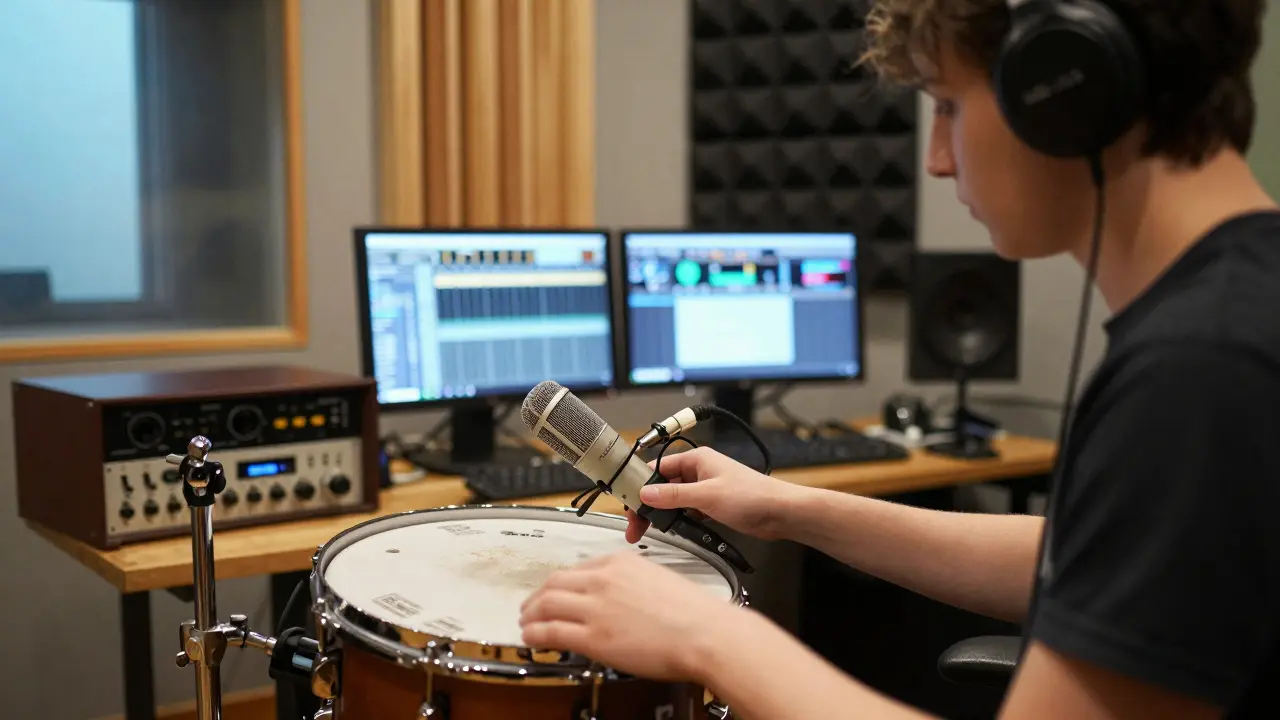
Most people think audio engineering is about plugging in microphones and turning knobs until it sounds good. But real audio engineering and music production? It’s a mix of science, art, and muscle memory built over thousands of hours. If you’re looking at courses right now, you’re not just signing up for a class-you’re starting a trade. And not every course teaches what you actually need to know.
What’s Really Taught in a Good Audio Engineering Program
Top programs don’t start with software. They start with sound itself. You’ll spend weeks learning how sound moves through air, how it reflects off walls, and why a room that sounds great for drums can kill a vocal. This isn’t theory-it’s hands-on. You’ll mic a snare drum in three different rooms, record the same performance, and listen back to hear how room acoustics change the entire feel of the track.
By week three, you’re not just using a DAW-you’re understanding why a 44.1 kHz sample rate matters for vinyl, why 24-bit depth gives you headroom for mixing, and how phase cancellation can erase your bassline without you realizing it. These aren’t buzzwords. They’re the difference between a track that sounds professional and one that sounds like it was made in a bedroom.
Core Modules You Can’t Skip
Here’s what separates a solid curriculum from a flashy brochure:
- Acoustics and Room Treatment - You’ll measure frequency response with a calibrated mic, learn how bass traps work, and build your own diffusers. No one teaches this well online. In-person labs show you how a 2-inch gap behind a panel changes low-end response.
- Microphone Techniques - Not just ‘use a Shure SM57 on guitar.’ You’ll record the same guitar amp with 12 different mics, at 5 distances, with 3 polar patterns. Then you’ll A/B them in context with a full mix. You’ll learn why a ribbon mic might kill a snare but save a brass section.
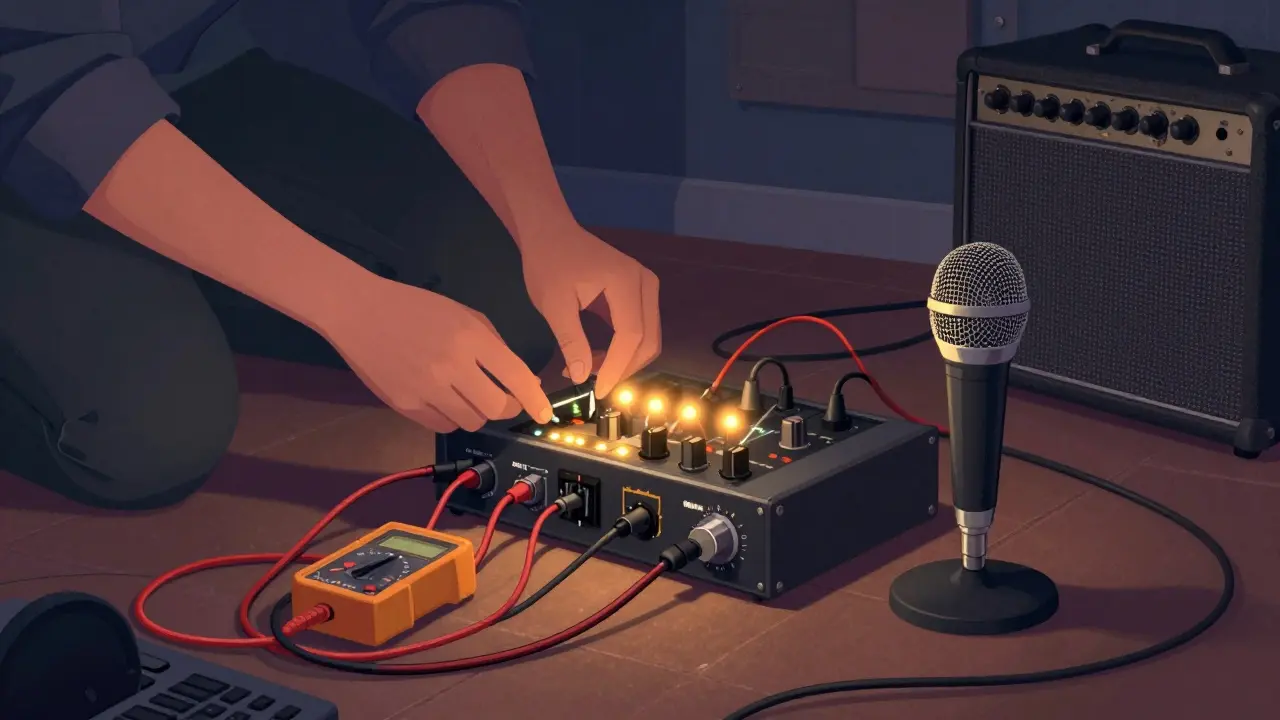
- Signal Flow and Patch Bays - Analog gear still matters. You’ll patch a compressor into a channel strip, route aux sends for reverb, and troubleshoot ground loops with a multimeter. This isn’t nostalgia-it’s how you fix problems when the plugin crashes.
- Mixing and Mastering - You’ll mix a full song from scratch using only stock plugins. Then you’ll compare it to a professional mix. You’ll learn why loudness isn’t the goal-dynamic range is. Mastering isn’t just turning up the volume. It’s ensuring your track sounds good on earbuds, car stereos, and club systems.
- Music Theory for Producers - You don’t need to read sheet music, but you do need to know how chords interact, why a minor 7th sounds sad, and how to use harmonic tension to build emotion. This is where many producers hit a wall. They can make beats, but they can’t make a song feel alive.
Software You’ll Actually Use
It’s not about which DAW is ‘best.’ It’s about which one you’ll use in the real world. Most professional studios run Pro Tools. Not because it’s prettier, but because it’s the industry standard for recording and editing. You’ll learn session organization, comping takes, and how to bounce stems for post-production.
You’ll also get deep into Logic Pro if you’re in a program that leans toward electronic or pop production. Logic’s Smart Controls and Flex Time are essential for modern beat-making. Ableton Live gets covered if the course focuses on live performance or loop-based composition. But you won’t spend six weeks on one DAW. You’ll learn the core concepts-editing, automation, routing-then apply them across platforms.
Plugins? You’ll use Waves, FabFilter, and iZotope for EQ and compression. But you’ll also learn to build your own chains. A good program teaches you to fix a muddy vocal with EQ before reaching for a de-esser. It’s about solving problems, not applying presets.
Real-World Projects That Matter
Forget making a single track for a grade. Good programs give you client projects. You’ll record a local band’s EP. You’ll mix a podcast with multiple interview tracks. You’ll master a demo for an artist pitching to labels.
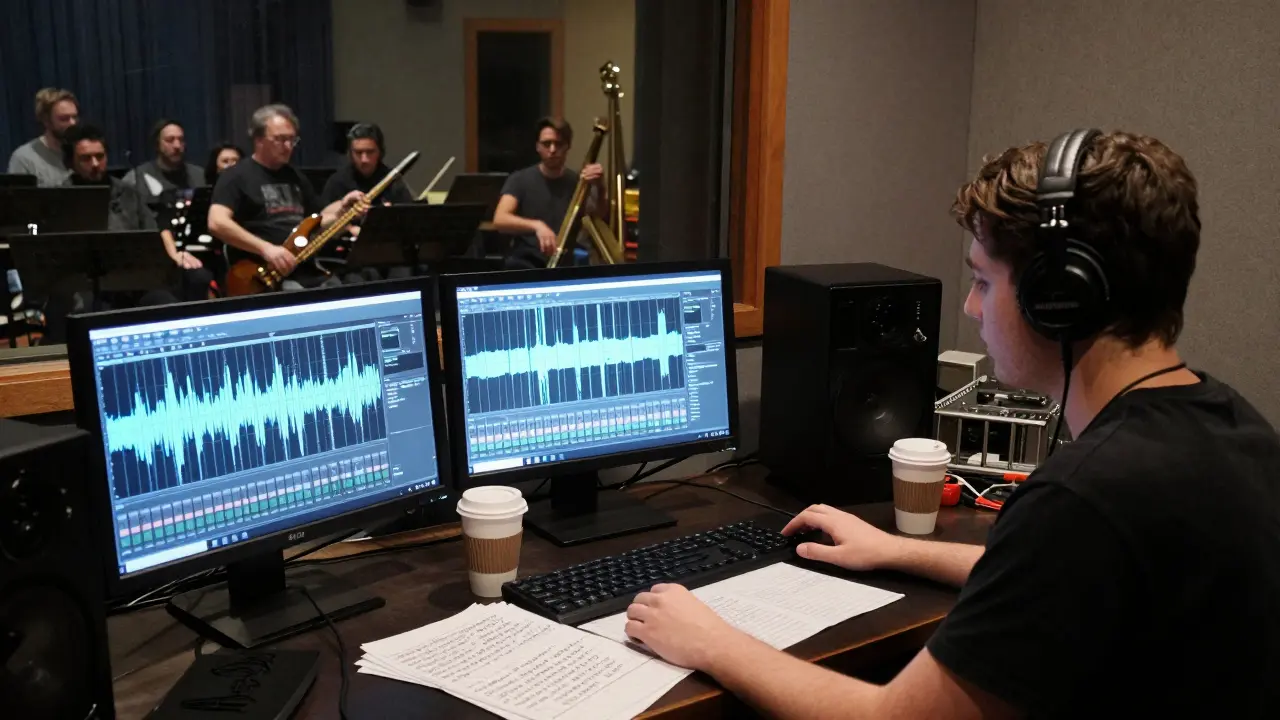
In one course I’ve seen, students had to record a 10-piece jazz ensemble in a live hall, edit out coughs and chair squeaks, balance 12 microphones in real time, and deliver a final stereo mix within 72 hours. That’s not a test. That’s a job.
You’ll also work with video editors to sync audio to film. That means learning SMPTE timecode, handling sync drift, and matching levels to dialogue. These are skills you won’t find in YouTube tutorials.
What Schools Don’t Tell You
Here’s the truth: most entry-level audio jobs don’t pay well. You’ll start as a studio assistant, running cables, making coffee, and fixing headphone splitters. But if you’ve been trained right, you’ll be the one people call when the vocal track is distorted or the drum kit won’t tune.
Programs that focus only on Ableton and FL Studio often leave students unprepared for live recording. If you want to work in a studio, you need analog gear experience. If you want to work in film, you need sync and dialogue editing skills. If you want to freelance, you need to know how to invoice, negotiate contracts, and manage client feedback.
Top programs include business modules: how to price your services, how to back up your sessions, how to handle copyright issues with samples. These aren’t glamorous, but they’re what keep you working.
What to Look for in a Course
Don’t be fooled by flashy websites. Ask these questions before you enroll:
- Do students record in real studios, or just in computer labs?
- What gear do they use? (If they only mention plugins, walk away.)
- Can you see past student projects? (Not just polished final mixes-raw session files too.)
- Do instructors still work in the industry? (If they haven’t mixed a track in five years, they’re teaching outdated methods.)
- Is there access to equipment after hours? (You’ll need it. Real learning happens at 2 a.m.)
Look for programs with partnerships with local studios, radio stations, or live venues. That’s where internships come from. That’s where jobs come from.
Where This Leads
After completing a solid program, you’re not just a ‘music producer.’ You’re a sound professional. You can work in recording studios, post-production houses, radio, film, gaming, or even live events. You can freelance, start your own studio, or join a team at a label.
Graduates from top programs are working on TV soundtracks in Los Angeles, mixing live broadcasts in London, and designing immersive audio for VR experiences in Tokyo. It’s not about fame. It’s about being the person who makes sure the sound doesn’t suck.
This isn’t a hobby. It’s a craft. And like any craft, it takes time, patience, and real training. The right course won’t promise you fame. It’ll give you the skills to earn your place in the room-no matter how loud the music gets.
Do I need to know how to play an instrument to take audio engineering courses?
No, but it helps. You don’t need to be a virtuoso, but understanding basic music theory-chords, rhythm, structure-makes you a better producer. Many engineers who can’t play still learn enough to communicate with musicians. If you’re serious, take a 6-week intro to music theory course alongside your audio training.
Can I learn audio engineering online instead of in person?
You can learn the basics online, but you can’t replicate hands-on studio experience. Sound behaves differently in every room. You need to touch real microphones, adjust analog preamps, and hear how cables affect tone. Online courses teach you how to click buttons. In-person programs teach you how to solve problems when the system fails. If you’re choosing between a $2,000 online course and a $15,000 in-person program, the latter gives you access to gear, mentors, and real sessions that build your resume.
How long does it take to get hired after finishing a course?
It varies. Some students land assistant roles within three months. Others take a year. The key isn’t the certificate-it’s your portfolio. If you’ve recorded five real projects, mixed a podcast series, and can show before-and-after session files, you’ll get calls. Employers care about what you’ve done, not how long you sat in class.
Are there scholarships or financial aid for audio engineering programs?
Yes, especially at public institutions and community colleges. Some programs partner with industry groups like the Audio Engineering Society (AES) to offer grants. Look for local arts councils or music foundations-many fund students from underrepresented backgrounds. Don’t assume it’s too expensive. A $5,000 certificate program at a community college can give you the same skills as a $30,000 private school.
What’s the difference between audio engineering and music production?
Audio engineering focuses on capturing and processing sound-microphones, signal flow, acoustics, mixing. Music production is broader: it includes arranging, composing, directing performances, and shaping the overall vision of a track. Many engineers become producers. Many producers learn engineering. The best professionals do both. A good course teaches you both sides, so you’re not stuck doing only one.
If you’re ready to stop watching tutorials and start making real recordings, the next step isn’t buying gear-it’s finding a program that puts you in a studio, not just in front of a screen.
Comments
Andrew Nashaat
Wow, this is basically the only post I've ever seen that doesn't sugarcoat audio engineering. Most people think it's just dragging sliders in FL Studio and calling it a day. But no-you need to understand phase cancellation like it's your job, because it literally is. And don't even get me started on people who think 'any DAW works'-Pro Tools is the industry standard for a reason. If your course doesn't make you patch a console with a multimeter, you're being scammed. Also, room treatment? If you're not measuring frequency response with a calibrated mic, you're just guessing. And yes, I've seen too many 'producers' with 10k worth of plugins but zero idea why their bass disappears in car speakers. Fix your room first. Always.
Gina Grub
Acoustics isn't theory-it's physics. And if your program skips bass traps and diffusers, it's a marketing brochure masquerading as education. I've worked in studios where the engineer couldn't tell the difference between absorption and diffusion. The result? A $50k project ruined because someone thought 'adding reverb' fixed the mud. Real training means touching gear, not just clicking buttons. And yes, analog still matters because when the plugin crashes at 2am during a live session, you need to know how to bypass a compressor with a patch cable. No one teaches that online. And don't even mention 'FL Studio producers' trying to mix orchestral sessions. It's not a genre-it's a crime.
Nathan Jimerson
This is exactly what I needed to read. I've been watching YouTube tutorials for two years and still feel lost. The real difference is hands-on experience-no amount of videos can replace the feeling of a ribbon mic on brass or hearing how a 2-inch gap changes low end. I'm enrolling in a community college program next month. It's not glamorous, but it's real. And if you're serious, start with the fundamentals. The gear will follow.
Sandy Pan
There's a quiet truth here that no one talks about: audio engineering isn't about technology-it's about listening. Not hearing. Listening. It's the difference between noticing the slight delay in a vocal reverb tail or the way a snare breathes differently in a live room versus a treated booth. The tools are just vessels. The real craft is in the patience to sit with a mix for hours, letting it breathe, letting it fail, letting it reveal itself. We've turned sound into a product, but it's still a living thing. The best engineers don't just fix problems-they hear the silence between the notes. And that's not taught in a syllabus. It's earned.
Meredith Howard
I appreciate the emphasis on real-world application. Many programs focus on software while ignoring the business side. Knowing how to invoice, manage client expectations, and handle copyright issues is just as vital as knowing how to use a compressor. I’ve seen talented engineers leave the industry because they couldn’t navigate contracts or negotiate rates. A good program should treat you as a professional, not just a technician. Access to equipment after hours is non-negotiable-real learning happens when no one is watching. And yes, internships through studio partnerships are the golden ticket.
Yashwanth Gouravajjula
In India, most think audio is just editing songs on phone apps. This post is a wake-up call. Real training needs real rooms, real mics, real problems. No shortcuts.
Kevin Hagerty
Oh wow another one of these 'audio engineering is a craft' rants. You know what's a craft? Fixing a leaky faucet. This whole thing reads like a sales pitch from a $20k school trying to justify its tuition. Most of this stuff is just glorified YouTube tutorials with a fancy studio behind it. I've seen people who went to 'top programs' still can't mix a vocal without over-compressing it into oblivion. And 'Pro Tools is the industry standard'? Yeah, because it's the only one that crashes every 30 seconds. If your course doesn't teach you how to use Reaper, you're being left behind. Also, who the hell still uses analog gear in 2025? It's like learning to use a typewriter because 'it builds character'.
Janiss McCamish
Kevin, you're missing the point. Pro Tools isn't perfect-but it's reliable in live sessions when everything else fails. And analog gear isn't nostalgia-it's problem-solving. I worked on a film project where the digital recorder died. The engineer patched a Neve preamp into a cassette deck and saved the take. That's not luck. That's training. You don't need to buy $10k gear to start. But you do need to understand how it works. Start with a community college. Record your friends. Learn the why before the what.
Pamela Tanner
I've mentored dozens of students over the years, and the ones who succeed aren't the ones with the fanciest plugins-they're the ones who show up early, stay late, and ask questions. They're the ones who clean the studio after hours because they care. Audio engineering isn't about being the loudest in the room. It's about being the quiet one who notices when the hi-hat is clipping. If you're serious, find a mentor. Don't just take a course. Join a community. And always back up your sessions-twice. Once on an external drive, once in the cloud. I've lost more than one project because someone thought 'it'll be fine.' It won't be.
Kristina Kalolo
What about accessibility? Are there programs that offer remote lab access for students with disabilities? I know some studios are adapting, but I haven't seen much discussion on inclusive design in audio education.