

Ever watched a barista pour a heart into a cappuccino and wondered how they do it? Or thought about turning your love for coffee into a real skill? Barista and coffee skills courses aren’t just about pouring milk-they’re about understanding every step from green bean to steaming wand. These courses teach you how to taste coffee like a pro, roast it right, grind for flavor, and craft drinks that look as good as they taste. You don’t need to be a coffee fanatic to start-you just need to care about the cup in your hands.
What You Actually Learn in a Barista Course
A good barista course doesn’t start with a machine. It starts with the bean. You’ll learn how origin affects flavor-Ethiopian beans taste fruity and floral, while Sumatran beans are earthy and bold. You’ll taste side-by-side samples of different roasts and learn how roast level changes acidity, body, and sweetness. Most beginners think espresso is just strong coffee. It’s not. It’s a precise extraction: 18-22 seconds, 9 bars of pressure, 20 grams of ground coffee yielding 36 grams of liquid. Get any of those numbers wrong, and your espresso tastes sour, bitter, or flat.
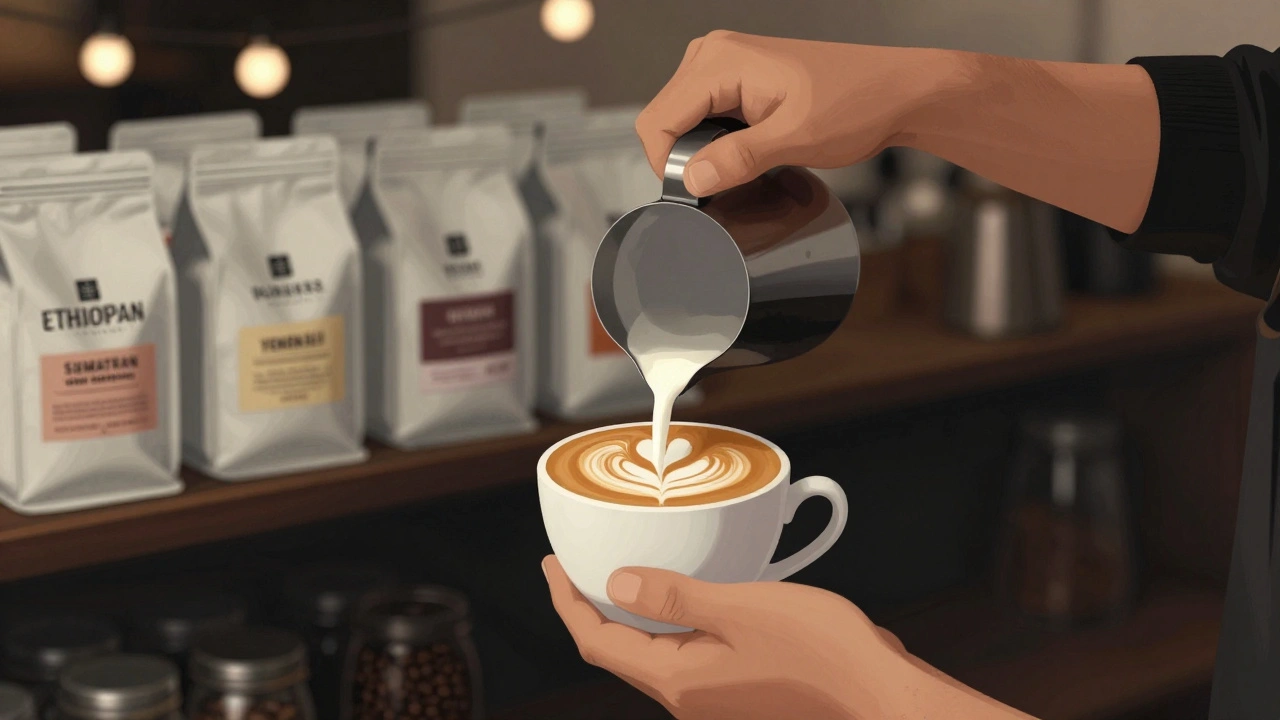
Then comes milk. Not just steaming-it’s texturing. You’re not just heating milk. You’re introducing air to create microfoam, the silky, paint-like consistency that blends with espresso without separating. A bad texture leaves you with bubbles that pop and a drink that tastes like warm milk. A good one clings to the cup, holds patterns, and tastes creamy without being heavy. You’ll practice for hours just to get that perfect swirl.
Latte art is the showpiece, but it’s built on the foundation of consistency. You won’t learn hearts and swans on day one. You’ll learn to pour slowly, control the height of the pitcher, and move with rhythm. The best baristas don’t rely on tricks-they rely on control. A course will show you how to fix a broken pour, why your design fades, and how to adjust your grind or tamping to make your art last longer.
Tools of the Trade: What You’ll Use
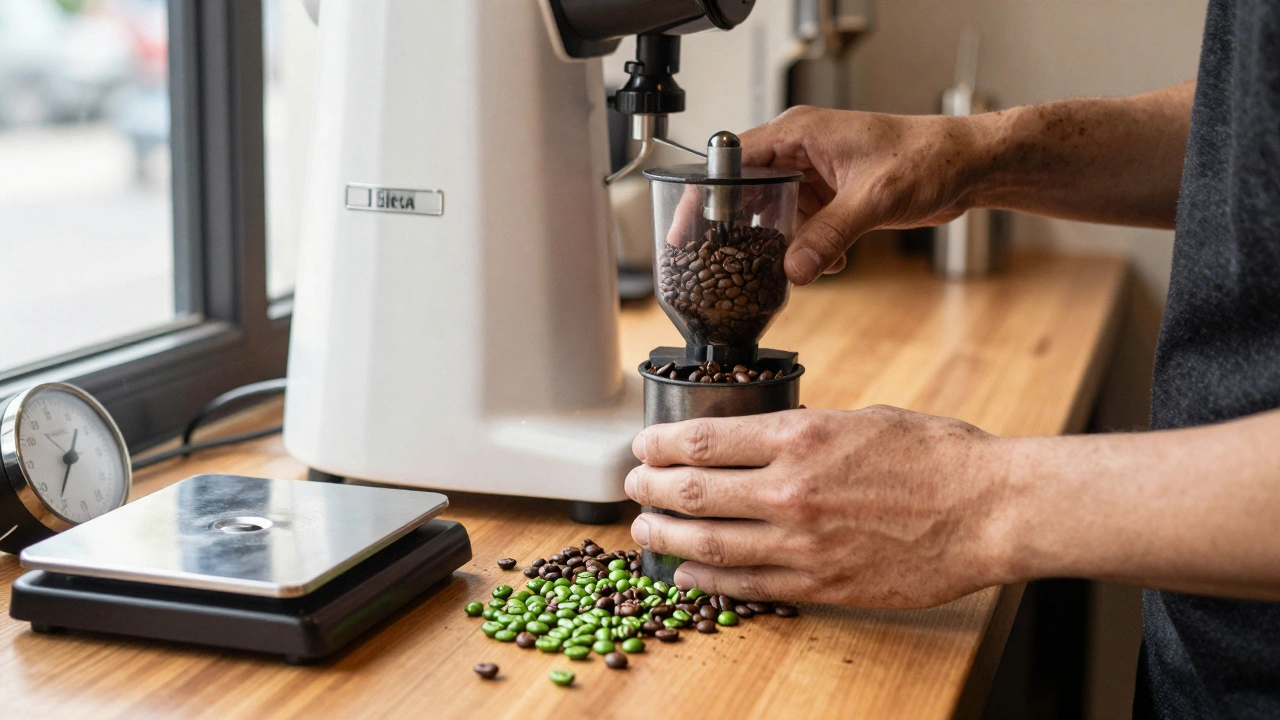
You won’t be handed a cheap espresso machine from a big-box store. Real courses use commercial-grade gear: machines like La Marzocco Linea PB or Rocket R58, grinders like Eureka Mignon or Mahlkönig EK43. You’ll learn why grinder consistency matters more than brand name-uneven grounds cause channeling, which ruins extraction. You’ll handle tamper weights, scale timers, and thermometers like tools of a craft, not gadgets.
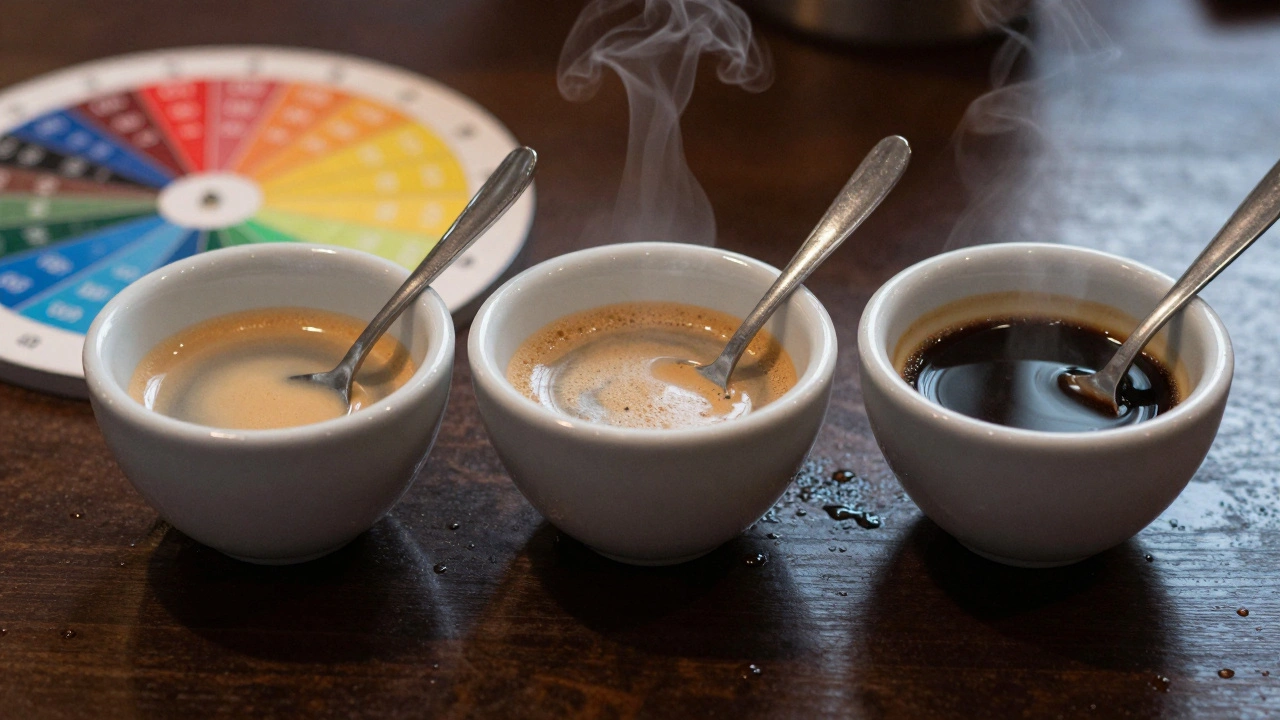
Every course includes a coffee cupping kit: small bowls, spoons, and a flavor wheel. You’ll smell and sip coffees from Kenya, Colombia, Brazil, and Yemen. You’ll learn to describe notes like “black tea,” “dark chocolate,” or “citrus zest”-not just “tastes good.” These aren’t fancy words. They’re the language professionals use to communicate quality and adjust brews.
From Student to Professional: What Happens After the Course
Completing a course doesn’t make you a barista overnight. But it gives you a leg up. Many cafes in Auckland, Wellington, and Christchurch now hire only people with certified training. Why? Because consistency matters. If one cup tastes different from the next, customers notice-and they leave. Employers want people who can replicate the same drink 50 times in a row.
Some courses include internships or job placements. Others give you a portfolio: photos of your latte art, tasting notes, and a log of your brewing experiments. That’s what gets you hired. One graduate from a course in Wellington started at a small café, then moved to a specialty roastery, and now trains new staff. That path isn’t rare-it’s common for people who take the training seriously.
Choosing the Right Course for You
Not all barista courses are the same. Some are three-hour workshops. Others are full-time programs lasting six weeks. Ask yourself: Do you want to make better coffee at home? Or do you want a career?
If you’re a home brewer looking to level up, a one-day course covering basics like grind size, water temperature, and pour-over technique is enough. You’ll walk away with better espresso and a deeper appreciation for your morning cup.
If you want to work in a café, go for a certified program. Look for ones accredited by the Specialty Coffee Association (SCA). These cover all 10 modules: green coffee, roasting, brewing, sensory skills, barista skills, and customer service. SCA certification is recognized worldwide. A course that doesn’t mention SCA? Be cautious.
Check the instructor’s background. The best teachers have worked in top cafés, competed in barista championships, or trained others for years. Don’t just look at the price-look at the time. A 40-hour course with hands-on practice beats a 6-hour lecture with a PowerPoint.
Common Mistakes New Students Make
Most people think latte art is the hardest part. It’s not. It’s consistency. You’ll see students spend hours perfecting a swan, then pour the next cup with no care. That’s not skill-that’s show. Real skill is making every cup taste perfect, even when you’re tired, busy, or stressed.
Another mistake: using pre-ground coffee. Pre-ground loses flavor fast. Even the best beans turn flat if ground hours before brewing. You’ll learn to grind fresh for every shot. It takes 10 extra seconds. But that’s the difference between good and great.
And don’t ignore water. Many people don’t realize tap water can ruin coffee. Hard water makes espresso bitter. Soft water makes it flat. A good course teaches you how to test your water and use filters if needed. In Auckland, where water is soft, you might need to add minerals. In Wellington, with harder water, you’ll need to soften it. It’s not optional-it’s part of the job.
Why This Skill Matters Now More Than Ever
Coffee culture isn’t just trendy-it’s a global industry worth over $100 billion. Specialty coffee is growing fast, especially in places like New Zealand, Australia, and Scandinavia. People are willing to pay more for coffee that’s traceable, ethically sourced, and expertly brewed. That’s where trained baristas come in.
It’s not just about jobs. It’s about connection. A barista who knows the farm where the beans came from, who can explain why a certain roast tastes like berries, becomes more than a coffee maker. They become a storyteller. That’s what keeps people coming back.
What to Expect on Your First Day
Don’t expect to walk in and start steaming milk. Day one is usually about smell and taste. You’ll sit with a tray of green beans-some light, some dark, some cracked, some whole. You’ll smell them, crush them between your fingers, and try to guess their origin. Then you’ll taste brewed samples, side by side. You’ll be surprised how much flavor changes with just a 5% difference in roast.
You’ll get your hands dirty. Grounds will stick to your clothes. Milk will spill. You’ll burn your fingers. That’s normal. The best baristas aren’t the ones who got it right the first time-they’re the ones who kept trying.
Do I need prior coffee experience to take a barista course?
No. Most courses are designed for complete beginners. You’ll start with the basics: how coffee grows, how beans are roasted, and how to use an espresso machine safely. No experience is needed-just curiosity and willingness to learn.
How long does a typical barista course last?
It depends on your goal. Introductory courses last 1-3 days and cover essentials like espresso and milk steaming. Professional certification programs, like those from the Specialty Coffee Association, run 40-60 hours total, usually spread over 2-6 weeks. Full-time intensive courses can be completed in one week.
Are barista courses worth the cost?
If you want to work in specialty coffee, yes. A good course costs between $300 and $1,200, depending on length and certification. But many graduates land jobs paying $22-$30 an hour right away. In cafés that serve premium coffee, trained baristas earn more, get better shifts, and often get tips for quality. It’s an investment that pays back quickly.
Can I learn latte art without taking a course?
You can practice at home, but you’ll hit a wall without proper guidance. Latte art looks simple, but it’s all about milk texture and pour control-things you can’t learn from YouTube alone. A course gives you feedback: your milk might be too bubbly, your pour too fast, your espresso too weak. Real-time correction is what turns hobbyists into professionals.
What’s the difference between a barista and a coffee technician?
A barista focuses on making drinks, understanding flavor, and serving customers. A coffee technician works on equipment-repairing grinders, calibrating machines, fixing steam wands. Some baristas learn basic maintenance, but technicians need mechanical training. Most courses focus on barista skills, but some advanced programs include equipment basics.
Next Steps: Where to Start
Look for courses offered by local specialty roasteries. In Auckland, places like Five Senses, Kōkako, and The Coffee Club offer certified training. Check if they’re SCA-registered. Call ahead-ask who teaches, how many hours are hands-on, and if they offer job support after the course.
Start small. Take a one-day intro class. Taste three different coffees. Pull your first espresso. Feel the weight of the tamper. Notice how the milk changes when you move the pitcher. That’s where the journey begins-not with a perfect heart, but with a single, well-made cup.
Comments
Diwakar Pandey
Been making coffee at home for five years, and this post nailed it. I used to think latte art was the goal-turns out it’s just the glitter on top. The real win is consistency. One day I burned my third shot in a row, and I finally got it: it’s not about looking cool, it’s about tasting right every single time. Now I weigh my beans, time my pour, and even test my water. No more guessing. Just good coffee.
Ajit Kumar
It’s astonishing how many people treat coffee like a drug delivery system rather than an agricultural craft. The obsession with latte art is symptomatic of a broader cultural decline-where aesthetics are mistaken for substance. True mastery lies in the quiet discipline of grinding fresh, dialing in extraction, and respecting the terroir of each bean. One cannot ‘appreciate’ coffee while using pre-ground, stale, over-roasted beans from a corporate chain. This is not a hobby-it’s a ritual that demands reverence. If you’re not willing to learn the science, don’t call yourself a coffee enthusiast. You’re just caffeine-dependent.
Geet Ramchandani
Oh please. Another sanctimonious coffee blog pretending it’s alchemy. You think you’re special because you know Ethiopian beans taste ‘floral’? Newsflash: most people just want their coffee hot and not bitter. You spend 40 hours learning to pour a heart, then charge $8 for it? Meanwhile, my local gas station brews a decent cup for $2 and doesn’t make me feel guilty for not knowing the difference between washed and natural processing. This whole ‘specialty coffee’ thing is just rich people’s performance art with a side of overpriced oat milk. Save the flavor wheel for your Yelp reviews and let the rest of us drink our coffee in peace.
Pooja Kalra
There’s a silence between the bean and the cup that few acknowledge. The machine doesn’t care. The milk doesn’t remember. Only the hands that grind, tamp, and pour carry the weight of intention. What is a latte art heart but a fleeting echo of human presence in a world that rushes? You can’t taste the farm in the cup unless you’ve sat with the farmer. You can’t pour with rhythm unless you’ve learned to listen. This isn’t about skill. It’s about surrender. To time. To heat. To the quiet hum of a machine that doesn’t judge you for your mistakes. Maybe that’s why we keep coming back-not for the drink, but for the stillness it gives us.
Sumit SM
Let’s be clear: the Specialty Coffee Association certification isn’t optional-it’s essential! If your course doesn’t cover all ten modules-green coffee, roasting, brewing, sensory skills, barista skills, customer service, water chemistry, equipment maintenance, workflow efficiency, and ethical sourcing-then you’re not learning, you’re just playing with hot water! And don’t even get me started on people who use tap water without filtering! Water is 98% of your brew! How can you expect flavor if your calcium levels are out of spec?!?!?!
Jen Deschambeault
I took a one-day course last year and now I make coffee for my whole office. It’s not about becoming a barista-it’s about bringing care into your routine. That first perfect shot? It changed how I start my day. Not because it tasted better, but because I finally felt like I was doing something with intention. If you’ve ever felt like your mornings are just autopilot-try this. Even just one class. You’ll be surprised what a little attention can do.
Kayla Ellsworth
So let me get this straight. You pay $1,200 to learn how to make coffee that tastes exactly like the $3 version you could’ve made at home with a French press? And now you’re going to judge me for using instant? I’m sorry, but if your entire identity hinges on microfoam, maybe you should check if you’re actually living your life or just curating a coffee aesthetic for Instagram. Also, ‘traceable beans’-did you get the GPS coordinates of the coffee tree too?
Soham Dhruv
my buddy just finished a 6 week cert and now he’s training new staff at this place in vancouver. dude was flipping burgers last year. the course gave him confidence, not just skills. you dont need to be some fancy barista to start-just show up, be humble, and keep trying. i burned my first 3 shots too. but now i grind fresh every time. its not magic, its practice. also-water matters. my tap here is soft as butter, so i throw in a pinch of mineral salt. weird? maybe. but my espresso tastes way better. just sayin'
Bob Buthune
I used to think coffee was just… coffee. Then I took a course. And everything changed. I cried the first time I tasted a Yirgacheffe-like, full-on ugly tears. Not because it was ‘good’-because it felt like someone had reached into my chest and pulled out a memory I didn’t know I had. The smell of wet earth after rain. My grandmother’s kitchen. The quiet before dawn. Now I don’t just make coffee-I carry it like a prayer. I’ve lost friends over this. People think I’m obsessed. But they don’t get it. This isn’t about taste. It’s about being present. And in a world that’s always screaming-I finally found silence in a cup.