

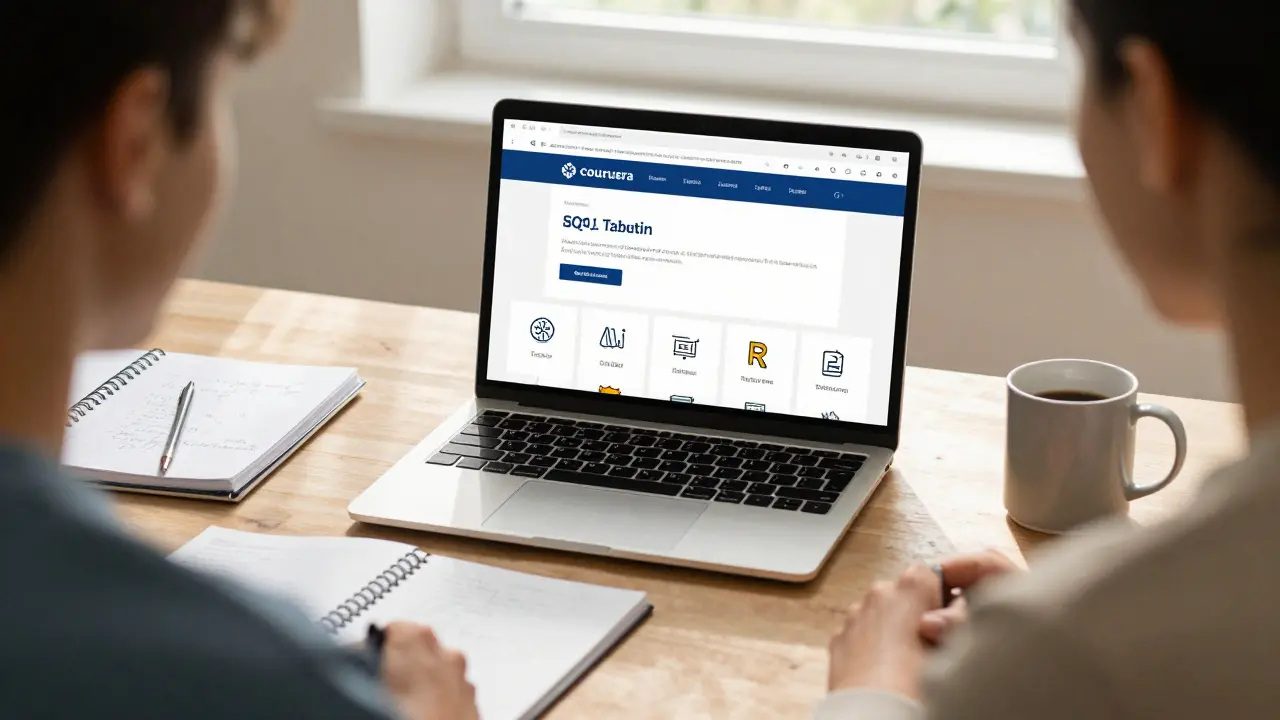
If you’re looking to level up your skills without spending a dime, free online learning platforms are your best bet. You don’t need a degree or a big budget to learn coding, data analysis, digital marketing, or even project management. Thousands of people are landing better jobs, switching careers, or starting side hustles using nothing but their internet connection and a little discipline. The question isn’t whether you can afford to learn-it’s which platform will actually help you get results.
Coursera: Learn from Top Universities for Free
Coursera partners with universities like Stanford, Yale, and the University of Michigan to offer courses you can audit for free. That means you get full access to video lectures, readings, and quizzes-just not the graded assignments or certificate. If you’re aiming to build real knowledge, not just a badge, this is ideal. For example, you can take the Google Data Analytics Professional Certificate course for free and still learn how to use SQL, Tableau, and R. Many learners have used these skills to land entry-level data jobs without paying a cent. The catch? You’ll need to pay if you want the official certificate. But if you’re learning for your resume, you can still list the course and link to your project work.
edX: Academic Rigor, No Cost
Founded by Harvard and MIT, edX is where serious learners go. It offers university-level courses in computer science, economics, engineering, and more. Like Coursera, you can audit most courses for free. The difference? edX often includes full problem sets and exams that mirror what on-campus students take. Take MIT’s Introduction to Computer Science and Programming Using Python. It’s used in MIT’s actual first-year course. People have used this to get hired as junior developers, even without a college degree. If you want to prove you can handle college-level work, edX gives you the proof-without the tuition bill.
Khan Academy: Master the Fundamentals
Most people think of Khan Academy as a place for high school math. But it’s also one of the best places to build a rock-solid foundation in subjects like statistics, economics, and computer programming. The platform breaks down complex topics into 5-10 minute videos with interactive exercises. If you’re struggling with basic algebra, probability, or how spreadsheets work, Khan Academy fills those gaps fast. One user went from not knowing how to use Excel to landing a data entry job after completing the entire Statistics and Probability and Excel for Business tracks-no cost, no pressure. It’s not flashy, but it works.
YouTube: The World’s Largest Classroom
YouTube isn’t a platform built for learning-but it’s become the most used one. Channels like freeCodeCamp, Corey Schafer, and Alex the Analyst offer full-length courses on programming, data science, and digital marketing. freeCodeCamp’s Full Stack Web Development course is over 14 hours long and completely free. It’s the same content they charge for in their paid bootcamp. Many learners have built portfolios using these tutorials and got hired at startups within months. The trick? Don’t just watch. Code along. Build something. Repeat. The best YouTube learners treat it like a syllabus: watch one video a day, do the exercise, and document what you made.
Alison: Certificates Without the Price Tag
Alison is one of the few free platforms that gives you actual certificates for completing courses-no payment required. You can earn diplomas in areas like digital marketing, human resources, and project management. The courses are shorter than Coursera or edX, but they’re practical. For example, the Digital Marketing Diploma covers SEO, Google Ads, and social media strategy. One user in rural Ohio used Alison to switch from retail to remote marketing work. She listed her Alison certificate on LinkedIn, applied to 20 jobs, and got three interviews. It’s not Harvard, but it’s real, and employers notice it.
Google Career Certificates: Job-Ready in Months
Google offers six career certificates on Coursera, and you can audit them for free. These include IT Support, UX Design, Data Analytics, Project Management, and more. The IT Support certificate alone has helped over 100,000 people land jobs in tech-many with no prior experience. Google designed these courses with hiring managers to teach exactly what companies need. Even without the certificate, the content is gold. You’ll learn how to troubleshoot Windows, set up networks, and use Linux-all skills that show up in job postings. If you’re serious about breaking into tech, this is your shortcut.
FutureLearn: Learn with People, Not Just Videos
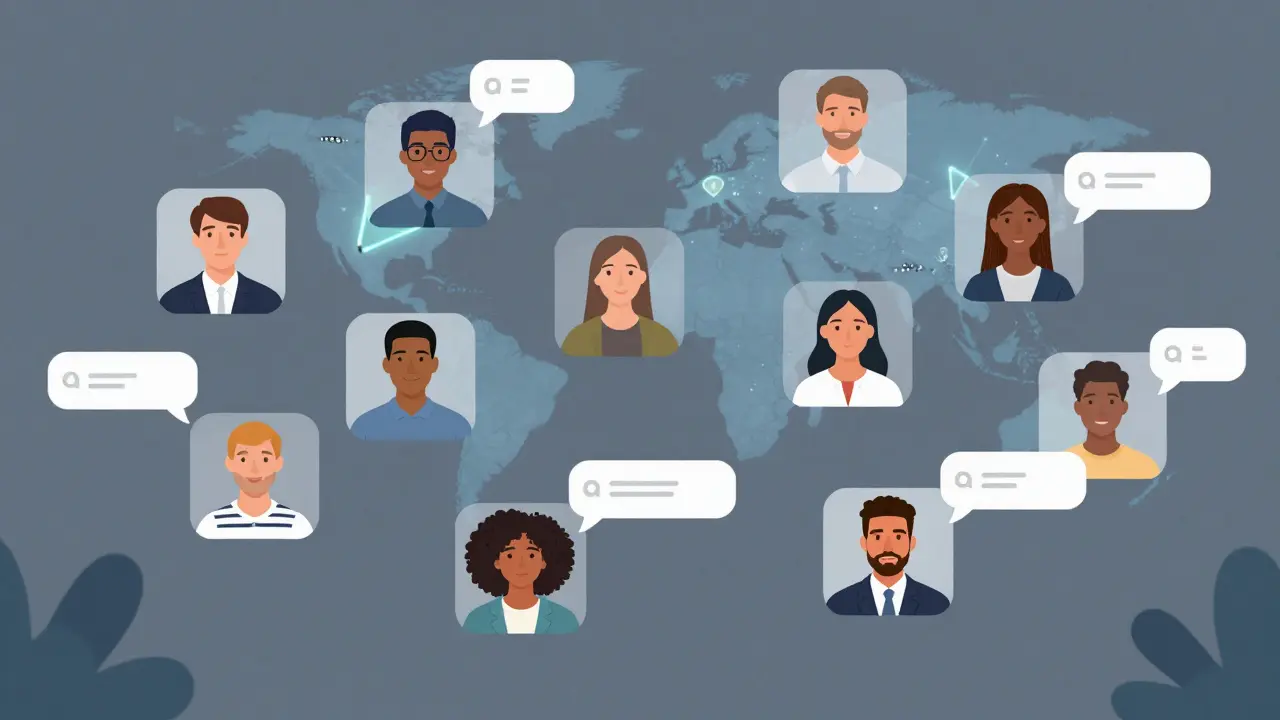
FutureLearn stands out because it’s built around discussion. You’re not just watching lectures-you’re chatting with learners from 180+ countries. Courses like Introduction to Psychology or How to Succeed in a Remote Job include weekly prompts and peer feedback. This builds soft skills you can’t get from a textbook. A nurse in Canada used FutureLearn to learn communication and leadership skills, then applied for a team lead role. She said the peer discussions helped her speak up in meetings at work. If you want to learn how to think, not just what to think, this platform gives you the conversation.
MIT OpenCourseWare: Free Ivy League Lectures
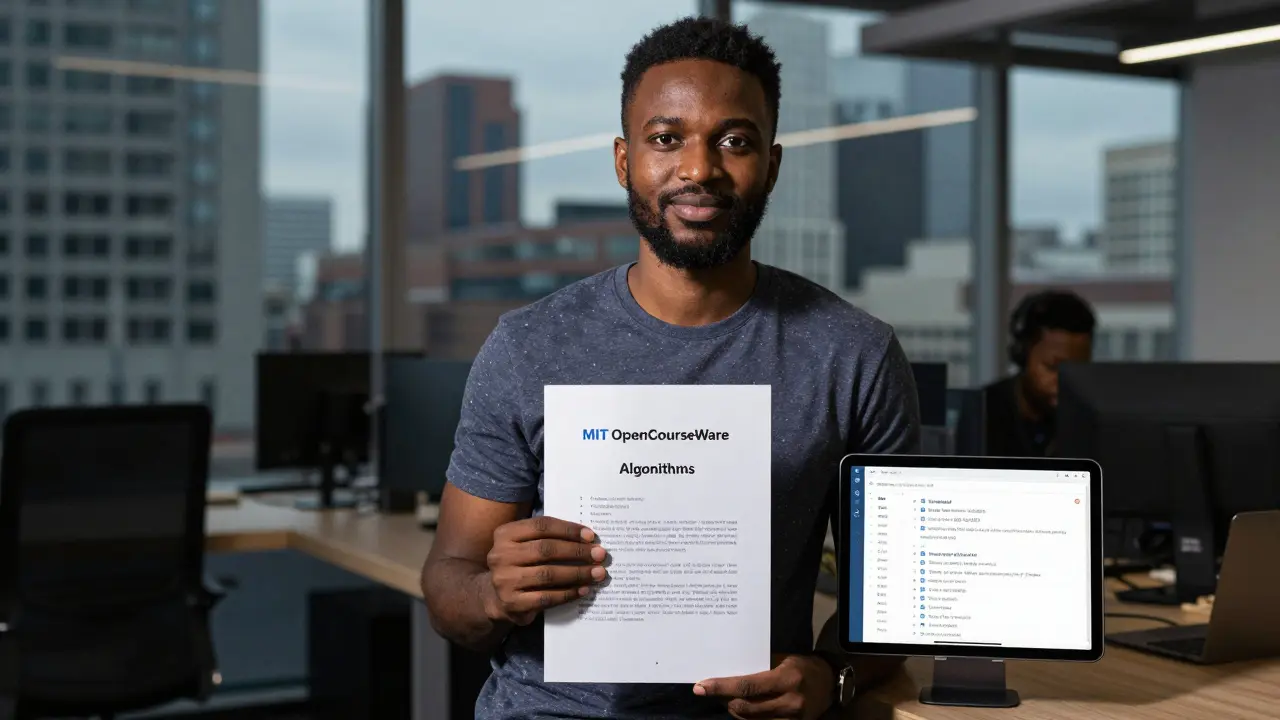
MIT OpenCourseWare gives you access to actual course materials from MIT classes-syllabi, exams, lecture notes, even video recordings. There’s no enrollment, no login, no certificate. But if you want to study engineering, physics, or artificial intelligence at the highest level, this is unmatched. One self-taught programmer in Nigeria used MIT’s Introduction to Algorithms course to land a job at a Berlin startup. He didn’t have a degree, but he could explain Dijkstra’s algorithm like a pro. If you’re willing to put in the grind, MIT OCW is the ultimate free resource.
How to Choose the Right Platform
Not all platforms are made equal. Here’s how to pick:
- If you want academic depth → edX or MIT OpenCourseWare
- If you want job-ready skills → Google Career Certificates or Alison
- If you need foundational knowledge → Khan Academy
- If you want community and discussion → FutureLearn
- If you’re learning to code or build things → YouTube + freeCodeCamp
- If you want university credibility → Coursera (audit mode)
Don’t jump between platforms. Pick one that matches your goal and stick with it for at least 30 days. Track your progress. Build a portfolio. Share your work. That’s what turns free learning into real opportunity.
Common Mistakes to Avoid
People think free means easy. It doesn’t. Here’s what trips most learners up:
- Watching without doing. You can’t learn to code by just watching videos.
- Chasing certificates instead of skills. Employers care about what you can do, not what you clicked.
- Starting too many courses. Finish one before starting another.
- Not documenting your work. If you built a website, put it online. If you analyzed data, share the results.
- Waiting for motivation. Discipline beats motivation every time.
One learner took 18 months to finish her first course. She watched videos during her lunch break, practiced on weekends, and posted her projects on GitHub. She got her first job offer six months after finishing. It wasn’t fast. But it was real.
Are free online courses really worth it?
Yes-if you treat them like real work. Free courses won’t magically get you a job. But if you complete them, build projects, and show your skills, they’re powerful. Many hiring managers don’t care if you paid for a course. They care if you can solve problems. Use free platforms to prove you can.
Can I get a job with just free online certificates?
Absolutely. Companies like Google, IBM, and Amazon hire people based on skills, not degrees. Google Career Certificates alone have led to over 150,000 jobs in the U.S. alone. Your resume needs to show what you’ve built, not just what you’ve clicked. A GitHub repo, a portfolio website, or a case study matters more than any certificate.
Which platform is best for beginners?
Khan Academy is the best starting point if you’re unsure where to begin. It builds confidence through small wins. If you already know what skill you want-like coding or marketing-start with freeCodeCamp or Alison. Both have clear paths and practical projects. Don’t overthink it. Start with one course. Finish it. Then move on.
Do employers take free courses seriously?
More than ever. LinkedIn reports that 74% of hiring managers now value online learning credentials, even if they’re free. What matters is how you present them. Don’t just list "Completed Coursera course." Say: "Built a sales dashboard using Google Sheets and Tableau after completing Google Data Analytics course. Reduced reporting time by 60% in my internship." Specifics win.
How much time do I need to spend each week?
Five to seven hours a week is enough to make real progress. That’s one hour a day, five days a week. Consistency beats intensity. Someone who studies 1 hour a day for 6 months will outperform someone who crams 20 hours in one weekend. Set a schedule. Block time. Treat it like a job.
Next Steps: What to Do Today
Don’t wait for the perfect moment. Start now:
- Pick one skill you want to learn-something tied to a job you want.
- Choose one platform from this list that matches your goal.
- Enroll in the first course. Don’t wait for the "right time."
- Complete the first module by the end of the week.
- Build one small project based on what you learned.
- Post it on LinkedIn or GitHub. Say what you learned.
That’s it. No apps to download. No credit card needed. Just you, your curiosity, and a little discipline. The world doesn’t need more people who want to learn. It needs people who did.
Comments
Gina Grub
Alison certificates are just digital confetti. Employers don't care unless you can demonstrate actual competency. I've seen too many people collect these like trading cards while their GitHub remains barren. If you're not building something real, you're just playing pretend.
Nathan Jimerson
This is exactly what the world needs more of. Free access to world-class education levels the playing field. I went from zero coding experience to a junior dev role using only freeCodeCamp and YouTube. It's not magic, it's consistency. Keep showing up.
Sandy Pan
There's a quiet revolution happening here. We're witnessing the death of credentialism and the rise of demonstrable competence. The university model was never about learning-it was about gatekeeping. These platforms don't just teach skills, they dismantle hierarchies. The real question isn't whether you can learn for free, but whether society is ready to value what you can do over where you studied.
Eric Etienne
Ugh. Another 'free learning' post. Everyone thinks they're gonna be the next self-taught billionaire by watching 14-hour YouTube videos. Newsflash: 98% of these people quit after the first module. And the ones who don't? They still can't code a simple function without Stack Overflow.
Dylan Rodriquez
What strikes me most is how these platforms don't just teach skills-they teach agency. You're no longer waiting for permission to learn. You're not asking for a scholarship or waiting for a corporate program. You're taking ownership of your growth. That shift-from passive recipient to active builder-is the real transformation. It's not about the certificate. It's about becoming the kind of person who finishes what they start.
Amanda Ablan
For anyone feeling overwhelmed-start small. Pick one thing. One platform. One course. Even if it's just 20 minutes a day. I used Khan Academy to relearn basic stats during my commute. Six months later, I was analyzing customer data for my team. You don't need to go all-in to make progress. Just start.
Meredith Howard
While the accessibility of these platforms is commendable I must emphasize the importance of structured learning paths and consistent evaluation metrics. Many individuals mistake exposure for mastery and fail to develop the metacognitive skills necessary for long term retention and application
Yashwanth Gouravajjula
India has millions learning this way. No degrees. No money. Just internet and willpower. We don't wait for permission. We build.
Kevin Hagerty
Typical woke edutainment garbage. Free courses? Yeah right. You think some guy in Ohio got hired because he watched a YouTube video? He got hired because he had a degree and connections. These platforms are just feel-good distractions for people too lazy to get a real education
Janiss McCamish
Stop overthinking it. Pick one course. Do the work. Build something. Post it. That's it. No certificate needed. Just proof you showed up.
Richard H
These platforms are great for foreigners. But in America, employers still want degrees. You think Google cares if you finished a free course? They want Ivy League. Don't get fooled by the hype.
Kendall Storey
YouTube + freeCodeCamp is the ultimate cheat code. I went from zero to frontend dev in 90 days. Watched one video a day. Built one small project. Didn't even finish the whole course. Just did enough to make something real. That's all that matters. No stress. No debt. Just code.
Ashton Strong
The democratization of knowledge through these platforms represents one of the most profound societal shifts of the 21st century. By removing financial and institutional barriers, we are empowering individuals to transcend socioeconomic constraints and pursue excellence on their own terms. This is not merely educational reform-it is the reclamation of human potential.