


Imagine sending your resume to a potential employer and having them verify your degree in seconds, not days. No more waiting on slow university registrars or worrying about forged diplomas from sketchy institutions. This is the promise of Blockchain for Credentialing Systems, which uses distributed ledger technology to issue, store, and verify educational and professional achievements with unbreakable security. As we move through 2026, this isn't just a futuristic concept anymore; it’s becoming the backbone of how we prove who we are and what we’ve learned.
The traditional system of verifying credentials is broken. It’s slow, expensive, and prone to fraud. Employers spend billions annually trying to confirm that a candidate actually graduated from the school they claimed. Students lose opportunities because their transcripts get stuck in bureaucratic limbo. Blockchain solves these problems by creating a tamper-proof record that lives outside any single institution’s control. But how exactly does this work, and where is it heading?
How Blockchain Transforms Credential Verification
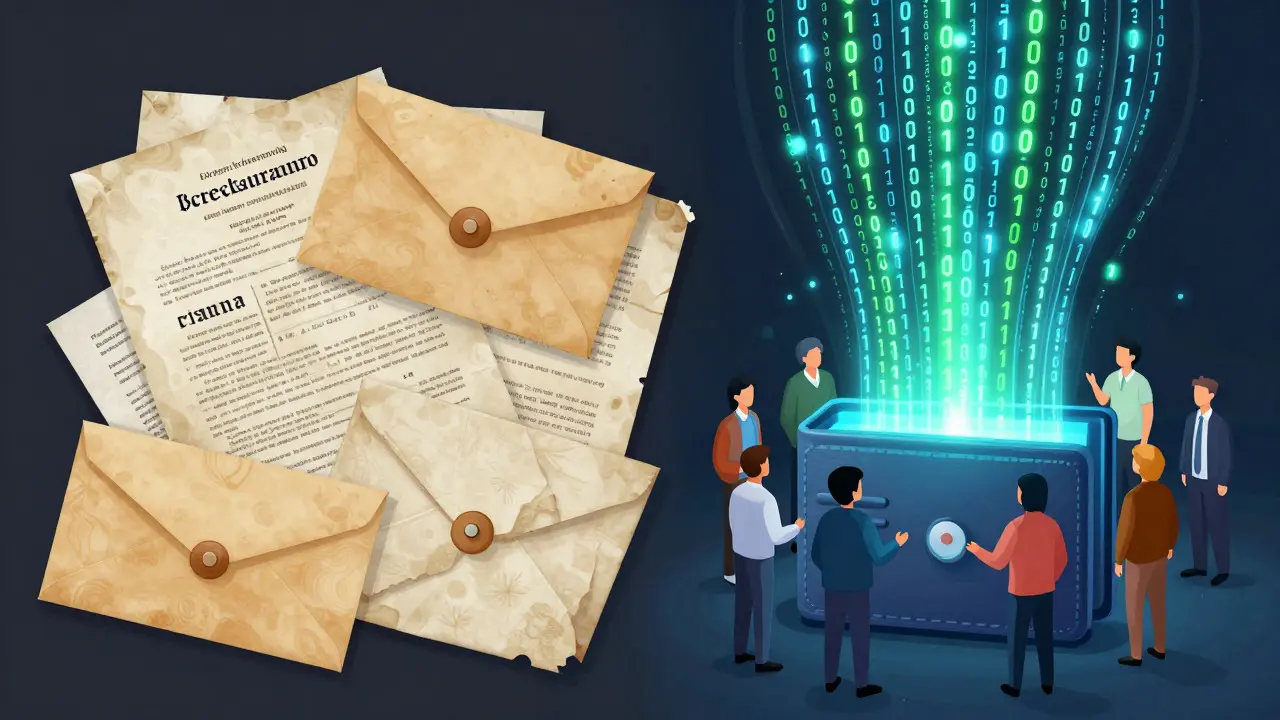
To understand the future outlook, you first need to grasp the mechanics. In a traditional setup, a university holds your transcript. If an employer wants to see it, the university has to dig it up, print it, seal it, and mail it-or worse, send an email that could be spoofed. With blockchain, the university issues a Digital Credential that contains your data (name, degree, date) and signs it with a cryptographic key. This signed record is then hashed and stored on a blockchain network. The actual data doesn’t necessarily live on the chain; instead, a unique fingerprint of the data does. When an employer receives your credential, they can check the hash against the blockchain to ensure it hasn’t been altered since issuance.
This process eliminates the middleman. You own your credentials. You decide who sees them and when. It’s like having a digital wallet for your achievements. Instead of relying on a third party to vouch for you, the math does the vouching. This shift from institutional trust to mathematical trust is the core revolution here. It reduces verification time from weeks to milliseconds and cuts costs significantly for both issuers and verifiers.
Key Standards Driving Adoption in 2026
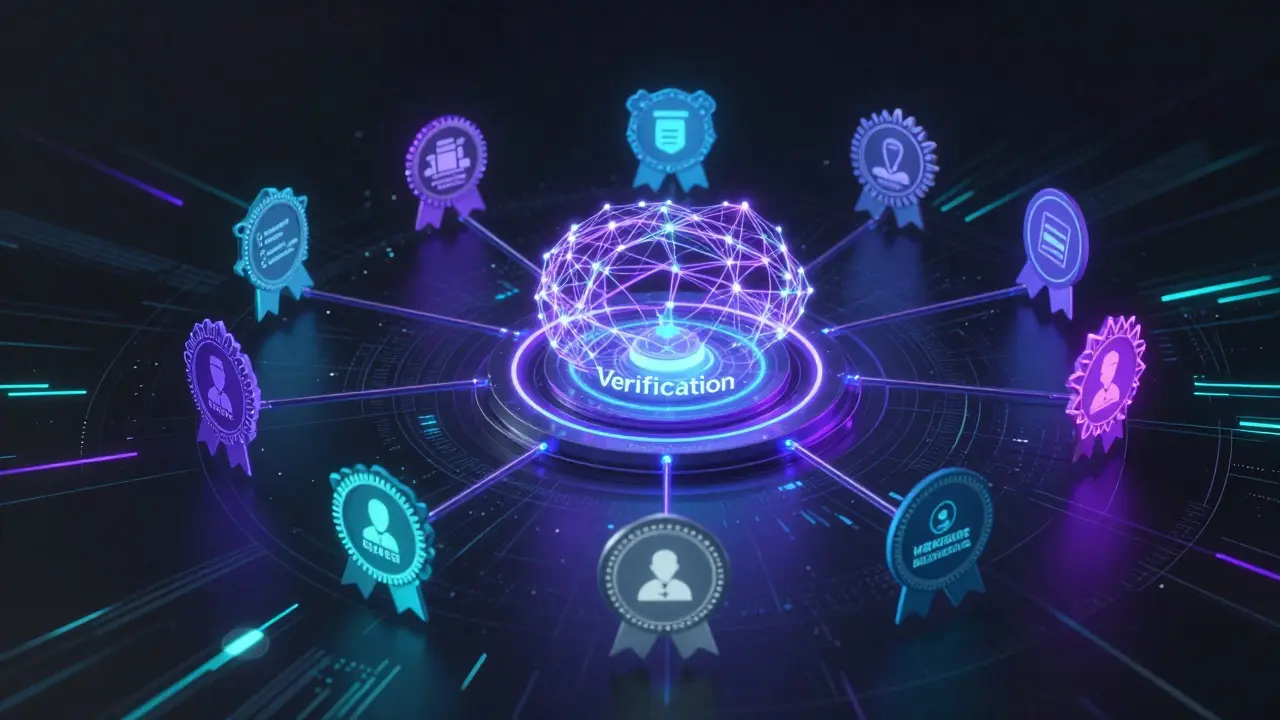
You might wonder why every company isn’t doing this already. The answer lies in standards. For years, different blockchains used different formats, making interoperability a nightmare. A credential issued on one platform couldn’t easily be read by another. That changed with the widespread adoption of W3C Verifiable Credentials (VCs). Developed by the World Wide Web Consortium, this standard provides a common language for issuing and verifying credentials across different blockchain networks and even off-chain systems.
In 2026, VCs have become the gold standard. Major universities, governments, and corporations now align their systems with these specifications. This means a nursing license issued by a state board can be verified by a hospital using a completely different software stack, as long as both support W3C VCs. Another critical component is Decentralized Identifiers (DIDs). DIDs allow individuals to create persistent identities that aren’t tied to a specific service provider like Google or Facebook. You control your DID, and you link your credentials to it. This combination of VCs and DIDs creates a robust framework for Self-Sovereign Identity (SSI), giving users full ownership of their digital profiles.
Real-World Applications Beyond Universities
While higher education was the early adopter, the use cases for blockchain credentialing have exploded. Healthcare is a prime example. Nurses and doctors need to keep their licenses and certifications current. Previously, updating a central registry was a logistical headache. Now, hospitals can instantly verify a nurse’s CPR certification or specialized training via a blockchain app on their phone. This speeds up hiring during emergencies and ensures patient safety.
The corporate world is also jumping in. Professional certifications in IT, project management, and finance are increasingly being issued as digital badges on blockchains. Companies like Microsoft and IBM have integrated blockchain verification into their HR processes. They don’t just want to know if you have a PMP certification; they want to know it’s valid right now, without calling PMI to check. This efficiency gains are massive for large enterprises dealing with thousands of employees.
Even the military is exploring this space. Service members accumulate complex records of training, deployments, and skills. Translating these into civilian job qualifications is often difficult. Blockchain can provide a portable, verified record of these experiences that employers can trust, smoothing the transition from military to civilian life.
Challenges and Barriers to Entry
Despite the hype, hurdles remain. One major issue is user experience. For the average person, managing private keys and digital wallets can be intimidating. If you lose your key, you might lose access to your credentials forever. While recovery methods are improving, the technology still needs to be invisible to the end-user to achieve mass adoption. We’re seeing progress here with biometric authentication and social recovery options, but it’s not perfect yet.
Privacy is another concern. Although blockchain is secure, it’s also transparent. If sensitive data is written directly to the public ledger, it’s there forever. Most modern systems avoid this by storing only hashes on-chain and keeping personal data off-chain in encrypted wallets. However, ensuring that no metadata leaks information requires careful design. Regulations like GDPR in Europe and various privacy laws in Asia add another layer of complexity, as they include a "right to be forgotten" which clashes with the immutable nature of blockchain. Solutions involving zero-knowledge proofs are emerging to address this, allowing verification without revealing underlying data.
| Feature | Traditional System | Blockchain-Based System |
|---|---|---|
| Verification Time | Days to Weeks | Seconds to Minutes |
| Cost per Verification | $10 - $50+ | Near Zero |
| Data Ownership | Institution Holds Data | User Holds Data |
| Fraud Resistance | Low (Paper can be forged) | High (Cryptographically Secured) |
| Portability | Low (Requires re-application) | High (Universal Standard) |
The Role of Governments and Policy
Government involvement is crucial for scaling these systems. In 2026, several countries have launched national digital identity frameworks built on blockchain principles. Estonia has been a pioneer, but newer entrants like Singapore and Canada are making significant strides. These national systems often serve as anchors for educational and professional credentials. If your government ID is on the blockchain, linking your educational credentials to it becomes seamless.
Policymakers are also working on legal recognition. A digital signature on a blockchain needs to hold up in court. Most jurisdictions are updating their laws to recognize electronic signatures and digital records as legally binding. This legal clarity gives businesses the confidence to rely on blockchain-verified credentials for high-stakes decisions like hiring or licensing.
Future Trends: What to Expect Next
Looking ahead, the integration of Artificial Intelligence with blockchain credentialing will be a game-changer. AI can analyze the skills represented by your credentials and match them to job openings automatically. Imagine applying for a job and the AI instantly verifying your entire skill set, including micro-credentials from online courses, and ranking you based on precise competency matches rather than just keywords on a resume.
We’ll also see the rise of lifelong learning portfolios. Education is no longer confined to four-year degrees. Micro-credentials, bootcamps, and self-paced online courses are becoming valuable assets. Blockchain allows these smaller achievements to be aggregated into a comprehensive, verifiable profile. This empowers workers to demonstrate continuous growth and adaptability, which is highly valued in today’s fast-changing economy.
Interoperability will deepen. Currently, some silos exist between different industries. In the coming years, we expect universal protocols that allow a credential from a coding bootcamp to be understood by a tech giant, a healthcare provider, and a financial institution equally well. This cross-industry compatibility will reduce friction in the global labor market.
Conclusion: Embracing the New Normal
The future of credentialing is decentralized, secure, and user-centric. Blockchain isn’t just a buzzword; it’s a practical solution to real-world inefficiencies. For students, professionals, and employers, adopting these systems means saving time, reducing costs, and increasing trust. While challenges around usability and privacy persist, rapid innovation is addressing them. As standards mature and regulations catch up, blockchain-based credentialing will likely become the default way we prove our qualifications. The question isn’t whether it will happen, but how quickly you’ll adapt to it.
Is blockchain credentialing secure?
Yes, it is highly secure. Blockchain uses cryptography to ensure that once a credential is issued, it cannot be altered or forged. The data is distributed across many nodes, so there is no single point of failure. Additionally, users control access to their credentials via private keys, adding another layer of security.
Can I transfer my blockchain credentials to another platform?
Generally, yes. Because most modern systems use W3C Verifiable Credentials standards, your credentials are portable. You can export them from one wallet or platform and import them into another, provided both support the same standards. This prevents vendor lock-in and gives you freedom over your data.
What happens if I lose my private key?
Losing your private key can mean losing access to your credentials. However, many modern wallet solutions offer recovery options, such as social recovery (where trusted contacts help you regain access) or biometric backups. It is crucial to follow best practices for key management, such as using hardware wallets or reputable custodial services.
Do employers accept blockchain-verified credentials?
Increasingly, yes. Many large corporations, government agencies, and healthcare providers have adopted verification tools that read blockchain credentials. As the technology matures and legal frameworks solidify, acceptance is growing rapidly. It is becoming a competitive advantage for candidates to have verifiable digital credentials.
How does blockchain protect my privacy?
Blockchain protects privacy by allowing selective disclosure. You can share only the specific information needed for a transaction, such as proving you are over 18 without revealing your exact birthdate. Furthermore, personal data is often stored off-chain, with only a cryptographic hash on the blockchain, ensuring that sensitive details are not publicly visible.