

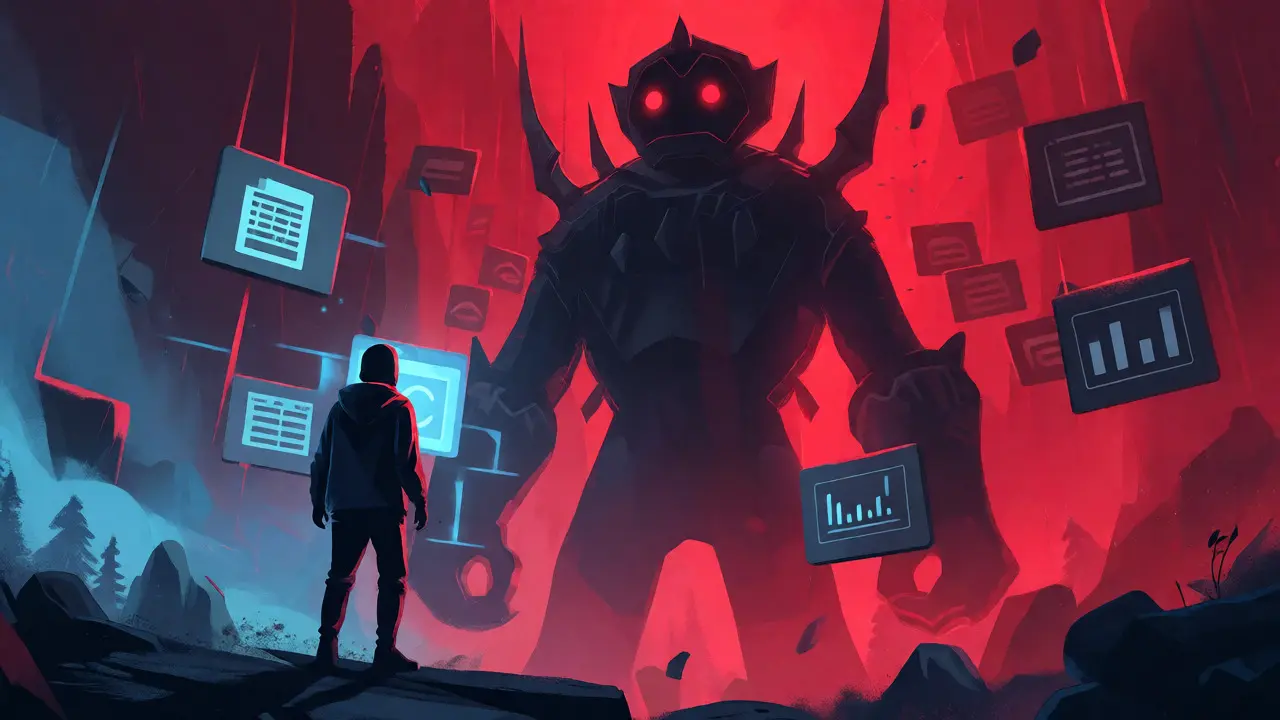
You know that feeling when you’ve been grinding through levels for hours, collecting items, and following tutorials, but nothing really sticks? Then you hit a wall. A massive, intimidating obstacle appears on the screen. Your heart rate spikes. You’re not just clicking buttons anymore; you’re strategizing, failing, trying again, and finally breaking through. That moment isn’t just about winning-it’s about proving to yourself that you learned something. In gamification, these moments are called boss battles and capstones. They are the critical junctures where passive consumption turns into active mastery.
Most gamified systems fail because they treat challenges as mere interruptions or arbitrary hurdles. They slap a "Level 5 Boss" label on a quiz that feels exactly like Level 4. But true design treats these moments as narrative and mechanical climaxes. Whether you are building an employee onboarding program, a customer loyalty app, or a university course, understanding how to structure these high-stakes interactions separates toy-like engagement from genuine behavioral change. Here is how you build challenges that actually mean something.
Why Standard Challenges Fail to Engage
Think about the last time you quit a mobile game or abandoned an online course. It probably wasn’t because it was too hard. It was likely because the difficulty felt disconnected from your progress. When a challenge doesn’t reflect the skills you’ve just acquired, it breaks the flow state. This is known as the "dissonance of effort." If I spent three weeks learning how to use pivot tables in Excel, and my next test asks me to define what a spreadsheet is, I feel cheated. The challenge didn’t respect my time or my new capability.
In educational and corporate contexts, this failure often stems from a lack of clear feedback loops. Traditional assessments are binary: pass or fail. But in well-designed games, failure is informative. You lose health, you see which attack pattern killed you, and you adjust. If your gamified system only says "Try Again," without indicating *why* the attempt failed, the user disengages. The goal of a boss battle isn’t to punish the player for forgetting a fact; it’s to highlight a gap in their strategic application of knowledge.
Consider the difference between a standard multiple-choice quiz and a simulation-based challenge. The former tests recall. The latter tests judgment. In a sales training module, asking "What is the price of Product X?" is low-value. Asking "The client objects to the price based on competitor Y's feature set-how do you respond within 30 seconds?" creates tension. That tension is where learning happens. We need to move away from checking boxes and toward testing resilience and adaptability under pressure.
The Anatomy of a Meaningful Boss Battle
A boss battle is a high-difficulty encounter that requires the synthesis of multiple previously learned skills rather than the repetition of a single mechanic. In video games, bosses have phases. Phase one might be easy, letting you get comfortable. Phase two introduces a new threat that forces you to adapt. Phase three combines both threats. This structure mirrors how complex skills are actually mastered in real life. You don’t learn to drive by only steering; you learn by steering while braking, checking mirrors, and watching pedestrians simultaneously.
To design a boss battle that works, you must identify the "Core Loop" of your system. What are the three to five primary actions users take repeatedly? Let’s say you’re designing a coding bootcamp. The core loop involves reading documentation, writing code, and debugging errors. A bad boss battle would ask them to write a function from memory. A good boss battle presents a broken legacy codebase with no comments. They must read (skill 1), identify the bug (skill 2), and rewrite the logic (skill 3) against a ticking clock. The stress comes from the combination, not just the individual parts.
| Feature | Standard Quiz | Boss Battle | Capstone Project |
|---|---|---|---|
| Primary Goal | Recall facts | Synthesize skills | Create new value |
| Failure Consequence | Retry immediately | Analyze error & retry | Iterate on prototype |
| Duration | Minutes | 15-60 Minutes | Days-Weeks |
| User Emotion | Neutral/Stress-free | Tension/Achievement | Pride/Owningship |
| Feedback Type | Correct/Incorrect | Performance Metrics | Peer/Mentor Review |
This table highlights why replacing all quizzes with boss battles is a mistake. Quizzes are necessary for foundational retention. But once users grasp the basics, you need to escalate the cognitive load. Boss battles should appear at natural narrative breakpoints-after completing a major module or reaching a specific rank. They serve as gates. You cannot proceed to the next tier until you prove you can handle the current complexity. This gating mechanism prevents skill decay and ensures that advanced content isn’t introduced before the foundation is solid.
Designing the Capstone: From Player to Creator
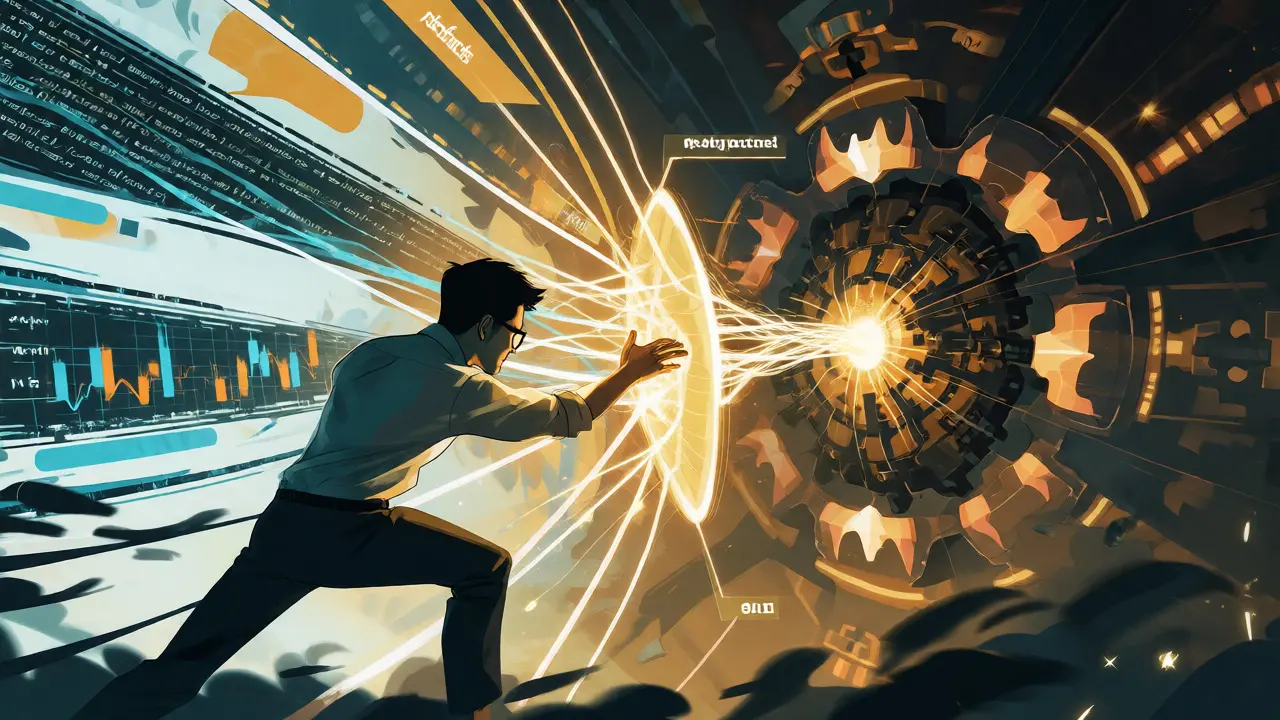
If boss battles test your ability to play the game, capstones are open-ended final projects that allow users to apply their accumulated skills to create something unique. Think of a capstone not as a test, but as a launchpad. In a language learning app, a boss battle might be a timed conversation with an AI character. The capstone, however, could be recording a short podcast episode in the target language explaining a hobby. There is no single right answer. The user chooses the topic, the tone, and the structure.
The power of the capstone lies in autonomy. Self-Determination Theory suggests that autonomy, competence, and relatedness are key drivers of intrinsic motivation. Boss battles provide competence (you beat it, so you are capable). Capstones provide autonomy (you chose how to demonstrate it). When users create something, they invest more emotionally in the outcome. They aren’t just earning points; they are building a portfolio piece. For professionals, this is crucial. An employee who completes a capstone project on "Improving Customer Retention" has a tangible artifact to show their manager. The gamification element here isn’t just the badge; it’s the professional capital earned.
However, capstones require careful scaffolding. If you throw users into an open-ended task without guidance, they suffer from choice paralysis. Provide constraints. Instead of "Write a marketing plan," try "Create a 3-step email campaign for our new product targeting Gen Z, using only templates we provided." Constraints breed creativity. They narrow the search space so the user can focus on execution rather than ideation. Also, ensure there is a social component. Capstones should be shared, reviewed, or voted on by peers. This adds a layer of accountability and community validation that solitary tasks lack.
Implementing Feedback Loops That Drive Iteration
How do you keep users engaged during these high-stakes moments? The secret is granular feedback. In a poorly designed system, you submit your capstone and wait three days for a grade. By then, the emotional connection to the work has faded. In a well-designed system, feedback is immediate and actionable. Did your boss battle fail because you ran out of time? Show a timer visualization. Did it fail because your strategy was flawed? Highlight the specific decision point that caused the collapse.
Use visual cues to indicate progress within the challenge itself. Health bars, combo counters, or accuracy percentages give users a sense of agency even when they are struggling. If a user sees their accuracy dropping in real-time, they can self-correct before the challenge ends. This transforms failure from a dead end into a data point. "I’m losing health because I’m ignoring defense," becomes a realization, not just a loss.
Furthermore, consider the concept of "asymmetric rewards." Not every success should yield the same reward. Defeating a boss might grant a cosmetic item (a badge, a title), while completing a capstone might unlock a functional advantage (access to premium tools, mentorship sessions). This distinction reinforces the hierarchy of achievements. Cosmetic rewards satisfy the desire for status; functional rewards satisfy the desire for utility. Balancing these keeps long-term players motivated. They aren’t just chasing dopamine hits; they are chasing tangible benefits that improve their experience or career prospects.

Pitfalls to Avoid in Challenge Design
One common trap is the "Difficulty Spike." Developers often underestimate how hard a challenge will be for a novice. A boss battle that requires pixel-perfect timing might frustrate a casual user who just wants to learn the history lesson embedded in the game. Always offer difficulty modes. Allow users to choose between "Story Mode" (forgiving, focuses on narrative) and "Hardcore Mode" (strict, focuses on mastery). This respects different user intents. Some people want to relax; others want to sweat. Both deserve a path forward.
Another pitfall is neglecting the "Cool Down" period. After a major boss battle or capstone submission, users need a breather. Don’t immediately throw them into another intense challenge. Offer lighter activities-collecting resources, customizing profiles, or exploring lore. This allows the brain to consolidate the learning from the previous peak experience. Constant intensity leads to burnout. Rhythm is essential. Build peaks and valleys into your user journey map.
Finally, avoid making challenges purely punitive. If failing a boss battle resets all progress, users will quit. Instead, implement soft penalties. Maybe you lose some currency, or you have to watch a short tutorial clip before retrying. The cost of failure should be low enough to encourage persistence but high enough to maintain stakes. The goal is to keep them in the game, not to kick them out.
Practical Checklist for Designers
- Identify Core Skills: List the top 3-5 competencies your system teaches. Ensure every boss battle tests at least two of them simultaneously.
- Define Failure States: What does "losing" look like? Is it running out of time, making a wrong choice, or producing low-quality output? Make it visible.
- Provide Scaffolding: Before a capstone, offer templates, examples, or checklists. Reduce cognitive load so creativity can flourish.
- Enable Social Proof: Let users see how others approached the challenge. Leaderboards for speed, galleries for creative solutions.
- Test for Flow: Playtest your challenges. Do they feel fair? If testers complain it’s "unfair" rather than "hard," adjust the mechanics, not the difficulty number.
Designing meaningful challenge moments isn’t about adding complexity for the sake of it. It’s about respecting the user’s intelligence and time. When you craft a boss battle that demands synthesis, or a capstone that invites creation, you transform a transactional interaction into a transformational experience. Users leave not just with points, but with proof of their growth. And that is the ultimate win condition in any gamified system.
What is the main difference between a boss battle and a regular level?
A regular level typically tests a single skill or mechanic in isolation. A boss battle requires the simultaneous application of multiple skills learned throughout the previous sections. It also usually features higher stakes, distinct phases, and a greater demand for strategic thinking rather than just reflexes or recall.
How do I prevent users from getting frustrated with difficult challenges?
Provide clear feedback on why they failed, offer optional hints or scaffolding, and include difficulty settings. Ensure the cost of failure is low (e.g., quick retries) so users feel safe experimenting. Visual indicators of progress within the challenge also help reduce anxiety.
Can capstone projects be automated in large groups?
Yes, but it requires structured rubrics and peer-review systems. Use algorithms to check for completion criteria (word count, required elements) and facilitate peer voting or mentor spot-checks for quality. Automation handles the logistics; humans handle the nuance.
Do boss battles always need to be time-limited?
No. Time limits add pressure, which suits action-oriented or reflex-based skills. For analytical or creative skills, resource limits (e.g., limited moves, budget, or attempts) or quality thresholds are often more appropriate and less frustrating.
How often should I include a boss battle in my curriculum?
Typically after every major module or learning unit. This creates a rhythmic structure of learning-practice-testing. Too frequent causes fatigue; too infrequent risks skill decay. Aim for a cadence that aligns with natural content boundaries.