


Most designers think branding is something clients hand to them-logo, colors, fonts. But real brand strategy? That’s yours to build. It starts long before the first mockup. It’s about who you are, what you stand for, and how you show up consistently. If you’re a designer who wants to attract the right clients, charge what you’re worth, and stop feeling like a freelancer drowning in busywork, your brand strategy is the missing piece.
Discovery: Know Yourself Before You Sell Yourself
You can’t build a brand for others if you don’t know your own. Too many designers skip discovery and jump straight into visuals. That’s like painting a house before laying the foundation. Your brand starts with questions no client asks:
- What kind of work makes you lose track of time?
- Which clients do you love working with-and which drain you?
- What’s one thing you wish more clients understood about design?
These aren’t fluffy exercises. They’re the raw material of your brand. One graphic designer I know realized she only felt energized when working with eco-conscious startups. That led her to pivot her portfolio, rewrite her website copy, and start saying "I help sustainable brands communicate with clarity"-not "I do logos and websites." Within six months, her inbound inquiries doubled, and her average project fee went up 40%.
Discovery isn’t a one-time workshop. It’s an ongoing practice. Keep a journal. Note which projects made you proud. Track which clients paid on time and gave you creative freedom. Over time, patterns emerge. That’s your sweet spot.
Voice: How You Sound When You’re Not Speaking
Your brand voice isn’t about being funny or formal. It’s about consistency. It’s the tone you use in emails, Instagram captions, client proposals, and even your auto-responder. If your website says "Let’s create something amazing" but your emails sound like a legal document, people get confused. And confusion kills trust.
Start by listing three adjectives that describe how you want people to feel when they interact with you. For example: calm, clear, confident. Now, write a sample email using those words as your guide. Then write another one using the opposite tone-sloppy, overly casual, or robotic. Compare them. Which one feels like you? That’s your voice.
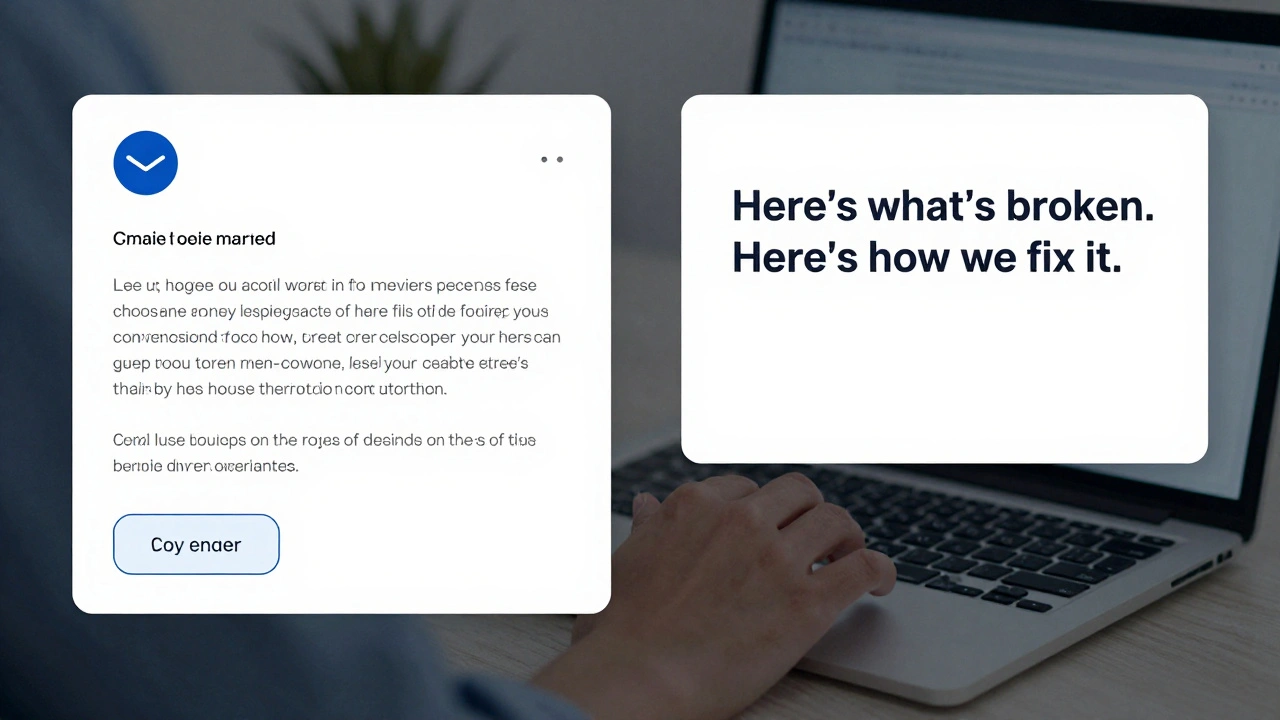
Real designers don’t copy other people’s voices. They refine their own. A UX designer in Portland uses short, direct sentences because his clients are time-crunched engineers. He doesn’t use buzzwords like "synergy" or "leverage." He says, "Here’s what’s broken. Here’s how we fix it. Here’s the timeline." That’s his voice. And it works.
Your voice should show up everywhere:
- Website headlines
- Project case studies
- LinkedIn posts
- Client onboarding docs
- Even your invoice notes
One designer I worked with changed her invoice footer from "Thank you for your business" to "Thanks for letting me solve this problem with you." The difference? One is transactional. The other is relational. Clients noticed. They started referring her.
Systems: The Hidden Engine of Your Brand
Most designers think systems are boring. Spreadsheets, templates, checklists-yawn. But here’s the truth: your systems are what free you. Without them, you’re stuck doing the same thing over and over. With them, you scale without burning out.
Your brand systems are the repeatable processes that make your work consistent, efficient, and professional. They include:
- Client onboarding checklist
- Project timeline template
- Style guide for your own work (fonts, colors, spacing rules)
- Portfolio presentation format
- Follow-up email sequence after a project ends
One illustrator built a simple system: after every project, she sends a one-page PDF called "What We Learned Together." It includes a quick summary of the project, a few key insights, and a personal note. Clients keep it. Some print it and hang it on their walls. It’s not marketing. It’s memory-making. And it turns one-time clients into lifelong ones.
Your systems don’t need to be fancy. They just need to be documented. Use Notion, Google Docs, or even a physical notebook. But write them down. If you can’t explain how you do something in five minutes, you’re doing it manually-and you’re limiting your growth.
And here’s the secret: clients don’t see your systems. But they feel the result. When your proposals arrive on time, your deadlines are met, your deliverables are polished, and your communication is clear-they assume you’re professional. They don’t know you spent three hours building a checklist to make that happen. But they’ll pay more for it.
How Discovery, Voice, and Systems Work Together
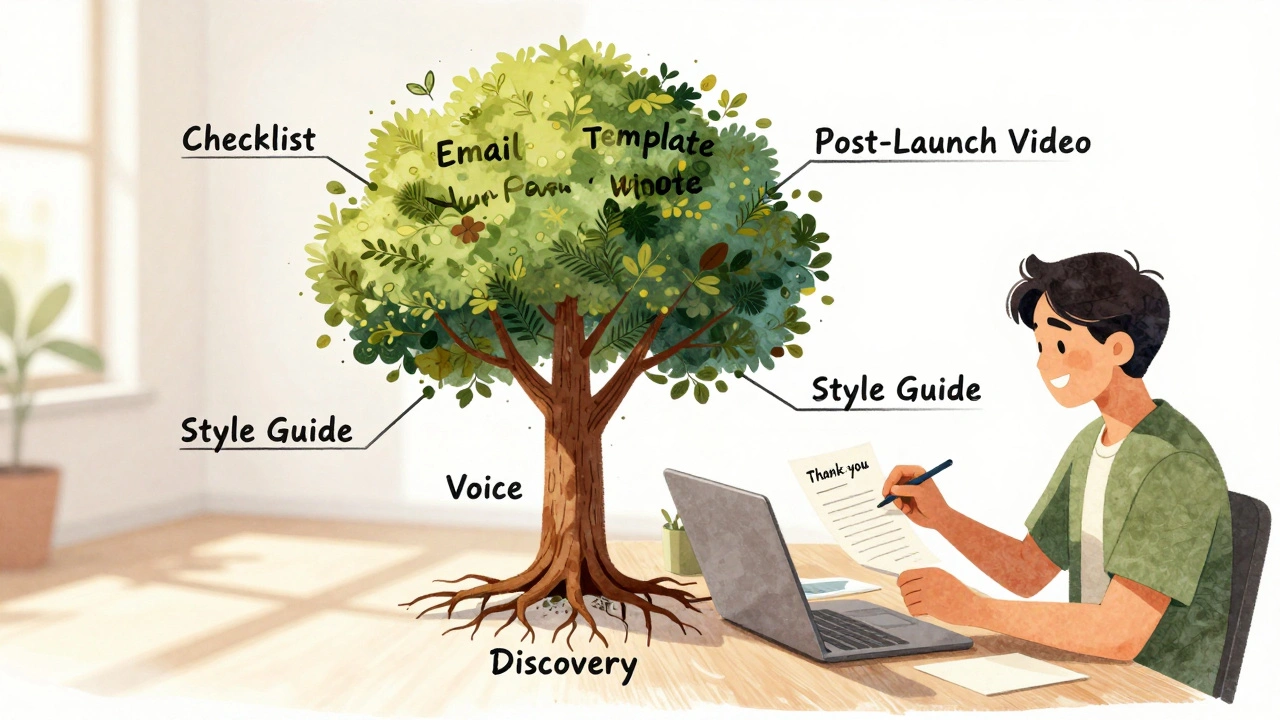
Think of your brand like a tree. Discovery is the roots. Voice is the trunk. Systems are the branches and leaves.
Without roots (discovery), you’re unstable. You chase trends. You take bad clients. You feel lost.
Without a trunk (voice), you’re inconsistent. One day you’re witty, the next you’re corporate. Clients don’t know who you are.
Without branches (systems), you collapse under your own weight. You work late. You miss deadlines. You get resentful.
When all three are aligned, your brand becomes magnetic. You stop selling. You attract. You stop explaining why you charge what you do. Clients just get it.
A web designer in Austin built his entire brand around this. He discovered he loved helping local restaurants with their online presence. His voice? Friendly, no-jargon, and a little playful. His systems? A fixed 6-week process with 3 check-ins and a post-launch video walkthrough. He doesn’t pitch. He posts case studies. He doesn’t negotiate. He has a clear pricing page. His clients come to him. And he’s been booked out six months in advance for two years.
Start Small. Build One Piece at a Time.
You don’t need to overhaul your entire brand this week. Pick one area to start:
- Write down your top three ideal client traits. Be specific: "A vegan bakery owner in Seattle who wants to stand out from chain cafés," not "small businesses."
- Revise one piece of your website copy to match your true voice. Replace corporate phrases with real language.
- Create one system: a project checklist, an email template, or a file-naming convention. Do it once. Then reuse it.
Do that for 30 days. Then repeat. Your brand isn’t built in a day. It’s built in small, intentional choices. The more consistent you are, the more people will recognize you-not just for your work, but for who you are.
What Happens When You Get It Right?
You stop feeling like a commodity. You stop competing on price. You stop saying yes to everything. You start saying no-with confidence.
You get clients who respect your time. Who read your emails. Who ask for your opinion. Who refer you without being asked.
You sleep better. You work less. You earn more.
That’s not magic. That’s brand strategy.
Do I need a logo to have a brand strategy?
No. A logo is just one visual element. Your brand strategy is about your values, voice, and systems. Many successful designers work for years without a logo and still attract ideal clients by being clear, consistent, and reliable. Focus on how you communicate and deliver before you worry about the shape of your icon.
Can I use my personal brand as my design brand?
Yes-and many top designers do. Your personal brand and design brand can be the same thing, especially if you’re a solo practitioner. People hire you for your perspective, not your company name. But be intentional: if you’re using your name, make sure your online presence reflects your professional values. A messy Instagram feed or unprofessional LinkedIn posts will hurt your credibility, no matter how good your work is.
How do I know if my brand voice is working?
Look at your client feedback. Are people saying things like, "I loved how you explained everything" or "You made me feel understood"? That’s your voice resonating. Also track your conversion rate: if more people are reaching out after reading your website or social posts, your voice is connecting. If clients still ask, "Why should I choose you?" your voice isn’t clear enough yet.
What if I change my style or focus over time?
That’s normal. Your brand should evolve as you do. But don’t flip-flop. If you shift from branding for restaurants to working with SaaS startups, don’t just change your logo. Revisit your discovery: why the shift? What’s new about your values? Update your voice and systems to match. Your audience will follow you if you’re authentic, not if you’re inconsistent.
Should I hire a brand strategist?
Not unless you’re stuck. Most designers can build their own brand strategy with time and reflection. Start with the discovery questions, write your voice guidelines, and build one system. If you’re overwhelmed or unsure after 30 days, then consider help. But don’t outsource your self-awareness. Your brand only works if it’s truly yours.
Comments
Daniel Kennedy
Bro, I used to be the guy who thought branding was just logos and color palettes until I read this. I started asking myself those discovery questions-turns out I only light up when working with indie coffee roasters. Now I say 'I help small-batch coffee brands look as good as their beans taste' and my DMs are blowing up. No more $20/hour gigs. This shit works.
Taylor Hayes
Love this breakdown. The voice part hit me hard-I realized my emails sounded like a corporate bot while my Instagram was all memes and emojis. I rewrote my onboarding email using 'calm, clear, confident' as my guide and got my first 'you get me' reply from a client. That’s the moment I knew I was on the right track.
Sanjay Mittal
Very practical. In India, many designers still think branding is about making things look 'pretty'. But consistency in voice and systems? That’s what builds trust. I’ve started documenting my workflows in Notion-simple stuff like file naming and feedback templates. Clients notice. They don’t say it, but they come back.
Mike Zhong
Let’s be real-this is just corporate fluff dressed up as wisdom. 'Discovery'? 'Voice'? 'Systems'? You’re selling the same old bullshit to designers who think they’re artists but are really just freelancers scared of business. Real branding isn’t about journaling. It’s about delivering results. If your client doesn’t care about your 'roots and trunk', they won’t pay you more. Stop overcomplicating.
Jamie Roman
I’ve been doing this for 12 years and I wish someone had told me this sooner. I used to work 80-hour weeks because I had no systems. I’d rebuild the same email template every time, reformat every portfolio case study from scratch, and then wonder why I burned out. Last year I built a Notion hub with my onboarding checklist, style guide, and follow-up sequence. Now I work 40 hours, take Fridays off, and my rates are 3x what they were. It’s not magic. It’s structure. Do the work. Write it down. Repeat.
Salomi Cummingham
Oh my god. I cried reading the part about the invoice footer. I changed mine from 'Thank you for your business' to 'Thanks for letting me solve this problem with you'-and my client sent me a handwritten note saying 'I feel like we’re partners now.' I didn’t even know that tiny phrase could do that. I’ve started applying it to every client touchpoint. My whole business feels more human now. Thank you for saying what so many of us feel but don’t know how to name.
Johnathan Rhyne
Ugh. 'Discovery' isn't a word you get to use unless you're a therapist or a pretentious yoga instructor. And 'voice'? You mean tone? And 'systems'? You mean 'stop being lazy and use templates'? This whole post reads like a TED Talk written by someone who’s never actually delivered a client project on time. Also, 'I help sustainable brands communicate with clarity'-who the hell talks like that? Say it like a normal person: 'I design for eco startups.' Done. Stop overthinking. Just do the work.
Nathan Jimerson
This is exactly what I needed. I was stuck doing random gigs-logos for pet stores, flyers for dentists, websites for crypto bros. I didn’t realize I was draining myself until I started tracking which projects made me proud. Turns out, I love working with local farmers markets. Now I’ve narrowed my focus and my life is better. No more stress. Just good work with good people. Thank you.
Sandy Pan
I used to think my brand was my aesthetic-minimalist, neutral tones, clean lines. But after reading this, I realized I was hiding behind aesthetics to avoid being vulnerable. My real brand is about helping people who feel invisible in their industries-single moms running small businesses, disabled creators, older entrepreneurs. That’s my discovery. My voice? Warm, unapologetic, gently defiant. My system? A 10-minute video I send after every project where I say one thing I learned from them. It’s not polished. It’s real. And clients cry when they get it. That’s the magic.
Eric Etienne
Wow. Another ‘branding guru’ telling designers how to feel better about being underpaid. Congrats, you wrote a 2000-word essay on ‘be yourself’ and charged people to read it. Newsflash: your ‘voice’ doesn’t matter if your work sucks. Stop trying to be a therapist. Just deliver better designs and charge more. That’s the only brand strategy that works.
Dylan Rodriquez
I’ve been a designer for 15 years and I’ve seen this cycle repeat. First, everyone’s obsessed with logos. Then it’s ‘personal branding.’ Then it’s ‘voice.’ Now it’s ‘systems.’ The truth? It’s all the same thing: clarity. When you know who you are, how you speak, and how you operate-you stop chasing clients and they start chasing you. It’s not about being trendy. It’s about being consistent. And consistency is the rarest thing in design right now.
Yashwanth Gouravajjula
Simple. Clear. True. In India, designers waste years trying to look ‘global’ instead of being themselves. This is the opposite of that. Just know your why, say it plainly, and systemize the rest. Done.
Kevin Hagerty
Ugh. I read this whole thing and all I saw was a bunch of fluff wrapped in corporate jargon. 'Discovery'? 'Voice'? 'Systems'? What happened to just doing good work? Also, 'I help sustainable brands communicate with clarity'-that’s not a voice, that’s a LinkedIn buzzword bingo card. And who the hell writes 'thank you for your business' on an invoice? That’s not your voice, that’s your grandma’s greeting card.
Janiss McCamish
Changed my website headline from 'Professional Graphic Designer' to 'I design for eco-brands who hate fluff.' Got 3 new clients in 48 hours. No fluff. No jargon. Just clarity. This isn’t theory-it’s practice. Do the thing.
Pamela Tanner
One small typo in the post: 'your brand strategy is the missing piece' should be 'your brand strategy is the missing piece.' Minor, but it matters when you’re trying to build credibility. Otherwise, this is excellent. The voice section alone should be required reading for every designer. Your tone isn’t a style-it’s a promise. Honor it.