


Most online educators start with a single goal: sell a course. They record videos, upload them to a platform, and wait for the money to roll in. But here is the harsh reality that keeps most creators awake at night-their income is a rollercoaster. One month they make thousands from a launch; the next, they make nothing because they stopped marketing. If you want to build a sustainable online learning business, you need to stop thinking like a merchant and start thinking like a utility provider. You are not just selling information; you are selling access, community, and ongoing support.
The difference between a hobbyist side-hustle and a long-term asset lies in your monetization architecture. In 2026, the market is saturated with free content. YouTube, AI summaries, and open-source communities give away the 'what' and the 'how.' Your value proposition must shift to the 'who' and the 'when.' Who is guiding the student through the chaos? When do they get help when they are stuck? This shift requires a fundamental change in how you structure your revenue streams.
Moving Beyond the One-Time Sale
The traditional model of selling a static video course for a fixed price-say, $97 or $197-is dying. Why? Because it forces you to constantly find new customers to maintain the same income level. It is a treadmill. Every time you want to buy a new laptop or pay rent, you have to run back to social media and beg for attention. This creates burnout. It also devalues your expertise. If you solve a problem once, why would someone pay again?
To break this cycle, you need to introduce recurring revenue. Recurring revenue stabilizes your cash flow. It allows you to predict your income three months out, which gives you the confidence to hire staff, upgrade technology, or take a vacation without worrying about whether the next launch will hit. The key is to offer something that evolves over time. A static video does not evolve. A curriculum that updates with industry trends, a community that grows more valuable as more experts join, or a coaching group that provides monthly feedback-these things demand a recurring fee.
Consider the concept of "lifetime value" (LTV). In a one-time sale model, your LTV is capped at the purchase price. In a subscription model, your LTV can be ten or twenty times higher if you retain students for a year or more. Even if your monthly fee is lower than your original course price, the total revenue per customer is significantly higher. For example, a $29/month membership retained for two years generates $696 per user. That is a massive increase in value compared to a single $197 sale, and it often comes with lower churn rates because students feel invested in their progress.
The Power of Tiered Pricing Structures
You cannot charge everyone the same price. Your audience has different budgets, different urgency levels, and different needs. A flat-rate pricing model leaves money on the table from high-value clients while alienating budget-conscious learners. The solution is a tiered pricing structure, often referred to as a "value ladder." This approach guides users from low-commitment interactions to high-ticket investments.
Start with a low-barrier entry point. This could be a free newsletter, a low-cost webinar, or a mini-course priced under $50. The goal here is not profit; it is trust. You need to prove that you can deliver results before asking for a large sum of money. Once a student experiences success with your low-tier offer, they are psychologically primed to buy more. This is where the middle tier comes in. This might be your core self-paced course or a quarterly cohort-based program. It solves the primary problem your audience faces.
The top tier is for those who want speed, personalization, or accountability. This is where you offer high-ticket masterminds, 1-on-1 consulting, or done-for-you services. By structuring your business this way, you capture value at every stage of the buyer's journey. You don't lose the person who can only afford $49, and you don't leave money on the table from the entrepreneur who can afford $5,000 for private access to you.
| Model | Revenue Stability | Customer Effort | Best For |
|---|---|---|---|
| One-Time Course | Low | High (Constant Marketing) | New creators testing ideas |
| Subscription/Membership | High | Medium (Retention Focus) | Communities & ongoing education |
| Cohort-Based Program | Medium | High (Live Teaching) | High completion rates & networking |
| Hybrid Model | Very High | Variable | Long-term sustainability |

Leveraging Cohort-Based Learning
If you struggle with the idea of creating endless content for a subscription, consider cohort-based courses. Unlike self-paced courses where students drop off after week two, cohort-based programs run on a schedule. Everyone starts together, learns together, and finishes together. This creates a sense of urgency and accountability that self-paced models lack.
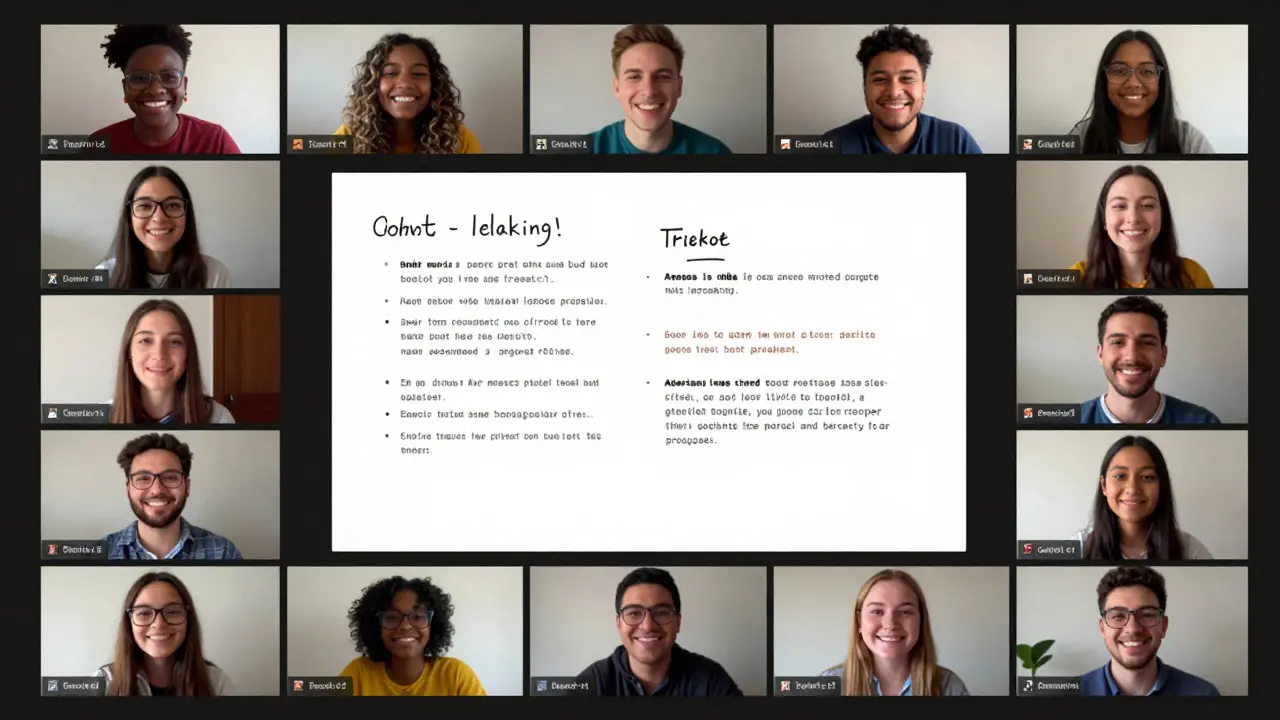
The beauty of this model is its scalability within limits. You cap the number of students per cohort to maintain quality, but you can run multiple cohorts throughout the year. This creates predictable bursts of revenue. More importantly, cohort-based programs command higher prices. Students are paying for the experience, the peer network, and the live interaction, not just the slides. In 2026, isolation is a major barrier to learning. People crave connection. By offering a structured environment with live Q&A sessions and peer collaboration tools, you provide an experience that AI cannot replicate.
Platforms like Mighty Networks is a community platform that enables creators to host paid memberships, courses, and events or Kajabi is an all-in-one marketing and sales platform for knowledge entrepreneurs have built features specifically to support this model. They allow you to manage cohorts, track attendance, and facilitate discussions seamlessly. The key is to design the curriculum so that it leverages the group dynamic. Assignments should require peer feedback. Projects should encourage collaboration. When students feel connected to each other, they are less likely to cancel their subscriptions or complain about the price.
Integrating Technology for Retention
Sustainability is not just about getting new customers; it is about keeping existing ones. Churn is the silent killer of online businesses. If you lose 10% of your subscribers every month, you need to replace them constantly just to stay flat. To reduce churn, you need to integrate technology that enhances the learning experience and reminds students of the value they are receiving.
Use email automation strategically. Do not just send promotional emails. Send value-driven sequences. Welcome new members with a series of lessons that guide them to their first quick win. Follow up with check-ins that ask for feedback. Use data analytics to identify students who are falling behind. If a student hasn't logged in for two weeks, trigger an automated email offering help or a reminder of what they are missing. Personalization at scale is possible with modern CRM tools.
Additionally, consider gamification. Badges, leaderboards, and streaks can motivate students to engage with your content regularly. While these tactics seem simple, they tap into basic human psychology. People want recognition. They want to see their progress. By making learning interactive and rewarding, you increase engagement, which directly correlates with retention. High engagement means students perceive higher value, which reduces price sensitivity and increases loyalty.
Diversifying Revenue Streams
Relying on a single source of income is risky. If your platform changes its algorithm, if your hosting provider raises prices, or if a competitor launches a cheaper alternative, your business could collapse overnight. Diversification protects you. It also allows you to reach different segments of your audience.
Beyond courses and memberships, consider affiliate marketing. Partner with tools you use and recommend. If you teach graphic design, partner with software companies. If you teach fitness, partner with supplement brands. This adds passive income without requiring additional effort from you. Another option is licensing your content. Sell your course curriculum to corporations for their employee training programs. B2B sales often come with larger contracts and longer terms than B2C sales.
You can also create digital products that complement your main offerings. E-books, templates, cheat sheets, and resource libraries can be sold as add-ons. These low-cost items increase the average order value and provide immediate value to students who want quick fixes. By building an ecosystem of products, you create multiple touchpoints for revenue. Each product serves a different purpose and appeals to a different budget, ensuring that no potential customer slips through the cracks.
Focusing on Community as a Moat
In the age of AI, information is cheap. Access is free. Your competitive advantage is not your content; it is your community. A strong community acts as a moat around your business. Competitors can copy your curriculum, but they cannot copy the relationships your students have formed with each other and with you.
Invest time in moderating your community. Encourage discussions. Host live events. Feature student success stories. When students feel seen and heard, they become advocates for your brand. They refer friends, they leave positive reviews, and they stick around even when better-priced options appear. Building this culture takes time, but it pays dividends for years. It transforms your business from a transactional exchange into a relational partnership.
Remember, sustainability is not about working harder; it is about working smarter. It is about building systems that generate value consistently, retaining customers through exceptional experiences, and diversifying your income sources to mitigate risk. By shifting your focus from selling courses to building a thriving learning ecosystem, you create a business that can withstand market fluctuations and grow steadily over time.
What is the best monetization model for a new online educator?
For new educators, starting with a low-cost one-time course or a mini-workshop is often best. It allows you to validate your topic and gather testimonials without significant upfront investment. Once you have proven demand, transition to a hybrid model that includes a subscription component for recurring revenue.
How do I prevent churn in my subscription-based learning business?
Prevent churn by focusing on retention strategies. Deliver consistent value, engage with students personally, and update your content regularly. Use email automation to re-engage inactive users and offer incentives for renewals. Building a strong community also increases loyalty and reduces the likelihood of cancellations.
Is cohort-based learning scalable?
Yes, but with limits. Cohort-based learning is less scalable than self-paced courses because it requires live facilitation. However, you can scale by running multiple cohorts simultaneously or hiring teaching assistants. The higher price point and completion rates often justify the increased effort.
What role does community play in a sustainable online business?
Community acts as a competitive moat. It fosters loyalty, encourages word-of-mouth referrals, and increases customer lifetime value. Students are less likely to leave a community where they have formed connections, making it a powerful tool for long-term sustainability.
How can I diversify my revenue streams beyond courses?
You can diversify by offering affiliate marketing partnerships, licensing your content to B2B clients, selling digital add-ons like templates or e-books, and providing high-ticket consulting or coaching services. Each stream targets different customer needs and budgets.
Comments
Anand Pandit
I really appreciate this shift in perspective. Most people think they just need to record a video and wait for the money, but that is not how it works anymore. The community aspect is what keeps me engaged with my current courses. When I feel connected to other learners, I am much more likely to stick around. It turns a solitary activity into a shared journey.
Sheetal Srivastava
This article is fundamentally flawed because it ignores the epistemological crisis of digital pedagogy. You are suggesting a commodification of human interaction which is inherently exploitative. The 'utility provider' model you describe is merely neoliberal capitalism dressed up in educational jargon. True learning cannot be subscription-based because knowledge should be free and accessible to all without paywalls or algorithmic retention strategies. Your focus on LTV is disgusting.
Reshma Jose
Look, I get the passion for free education, but let's be real here. Creators have bills too. If you want high-quality content and support, someone has to pay for it. The tiered pricing makes sense because not everyone can afford the top tier. I started with the cheap webinar and now I'm in the mastermind group. It works if you deliver value. Don't hate the player, hate the game.
ujjwal fouzdar
We are trapped in a matrix of our own making. The course is not the product; the anxiety is the product. We buy access to hope that we will become better versions of ourselves, but the void remains. Cohort-based learning is just a digital herd mentality. We gather together to pretend we are moving forward while standing still. Is there any true freedom in paying monthly fees for validation? Or are we just feeding the beast?
Shivam Mogha
The point about churn is valid.
mani kandan
It is quite fascinating how the landscape has shifted from static videos to dynamic ecosystems. One might argue that the 'value ladder' concept is simply a modern iteration of the ancient apprenticeship model, where one starts small and gradually gains deeper access to the master's wisdom. The use of AI summaries mentioned in the post is a double-edged sword. On one hand, it democratizes information. On the other, it devalues the curated experience. I find that the human touch in cohort programs is irreplaceable. It adds a layer of texture to the learning process that cold data cannot replicate. Perhaps we should view these platforms not as merchants, but as gardeners tending to a collective mind.
Bhavishya Kumar
The grammatical structure of your argument regarding recurring revenue is sound however you fail to address the semantic implications of 'utility provider'. Furthermore the table provided lacks proper citation sources. In addition the use of colloquialisms such as 'beg for attention' undermines the formal tone required for business discourse. You must also consider the syntactic ambiguity in the sentence about lifetime value. It is unclear whether the ten times higher refers to gross revenue or net profit. Please clarify these points before drawing conclusions.
rahul shrimali
Just build the thing and sell it. Stop overthinking the models. People want results not philosophy. If your product is good they will stay. If it sucks they leave. Simple as that. Focus on delivery.
Eka Prabha
This is clearly a coordinated effort by big tech to monetize every second of our lives. They claim it is about 'community' but it is really about data harvesting. The 'gamification' tactics are psychological manipulation designed to keep us addicted to their platforms. I refuse to participate in this dystopian surveillance state. Real education happens in libraries and public spaces not behind paywalls controlled by algorithms. Do not fall for this corporate propaganda.
Rahul Borole
It is imperative that educators recognize the strategic importance of diversification. Relying on a single revenue stream is akin to walking a tightrope without a safety net. The hybrid model offers robust stability. By integrating affiliate marketing and B2B licensing one can mitigate risks associated with platform dependency. Furthermore the emphasis on community building is not merely a soft skill but a hard economic asset. High retention rates directly correlate with increased profitability. Therefore one must approach online education with rigorous planning and disciplined execution. Success is not accidental it is engineered through systematic optimization of value delivery.