


Cohort-based courses aren’t just another buzzword in online education. They’re the reason people finish programs, build real networks, and actually apply what they learn. Unlike self-paced MOOCs where 90% of learners drop out before week two, cohort-based learning keeps people accountable, connected, and motivated. If you’re designing one, scheduling it, or facilitating it, here’s how to do it right - no fluff, no theory without practice.
Why Cohort-Based Learning Works
People don’t learn in isolation. They learn by doing, by talking, by failing together. A cohort is a group of learners who start, progress, and finish together. They share deadlines, group projects, live Q&As, and even late-night Slack rants. This structure creates social pressure - the good kind. A 2024 study from Stanford’s Graduate School of Education found that learners in cohort-based programs were 3.2 times more likely to complete their course than those in self-paced versions.
Why? Because human connection drives persistence. When you know five others are waiting for your feedback on their project, you show up. When you see someone else struggling with the same concept, you ask for help. When the instructor drops in with a live critique, you care.
Designing a Cohort-Based Course: Start with the Journey, Not the Content
Most people start by dumping lectures into a LMS. That’s not a cohort course. That’s a video library with a group name.
Instead, map out the learner’s journey like a story:
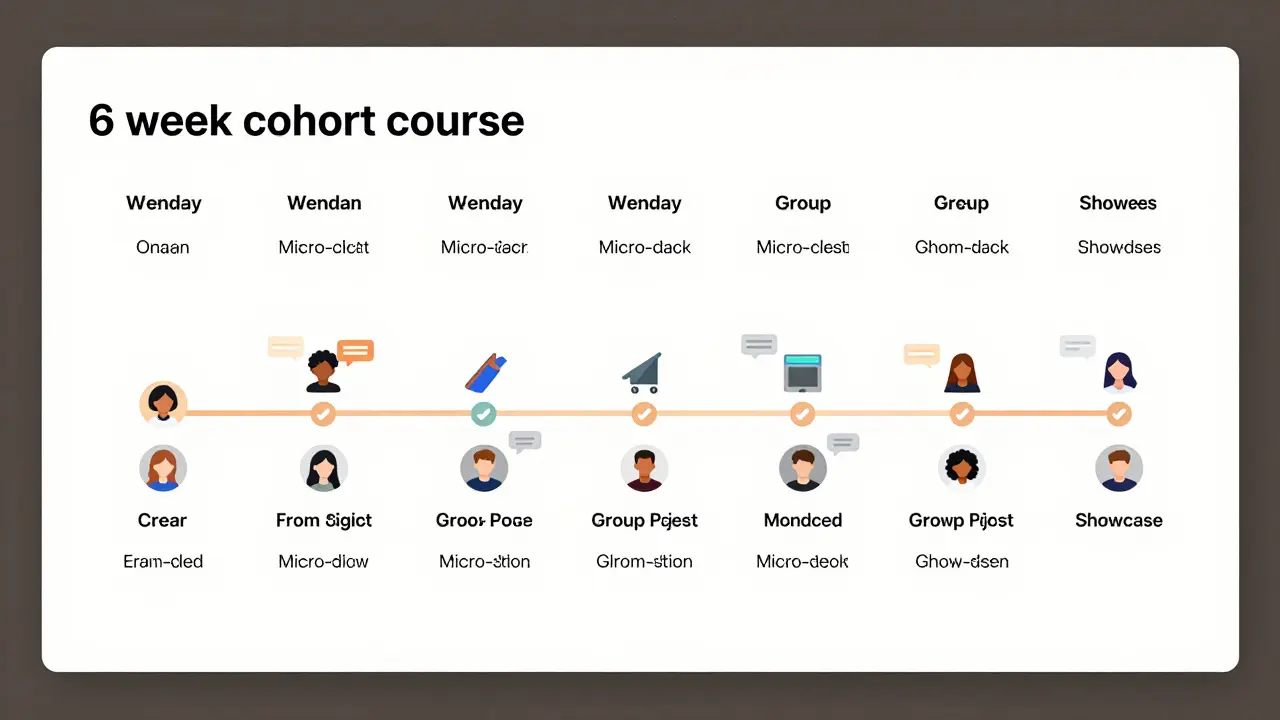
- Week 1: Onboarding & Connection - Not syllabus review. Icebreakers. Shared goals. A group charter written together.
- Weeks 2-4: Skill Building with Feedback Loops - Short lessons, then immediate application. No more than 20 minutes of video per day. The rest is doing.
- Weeks 5-7: Collaborative Projects - Teams of 3-4. Real-world problems. No perfect answers. Just iteration.
- Week 8: Showcase & Reflection - Live presentations. Peer feedback. Personal growth stories.
Each phase must have a clear outcome. Not ‘learn Python’ - but ‘build a working API that pulls real data and shares it with your cohort.’
Use a simple tool like Notion or Airtable to lay out the weekly flow. Include: what to do, what to submit, who to interact with, and when it’s due. Keep it visual. Learners should be able to glance at it and know exactly where they are.
Scheduling: Less Is More, But Consistency Is Everything
Don’t overload. Cohort courses thrive on rhythm, not volume.
Here’s what works for most adult learners:
- One live session per week - 60-75 minutes max. Zoom or Discord. Record it, but don’t make it the main event.
- Two to three micro-assignments per week - 15-30 minutes each. Think: post a reflection, comment on two peers’ work, try a tool, share a win.
- One group project milestone every two weeks - Enough time to collaborate, not enough to procrastinate.
- One open office hour per week - 30 minutes. No agenda. Just drop in if you’re stuck.
Timing matters. Schedule live sessions on Tuesday or Wednesday evenings. Avoid Mondays (too busy) and Fridays (people are checked out). In New Zealand, 7-8:30 PM local time works well - after dinner, before bed.
Use a shared calendar. Send reminders 24 hours and 1 hour before live sessions. Use tools like Calendly or Google Calendar with automated emails. Don’t assume people will remember.
Facilitation: Your Job Isn’t to Teach - It’s to Hold Space
Facilitators aren’t lecturers. You’re the glue. The cheerleader. The quiet guide who notices when someone’s gone quiet.
Here’s how to show up:
- Start each session with a win - Ask someone to share a small victory. Even ‘I finally sent my first email to a client.’
- Ask open questions - ‘What surprised you this week?’ ‘What would you do differently?’ Not ‘What’s the answer?’
- Call out silence - If someone hasn’t posted in 3 days, send a private message: ‘Hey, noticed you’ve been quiet. Everything okay?’
- Don’t answer every question - Let the cohort respond first. ‘What do others think?’ builds community.
- Be vulnerable - Share your own struggles. ‘I messed up this project too. Here’s what I learned.’
Facilitation is emotional labor. You’re not grading. You’re nurturing. Your tone, your timing, your presence - these are the real curriculum.
Tools That Actually Work
You don’t need a fancy platform. But you do need the right combo.
- Communication - Slack or Discord. Keep it simple. One channel per week, one for general, one for feedback.
- Content Delivery - Loom for short videos. Not YouTube. Not long Zoom recordings. 5-minute clips with a clear takeaway.
- Assignment Tracking - Notion or Airtable. Each learner gets a row. You can see who’s on track, who’s falling behind.
- Live Sessions - Zoom or Google Meet. Use breakout rooms for small group work.
- Feedback - Peergrade or Google Forms with anonymous responses. No grades. Just comments.
Don’t use 10 tools. Use 3 well. Too many apps = confusion. Too few = frustration.
What Fails - And How to Avoid It
Here are the top three reasons cohort courses die:
- Too much content, not enough connection - If learners feel like they’re watching videos alone, they quit.
- No clear deadlines - Vague timelines = procrastination. Set hard dates. No extensions unless it’s a true emergency.
- Facilitator burns out - If you’re responding to 50 DMs a day, you’re doing it wrong. Build peer support. Train learners to help each other.
Fix it by:
- Limiting direct messages to one per learner per week (unless urgent)
- Creating a ‘Peer Help’ channel where learners answer each other’s questions
- Setting a weekly 30-minute ‘Facilitator Reset’ - no learners, just you, coffee, and a notebook
Real Example: A 6-Week Copywriting Cohort
One course in Auckland ran for six weeks. 24 learners. No degrees. Just people wanting to write better emails, ads, and social posts.
- Each week: one 60-minute live call, three micro-tasks, one peer review.
- Week 3: Rewrite a real business email - sent to the group, not the client.
- Week 5: Teams of three created a full ad campaign for a local cafe.
- Week 6: Each person presented their best piece. One learner got hired by a startup after her pitch.
Completion rate: 92%. Why? Because they had a shared goal. A shared rhythm. And someone who showed up - not as an expert, but as a fellow traveler.
Final Thought: It’s Not About the Course. It’s About the Community.
Cohort-based learning isn’t scalable in the traditional sense. You can’t serve 10,000 people with one facilitator. But you don’t need to. You need to serve 20 people deeply. That’s where transformation happens.
If you’re building a cohort course, ask yourself: Are you creating content - or connection?
Choose connection. Every time.
How long should a cohort-based course last?
Most effective cohort courses run between 4 and 12 weeks. Shorter than 4 weeks doesn’t allow enough time for relationships to form. Longer than 12 weeks risks burnout and loss of momentum. Six weeks is the sweet spot for most adult learners - enough depth without overwhelm.
Do cohort courses work for technical subjects like coding?
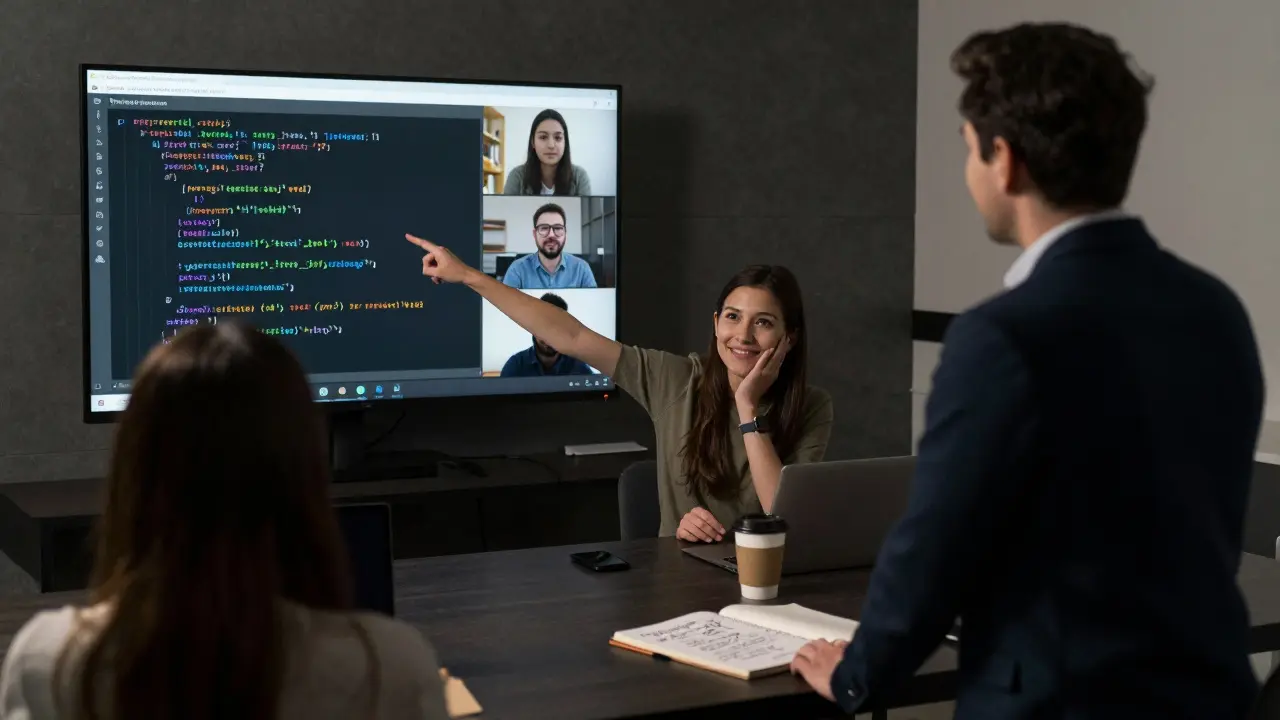
Yes - and they work better than self-paced options. Coding is hard to learn alone. Cohorts thrive on pair programming, code reviews, and debugging together. A 2023 study from MIT’s Open Learning Initiative showed that learners in cohort-based coding programs completed projects 47% faster and with 30% fewer errors than those learning solo.
What if someone falls behind?
Don’t let them disappear. Send a private message. Ask if they need help, or if something’s wrong. Offer a one-on-one 15-minute check-in. But don’t offer extensions unless it’s a medical or family emergency. Cohorts rely on shared timelines. If you let one person fall behind without consequences, the whole group loses momentum.
Can I run a cohort course with volunteers or peer facilitators?
You can, but only if you have a strong structure. Peer facilitators need training - not on content, but on facilitation skills: how to ask questions, how to handle conflict, how to give feedback. Use a simple guide like ‘The Facilitator’s Fieldbook’ as a reference. Assign rotating roles: one person leads the discussion, another takes notes, another sends reminders. It builds ownership.
How do I measure success in a cohort course?
Forget completion rates alone. Track: how many learners submitted peer feedback, how many attended live sessions, how many said they applied the skills in their job or side project. A 2025 survey of 500 cohort learners found that 81% reported tangible outcomes - like a new job, promotion, or launched product - within 90 days of finishing. That’s the real metric.
Do I need to charge for a cohort course?
Not necessarily, but it helps. When people pay, they show up. Free cohorts often have 40-60% lower engagement. If you’re running it for free, compensate by adding more structure: mandatory check-ins, public accountability posts, or a small reward for completion (like a certificate or feature on your website). Value follows commitment.
Next Steps: Start Small, Then Scale
Don’t try to build a 100-person cohort in month one. Start with 10. Test your schedule. Refine your assignments. Learn how your group talks. Then grow.
Cohort-based learning isn’t about technology. It’s about trust. And trust takes time. Build it slowly. Protect it fiercely. And never underestimate the power of showing up - together.
Comments
deepak srinivasa
I’ve run two cohorts now - one in coding, one in design thinking. The biggest win? When someone who was silent for weeks suddenly drops a breakthrough idea in the group chat at 2 a.m. That’s the magic. Not the syllabus. Not the Loom videos. It’s the quiet moments between deadlines where people start trusting each other.
pk Pk
Bro, this is exactly what I’ve been trying to tell my team for months. We were dumping 3-hour lectures into Notion and wondering why no one showed up. Changed everything last month - one 45-min live call, three micro-tasks, no grading. Completion jumped from 38% to 89%. Also, we started calling it ‘The Crew’ instead of ‘Course’. Small shift, huge difference.
NIKHIL TRIPATHI
Love the structure here. Especially the part about facilitators holding space instead of teaching. I used to think my job was to explain everything clearly - turns out, my job was to shut up and let people figure it out together. One of my learners told me last week: ‘You didn’t teach me Python. You made me feel safe enough to fail at it.’ That hit harder than any certificate.
Also, the Slack channel tip? Gold. We have #wins-only now. People post dumb little stuff like ‘I finally fixed that one bug’ - and the whole group cheers. It’s weirdly powerful.
And yeah, don’t use ten tools. I tried Miro + Notion + Trello + Discord + Zoom + Google Forms + Peergrade + Calendly + Loom + Typeform. My learners were confused. Now it’s just Notion + Slack + Zoom. Done.
Oh, and the ‘one DM per learner per week’ rule? Life saver. I used to answer 70 DMs a day. Now I say ‘Ask the group’ and 80% of the time someone else answers before I even open my laptop.
Also - 6 weeks is perfect. Anything longer and people start ghosting. Anything shorter and you’re just cramming. Six weeks lets you build rhythm. Like a song.
Shivani Vaidya
This is the most practical guide I've read on cohort design. No fluff. Just truth.
Rubina Jadhav
I ran a free cohort for 12 people last year. No charge. Just a Google Doc and Zoom. We had 6 dropouts. The ones who stayed? They became friends. One even flew to another city to meet her cohort partner. That’s the thing - when you care, people care back. Even if it’s free.
sumraa hussain
YOOOOOO I JUST GOT HIRED BECAUSE OF MY COHORT PROJECT!!!!!
WE BUILT A SMALL APP FOR A LOCAL BAKERY AND I PRESENTED IT IN WEEK 6 AND THE OWNER WAS IN THE ZOOM AND HE SAID ‘I’LL PAY YOU TO BUILD THIS FOR REAL’
AND NOW I’M A FULL TIME DEV AT A CAFE????????????
THIS ARTICLE IS A LIFELINE
THANK YOU
Raji viji
LMAO this is just another ‘community is everything’ warm hug for people who can’t code. Real talk - if your cohort needs 8 weeks of ‘sharing wins’ and ‘vulnerability’ to get someone to finish a Python project, you’re doing it wrong. The real curriculum is the damn code. Not the Slack emojis. Not the icebreakers. Not the ‘I messed up too’ stories.
People don’t need to feel ‘held’. They need to be challenged. Hard. And if they can’t handle that? Then they shouldn’t be in the cohort. Stop coddling. Build rigor. That’s what separates the real learners from the Instagram-study-account crowd.
Also - 92% completion rate? Bullshit. You’re probably counting people who posted one emoji in a thread as ‘completed’. Real completion means submitting a working, documented, tested product. Not a ‘growth story’.
Rajashree Iyer
Isn’t it fascinating how we’ve turned education into a social experiment? We’ve forgotten that learning is solitary. That mastery is forged in silence. The cohort is a mirror - not a teacher. We project our fears onto each other, our loneliness into group chats, our need for belonging into deadlines. The real course isn’t the curriculum. It’s the unspoken grief of people trying to become someone they think they should be. And the facilitator? They’re just the quiet priest holding the candle in the dark.
But tell me - when the cohort ends… who are you left with? Yourself. And the echo of the voices you learned to trust. That’s the real legacy.
Parth Haz
Excellent breakdown. I’d only add one thing: the facilitator’s ‘reset’ hour is non-negotiable. I skipped it for two weeks last term. Burnout hit hard - I started replying to DMs with one-word answers. My tone got clipped. The group noticed. They didn’t say anything. But the energy changed. I restarted the reset hour. Within 48 hours, the tone in the group lightened. People started sharing again. It’s not self-care. It’s course-care.
Also - the ‘no extensions’ rule? Perfect. We had one person miss a deadline because their internet went down. We didn’t extend. They apologized. The cohort rallied. Two people sent them screen recordings of the feedback. One sent a voice note. That’s community. That’s accountability. Not a system. Not a policy. A human response.