


Most online courses fail because people quit. Not because the content is bad. Not because it’s too hard. But because it’s boring. You’ve seen it: endless video lectures, PDF downloads, quiz after quiz with no reward, no progress bar, no sense of achievement. It feels like homework you never asked for. That’s where gamification changes everything.
What Gamification Actually Means in Learning
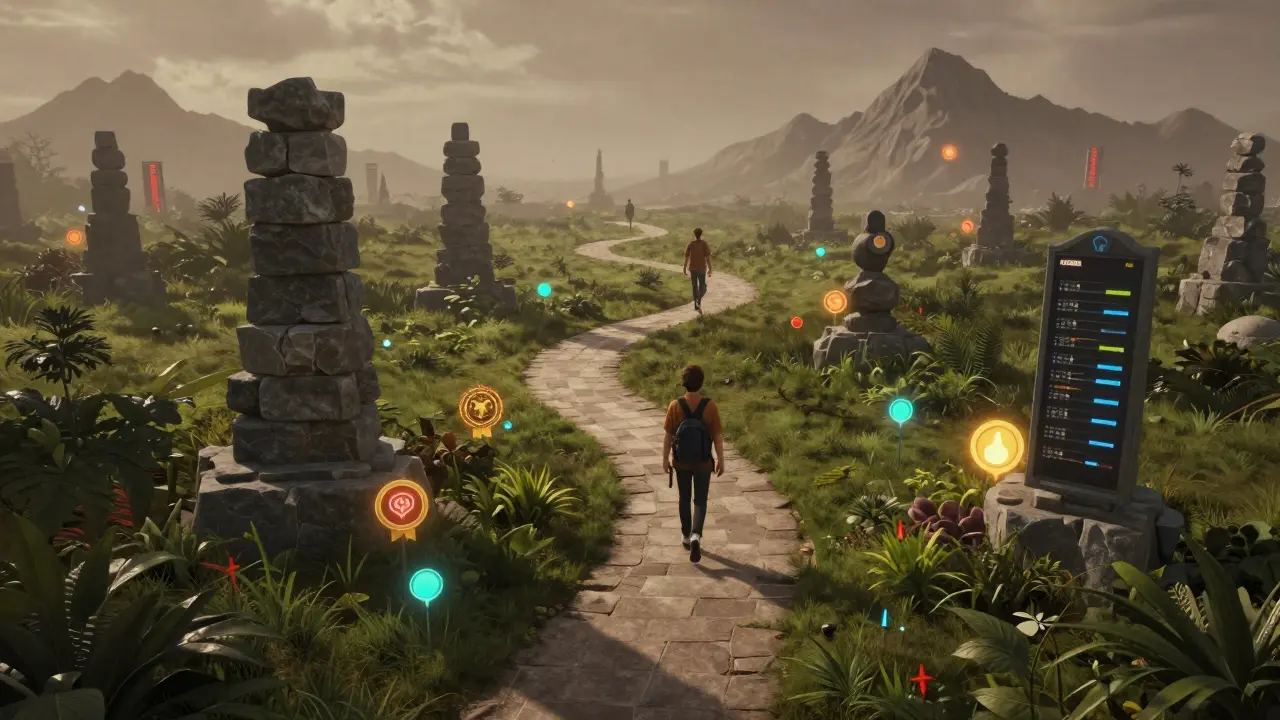
Gamification isn’t about turning your course into a video game. It’s about using game-like elements to make learning feel more engaging, more motivating, and more rewarding. Think points, badges, leaderboards, progress bars, levels, challenges, and immediate feedback. These aren’t just decorations. They tap into how the human brain naturally responds to goals, rewards, and competition.
When you earn a badge for finishing a module, your brain releases dopamine-the same chemical that kicks in when you score a goal or find a hidden item in a game. That feeling sticks. It makes you want to do more. A 2023 study from the University of Auckland tracked 1,200 learners using gamified platforms and found completion rates jumped by 47% compared to traditional e-learning modules.
It’s not magic. It’s psychology. Humans are wired to respond to clear goals, visible progress, and recognition. Gamification just makes those things part of the learning process.
Why Traditional E-Learning Falls Flat
Most online courses treat learners like data points. You watch a video. You click next. You take a quiz. You get a score. Then what? Nothing. No celebration. No next challenge. No reason to come back tomorrow.
Think about how you play a mobile game. You unlock a new level. You get a shiny reward. You see your rank go up. You get a notification: "You’ve earned 500 XP!" That’s not random. Game designers spend millions studying what keeps people hooked. Online learning has ignored those lessons-for too long.
Without gamification, learners feel invisible. They don’t know if they’re doing well. They don’t feel like they’re moving forward. And when motivation fades, so does learning.
Core Elements That Actually Work
Not all game elements are created equal. Some feel forced. Others feel natural. Here are the five elements that consistently boost engagement in real-world learning programs:
- Progress Bars - Show learners exactly how far they’ve come and how much is left. A simple 70% bar creates a sense of momentum. People hate leaving things half-done.
- Badges and Certificates - Not just pretty icons. Each badge should represent a real skill mastered. "Completed Data Analysis Module" is better than "Great Job!"
- Points and Levels - Points give immediate feedback. Levels create long-term goals. A learner who reaches "Level 5: Expert" feels like they’ve earned it.
- Challenges and Quests - Instead of "Read Chapter 3," try "Complete this real-world case study to unlock the next module." Quests turn passive learning into active problem-solving.
- Feedback Loops - Instant feedback matters. If you answer a question wrong, don’t just say "Incorrect." Say: "Try again-here’s a hint: look at the case example from Module 2. You’ve got 2 more attempts before moving on."
These elements work because they mirror how people learn best: through action, feedback, and incremental success.
Real Examples from Top Platforms
Some platforms are doing this right-and seeing results.
Khan Academy uses points, energy bars, and streaks. If you practice math every day for a week, you get a "7-Day Streak" badge. It’s simple. But millions of students stick with it because of that streak.
Duolingo is the gold standard. You earn XP, climb leaderboards, unlock new skills, and get daily goals. Missing a day? You lose your streak. That tiny fear of losing something you’ve built keeps people coming back-even when they’re not "in the mood" to learn.
LinkedIn Learning added completion badges and skill assessments. Now, when you finish a course, you can add the badge directly to your profile. That turns learning into social proof. People don’t just learn for themselves-they learn to show off.
These aren’t gimmicks. They’re systems built on behavioral science. And they work.
How to Build Gamification Into Your Course
If you’re designing an online learning program, here’s how to start:
- Define the learning goal first - Don’t add badges because they look cool. Ask: "What behavior do I want to encourage?" Completing assignments? Participating in discussions? Repeating practice?
- Map rewards to milestones - Don’t give a badge for every click. Give it for mastery. "Earn the "Data Visualization Pro" badge after completing 3 real projects with peer feedback."
- Use progress as motivation - Show learners their journey visually. A progress bar that fills up as they complete modules is more powerful than a checklist.
- Add optional competition - Leaderboards can backfire if forced. Make them optional. Let learners choose: "See how you rank among peers" or "Focus on your own progress."
- Test and tweak - Track what works. Do learners who earn badges complete more modules? Do streaks reduce drop-off? Use analytics to refine your system.
Start small. Add one gamified element to one module. See how learners respond. Then expand.
What Doesn’t Work
Not every game mechanic belongs in learning. Avoid these traps:
- Overloading with points - Too many numbers feel like a spreadsheet, not a game.
- Forced leaderboards - If you’re not a competitive person, seeing others ahead of you can crush motivation, not boost it.
- Empty rewards - "You earned a star!" means nothing if it doesn’t connect to real progress.
- Ignoring accessibility - Not everyone can see badges or hear sound effects. Make sure gamification works for all learners.
The goal isn’t to make learning fun. It’s to make it meaningful. Gamification should support learning, not distract from it.
Measuring Success: What to Track
Don’t guess whether your gamification works. Measure it.
- Completion rate - Are more learners finishing the course?
- Time spent per module - Are learners spending more time on content, or just clicking through?
- Repeat visits - Are they logging in daily? Weekly?
- Feedback scores - Do learners say the course feels more engaging?
- Transfer of learning - Can they apply what they learned in real life? This is the real test.
One university in New Zealand added a weekly challenge system to their professional development course. Within six months, course completion rose from 58% to 89%. The biggest change? Learners started sharing their badges on LinkedIn. They weren’t just learning-they were building their professional identity.
The Future of Gamified Learning
The next wave isn’t just badges and points. It’s adaptive gamification.
Imagine a system that notices you’re struggling with a topic and automatically gives you a mini-quest to practice it. Or one that detects you’ve been inactive for three days and sends a personalized message: "Your streak is at risk. Here’s a 5-minute challenge to get back on track."
AI is making this possible. Platforms like Coursera and Udacity are testing adaptive learning paths that adjust difficulty, reward frequency, and feedback style based on individual behavior.
Soon, gamification won’t be a feature. It’ll be the default.
Final Thought: It’s Not About Games. It’s About People.
Gamification works because it respects how humans learn. We need to feel progress. We need to feel seen. We need to feel like our effort matters.
Stop treating learners like passive recipients of information. Start treating them like active participants in their own growth. Give them goals. Give them feedback. Give them reasons to keep going.
That’s not gamification. That’s good teaching.
Is gamification only for young learners?
No. Gamification works for all ages. Adult learners in corporate training, healthcare certifications, and even university courses respond well to progress tracking, badges, and challenges. The key is tailoring the rewards to what matters to them-like professional recognition, skill mastery, or time savings-not cartoonish points or fictional characters.
Can gamification make learning too competitive?
Yes, if leaderboards are forced or public. The best systems offer competition as an option. Let learners choose between "Compare with peers" or "Focus on my progress." Some people thrive on competition. Others prefer personal growth. Respect both.
Do I need special software to add gamification?
Not necessarily. Many learning platforms like Moodle, Thinkific, and Teachable have built-in gamification tools. You can start with simple progress bars, completion badges, and streak counters using existing features. You don’t need to build a game from scratch.
How do I avoid making gamification feel fake or forced?
Tie every reward to real learning outcomes. A badge shouldn’t say "Completed Video 3"-it should say "Mastered Budget Forecasting." Use language that reflects real-world value. Learners can spot empty rewards instantly. Make every point, badge, or level meaningful.
What’s the biggest mistake people make with gamification?
Adding game elements without a clear learning goal. Gamification isn’t decoration. It’s strategy. If you don’t know what behavior you’re trying to change-like completing assignments, participating in discussions, or practicing skills-you’re just adding noise. Start with the learning outcome, then design the game around it.
Start with one small change. Add a progress bar to your next module. Give a badge for completing a real task. See what happens. Learning doesn’t need to be dull. It just needs to feel worth your time.