


You have spent months recording videos, writing quizzes, and designing a curriculum that actually teaches something valuable. You hit "publish" on your platform, waited for the students to flock in, and... silence. This is the most common trap for new creators. Building a great online course is only half the battle; getting people to buy it is the other half. Without a solid marketing plan, even the best educational content sits invisible in a crowded digital marketplace. This guide cuts through the noise and gives you a practical, step-by-step roadmap to fill your seats.
The Core Strategy: Pre-Launch and Audience Building
Most creators make the mistake of trying to sell before they have an audience. If you start from zero, you need to build trust first. The golden rule of course marketing is simple: give value before asking for money. You need to identify who exactly will benefit from your expertise. Are you teaching Python to beginners? Or are you offering advanced SEO strategies for e-commerce managers? Define this clearly. Vague audiences like "everyone interested in fitness" will result in vague messaging that converts poorly.
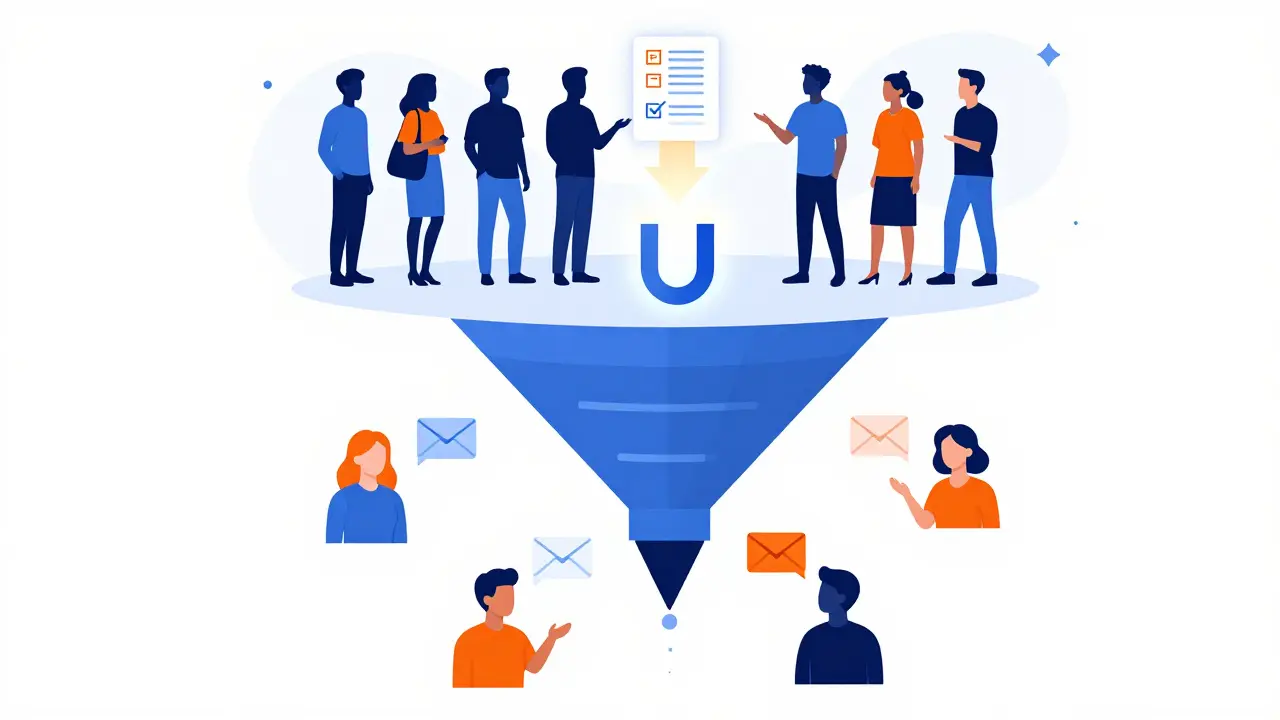
Once you know your audience, you need a way to capture their attention without demanding a credit card immediately. This is where the concept of a lead magnet comes in. A lead magnet is a free, high-value resource you offer in exchange for an email address. It should solve one specific, small problem related to your main course. For example, if your course is about watercolor painting, your lead magnet could be a PDF checklist of essential brushes or a short video tutorial on mixing colors. The goal is to move strangers into your email list, which is the asset you own and control.
Crafting Irresistible Messaging
Your website copy and ads need to speak directly to the pain points of your potential students. People do not buy courses; they buy transformations. They want to go from Point A (confused, stuck, unskilled) to Point B (confident, employed, skilled). When writing your sales page, focus on the outcome, not just the features. Instead of saying "10 hours of video content," say "Master Excel formulas in under two weeks so you can finish your work by 5 PM."
Use social proof aggressively. If you have beta testers, ask them for honest testimonials. Even if you are launching for the first time, share snippets of your expertise on social media to demonstrate authority. Show, do not just tell. If you are selling a coding course, post a screenshot of a complex bug you fixed. If you are selling a nutrition plan, share a before-and-after photo of your own journey. Authenticity builds the trust required for a purchase.
Choosing the Right Channels
You cannot be everywhere at once, and trying to be will dilute your efforts. Pick one or two primary channels where your audience hangs out. Here is how different platforms perform for course marketing:
- Email Marketing: This remains the highest converting channel. People who opt-in are already interested. Use tools like Mailchimp or ConvertKit to automate welcome sequences that nurture leads over time.
- Social Media (Instagram/TikTok): Ideal for visual or lifestyle-based courses. Short-form video allows you to show quick tips and personality, building a parasocial relationship with viewers.
- LinkedIn: The best place for B2B or professional development courses. Long-form posts and articles here establish thought leadership.
- YouTube: Excellent for long-term organic traffic. Create tutorials that solve problems partially, then link to your full course for the complete solution.
Do not ignore search engine optimization (SEO). Write blog posts that answer the questions your future students are typing into Google. If someone searches "how to fix a leaky faucet," and you have a plumbing certification course, write a detailed guide and include a subtle recommendation for your course at the end.
Structuring Your Launch Campaign
A structured launch creates urgency and excitement. Rather than just leaving your course up for sale forever, consider a "cart open" period. This mimics the scarcity of a live event. Here is a typical 7-day launch sequence:
- Day 1-2: Awareness. Post content about the problem your course solves. Do not mention the course yet. Just agitate the pain point.
- Day 3-4: Education. Provide valuable free content via email or webinars. Show that you understand their struggle and have a solution.
- Day 5: The Reveal. Announce the course. Share the curriculum, the benefits, and early-bird pricing.
- Day 6: Social Proof. Share testimonials, case studies, or behind-the-scenes looks at how you created the material.
- Day 7: Urgency. Remind people the cart is closing soon. Offer a final bonus for immediate buyers.
This rhythm works because it guides the prospect through a psychological journey from curiosity to conviction. It prevents decision fatigue by giving them a clear window to act.
| Channel | Best For | Cost | Time to Results |
|---|---|---|---|
| Email Marketing | High-ticket courses, recurring revenue | Low (Software subscription) | Immediate (if list exists) |
| Paid Ads (Facebook/Google) | Scaling quickly, testing offers | High (Ad spend) | Fast (Days) |
| Organic Social | Brand building, community | Free (Time intensive) | Slow (Months) |
| Content/SEO | Long-term passive traffic | Free (Time intensive) | Very Slow (6+ Months) |
Leveraging Partnerships and Affiliates
You do not have to do all the marketing alone. Affiliate marketing is a powerful lever for online courses. Find influencers, bloggers, or podcasters who already talk to your target audience. Offer them a commission-typically 20% to 40% of every sale they generate-in exchange for promoting your course. This aligns incentives: they only get paid if they bring you a paying customer. It reduces your risk because you pay for performance, not just impressions.
When approaching partners, make it easy for them. Provide pre-written emails, social media graphics, and unique tracking links. Tools like ShareASale or Refersion can automate this process. Look for micro-influencers (those with 5k-50k followers) as they often have higher engagement rates and are more affordable than celebrity endorsements.

Post-Purchase Engagement and Retention
Marketing does not stop when the payment goes through. In fact, this is where many creators fail. If students feel abandoned after buying, they will leave negative reviews, which kills future sales. Implement an onboarding sequence. Send a welcome email that tells them exactly what to do next: log in, watch the first module, join the community forum.
Encourage completion. Gamify the experience with certificates or badges. Ask for feedback midway through the course to improve it. Happy students become your best marketers. They will refer friends, leave glowing reviews, and potentially buy your next product. Treat the relationship as long-term, not transactional.
Common Pitfalls to Avoid
Many course creators burn out or lose money due to avoidable errors. First, do not discount your course too heavily. If you constantly run 50% off sales, you train customers to wait for a discount and devalue your expertise. Second, do not rely solely on one platform. If you host your course entirely on Udemy or Skillshare, you are subject to their algorithm changes and fee structures. Always drive traffic to your own landing page where you own the customer data. Finally, do not neglect analytics. Track where your clicks come from. If Instagram brings traffic but no sales, and Email brings fewer clicks but high sales, shift your budget accordingly.
How much should I charge for my online course?
Pricing depends on the transformation you offer and your authority. Informational courses (e.g., "Learn Knitting") might range from $29 to $99. Transformational or professional courses (e.g., "Get Certified as a Project Manager") can command $500 to $2,000+. Research competitors, but price based on the value of the outcome, not just the number of hours of video you recorded.
What is the best platform to host my online course?
It depends on your technical skills and budget. Marketplaces like Udemy provide built-in traffic but take a large cut of revenue and limit your branding. Self-hosted platforms like Teachable, Thinkific, or Kajabi give you full control over pricing, branding, and customer data, but you are responsible for driving all your own traffic. For most serious entrepreneurs, self-hosting is the better long-term play.
Do I need a large social media following to sell a course?
No. A highly engaged email list of 500 people is worth more than 50,000 passive Instagram followers. Focus on building an email list through lead magnets and providing value. You can also use paid ads to reach people who do not follow you, bypassing the need for a massive organic audience initially.
How important is a webinar for course marketing?
Webinars are extremely effective for higher-priced courses ($200+). They allow you to demonstrate your teaching style, answer questions in real-time, and build deep trust. A well-run webinar can convert 10-20% of attendees into buyers. For lower-priced impulse buys, a strong sales page may suffice, but webinars add significant credibility.
Should I offer refunds for my online course?
Yes, offering a money-back guarantee (e.g., 14 or 30 days) reduces friction and increases conversions. It signals confidence in your product. Most ethical creators find that refund rates are low (under 5%) if they properly qualify leads during the marketing phase. Ensure your refund policy is clear on the checkout page.