

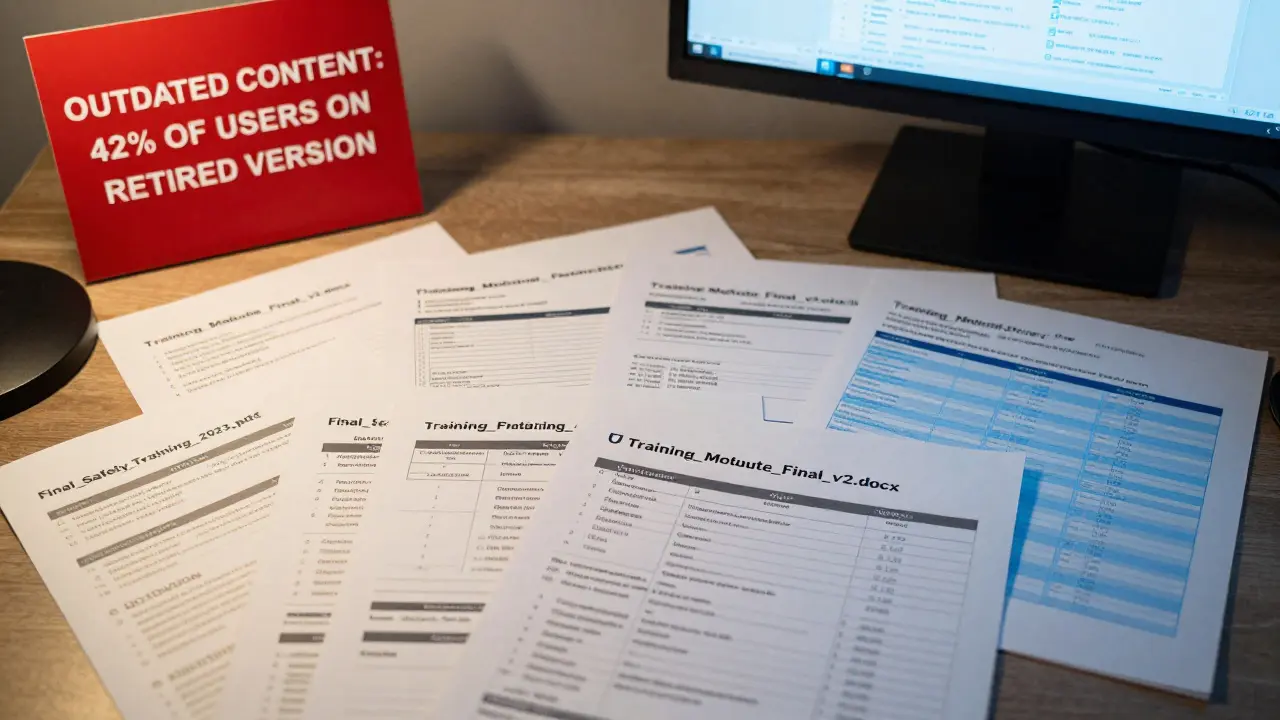
When your company rolls out a new safety protocol or updates its code of conduct, does every employee get the right version? Do you know if someone is still using a 2022 training module that’s now outdated - and possibly illegal? If you’re nodding along, you’re not alone. Most companies struggle with this. And the cost of getting it wrong? Fines, lawsuits, or worse - a worker getting hurt because they weren’t trained on the latest rules.
Why L&D Content Needs Governance
Learning and Development (L&D) isn’t just about putting videos online and calling it a day. It’s about making sure the right people get the right information at the right time. But without clear rules, content becomes a mess. One department uses a PDF from 2021. HR uploads a new PowerPoint. The IT team adds a quiz from a third-party vendor. No one tracks what’s live, what’s expired, or who’s seen what. This isn’t just messy - it’s risky. In industries like healthcare, finance, or manufacturing, outdated training can violate laws like OSHA, HIPAA, or GDPR. If an audit finds that 30% of your staff completed training using a version that was retired six months ago, you’re not just embarrassed - you’re exposed. Content governance for L&D fixes this. It’s not a fancy software system. It’s a set of clear, written rules about who creates content, how it’s approved, how versions are labeled, and how you retire old material. Think of it like a library catalog - but for your company’s training materials.Versioning: The Backbone of Compliance
Versioning sounds simple: label each update with a number or date. But most companies do it wrong. You’ve probably seen this:- Training_Module_Final_v2.docx
- Final_Safety_Training_2023.pdf
- Safety_2023_Final_Rev_A.pptx
- Use a consistent numbering system: Major.Minor.Revision (e.g., 3.1.0). Major = big changes. Minor = small updates. Revision = typo fixes.
- Always include a date: Version 3.1.0 | Effective: Jan 15, 2026
- Never reuse version numbers. If you fix a mistake in 3.1.0, call it 3.1.1 - not 3.1 again.
Compliance Isn’t Optional - It’s Built In
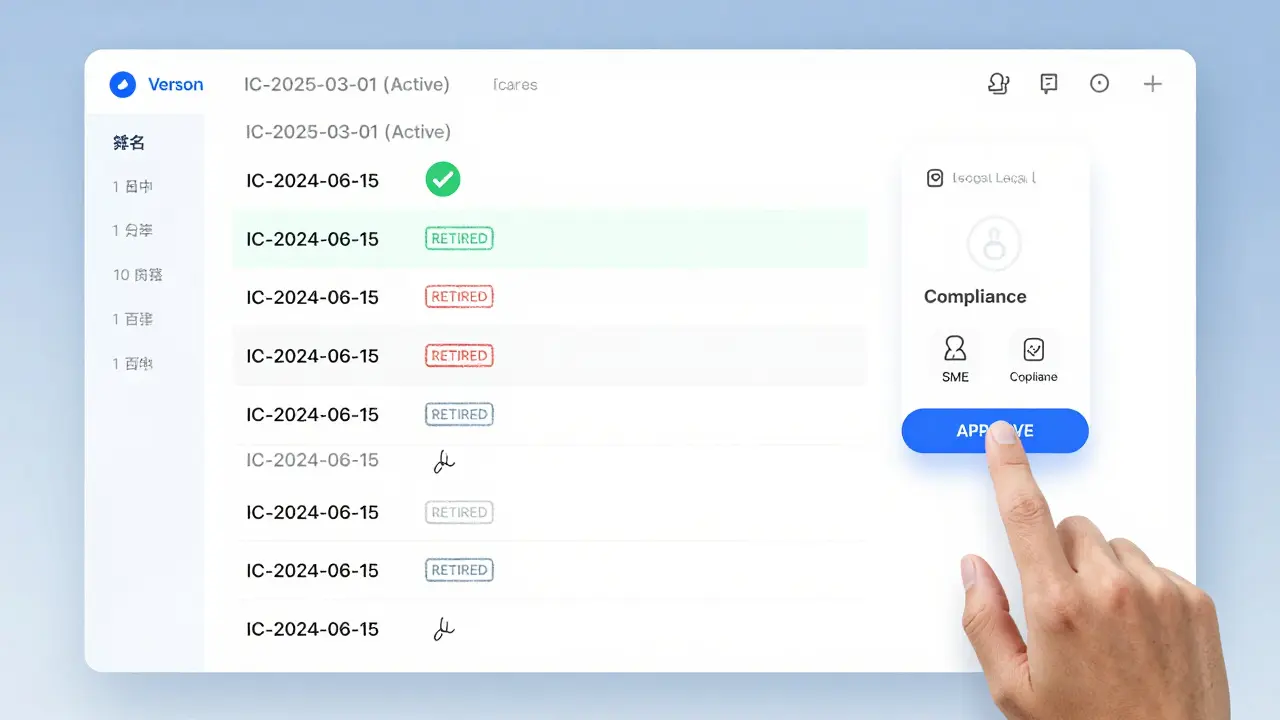
Compliance isn’t something you check off once a year. It’s woven into how you create, store, and deliver content. If your company operates in the EU, you need GDPR-compliant data handling. If you’re in healthcare, HIPAA training must be tracked and documented. In the U.S., OSHA requires annual safety training - and proof of completion. But here’s what most L&D teams miss: compliance doesn’t start with the learner. It starts with the content creator. Every piece of training content should have:- A subject matter expert (SME) who approves the facts
- A legal reviewer who checks for regulatory alignment
- A compliance owner who tracks expiration and renewal deadlines
Who Owns This? (And Why It Matters)
In most companies, L&D owns the training. Legal owns compliance. IT owns the system. And HR owns the employees. Who’s responsible when something goes wrong? The answer: one person. Content governance only works if there’s a single owner - usually called the Learning Content Manager. This person isn’t necessarily in HR or IT. They’re the bridge. They know the regulations. They understand the tech. And they have the authority to say "no" to a rushed update. This role doesn’t need a big title. But they need:- Access to legal and compliance teams
- Control over the content repository
- The power to pause rollout if something’s off
Real-World Example: A Hospital’s Wake-Up Call
In late 2024, a mid-sized hospital in Christchurch, New Zealand, got audited. They thought they were fine. Their staff completed annual infection control training every year. But the audit found something shocking: 42% of staff had completed a version of the training that was retired 14 months earlier. Why? Because the L&D team uploaded a new module - but never turned off the old one. The old version was still accessible. Some staff found it easier. Others didn’t know there was a new one. The hospital was fined NZ$180,000. Not for negligence - for failing to enforce version control. They didn’t have a governance policy. No version numbers. No retirement dates. No single owner. After the fine, they built a simple system:- Every training module now has a version tag: IC-2025-03-01
- The LMS auto-hides any version older than 90 days
- Each module requires sign-off from the infection control officer and legal
- A Learning Content Manager reviews all updates monthly
What Happens Without It?
You might think, "We’re a small company. We’re not a hospital." But compliance doesn’t care about size. If you’re in logistics, you need WHMIS or DOT training. If you’re in retail, you need anti-harassment training. If you’re in tech, you need data privacy training. Without governance:- You can’t prove training happened
- You can’t prove it was the right version
- You can’t prove employees understood it
- You can’t prove you updated it when the law changed

Getting Started: Three Steps
You don’t need a big budget or a fancy platform. Start here:- Map your critical training. Which modules have legal, safety, or compliance implications? List them. Pick three to start with.
- Assign owners. Who approves each piece? Who tracks its expiration? Who ensures it’s retired? Write it down.
- Implement versioning. Use Major.Minor.Revision + date. Add a "Last Updated" footer to every file. Use your LMS to lock old versions.
Comments
Sally McElroy
Versioning isn't just about numbers-it's about accountability. If you can't trace who approved what and when, you're not managing risk, you're just hoping. The hospital example proves it: no governance, no excuse. It's not about tech, it's about discipline. Every update must have a paper trail. No exceptions. No "just this once."
Destiny Brumbaugh
USA needs to lead on this. Why are we letting other countries set the standard? If we had real leadership in L&D, we wouldn't be catching up to NZ's audit results. We should be the ones writing the rules, not following them. This isn't about compliance-it's about national pride in training standards.
Sara Escanciano
Anyone who thinks this is "just HR stuff" is putting lives at risk. You don't get a second chance when someone gets hurt because you didn't lock an old PDF. This isn't a suggestion. It's a moral imperative. If your company doesn't have a Learning Content Manager, you're already guilty. Stop pretending it's optional.
Elmer Burgos
I like how this breaks it down. Honestly, I’ve seen so many teams try to wing it with shared drives and "final_v3" files. It’s a disaster waiting to happen. The versioning system here is simple but brilliant. Major.Minor.Revision + date? That’s the kind of thing that actually works in real life. No need to overcomplicate it.
And yeah, one owner makes all the difference. I’ve worked places where everyone thought someone else was handling it. Spoiler: they weren’t.
Jason Townsend
Who really controls the LMS? You think it's the Learning Content Manager? Nah. It's the IT vendor who owns the backend. They're the ones who decide when old versions get deleted. And guess what? They don't care about your compliance. They care about storage costs. This whole system is a illusion built on corporate wishful thinking. The audit? Just a PR stunt to scare companies into paying more for "secure" platforms.
Antwan Holder
Think about it. Every time you hit "publish" on a training module, you're not just updating content-you're shaping lives. That PDF you uploaded in 2021? It could be the last thing someone reads before they walk into a machine they weren't trained for. That’s not negligence. That’s a silent scream echoing through factory floors, hospital corridors, and office cubicles. We’re not just managing files. We’re holding the line between life and death. And if you’re not screaming about this, you’re part of the problem.
Angelina Jefary
You said "Major.Minor.Revision" but then wrote "3.1.0" - that’s not correct. It should be "3.1.0" with no space before the period. And "Effective: Jan 15, 2026" - that’s a comma splice. It should be "Effective January 15, 2026" or "Effective on Jan. 15, 2026." Also, "LMS" isn't capitalized in the middle of a sentence unless it's at the start. And why are you using "they" for "every version"? It's singular. This article is full of grammatical errors. How can we trust compliance advice from someone who can't write a proper sentence?
TIARA SUKMA UTAMA
Just make sure the new version shows up. That’s it. No need for all this paperwork.
Jasmine Oey
Oh honey. You think versioning is the issue? Please. This whole post reads like a corporate brochure written by someone who’s never actually had to manage real training. I’ve seen L&D teams try to implement this and it turns into a 17-step approval process that takes six weeks. Meanwhile, the actual workers are still using the old PDF because the new one is buried under 47 layers of bureaucracy. You’re not fixing the problem-you’re making it a performance art piece.
Marissa Martin
I’ve worked in places where no one wanted to be the owner. It’s scary to be the one who says "no." But if you don’t step up, who will? I’ve seen good people get fired because someone else didn’t want to take responsibility. It’s not about power. It’s about courage. And courage is rare.
James Winter
Canada does this better. We don’t wait for a fine to wake up. We have standards. You think NZ got fined because they were weak? No. They had the guts to enforce. You want compliance? Stop begging for permission. Start enforcing it. That’s what real leadership looks like.
Aimee Quenneville
So let me get this straight… you’re saying we need a person whose only job is to say "no" to training updates? Sounds like a dream job. I want to be that person. I’ll wear a cape. "The Gatekeeper of Good Training." I’ll sit in a glass office with a "Do Not Disturb - Compliance in Progress" sign. Coffee mug: "I paused the update so you could live."
Cynthia Lamont
Let’s be real. The hospital didn’t get fined because they didn’t have versioning. They got fined because they didn’t have a compliance officer who actually checked the LMS logs. The versioning system? It was there. But no one looked. The real failure? Human negligence. Not process. People. Always people. You can have the best system in the world, but if your staff don’t care, it’s just digital wallpaper.
Kirk Doherty
Simple works. Version number. Date. One person. Done. No need for all the jargon. Just make sure people know where to find the current one and that the old one disappears. That’s it.
Dmitriy Fedoseff
In my culture, we say: "The best system is the one that survives the first mistake." This post assumes people will follow rules. But humans don’t follow rules-they follow habits. So don’t build a policy. Build a habit. Make the correct version the easiest version. Make the old version invisible. Make the owner’s name visible on every document. Make it so natural that not doing it feels wrong. Governance isn’t a policy. It’s a rhythm.