


You’ve probably seen it happen before. A company spends a fortune on a shiny new e-learning platform or hires an expensive external trainer. Everyone clicks through the modules, everyone gets their certificate, and then... nothing changes. Sales don’t go up. Errors don’t go down. The team is just as frustrated as they were before.
This happens because most organizations treat training like a checkbox exercise rather than a strategic lever. They jump straight to the solution (a course) without diagnosing the problem. If you want your corporate training strategy to actually move the needle, you have to start with the right questions, not the right slides.
Building a training program that delivers real business value requires a shift in mindset. It’s less about "learning" and more about "performance." This guide breaks down how to conduct a rigorous needs assessment and build a strategy that aligns employee growth with company goals.
The Anatomy of a Skills Gap Analysis
Before you write a single line of curriculum, you need to know exactly what is missing. This is called a needs assessment, or more specifically, a skills gap analysis. It answers three simple but critical questions:
- What should be happening? (The standard)
- What is actually happening? (The reality)
- Why is there a difference? (The root cause)
Let’s look at a concrete example. Imagine your customer support team is missing their response time targets. The immediate reaction might be to send them all to a "Speed Typing" or "Efficient Communication" workshop. But wait. Is it a skill issue? Or is it a tool issue?
If the ticketing software crashes every hour, no amount of typing training will fix the delay. If the knowledge base is outdated, the agents aren’t slow; they’re searching for answers that don’t exist. A proper needs assessment separates these factors. You interview managers, observe workflows, and analyze data. Only when you confirm that the gap is due to a lack of knowledge or skill do you proceed with training.
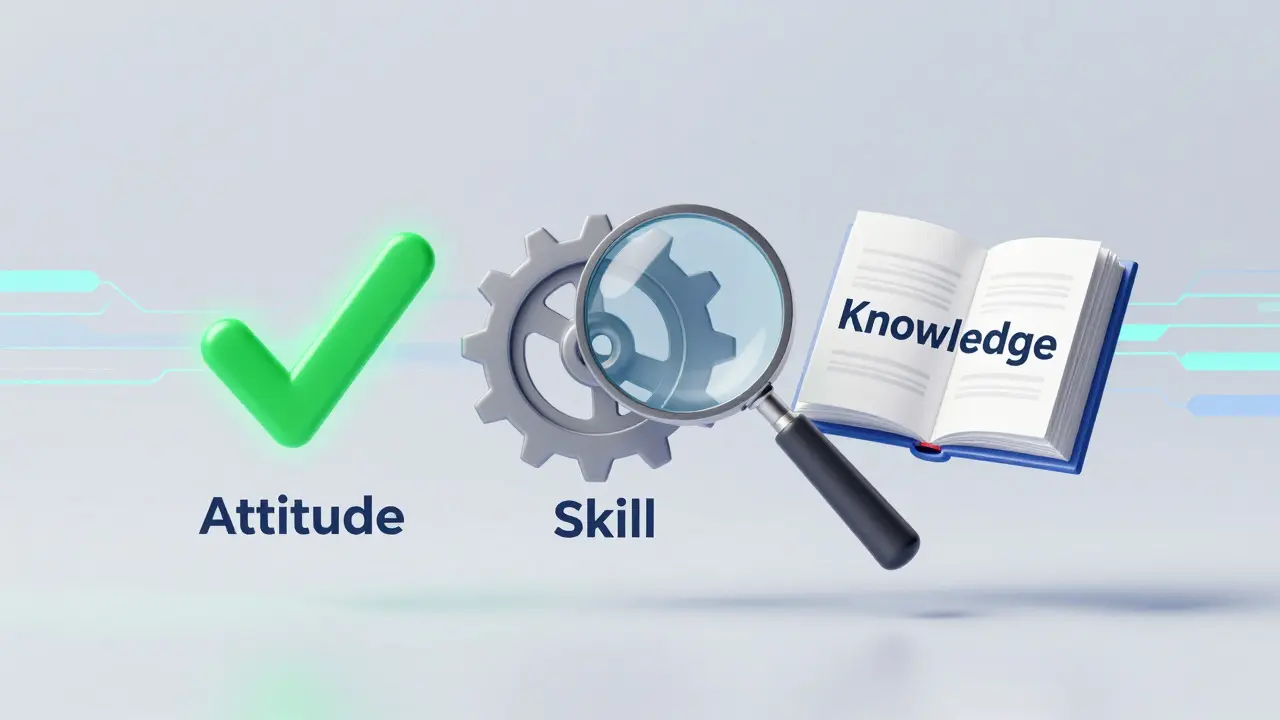
To do this effectively, use the ASK Model:
- Attitude: Do employees want to perform better? Are they motivated?
- Skill: Do they have the technical ability to do the job?
- Knowledge: Do they have the information required to make decisions?
If the gap is in attitude, training won’t help-you need leadership coaching or incentive restructuring. If it’s knowledge, you need documentation or quick-reference guides. If it’s skill, then yes, hands-on practice and training are the answer.
Aligning Learning with Business Objectives
A common mistake is designing training in a vacuum. HR decides what people "should" learn based on generic industry trends, ignoring what the business actually needs right now. Your training strategy must be a direct reflection of your company’s strategic plan.
If your company’s goal for the next year is to expand into the Asian market, your training shouldn’t focus on internal compliance updates alone. It needs to include cultural competency, language basics, and regional sales tactics. If the goal is cost reduction, training might focus on lean methodologies and waste elimination.
To ensure alignment, sit down with department heads-not just other HR colleagues. Ask them:
- What are the top three challenges your team faces this quarter?
- What specific behaviors would solve those challenges?
- How will we measure if those behaviors are adopted?
This conversation shifts training from a "nice-to-have" perk to a critical business enabler. It also helps secure budget approval. When you can show the CEO that a $10,000 safety training program prevents potential $500,000 in regulatory fines, the decision becomes easy.
Choosing the Right Delivery Method
Once you’ve identified the gap and aligned it with business goals, you face the next decision: how do you deliver the content? There is no one-size-fits-all approach. The method depends on the complexity of the skill and the urgency of the need.
| Method | Best For | Pros | Cons |
|---|---|---|---|
| E-Learning / LMS Modules | Compliance, product knowledge, standardized info | Scalable, trackable, consistent | Low engagement, passive learning |
| Instructor-Led Training (ILT) | Soft skills, complex processes, team building | Interactive, immediate feedback, networking | Expensive, logistical hurdles |
| Microlearning | Just-in-time support, quick tips, reinforcement | Bite-sized, accessible on mobile, low cognitive load | Not suitable for deep conceptual understanding |
| Coaching & Mentoring | Leadership development, personalized growth | Highly tailored, builds relationships, sustainable | Time-intensive, hard to scale |
| Simulation / VR | Risk-heavy environments (healthcare, manufacturing) | Safe failure environment, high immersion | High initial cost, tech barriers |
Consider the concept of "blended learning." Rarely does one method work best. A sales team might take an online module to understand the new product features (knowledge), followed by a role-play workshop to practice objection handling (skill), and finally receive weekly coaching calls to refine their pitch (attitude/refinement). This multi-touch approach reinforces learning and improves retention rates significantly compared to single-session events.
Measuring ROI and Impact
If you can’t measure it, you can’t manage it. Yet, many companies stop measuring at the end of the training session. They count attendance and ask, "Did you enjoy it?" This is the Kirkpatrick Level 1 evaluation, and it tells you almost nothing about business impact.
To prove the value of your corporate training strategy, you need to go deeper using the Kirkpatrick Model:
- Level 1: Reaction - Did learners find it relevant and engaging?
- Level 2: Learning - Did they acquire the intended knowledge/skills? (Use quizzes or demonstrations)
- Level 3: Behavior - Are they applying what they learned on the job? (This requires observation and manager feedback 3-6 months later)
- Level 4: Results - Did it impact business metrics? (e.g., increased sales, reduced errors, faster cycle times)
Getting to Level 4 is challenging but necessary. You need to establish baseline metrics before training begins. If your goal is to reduce customer churn, measure the churn rate prior to the program. Then, compare it after the program has been implemented. Control groups can help isolate the effect of training from other variables, such as seasonal changes or marketing campaigns.
Don’t forget the financial side. Calculate the Return on Investment (ROI) by comparing the monetary value of the results to the total cost of the program (development, delivery, employee time away from work). Even a rough estimate helps justify future budgets.

Overcoming Common Pitfalls
Even with a solid plan, things can go wrong. Here are the most frequent traps that derail training strategies:
- The "One-and-Done" Myth: Learning isn’t an event; it’s a process. Without reinforcement, up to 80% of training is forgotten within a month. Build in spaced repetition, refresher courses, and on-the-job support tools.
- Lack of Manager Buy-In: Employees listen to their bosses more than HR. If managers don’t reinforce the training, employees will revert to old habits. Train the trainers-specifically, train managers on how to coach their teams post-training.
- Ignoring Learner Diversity: Not everyone learns the same way. Some prefer visual aids, others need hands-on practice. Offer choices where possible and ensure accessibility for all abilities.
- Outdated Content: In fast-moving industries, a course created two years ago might already be obsolete. Establish a regular review cycle for all training materials.
Another subtle pitfall is focusing too much on individual performance while ignoring systemic issues. If the workflow is broken, training the individual is a band-aid. Always return to the needs assessment phase periodically to ensure the environment supports the new skills.
Building a Sustainable Learning Culture
The ultimate goal of a corporate training strategy isn’t just to fix today’s problems; it’s to create an organization that learns continuously. This means shifting from a culture of "compliance" to a culture of "growth."
Encourage curiosity. Reward employees who share knowledge with peers. Create communities of practice where experts can connect with beginners. Use technology to facilitate peer-to-peer learning, not just top-down instruction.
When employees see that their development is tied to clear career paths and tangible business outcomes, engagement skyrockets. They stop viewing training as a distraction from "real work" and start seeing it as an investment in their own future. That shift in perception is the true hallmark of a successful training strategy.
How long does a typical needs assessment take?
It varies by scope. A small team assessment might take 1-2 weeks, involving interviews and data review. A company-wide analysis could take 2-3 months. Rushing this step often leads to ineffective training solutions, so prioritize thoroughness over speed.
What is the difference between a training strategy and a training plan?
A strategy is the high-level approach: why you are training, what business goals it supports, and the overall philosophy. A plan is the tactical execution: specific courses, schedules, budgets, and assigned responsibilities for a given period.
How do I get management buy-in for training budgets?
Speak the language of business, not HR. Connect training directly to key performance indicators (KPIs) like revenue, retention, or efficiency. Present a clear ROI projection and highlight the costs of *not* training, such as lost productivity or high turnover.
Is e-learning always cheaper than instructor-led training?
Not necessarily. Developing high-quality interactive e-learning can be expensive upfront. However, the marginal cost per additional learner is near zero, making it more cost-effective at scale. Instructor-led training has lower development costs but higher recurring delivery costs.
How often should I update my training materials?
At least annually for compliance and core skills. For rapidly changing fields like technology or sales, quarterly reviews are recommended. Monitor user feedback and performance data to identify outdated content sooner.
Comments
Keith Barker
the gap between knowing and doing is where the real work happens most companies ignore this because it requires patience and actual observation rather than just buying a platform that looks good in a quarterly report
i think we are always trying to optimize human behavior with software solutions which misses the point entirely humans are messy and training is an attempt to impose order on chaos but only if the environment supports that order otherwise its just noise
Lisa Puster
typical american corporate fluff nobody actually reads this garbage they just want their certificate so they can say they did something while the company burns cash on useless consultants who dont understand basic economics or how real business works
if you cant measure it its worthless stop pretending your feelings matter when it comes to roi
Joe Walters
honestly this whole thing feels like it was written by someone who has never actually managed a team of people who hate being told what to do
you talk about attitude like its a switch you can flip but try telling a guy making minimum wage that his 'attitude' is the problem when his manager is a micromanaging nightmare its not skill or knowledge its pure survival instinct and no amount of microlearning is gonna fix that
also the typo in the original post about 'sequestial' timestamps made me lose all respect for whoever wrote this guide lol
Robert Barakat
the root cause is rarely technical it is almost always cultural
we build systems that punish curiosity and reward compliance then wonder why innovation dies and employees become robots clicking through modules to get back to their real lives
training is a symptom of a deeper malaise in organizational structure
Michael Richards
stop wasting time on needs assessments until you have fixed your leadership pipeline
most managers are terrible at giving feedback so even if you train the staff perfectly the manager will undo it in a week by ignoring the new behaviors or criticizing them for being too slow
train the trainers first specifically the managers who control the daily workflow if they dont buy in nothing else matters period
Laura Davis
love this breakdown especially the part about manager buy-in because thats where everything falls apart every single time i have seen
when leaders dont model the behavior they expect from their teams the training becomes just another checkbox exercise that everyone hates
we need to start treating learning as a continuous conversation not a one-time event because growth happens in the moments between formal sessions when people feel safe to ask questions and make mistakes without fear of judgment
Lisa Nally
the pedagogical framework presented here is fundamentally sound yet practically limited by its assumption of managerial competence
in my experience working with enterprise clients the primary barrier to effective instructional design implementation is not the lack of methodology but the resistance to change management protocols that require sustained executive sponsorship
without aligning the Kirkpatrick levels with specific key performance indicators the entire initiative collapses into vanity metrics that fail to demonstrate tangible return on investment
Edward Gilbreath
they want you to believe its about skills but its really about control
corporate training is just a way to keep you busy and docile while they figure out how to automate your job away next year
why would they invest in you if they plan to replace you with ai anyway its all a smokescreen to make you feel productive while they drain your energy
kimberly de Bruin
just read the first paragraph and got it
problem solved