


You’re three hours into a major supply chain disruption. The phones are ringing off the hook, social media is turning toxic, and your leadership team is staring at you waiting for instructions. Do you have a script? Or are you just hoping no one notices the panic in your eyes?
Most companies think they’re ready for a crisis until it actually hits. They have binder full of documents that haven’t been touched since the last audit. But Crisis Management and Business Continuity Training isn't about reading binders. It’s about muscle memory. When chaos strikes, your team shouldn’t be Googling "what do we do now?" They should already know their role.
Why Paper Plans Fail in Real Life
Here’s the hard truth: a Business Continuity Plan (BCP) written on paper is useless if nobody knows how to execute it. We’ve seen this play out time and again. During the initial shock of the pandemic, many organizations realized their disaster recovery plans were theoretical exercises. They hadn’t tested remote work protocols at scale. They hadn’t trained middle managers to handle sudden headcount reductions or supply shortages.
Training bridges the gap between policy and action. It transforms abstract concepts like "risk mitigation" into concrete behaviors. Without it, even the best-funded companies crumble under pressure because decision-making slows down when people are unsure of their authority levels.
The Core Pillars of Effective Training
Effective training doesn’t happen in a vacuum. It needs to cover three distinct areas to be truly resilient:
- Communication Protocols: Who talks to the press? Who updates employees? Who calls the board? Ambiguity here causes rumors to spread faster than facts.
- Operational Recovery: How do you keep the lights on? This involves IT backups, alternate office locations, and critical vendor lists.
- Psychological Resilience: Crises cause stress. Training must include techniques to help teams stay calm and focused under fire.
When you combine these elements, you create a culture where everyone understands their part in the larger survival strategy. It’s not just about saving the company; it’s about protecting the people within it.
Designing Your Crisis Simulation Exercises
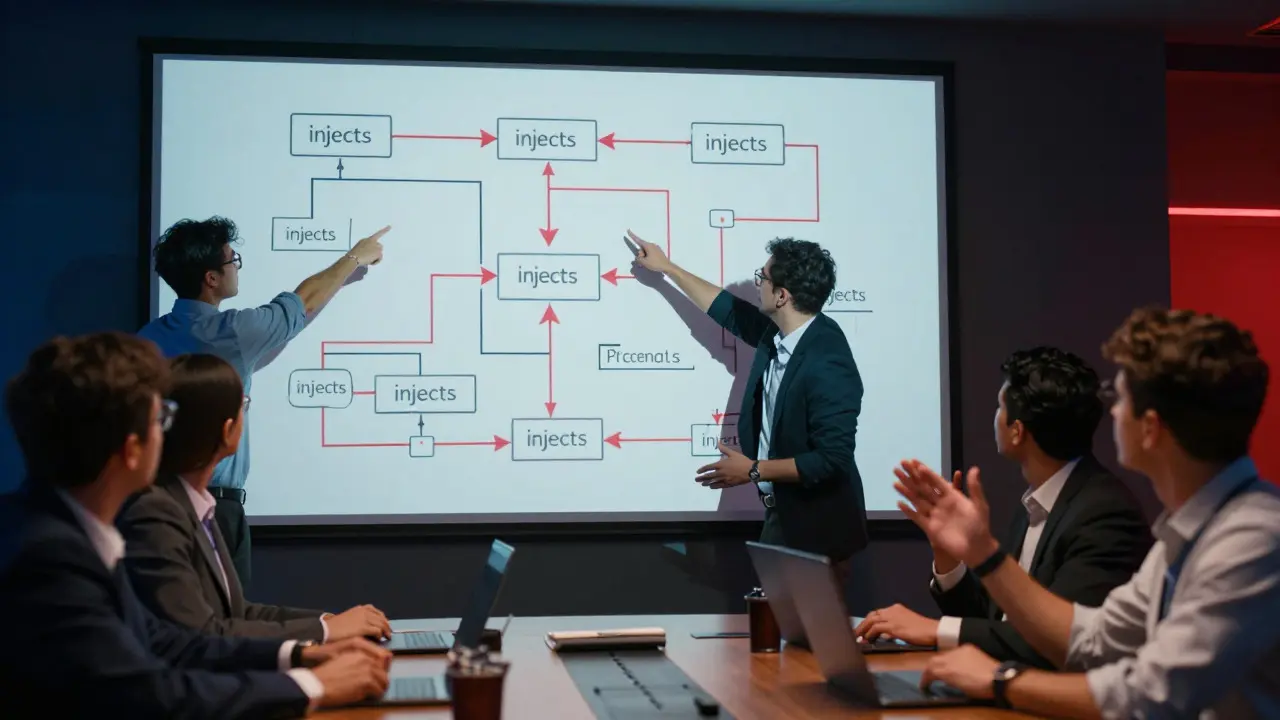
Lectures are boring and often ineffective for high-stakes scenarios. You need simulations. Think of them as fire drills, but for complex business problems. Start small. Maybe it’s a cyber-attack simulation where the IT director has to make decisions with incomplete data. Then scale up to a multi-day tabletop exercise involving executive leadership.
Here’s a simple framework for building a simulation:
- Define the Scenario: Pick a realistic threat. Don’t go for black swan events initially. Focus on probable risks like data breaches, natural disasters, or PR scandals.
- Assign Roles: Everyone gets a job. The CEO handles external comms. The COO manages internal operations. HR deals with employee welfare.
- Introduce Injects: Throw curveballs mid-exercise. "The server is down," "A journalist is asking questions," "A key supplier went bankrupt." See how the team adapts.
- Debrief Immediately: This is the most critical step. What worked? What failed? Where did communication break down?
The goal isn’t to have a perfect run. It’s to find the cracks in your armor before the real enemy attacks.
Comparing Training Approaches
Not all training methods suit every organization. Your choice depends on budget, size, and industry risk profile. Here’s a breakdown of common approaches:
| Method | Best For | Cost Implication | Effectiveness |
|---|---|---|---|
| Tabletop Exercises | Leadership Teams | Low (Internal Facilitator) | High for Strategy |
| Live Drills | Frontline Staff | Medium (Disruptive) | High for Execution |
| E-Learning Modules | All Employees | Low (Scalable) | Medium for Awareness |
| Third-Party Simulations | Large Corporations | High (External Experts) | Very High for Complexity |
Notice that e-learning is great for basic awareness but fails to build coordination skills. Live drills are excellent for testing physical responses but can be costly if done too frequently. Tabletop exercises offer the best ROI for strategic planning.
Common Pitfalls to Avoid
Even experienced trainers fall into traps. One big mistake is assuming everyone reads the manual. In reality, people skim. Another error is ignoring the "human factor." If your staff feels unsupported during a crisis, turnover spikes afterward. Training should address emotional well-being, not just logistical steps.
Also, beware of "checklist fatigue." If your procedures are so rigid that they require ten approvals for every action, you’ll move too slowly. Modern crises demand agility. Train your teams to make educated guesses when data is missing, rather than freezing in analysis paralysis.
Measuring Success After the Drill
How do you know if your training worked? Look for specific metrics. Did response times decrease compared to previous years? Did fewer errors occur during the simulation? Did employees report higher confidence levels in post-drill surveys?
Track these KPIs over time. If your mean time to recovery (MTTR) drops by 20% after implementing new training protocols, you have proof of value. Use this data to justify further investment in resilience programs.
Remember, business continuity isn’t a one-time project. It’s an ongoing cycle of prepare, test, learn, and improve. As threats evolve-from AI-driven cyberattacks to climate-related disruptions-your training must evolve with them.
Frequently Asked Questions
How often should we conduct crisis management training?
Ideally, quarterly tabletop exercises for leadership and annual live drills for broader staff. However, any significant change in your business structure, technology stack, or market environment should trigger an immediate review and potential retraining session. Consistency matters more than frequency; regular short sessions beat rare marathon workshops.
Do small businesses really need formal BCP training?
Absolutely. Small businesses are often more vulnerable because they lack redundancy. If one key person gets sick or a single supplier fails, the whole operation can halt. Formal training helps small teams identify critical dependencies and establish clear backup roles without needing a large HR department to manage it.
What is the difference between crisis management and business continuity?
Crisis management focuses on responding to the immediate incident-stopping the bleeding, communicating with stakeholders, and making urgent decisions. Business continuity focuses on keeping essential functions running during and after the crisis. Think of crisis management as the ER doctor stabilizing the patient, while business continuity is the rehabilitation plan ensuring they return to normal life.
Who should lead the training sessions?
It depends on the complexity. Internal leaders who understand the specific operational risks are best for tactical drills. For strategic scenarios, bringing in an external facilitator can provide objectivity and challenge groupthink. A hybrid approach often works best: internal experts design the scenarios, while external coaches facilitate the debriefs to ensure honest feedback.
Can online tools replace in-person simulations?
Online tools are great for knowledge transfer and asynchronous learning, but they struggle to replicate the interpersonal dynamics of a real crisis. Virtual reality (VR) and advanced simulation software are closing this gap, allowing remote teams to practice coordination. However, nothing beats the nuance of face-to-face interaction for high-stakes negotiation and conflict resolution scenarios.
Comments
Iva Grekova
This is such a needed reminder that plans are just paper until they're practiced. I love the focus on psychological resilience because honestly, panic spreads faster than facts any day.
Onyinyechi Nwosu
so true about the binder full of docs nobody reads. muscle memory is everything when chaos hits
Chandan Singh
While the article touches on valid points regarding simulation frameworks it overlooks the critical importance of automated failover systems in modern IT infrastructure which reduces the cognitive load on human operators during initial shock phases significantly. Furthermore tabletop exercises often suffer from groupthink unless facilitated by an external party who can challenge assumptions effectively without internal political bias influencing the outcome of the debriefing session immediately following the exercise scenario completion.
Brannen Hall
E-learning modules? Please. Nobody remembers anything from those click-through slides. It's just compliance theater for HR budgets.
tiffany King
I think you're being a bit harsh on e-learning though! It's great for getting everyone on the same page quickly before diving into the heavy stuff like live drills. You have to start somewhere right?
Brenna Gonedrman
The section on psychological resilience was absolutely vital and often completely ignored in standard corporate training programs which usually treat humans like robots that just execute code. If your team isn't mentally prepared to handle the stress then all the logistical backups in the world won't save you from total operational collapse.
Courtney Wagstaff
Love the "fire drill" analogy here. It really helps people understand why we need to practice even when things seem fine. Also that part about not freezing due to analysis paralysis is spot on for my industry lol.
Elisabeth Ballet
Listen up! If you aren't testing your protocols quarterly you are setting yourself up to fail. Stop making excuses about budget or time and get your leadership team in a room to actually run these scenarios. Your competitors will thank you when you recover faster than they do.
Joanna Mucha
We must consider the existential dread inherent in crisis management itself. The binder is merely a talisman against the void of uncertainty. True continuity requires a philosophical acceptance of entropy rather than mere procedural compliance. One cannot simply train for chaos one must embody it.