

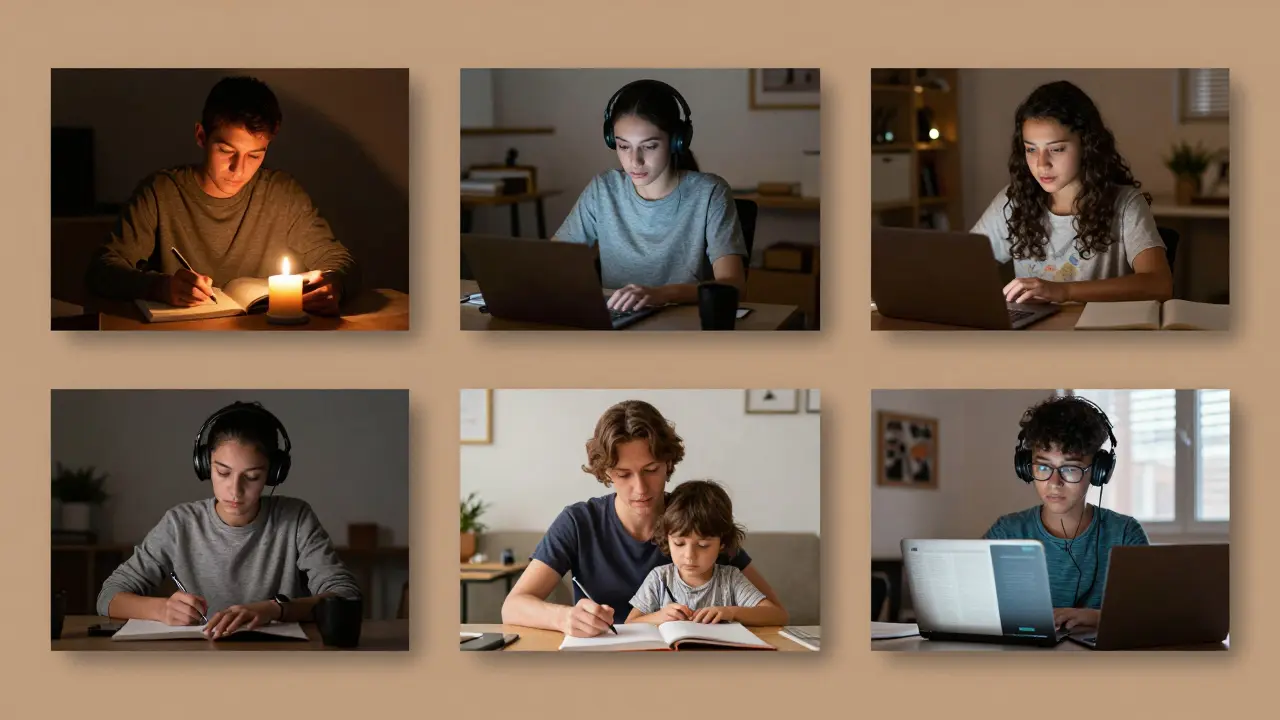
When you teach online to a group of students from different countries, languages, and cultural backgrounds, one-size-fits-all lessons don’t work. A student in Lagos might be logging in at 3 a.m. because that’s the only time their home has power. A student in Oaxaca might be juggling childcare while attending class. Another might come from a community where speaking up in group discussions is seen as disrespectful, not brave. If your course assumes everyone learns the same way, you’re not just missing the mark-you’re leaving learners behind.
What Culturally Responsive Teaching Really Means Online
Culturally responsive teaching isn’t about adding a single lesson on global holidays or using a few translated phrases. It’s about redesigning how you teach so that every student’s identity, experience, and way of knowing becomes part of the learning process. In online environments, this means recognizing that culture shapes how people communicate, solve problems, and even think about time and authority.
For example, in many Indigenous communities, knowledge is passed down through storytelling, not lectures. In East Asian contexts, silence in discussion may signal deep thought, not disengagement. In some Latin American and African cultures, collective decision-making is valued over individual expression. If your online course only rewards quick, vocal responses, you’re silently penalizing students whose cultural norms don’t match your expectations.
Building Trust in a Virtual Classroom
Trust is the foundation of any learning environment, but it’s harder to build online. Students can’t see your facial expressions or read the room. They don’t know if you notice when they’re struggling or if you even care. Start by making space for personal stories-not as assignments, but as part of daily interaction.
Try this: At the start of the term, ask students to share one thing about their home, work, or community that shapes how they learn. Not a formal bio. Just a sentence or two. Maybe it’s, “I help my younger siblings with homework after my shift,” or “We don’t have reliable internet, so I download videos to watch offline.” You’ll be surprised how much this humanizes your class. And when students feel seen, they show up.
Designing Flexible, Not Just Accessible, Content
Accessibility is about making sure someone can log in. Cultural responsiveness is about making sure they can thrive once they’re there. That means going beyond captions and screen readers.
Instead of requiring live Zoom sessions at a fixed time, offer asynchronous alternatives with clear guidelines. Record lectures with optional transcripts in multiple languages. Let students submit assignments in formats that suit their strengths-a video essay, a podcast, a visual map, or a written reflection. Don’t assume writing is the only valid way to demonstrate understanding.
Also, avoid examples that only reflect Western contexts. A business case study about supply chains shouldn’t only mention U.S. warehouses. Include examples from Southeast Asian markets, rural India, or Indigenous cooperatives in Canada. When students see their realities reflected, they feel like they belong.
Reimagining Participation and Assessment
Traditional participation grades often favor extroverts and native English speakers. In an online cohort with 15 nationalities, that’s unfair. One student might contribute deeply in written forums but never speak in video calls. Another might hesitate to post because they fear grammar mistakes.
Replace “participation = speaking up” with “engagement = meaningful contribution.” Use discussion boards where students respond to each other’s posts before replying to you. Create peer review cycles that emphasize feedback, not grades. Let students choose how they want to be assessed-through a reflective journal, a collaborative project, or a recorded oral presentation.
And here’s a hard truth: if you’re grading grammar over ideas, you’re prioritizing language fluency over learning. That’s not equity. That’s exclusion.
Collaborating with Students, Not Just Teaching Them
Don’t assume you know what your students need. Ask them. Create anonymous feedback loops every two weeks. Use simple tools like Google Forms or Padlet. Ask: “What’s working?” “What feels alienating?” “What resource would help you more?”
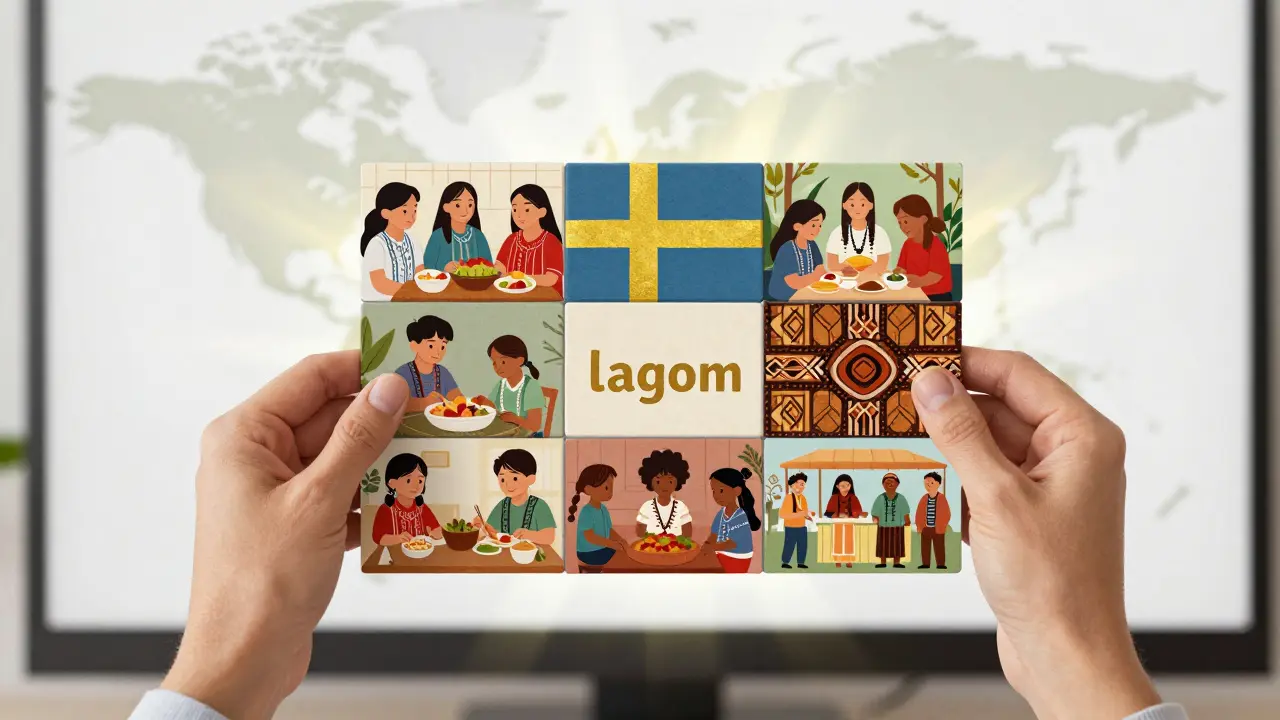
One instructor in New Zealand started a monthly “Cultural Exchange Hour” where students taught each other a custom from their culture-not as a performance, but as a learning moment. A student from the Philippines shared how family meals are used to discuss problems. A student from Sweden explained how “lagom” (just enough) shapes their approach to work. These weren’t side activities. They became core lessons in communication and community.
Professional Development for Educators
Most online teaching certifications don’t cover cultural responsiveness. They teach you how to use LMS platforms, not how to navigate cultural power dynamics. That’s a gap-and it’s costly.
Start small: Read one article a month from scholars like Geneva Gay or Ladson-Billings. Join online communities like the Global Equity in Education Network. Watch videos from educators in Nigeria, Brazil, or Mongolia who are redesigning their courses for cultural relevance. Don’t wait for your university to offer training. Build your own.
And remember: you don’t need to be an expert in every culture. You just need to be curious. A simple “Tell me more about how you approach this” goes further than any checklist.
Why This Matters Now More Than Ever
In 2026, over 60% of online learners come from outside North America and Europe. Institutions that treat diversity as a checkbox are falling behind. Students aren’t just looking for credentials-they’re looking for belonging. They want to know their voices matter, their time matters, their culture matters.
Culturally responsive teaching isn’t a nice-to-have. It’s the only way to create online learning that’s truly scalable, sustainable, and just. When you design for difference, you don’t dilute the learning-you deepen it.
Start Today: Three Practical Steps
- Revise one assignment prompt to allow multiple formats of response (audio, video, visual, text).
- Replace one example in your course with a non-Western case study or perspective.
- Send one anonymous survey asking students: “What’s one thing about your background that affects how you learn?”
You don’t need to overhaul everything. Just change one thing. Then another. Culture isn’t a curriculum add-on. It’s the lens through which every lesson is received. Make it visible. Make it respected. Make it part of how you teach.
Comments
Mbuyiselwa Cindi
Just finished redesigning my entire online course based on this, and wow-students are actually logging in on time now. One from Lagos told me she finally felt seen when I let her submit a voice note instead of a written essay. She said her grandmother’s stories taught her more than any textbook ever could. I didn’t even know she’d lost her mom last year. She shared that unprompted. Culture isn’t a checkbox. It’s the heartbeat of learning.
Krzysztof Lasocki
So you're telling me we shouldn't force 20-year-olds from rural Bihar to write 1500-word essays at 3 a.m. because 'academic rigor'? Bro. That's not rigor. That's just laziness wrapped in a syllabus. I used to do this. Then I let students submit TikTok-style reflections. Now their engagement is 300% higher. Also, I stopped grading grammar. Now I grade courage. And yeah, it's messy. So what?
Henry Kelley
Man I wish my uni would get this. We got this big LMS update last year and all they did was add a new button for 'multilingual support'-which just meant auto-translating everything into broken Spanish. Meanwhile, my student from rural Nepal is still uploading PDFs of handwritten notes because her phone can't open .docx files. Accessibility isn't about buttons. It's about listening. And no, I don't have a fancy training certificate. I just pay attention.
Patrick Sieber
This is the most grounded, practical guide to online equity I’ve read in years. I’ve been teaching online since 2018 and this is the first time someone nailed the difference between accessibility and cultural responsiveness. I’ve started doing the 'one thing about your home' prompt at the start of every term. The responses? Heartbreaking. Beautiful. Real. One student wrote: 'I learn best when I’m lying down because I’m tired from working two jobs.' I didn’t know I needed to hear that. Now I design for that.
Kieran Danagher
Let me guess-the next thing you’ll ask us to do is bow to a statue of Paulo Freire while chanting 'critical pedagogy' in unison? No. Just no. This isn’t performative activism. This is just good teaching. Stop making it a movement. Just stop forcing everyone to write essays. Let them record a 2-minute video. Let them draw a comic. Let them send a voice memo. Jesus. We’re educators, not content moderators.
poonam upadhyay
Oh, so now we’re supposed to abandon academic standards because someone’s 'culture' makes them uncomfortable? Let me get this straight-your student from Oaxaca can’t handle a 1200-word essay because she’s 'juggling childcare'? So we lower the bar? What about the student from Bangalore who wakes up at 4 a.m. to study while her parents sleep? She doesn’t get a pass? This isn’t equity-it’s condescension disguised as compassion. And don’t even get me started on 'oral presentations'-who’s going to grade those fairly across 15 time zones? This is chaos wrapped in woke glitter.
Shivam Mogha
Agreed. Let students choose how they learn. No need to overthink it.
mani kandan
There is a quiet dignity in silence. In many Indian villages, to speak too quickly is to reveal insecurity. To listen deeply is to honor the wisdom of the group. I once had a student from Kerala who never spoke in forums but wrote the most thoughtful, nuanced responses-each one longer than the entire syllabus. I didn’t notice until I stopped counting posts and started reading. Sometimes, the most powerful voices are the ones we forget to hear because they don’t shout.
Rahul Borole
While the intent behind culturally responsive teaching is commendable, we must not sacrifice academic rigor in the name of inclusion. The global job market demands precision, clarity, and structured communication. Allowing video essays and voice memos may foster emotional comfort, but it undermines the development of critical literacy skills essential for professional advancement. Institutions must balance empathy with accountability. A degree is not a participation trophy.
Sheetal Srivastava
Let’s be brutally honest: this entire framework is a neoliberal distraction. You’re not 'empowering' marginalized learners-you’re commodifying their trauma as pedagogical content. 'Tell me about your home' becomes performative ethnography. The real issue? Underfunded institutions. The real solution? Pay teachers. Hire more staff. Stop outsourcing education to algorithms and then pretending that a 'cultural exchange hour' fixes systemic disinvestment. This is aesthetic activism. It looks good on a grant application. It doesn’t change a single child’s reality.
Bhavishya Kumar
There is no such thing as 'grammar over ideas'-grammar IS the structure of ideas. If you allow 'vocal presentations' without linguistic clarity, you are not promoting equity-you are enabling linguistic illiteracy. A student who cannot articulate an argument in written English cannot succeed in a global academic or professional environment. This is not elitism. It is realism. And yes, I know what a comma splice is. And I will correct it.
ujjwal fouzdar
What if the real crisis isn’t our curriculum-but our obsession with measuring learning as output? We’ve turned education into a factory. A factory that demands essays, deadlines, and participation points. But what if knowledge is not something we produce? What if it’s something we *remember*? What if the student in Lagos who logs in at 3 a.m. isn’t failing the system-she’s remembering how to survive it? Maybe the most radical act isn’t redesigning assignments... but letting go of the idea that learning must be documented, graded, and validated by someone with a PhD and a Zoom background of bookshelves.
Anand Pandit
This is exactly what I’ve been trying to tell my department for years. I started letting students submit projects as audio diaries last semester. One guy from Punjab recorded himself explaining quantum physics while helping his dad fix a tractor. He didn’t use a single equation-but he understood it better than anyone in class. I gave him an A+. No one complained. Everyone learned more. Sometimes, the best teaching happens when you stop being the expert and just get out of the way.