


You hit "Submit" on a quiz, and within seconds, an algorithm decides if you're struggling, bored, or ready to skip ahead. It feels like magic, but it's actually math processing your personal history. As AI-driven learning analytics becomes the backbone of modern classrooms, we’re trading convenience for something invisible: our digital footprints. The core problem isn't just that machines are watching; it's that most schools don't tell students exactly what they're seeing, how long they keep it, or who else gets a peek.
If you've ever wondered why a recommendation engine suggested a specific course or why your progress bar moved differently than your classmate's, you're already interacting with these systems. This guide breaks down how learning analytics works under the hood, where the privacy cracks usually form, and what concrete steps educators and learners can take to keep control of their data. No jargon-heavy lectures-just the facts you need to navigate this new reality.
The Data Trail You Leave Behind
Every click, pause, and hesitation generates a data point. In traditional schooling, a teacher might notice you frowning at page 42. In an AI-driven system, the software logs that you hovered over a definition for eight seconds before clicking away. These aren't just behavioral notes; they are behavioral data attributes attached to your unique identifier.
The scope of collection is often wider than users realize. Beyond grades and test scores, platforms capture:
- Interaction Metrics: Time spent on tasks, frequency of logins, and navigation paths through modules.
- Content Engagement: Which videos were re-watched, which articles were skimmed, and whether transcripts were downloaded.
- Device Context: Screen resolution, browser type, and even typing speed or error rates during input.
Consider a scenario from a large online university in New Zealand. A student’s irregular login times and rapid quiz completions triggered an "at-risk" flag. The system didn't know the student was working night shifts to pay tuition; it only saw patterns suggesting disengagement. Without human context, raw data can misinterpret life circumstances as academic failure. This highlights a critical gap: data literacy among both students and staff is often low, leading to decisions based on incomplete pictures.
Who Owns Your Digital Self?
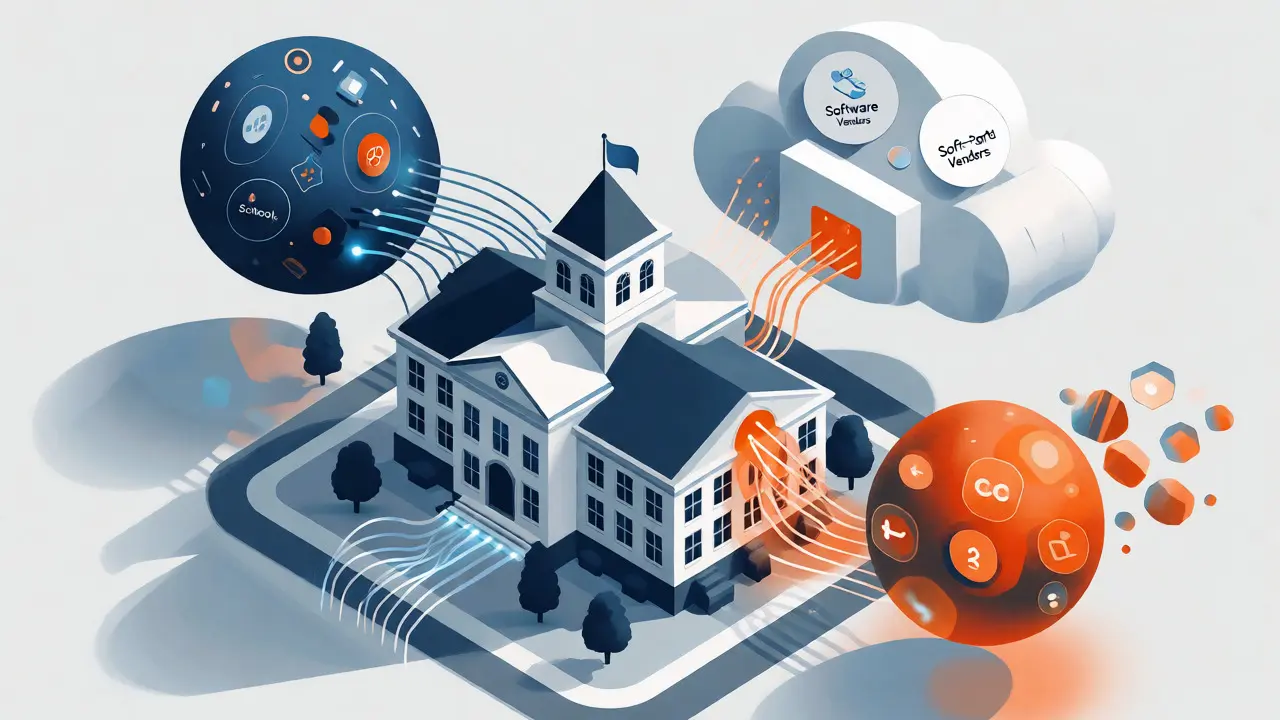
Ownership is tricky when third-party vendors handle the processing. Most institutions use external platforms like Canvas, Blackboard, or specialized AI tutors. When you sign up, you agree to Terms of Service (ToS) that often grant these companies broad rights to aggregate, anonymize, and sometimes sell de-identified datasets.
Under regulations like the General Data Protection Regulation (GDPR) in Europe or the Privacy Act 2020 here in New Zealand, individuals have specific rights. You can request access to your data, ask for corrections, or demand deletion. However, exercising these rights requires knowing who holds the data. Is it the school? The software vendor? Or a cloud provider hosting the servers?
| Stakeholder | Data Access Level | Primary Use Case | Retention Period |
|---|---|---|---|
| Institution/School | Full Academic & Behavioral History | Curriculum Improvement, Early Intervention | 7-10 Years (Regulatory) |
| Software Vendor | Anonymized Aggregates + Raw Logs | Product Development, Algorithm Training | Indefinite (until contract ends) |
| Third-Party Ads | Demographic Tags + Interest Profiles | Targeted Marketing | Short-term (6-12 Months) |
| Student/User | Limited View via Dashboard | Self-Monitoring | N/A (Access Only) |
This table illustrates the power imbalance. Vendors often retain raw logs indefinitely to refine their models, while students see only a summary dashboard. If you want your raw interaction logs deleted, you must file a formal request, which many users never do because the process is opaque.
The Bias in the Machine
Privacy isn't just about secrecy; it's about fairness. AI models learn from historical data. If past cohorts had systemic biases-for example, if women were historically encouraged less toward STEM fields-the algorithm might subtly deprioritize advanced math recommendations for female students today. This is known as algorithmic bias.
A study published by the National Center for Education Statistics highlighted that predictive models often perform worse for minority groups due to smaller sample sizes in training data. When an AI predicts a dropout risk, it’s not predicting destiny; it’s calculating probability based on flawed historical trends. If your demographic profile matches a group that historically struggled, the system might lower its expectations for you, creating a self-fulfilling prophecy.
To mitigate this, look for platforms that offer "explainability." Can the system tell you *why* it made a recommendation? If the answer is just "the black box," be cautious. Transparent systems allow educators to override algorithmic suggestions, ensuring human judgment remains the final arbiter.

Practical Steps for Students and Educators
You don't need to become a lawyer to protect your data, but you do need to be proactive. Here are actionable strategies tailored for different roles.
For Students:
- Check the Privacy Policy Summary: Look for sections titled "Data Sharing" or "Third Parties." If they mention selling data to advertisers, consider using incognito mode or a separate email address for non-critical courses.
- Minimize Profile Details: Don’t fill out optional demographic fields unless required for accreditation. Less data means fewer vectors for profiling.
- Request Data Exports: At the end of a term, download your activity logs. Keeping a local copy ensures you have evidence if disputes arise later.
For Educators:
- Conduct a Data Audit: Before adopting a new tool, list every piece of data it collects. Ask the vendor: "Do you use our student data to train general AI models?"
- Implement Consent Gates: For sensitive biometric data (like eye-tracking in VR labs), require explicit opt-in rather than assuming consent via enrollment.
- Review Vendor Contracts: Ensure clauses exist for data breach notifications within 72 hours and clear terms for data deletion upon contract termination.
These steps shift the dynamic from passive acceptance to active management. It’s not about rejecting technology; it’s about demanding transparency.
Future-Proofing Your Learning Environment
The landscape is shifting. By 2026, edge computing allows more processing to happen directly on your device rather than sending raw data to the cloud. This reduces exposure during transmission. Additionally, federated learning techniques enable AI to learn from user devices without ever centralizing the actual data points. Imagine an app that improves its grammar correction feature by learning from your typos locally, then sending only the mathematical updates-not the sentences themselves-to the server.
However, regulation lags behind innovation. While the EU’s AI Act sets strict boundaries for high-risk educational AI, other regions vary wildly. Staying informed means following bodies like the International Association for K-12 Online Learning (iNACOL) or local privacy commissioners. They publish guidelines that often precede hard laws.
Ultimately, data privacy in AI-driven learning isn't a hurdle; it's a quality check. When you know how your data is handled, you trust the system more. And trust is the foundation of effective learning. If you feel watched rather than supported, engagement drops. So, ask questions. Demand clarity. Your digital identity is part of your educational journey-guard it accordingly.
Does AI grading violate student privacy?
Not necessarily. AI grading processes text and metadata, but privacy violations occur if the platform retains full essay drafts indefinitely or shares them with third parties without consent. Check if the vendor deletes raw submissions after scoring.
Can I delete my data from a learning platform after graduating?
Yes, under laws like GDPR and NZ Privacy Act, you generally have the right to erasure. However, institutions may retain minimal records for alumni verification or legal compliance. Always submit a written request specifying "right to be forgotten."
What is 'anonymization' in learning analytics?
Anonymization removes direct identifiers (names, emails) so data cannot be traced back to you. True anonymization is difficult; if enough indirect details remain (age, major, location), re-identification is possible. Look for "k-anonymity" guarantees in vendor contracts.
Are free learning apps safer than paid ones?
Often, no. Free apps frequently monetize user data through advertising or selling aggregated insights. Paid platforms typically rely on subscription revenue, reducing the incentive to exploit your data commercially.
How does AI bias affect personalized learning?
Bias can lead to inaccurate predictions. If an AI model was trained mostly on one demographic, it may misjudge the potential of students from underrepresented groups, offering them easier content or lower expectations prematurely.