

Building a Database and Backend Course that actually works in 2026 is harder than it looks. You have the technology stack shifting under your feet every six months, students who want job-ready skills in weeks, and an industry that demands more than just knowing how to write SQL queries. If you are designing a curriculum for backend development or database management, you need a strategy that balances timeless fundamentals with current market realities.
This isn't about listing tools. It's about creating a learning path that produces engineers who can build scalable systems, secure data pipelines, and maintainable APIs. Whether you are an educator at a university, a bootcamp instructor, or a self-taught developer structuring your own study plan, this guide breaks down exactly what needs to be in your syllabus to stay relevant.
The Core Pillars of Modern Backend Education
To create effective backend course content, you must anchor your strategy in three non-negotiable pillars: language proficiency, data architecture, and system design. Skipping any one of these leaves graduates unprepared for real-world engineering roles.
First, pick a primary language, but teach the concepts behind it. In 2026, Python remains dominant for data-heavy backends due to libraries like FastAPI and Django. Node.js continues to rule single-language full-stack environments. Go has become the standard for high-performance microservices. Your course should choose one as the primary vehicle but explain how concurrency, memory management, and error handling differ across them. This prevents students from becoming "framework tourists" who collapse when they switch stacks.
Second, data architecture must go beyond basic CRUD operations. Students need to understand why we use relational databases like PostgreSQL for transactional integrity and NoSQL databases like MongoDB or Redis for caching and flexible schemas. The strategy here is comparative learning: show a scenario where a relational model fails (e.g., rapid schema changes) and where a NoSQL model struggles (e.g., complex joins). This builds architectural intuition.
Third, system design principles are no longer optional for senior-level prep. Even entry-level courses should introduce concepts like load balancing, statelessness, and API versioning. These topics bridge the gap between writing code and building products.
Structuring the Database Curriculum
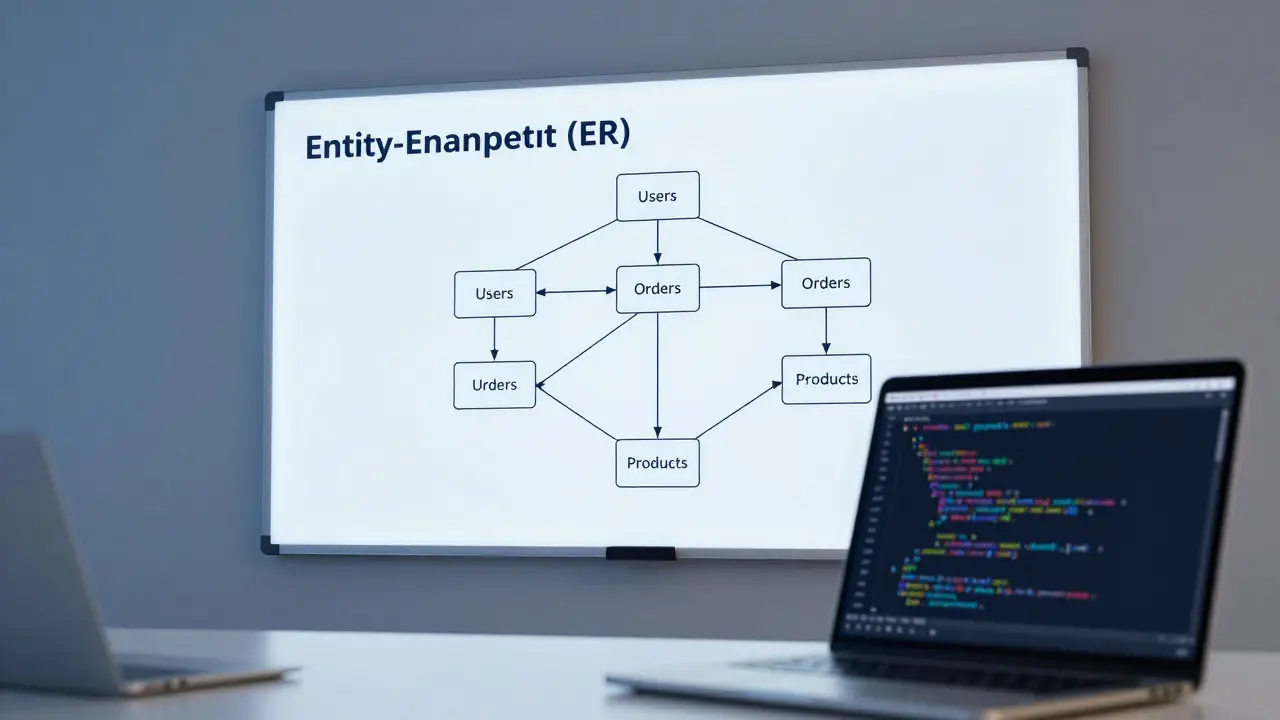
When designing the database portion of your coding course, avoid teaching SQL as a standalone syntax lesson. Instead, teach it as a tool for data modeling. Start with Entity-Relationship (ER) diagrams before writing a single query. This forces students to think about relationships-one-to-many, many-to-many-before they worry about SELECT statements.
- Weeks 1-3: Relational Fundamentals. Cover normalization forms (1NF, 2NF, 3NF) not as academic exercises, but as methods to prevent data redundancy. Use PostgreSQL as the primary engine because its adherence to standards makes it ideal for learning. Introduce indexing early; explain B-Trees vs. Hash indexes using real performance metrics.
- Weeks 4-5: Advanced Querying & Optimization. Teach JOINs, subqueries, and window functions. Crucially, include EXPLAIN ANALYZE plans. Show students how a missing index turns a millisecond query into a second-long bottleneck. This practical debugging skill is highly valued by employers.
- Weeks 6-7: NoSQL & Specialized Stores. Introduce document stores (MongoDB) for JSON-heavy applications and key-value stores (Redis) for session management and caching. Contrast ACID compliance in relational DBs with BASE principles in NoSQL systems.
- Weeks 8-9: Data Migration & Security. Cover backup strategies, replication (master-slave), and role-based access control (RBAC). SQL injection prevention must be emphasized through parameterized queries, not just theoretical warnings.
This structure ensures that by the end of the module, students don't just know how to store data; they understand how to protect it, retrieve it efficiently, and scale it as user demand grows.
Backend Architecture & API Design
The backend serves as the brain of the application, processing requests and managing business logic. Your course content must reflect the shift toward service-oriented architectures. While monolithic applications still exist, most new projects start with modular designs that can evolve into microservices.
Start with RESTful API design. Teach HTTP methods (GET, POST, PUT, DELETE) and status codes rigorously. Many beginners misuse 200 OK for errors or ignore idempotency. Provide concrete examples: a payment endpoint must be idempotent to prevent double-charging users. Then, introduce GraphQL as an alternative for clients that need specific data subsets, reducing over-fetching common in REST.
Authentication and authorization are critical security layers. Move beyond simple JWT (JSON Web Tokens) tutorials. Explain the trade-offs between session-based auth (cookies) and token-based auth (stateless). Discuss OAuth 2.0 flows for third-party logins (Google, GitHub) since this is a daily requirement in modern apps. Include a module on hashing passwords with bcrypt or Argon2, emphasizing why MD5 and SHA-256 are insufficient for password storage.
Finally, integrate testing into the workflow from day one. Unit tests for business logic, integration tests for API endpoints, and end-to-end tests for critical paths. Tools like Jest for Node.js or Pytest for Python should be part of the standard toolkit. Employers look for developers who write testable code, not just functional code.
DevOps & Deployment Essentials
A backend engineer’s job doesn’t end when the code runs locally. Your course strategy must include deployment and infrastructure basics. In 2026, cloud-native development is the norm. Students should be comfortable deploying to platforms like AWS, Azure, or serverless options like Vercel or Netlify Functions.
Introduce Docker early. Containerization solves the "it works on my machine" problem. Teach students to write efficient Dockerfiles, manage multi-stage builds to reduce image size, and use docker-compose for local development environments involving multiple services (app, DB, cache).
Basic CI/CD (Continuous Integration/Continuous Deployment) pipelines are essential. Show how to automate testing and deployment using GitHub Actions or GitLab CI. This exposes students to professional workflows where code quality is enforced automatically before reaching production.
| Technology | Best Use Case | Learning Curve | Key Advantage |
|---|---|---|---|
| PostgreSQL | Transactional data, complex queries | Medium | ACID compliance, JSON support |
| MongoDB | Content management, rapid prototyping | Low | Flexible schema, horizontal scaling |
| Redis | Caching, session storage, queues | Low | In-memory speed, pub/sub messaging |
| Docker | Environment consistency | Medium | Isolation, reproducibility |
| Kubernetes | Orchestrating large-scale containers | High | Auto-scaling, self-healing |

Project-Based Learning: From Theory to Practice
Lectures alone won't build competence. Your course content strategy must prioritize project-based learning. Assignments should mimic real-world constraints: tight deadlines, ambiguous requirements, and legacy codebases.
Start with small modules: build a URL shortener to learn routing and database mapping. Progress to a task manager to practice authentication and CRUD operations. For the capstone, assign a system that requires external API integration, such as a weather dashboard pulling data from OpenWeatherMap or an e-commerce backend connecting to Stripe for payments.
Encourage collaboration using Git. Require pull requests, code reviews, and branching strategies (like GitFlow or Trunk-Based Development). This soft skill is often the differentiator between junior and mid-level hires. Students learn to communicate technical decisions, handle merge conflicts, and maintain clean commit histories.
Adapting to AI-Assisted Development
You cannot ignore the impact of AI coding assistants like GitHub Copilot or Cursor in 2026. Your course should explicitly address how to use these tools responsibly. Teach students to prompt effectively, review generated code for security vulnerabilities, and understand the underlying logic rather than copy-pasting blindly.
Include exercises where students debug AI-generated code that contains subtle bugs or inefficiencies. This builds critical thinking skills and ensures they remain in control of the development process. The goal is to produce engineers who leverage AI to accelerate productivity, not those who depend on it to fill knowledge gaps.
What programming language is best for a backend course in 2026?
There is no single "best" language, but Python and Node.js are the most accessible for beginners due to their vast ecosystems and community support. Go is recommended for courses focusing on high-performance systems. Choose based on your target audience's career goals: web startups often prefer Node.js or Python, while enterprise infrastructure roles may favor Go or Java.
How much time should be dedicated to databases vs. application logic?
A balanced approach suggests a 40% focus on application logic (APIs, business rules) and 60% on data persistence and architecture. Databases are the backbone of backend systems; poor data modeling leads to scalability issues later. Ensure students spend significant time optimizing queries and understanding schema design.
Should I teach SQL or NoSQL first?
Always teach SQL first. Relational databases enforce discipline in data modeling and provide a solid foundation for understanding transactions and consistency. Once students grasp structured data, introducing NoSQL becomes easier as they can appreciate the trade-offs of flexibility versus integrity.
Is Kubernetes necessary for an entry-level backend course?
No, Kubernetes is too complex for entry-level learners. Focus on Docker for containerization and basic cloud deployment. Mention Kubernetes as an advanced topic for orchestration, but ensure students master local development and simple cloud instances first.
How do I keep my course content updated with rapid tech changes?
Focus on principles over tools. HTTP, REST, SQL, and object-oriented design change slowly. Update specific library versions and framework features annually. Incorporate a "current trends" module that covers emerging technologies like WebAssembly or edge computing, allowing you to swap out content without restructuring the entire curriculum.
Comments
Francis Laquerre
The bit about teaching ER diagrams before writing a single query is absolutely spot on. I have seen so many junior devs who can write a complex join but have no idea why their schema is a mess. It is like building a house without a blueprint and wondering why the walls are crooked. You cannot just throw SQL at people and expect them to understand data integrity. The structure matters more than the syntax in the long run.
Andrea Alonzo
I completely agree with the emphasis on foundational concepts over fleeting framework trends, because when you strip away all the shiny new tools that come out every six months, what remains is the ability to model data correctly and design systems that do not collapse under load, which is something that takes years to master rather than weeks of bootcamp intensity, and it is frustrating to see curricula that prioritize getting students job-ready quickly by teaching them how to use a specific library version instead of teaching them how to think like an engineer who can adapt to any technology stack that emerges in the future.
Saranya M.L.
This curriculum lacks rigor. In India, we teach ACID properties from day one because we understand that data consistency is non-negotiable in enterprise environments. Teaching NoSQL before relational databases is pedagogical malpractice. You must enforce strict normalization forms first. If you cannot explain why 3NF prevents update anomalies, you have no business teaching backend architecture. The industry demands precision, not this casual approach to data modeling.
om gman
oh look another guide telling us to learn docker like its some revolutionary discovery lol. nobody cares about your 'strategy' when the real world is just copy pasting code from stack overflow and hoping it works. kubernetes is too hard anyway so why bother mentioning it if you are just going to say skip it for beginners. typical western elitism pretending there is a right way to code
michael rome
While the frustration with outdated content is understandable, the goal here is to provide a structured path for those who genuinely want to build robust systems rather than just patching together broken scripts. Understanding containerization is essential for reproducibility, which saves countless hours of debugging environment-specific issues later on. It is not about being elite; it is about being professional and ensuring that the software you deploy behaves consistently across different machines and stages of development.
Oskar Falkenberg
i totally get where everyone is coming from regarding the pace of change in tech stacks but i think the most important thing is really just making sure students understand the underlying principles because frameworks come and go but http requests and database transactions are pretty much here to stay forever and if you focus too much on the specific tool you end up being obsolete in two years whereas if you focus on the concepts you can pick up any new language or database in a matter of weeks which is what i have found in my own experience working with various teams over the last decade
Stephanie Frank
Let's be real, half these 'backend engineers' produced by bootcamps cant even write a decent unit test without breaking the entire application. They treat testing as an afterthought until production goes down. This guide is nice but it doesnt address the cultural issue of developers who are terrified of refactoring because they wrote spaghetti code initially. You need to teach them to fear bad code more than deadlines.
Patrick Dorion
The integration of AI coding assistants into the curriculum is a crucial point that many educators are still ignoring. We need to shift the paradigm from writing code to reviewing and architecting systems. If students rely solely on Copilot without understanding the logic, they become liabilities. Teaching them to debug AI-generated inefficiencies is perhaps the most valuable skill they can acquire for the modern workforce.
Marissa Haque
I am so glad someone finally mentioned GraphQL! REST is fine for simple CRUD apps but when you start dealing with complex client requirements, over-fetching becomes a nightmare! Having the ability to request exactly what you need is such a relief for frontend developers! Plus, the type safety with TypeScript is incredible! It makes the whole development flow so much smoother!
Keith Barker
code is poetry but most juniors write doggerel. the difference lies in understanding constraints. sql is not just a query language it is a constraint enforcement mechanism. ignore that and you will pay for it in technical debt.
Lisa Puster
typical american approach focusing on speed over quality. in europe we spend months on architecture before writing a line of code. this rush to produce 'job ready' graduates is creating a generation of incompetent coders who break things constantly. stop teaching shortcuts and start teaching discipline.
Jeanne Abrahams
Sarcastically speaking, I suppose learning to use Redis for caching is the next big step towards enlightenment. But seriously, the part about RBAC and security is often glossed over until someone gets hacked. It is funny how we teach kids to ride bikes with training wheels but then hand them the keys to a server with root access and tell them to figure it out themselves.
Bineesh Mathew
The moral decay of modern software engineering is evident in the neglect of fundamental system design principles. We have created a class of developers who are mere operators of tools rather than true architects of digital reality. To teach without emphasizing the ethical responsibility of secure and scalable systems is to contribute to the chaos of the digital age. One must ask: what is the soul of a database? It is order amidst entropy.