

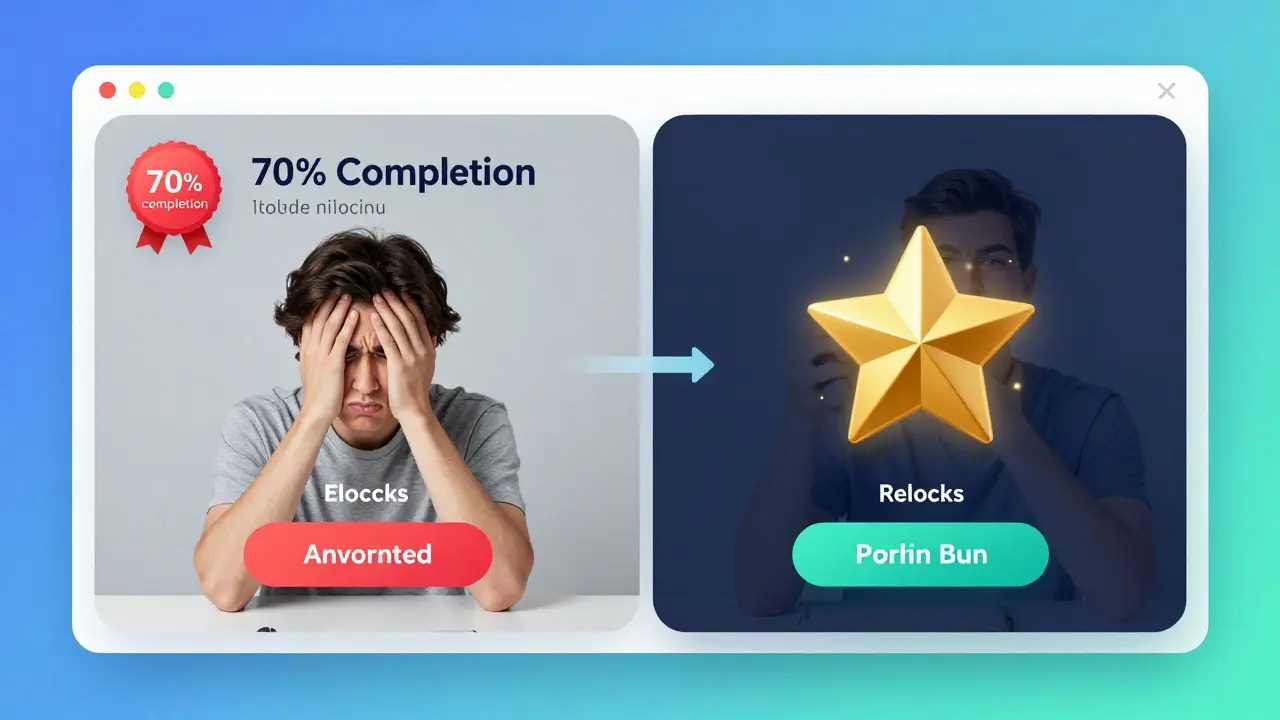
Most online courses fail because they treat every learner the same. You upload a 90-minute video, add a quiz, and hope people stick with it. But humans don’t learn like robots. Some need to chew on one concept for days. Others zip through it and get bored. That’s where drip content and learning paths change everything. Instead of dumping everything at once, smart platforms deliver lessons bit by bit-tailored to how each person responds. This isn’t just a nice feature. It’s the difference between a course that gets ignored and one that transforms skills.
What Drip Content Actually Does
Drip content isn’t just scheduling videos to go out every Monday. It’s about releasing material based on behavior, progress, or even time spent. Think of it like a video game: you don’t get the boss fight until you’ve mastered the first three levels. Platforms like Teachable and Thinkific let you set rules: ‘Release Module 3 only after 80% of Module 2 is completed.’ That’s not arbitrary-it’s adaptive.
Real-world example: A marketing course on Kajabi used drip content to hold learners longer. Instead of giving all 12 modules upfront, they released one per week. But here’s the twist: if someone finished a module in two days and scored 90%+ on the quiz, they got the next one immediately. Those learners finished the course 40% faster than others-and kept coming back for more. That’s the power of letting learners control the pace, not the other way around.
Learning Paths Are the Engine Behind Personalization
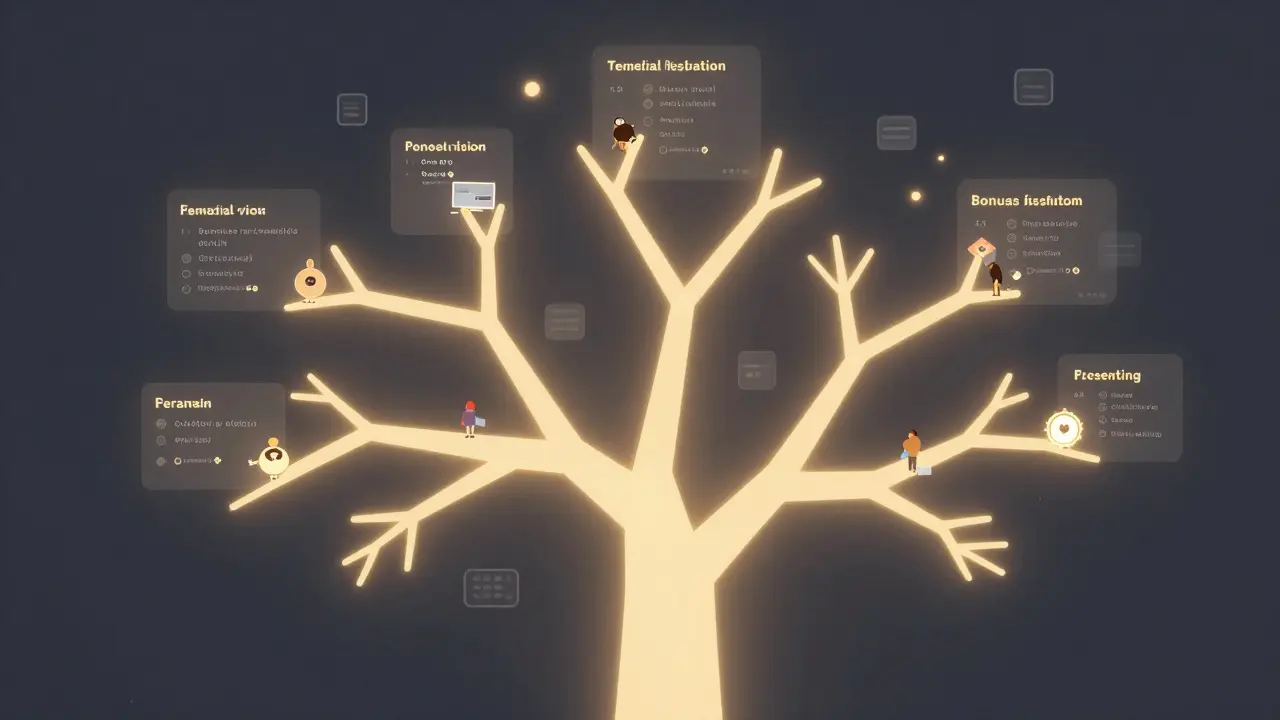
Drip content is the delivery system. Learning paths are the map. A learning path is a sequence of modules, assessments, and resources that branch based on performance. It’s not linear. It’s dynamic. One learner might take a path focused on analytics. Another, who struggles with data, gets extra practice modules before moving forward.
Platforms like LearnDash (for WordPress) and Podia allow you to build these paths visually. You drag and drop modules, then set conditions: ‘If quiz score < 70%, redirect to remedial content.’ No coding needed. In a recent study of 12,000 learners across three platforms, courses with branching paths had 68% higher completion rates than linear ones. Why? Because learners didn’t feel stuck or bored. They felt seen.
Which Platforms Actually Do This Well?
Not every platform can handle adaptive delivery. Some just schedule content by date. Others require developers to build logic. Here’s what works in 2026:
| Platform | Drip Content | Learning Paths | Conditional Release | Integration with LMS |
|---|---|---|---|---|
| Teachable | Yes (by date or completion) | Basic (sequential only) | Yes | No |
| Thinkific | Yes (completion-based) | Yes (with prerequisites) | Yes | Yes (via Zapier) |
| Kajabi | Yes (advanced rules) | Yes (multi-path) | Yes | Yes (native) |
| LearnDash | Yes (via plugins) | Yes (complex branching) | Yes | Yes (WordPress LMS) |
| Podia | Yes (by date) | Yes (simple paths) | Yes | No |
| Moodle | Yes (via settings) | Yes (advanced) | Yes | Yes (built-in) |
Teachable and Podia are great for beginners. They’re simple, clean, and affordable. But if you’re running a high-stakes training program-like certification prep or corporate onboarding-you need more. Kajabi and LearnDash let you build full decision trees. Want to send someone to a live coaching call if they fail a quiz twice? Done. Want to unlock a bonus case study only if they complete all practice exercises? That’s possible too.
Why This Matters for Learners
Adaptive delivery doesn’t just improve completion rates. It changes how people feel about learning. When you’re stuck on a concept and the system gives you extra help instead of moving on, you don’t feel dumb. You feel supported. When you breeze through content and get rewarded with faster access, you feel challenged, not rushed.
A teacher in New Zealand who switched from a static Udemy-style course to a Kajabi-powered adaptive path saw her dropout rate drop from 62% to 19% in six months. Her students weren’t smarter. The course just stopped treating them like a crowd and started treating them like individuals.
This isn’t about fancy tech. It’s about empathy. The best learning platforms don’t just deliver content-they respond to you. They notice when you’re struggling. They celebrate when you’re excelling. They adjust. That’s what makes learning stick.
Common Mistakes to Avoid
Even with the right tools, people mess this up. Here’s what not to do:
- Don’t drip too slowly. Releasing one module per week feels like torture if someone’s ready to move on. Let speed be a reward, not a prison.
- Don’t ignore feedback loops. If learners consistently fail Module 4, maybe the content is bad-not them. Use data to fix the course, not punish the learner.
- Don’t overcomplicate paths. Three branching options are enough. Ten? You’ll confuse everyone, including yourself.
- Don’t forget mobile. If your drip system doesn’t work on phones, half your learners will quit. Test it.
One course creator used conditional release to send learners to a video explaining a tricky concept-but forgot to make the video downloadable. Half the learners couldn’t watch it on their commute. They dropped out. Simple fix: add a PDF summary. That’s all it took.

How to Start Building Your Own Adaptive Course
You don’t need to rebuild your entire course. Start small:
- Pick one module that has the highest dropout rate.
- Add a quick quiz at the end.
- Set up a rule: if score is below 70%, automatically send them to a 5-minute video recap and a practice worksheet.
- If they score above 85%, unlock a bonus challenge or advanced reading.
- Track results for two weeks.
That’s it. You’ve just created your first adaptive learning path. No developers. No budget. Just smarter delivery.
Over time, you’ll see patterns. Maybe 30% of learners need extra help with the same topic. That’s your clue to rewrite that section. Maybe 20% finish everything in three days. That’s your signal to offer a fast-track badge. Adaptive learning isn’t about automation-it’s about listening.
What’s Next for Adaptive Learning
AI is starting to play a bigger role. Platforms like Absorb and Docebo now use machine learning to predict who’s at risk of dropping out-and suggest interventions before they quit. But the core idea hasn’t changed: learning works best when it’s personal.
The future isn’t AI replacing teachers. It’s AI helping teachers notice what they can’t see in a class of 500. Who’s falling behind? Who’s ready to leap ahead? Who needs a nudge? The platform tells you. You decide what to do.
That’s the real win. Not the tech. The human connection it enables.
What’s the difference between drip content and learning paths?
Drip content is about timing-when lessons are released. Learning paths are about direction-how learners move through content based on their performance. Drip controls the flow. Learning paths control the route.
Can I use drip content without a learning path?
Yes. You can release modules weekly without any branching. But you’re missing half the power. Drip content alone reduces overwhelm. Learning paths make learning effective. Together, they’re unbeatable.
Which platform is best for beginners?
Teachable or Podia. Both are easy to set up, have clean interfaces, and support basic drip and simple learning paths. You can get started in under an hour. Save complex branching for later.
Do I need to code to build adaptive courses?
No. Platforms like Kajabi, Thinkific, and LearnDash let you build conditional logic with drag-and-drop tools. You only need code if you’re building a custom system from scratch-which most people shouldn’t.
How do I know if my adaptive course is working?
Look at three things: completion rate, quiz scores, and time spent per module. If completion jumps up and time spent on failed modules drops, you’re doing it right. If learners are skipping content, your paths might be too confusing.
Is adaptive learning only for paid courses?
No. Even free courses benefit. A nonprofit offering free digital literacy training saw 50% more learners finish when they added a simple quiz-based drip system. Personalization works at any price point.
Adaptive course delivery isn’t the future. It’s the present. And if you’re still dumping content and hoping for the best, you’re already behind.
Comments
Diwakar Pandey
Really liked how you framed this as empathy, not tech. I've seen so many courses just dump content and wonder why people ghost after week one. The key is letting learners breathe. One module at a time, but only if they're ready. No rush.
Geet Ramchandani
This whole 'adaptive learning' thing is just corporate jargon for 'we don't want to make good content so we'll blame the learner instead.' If your course needs a quiz to decide if someone gets the next video, maybe your video was boring as hell to begin with. Also, Kajabi charges a fortune for this basic stuff.
Pooja Kalra
There is a deeper truth here, beyond platforms and drip schedules. Learning is not a linear ascent. It is a spiral. We return to the same concepts, not because we failed, but because we have grown. The machine does not understand this. It counts completion rates like coins in a jar. But the soul remembers the weight of confusion - and the quiet joy of finally seeing it. Who built this system? Who decided that mastery must be measured in clicks?
Jeroen Post
The whole thing is a psyop by edtech to keep you paying monthly. They don't care if you learn. They care if you stay subscribed. Watch the data. They track every second you linger. Then they sell your attention to advertisers. You think you're getting personalized learning? You're a lab rat in a Skinner box with a fancy dashboard.
Nathaniel Petrovick
Man I tried this on my small coaching course last year and it totally changed everything. I started with just one module with a quiz and a simple rule - if you scored under 70% you got a 3-min recap video. Dropouts dropped like crazy. People actually finished. No magic. Just listening. Also, mobile works fine if you keep videos under 5 min. Simple stuff works.
Honey Jonson
OMG YES this is so true!! I used to just upload videos and cry when people didnt finish. Then I added a stupid little quiz and a bonus PDF if they passed. People started messaging me like 'thank you for not making me feel dumb' and I was like... wait this is just basic human stuff?? We dont need AI to be kind. Just don't be a robot. Also my phone app works great now lol
Sally McElroy
It's alarming how many educators still treat learners like cattle. You don't herd sheep into a barn and expect them to graze efficiently. And yet, here we are - mass-produced courses with no regard for cognitive load, prior knowledge, or emotional readiness. The fact that this is even a discussion reveals a systemic failure in pedagogical training. This isn't 'tech' - it's basic psychology. And if you're still using Udemy-style dumps, you're not just outdated - you're negligent.
James Winter
Who cares about all this fancy crap? Just make the video clear. If people can't follow, they're lazy. Canada doesn't need this. We get stuff done without hand-holding.
Aimee Quenneville
James, you're adorable. I love how you think 'clear video' means 'no effort required.' I taught ESL to adults who worked night shifts. They didn't have time to rewatch 45-minute lectures. So I broke it into 5-min chunks with quizzes. They cried. Not from boredom. From relief. You call it hand-holding. I call it not being a jerk.
Cynthia Lamont
Did you even read the table? Teachable doesn't do branching paths properly. And Podia? Please. Their 'learning paths' are just folders with a delay button. This whole post is a marketing fluff piece disguised as insight. And don't get me started on Kajabi's pricing. They charge $199/month to do what Moodle does for free. This isn't innovation - it's rent-seeking.
Kirk Doherty
I used LearnDash for a community course. Set up one conditional rule: fail quiz = get extra worksheet. That's it. Completion went from 31% to 68%. No drama. No AI. Just basic feedback. Sometimes the simplest fix is the real one.
Meghan O'Connor
This entire article is a textbook example of over-engineering. If your content is good, people will finish it. If it's bad, no amount of drip or branching will save it. You're treating symptoms, not the disease. Also, 'adaptive learning' is just a buzzword invented by consultants who've never taught a class. Stop confusing complexity with intelligence.
Morgan ODonnell
I think the real win here is how it makes teachers feel. Not the learners - the teachers. When you see someone finally get it because you gave them a second chance, not a failing grade... that's the magic. I used to feel like a gatekeeper. Now I feel like a guide. And that changes everything.
Liam Hesmondhalgh
All this tech is just a crutch. Real teachers don't need platforms. They look in the eyes of their students and adjust. This is just tech bros trying to automate humanity. You can't code empathy. You just can't.
Patrick Tiernan
I tried this drip thing on my course about how to fix your car. Took me 3 hours to set up. One person finished in 2 days. The rest? They complained the videos were too short. So I made them longer. Now everyone's happy. Turns out people just want more stuff. Not less. Who knew?