


The Shift from Static Lessons to Fluid Learning
In early education history, the classroom was rigid. Every student heard the same lecture, solved the same worksheet, and moved to the next chapter regardless of whether they understood the material. That model felt outdated years ago, yet many systems still run on it today. In 2026, the standard has shifted dramatically toward Dynamic Content Adjustment, which isa method where educational materials change in real-time based on how a student interacts with them.
This approach is the core engine of adaptive learning technology. Instead of a straight line from A to B, the path bends around obstacles like confusion or boredom. If a student struggles with fractions, the system doesn't just move to decimals; it loops back to show visual models of division. If a student breezes through algebra proofs, the system skips remedial review and offers enrichment puzzles.
This flexibility changes everything for instructional design. It moves away from guessing what students know and relies on proof. You stop asking "Is everyone there?" because the data tells you exactly who understands and who needs help right now.
The Mechanics of Real-Time Performance Analysis
How does software actually know you are struggling? It relies on a combination of direct answers and behavioral cues. Early adaptive tools only tracked whether a multiple-choice answer was correct or incorrect. Modern platforms in 2026 are much more sensitive. They utilize machine learning algorithms to process thousands of signals simultaneously.
- Response Time: Rushed answers often signal guessing rather than knowledge. Hesitation suggests critical thinking.
- Error Patterns: Repeating the same mistake indicates a specific misconception rather than general lack of effort.
- Resource Usage: If a student opens the help video three times before answering, the system flags that concept as weak.
- Navigation Trails: Clicking randomly through menus might mean frustration or distraction.
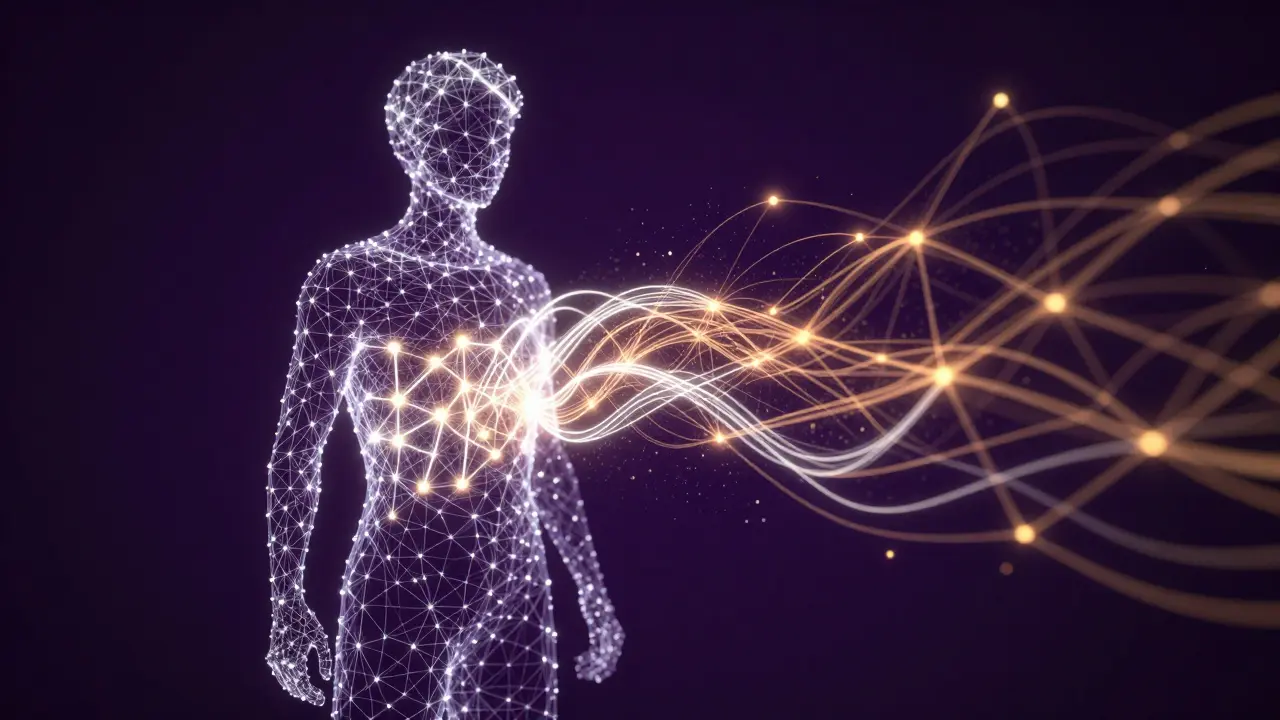
These data points feed into what experts call Knowledge Tracing, defined asstatistical modeling of student knowledge over time. This technique predicts future performance based on past interactions. It treats skills like a graph of connections rather than isolated facts. If a student fails a geometry question, the system traces the root cause back to arithmetic rules learned two weeks prior.
Structuring Dynamic Pathways
Content adjustment requires a sophisticated underlying architecture. Unlike a simple quiz that branches left or right, modern adaptive engines create fluid pathways. Think of it less like a train track and more like a navigation app for driving. When traffic hits a roadblock (a difficult concept), the map reroutes you through a different neighborhood (an alternative explanation style).
To implement this effectively, developers categorize learning objectives by complexity. This aligns closely with cognitive psychology frameworks. Educators map content nodes so that prerequisites are clear. You cannot jump to calculus without mastering algebraic manipulation. The system enforces these dependencies dynamically. If the data shows gaps in foundational logic, it serves up scaffolding modules automatically. This ensures students aren't skipping steps simply to finish a module.
Different subjects require different adjustment logic. In language learning, repetition is key. Adjustments focus on vocabulary frequency and sentence structure complexity. In coding bootcamps, adjustments focus on debugging speed and logic syntax. A physics simulation might slow down animations if a student gets lost in variables. One size rarely fits all, which is why the content library must contain multiple variations of every concept.
| Feature | Traditional Learning Model | Dynamic Content Adjustment Model |
|---|---|---|
| Pacing | Fixed schedule for all learners | Variable speed based on mastery level |
| Content Variety | Single path (linear) | Multiple modalities (video, text, interactive) |
| Intervention | End-of-term assessment identifies gaps | Real-time alerts during learning process |
| Data Source | Exam scores only | Interaction logs, latency, error rates |
Addressing Algorithmic Bias and Privacy
With great power comes significant responsibility. As of late 2025 and moving into 2026, privacy regulations regarding student data have tightened globally. Schools must ensure that dynamic adjustment engines comply with local laws like FERPA in the US or NZPPIA in New Zealand. Collecting granular interaction data means you are capturing detailed profiles of children's cognitive processes. This data must be stored securely and used ethically.
Bias is another major concern. If the training data for the AI consists mostly of students from specific demographics, the system might underperform for others. A system might misinterpret cultural references in reading comprehension questions or penalize valid alternative problem-solving methods. Developers in 2026 run rigorous fairness audits on their recommendation engines. These audits check if specific subgroups receive harder paths or fewer resources unfairly. Transparency is key here. Teachers need to see why the system recommended a specific intervention, not just trust the black box.

The Role of Educators in 2026
There is a persistent fear that automation replaces teachers. This is false. Adaptive systems actually free up human capacity for high-value tasks. The software handles the rote practice and grading. This means teachers spend less time marking worksheets and more time mentoring.
The dynamic report dashboard becomes the teacher's command center. Instead of seeing averages for the whole class, they see heat maps of individual struggle. If ten students are stuck on the same concept, the teacher knows immediately and can adjust their live lesson plan. This synergy between human intuition and machine precision creates a hybrid environment. The technology manages the logistics of content delivery, while the educator manages motivation, emotional support, and complex discussion. In this model, technology amplifies the teacher rather than diminishing their authority.
Implementing Change Without Overload
For institutions wanting to adopt dynamic content adjustment, the transition requires preparation. Simply installing software isn't enough; the content itself needs to be modular. Old textbooks don't work well in adaptive systems because paragraphs are too static to re-sequence. Institutions should invest in creating bite-sized learning objects tagged with metadata. Each chunk needs attributes like difficulty level, modality type, and estimated duration.
Cultural readiness is also vital. Students accustomed to waiting for the bell to ring need to understand the responsibility of self-paced progression. They need to learn how to trust the feedback the system gives them. Schools running successful pilots reported a two-week ramp-up period where they explained the mechanics of the platform to the students. Once students realized the system works for them rather than against them, engagement metrics usually spike significantly.
Comments
pk Pk
Teachers worry about being replaced but tools just handle the grunt work. It frees up time for actual mentoring sessions. We need to focus on how we integrate this into existing workflows properly. It requires patience but the payoff is worth the effort. Every student deserves a path tailored to their specific needs.
Raji viji
You sound like a shill for the venture capital funding round. Real learning happens in the messiness of human interaction. Algorithms are lazy shortcuts designed by engineers who never taught. The data collection is creepy surveillance disguised as educational innovation.
Rajashree Iyer
There is a profound silence in these new systems. The noise of a classroom has been traded for binary tracking. Is efficiency truly the metric by which we measure wisdom? We risk losing the accidental discoveries that define true intellect.
Parth Haz
While poetic, the empirical evidence suggests otherwise. Retention rates improve significantly when pacing is optimized for individuals. Efficiency supports the deeper learning outcomes you cherish. We can balance the metrics with human nuance effectively.
Vishal Bharadwaj
This whole concept is defiently flawed. Most schools dont have the bandwith to support it. It works for rich kids not poor ones. Thier is always a gap in acess.
anoushka singh
I know you worry a lot about fairness. My cousin uses it and she says it helps her focus better. Maybe try looking at the positive side of things once. You seem stressed about changes generally.
Sandeepan Gupta
The foundational architecture requires strict metadata tagging for every content chunk. Educators must define clear prerequisites before deploying the modules. Without clear dependencies the system recommends circular paths. Knowledge tracing relies heavily on accurate initial skill assessment. If the baseline is wrong the entire pathway becomes corrupted. We also need to consider cognitive load management during transitions. Too many hints confuse the student and reduce retention. Feedback loops must be instantaneous to prevent frustration buildup. Privacy protocols need to be embedded directly into the code. Data sovereignty laws vary significantly by region and jurisdiction. Compliance is not something you add as an afterthought later. Testing requires diverse cohorts to identify bias early on. Teachers need dashboards that visualize the invisible decision logic clearly. Professional development should accompany any technical rollout plan. Trust takes time to build with both staff and student populations. Implementation failure usually stems from rushing the pilot phase.
Tarun nahata
Wow, that is incredibly detailed and super helpful info. Your passion for structural integrity shines through beautifully. Lets keep pushing for these high standards together. The future of edtech depends on careful builders like you. Keep crushing it with the insights please!
Aryan Jain
Big companies want to own our brains next. They sell the data to other groups secretly. We dont know where the data goes. Just stay away from the tech.
Madhuri Pujari
Oh. Please. Stop. Spreading. Fear!!! This is not a cult. It is a teaching tool!!! Wake. Up. From. Paranoia!! Your fear-mongering is unhelpful.
Jitendra Singh
Looks promising.