


You spent weeks creating the perfect curriculum. You designed engaging videos, built interactive quizzes, and set up a slick landing page. Then you launched. For the first week, open rates are high. By week three, they’re in the toilet. By month two, half your students have ghosted you.
It’s not that your content is bad. It’s that you stopped talking to them. Or worse, you only talked to them when you wanted something-like an upsell or a review. Email nurture sequences are the antidote to this silence. They aren’t just marketing spam; they are structured, automated communication flows designed to keep learners engaged, accountable, and moving toward completion.
If you’re running online courses, whether on Teachable, Kajabi, or custom LMS platforms, you know the pain of low completion rates. Industry benchmarks suggest average completion rates for massive open online courses (MOOCs) hover around 5-15%. Even paid cohorts often see drop-offs after the initial novelty wears off. This guide breaks down how to build email sequences that actually work, using specific triggers, timing, and content types that respect your student’s time while driving retention.
Why Most Course Emails Fail (And How to Fix Them)
Most course creators treat email as a megaphone. They blast announcements to everyone at once. "New module is live!" "Check out my new book!" "Don't forget to buy the premium tier!" This approach fails because it ignores the learner’s journey. A student in Module 1 has different needs than a student stuck on Module 4.
Student engagement drops when communication feels irrelevant or intrusive. To fix this, you need segmentation. Not just by purchase date, but by behavior. Did they log in? Did they watch the video? Did they fail the quiz? Each action (or inaction) is a signal. Your email sequence should respond to that signal, not ignore it.
Think about your own experience with Netflix or Spotify. They don’t send you random recommendations. They send suggestions based on what you’ve watched or listened to recently. Your course emails should do the same. If a student hasn’t logged in for five days, a generic "How are you doing?" email is weak. A targeted "We missed you here’s the last lesson you started" email is strong.
The Core Structure of High-Retention Email Flows
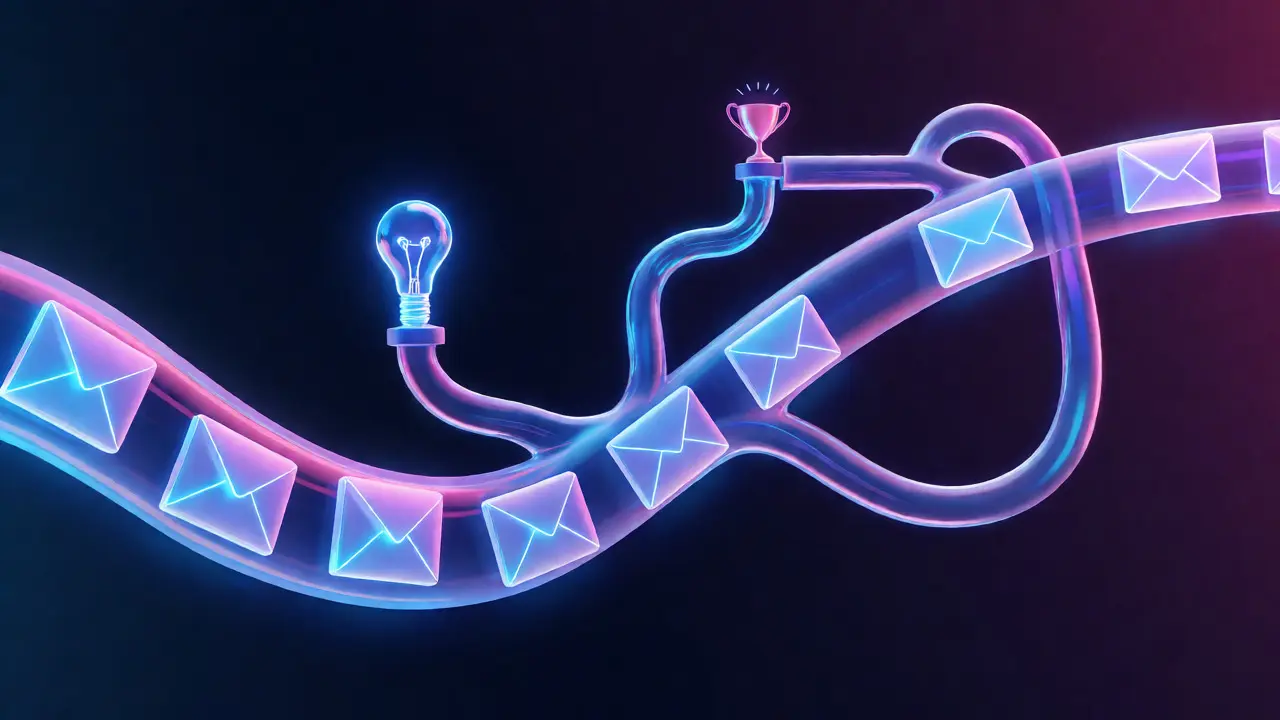
You don’t need ten different automations. You need four core sequences that cover the critical lifecycle stages of a course participant. These flows address the most common points of friction: confusion, boredom, and overwhelm.
- The Onboarding Sequence: Sent immediately after purchase. Goal: Reduce buyer’s remorse and set expectations.
- The Activation Sequence: Triggered if no login occurs within 48 hours. Goal: Get them into the platform.
- The Progression Sequence: Triggered upon completing a module. Goal: Maintain momentum and celebrate wins.
- The Re-engagement Sequence: Triggered after 7+ days of inactivity. Goal: Win back dormant students.
Let’s break down why each one matters. The Onboarding Sequence is crucial because the first 24 hours determine long-term habit formation. If a student doesn’t understand where to start or how to navigate the dashboard, they quit before they even begin. Keep these emails short. Three sentences max. One clear call to action (CTA).
The Activation Sequence is your safety net. Data from various ed-tech platforms shows that students who log in within the first 48 hours are 3x more likely to complete the course. If they haven’t logged in, send a nudge. Don’t guilt-trip them. Just offer help. "Hey, noticed you haven’t jumped in yet. Need help finding the login link? Reply to this email." Humanize the support.
Content Types That Actually Drive Clicks
Stop sending walls of text. Students are busy. They skim. Your emails need to deliver value in under 30 seconds. Here are four content types that consistently outperform generic newsletters in course environments.
| Content Type | Purpose | Best Timing | Example Subject Line |
|---|---|---|---|
| Micro-Lessons | Deliver immediate value without requiring login | Mid-week slump (Wed/Thu) | "One tip to fix your [Topic] mistake" |
| Peer Spotlights | Social proof and community building | End of module | "How Sarah finished Module 2 in 3 days" |
| Q&A Summaries | Address common blockers | After live calls/Q&A sessions | "You asked: How to handle [Specific Issue]?" |
| Progress Recaps | Motivation through visualization | Monthly or milestone-based | "You’ve completed 40% of the course!" |
Micro-lessons are powerful because they lower the barrier to entry. Instead of saying "Go watch a 20-minute video," say "Here’s a 2-minute read on why your code isn’t compiling." If they click, great. If they don’t, they still got value. This builds trust.
Peer spotlights leverage social proof. When a student sees someone else succeeding, it reduces isolation. Online learning can be lonely. Highlighting a peer’s success story reminds them that others are struggling and winning too. Make sure these stories are relatable, not just highlighting the top 1% of performers.
Timing and Frequency: The Goldilocks Zone
Too many emails, and you become spam. Too few, and you’re forgotten. Finding the right cadence depends on your course length and intensity.
For self-paced courses, weekly emails are usually sufficient. Daily emails during the first week of onboarding can help establish habits, but then dial it back. For cohort-based courses, align your emails with the syllabus. If you release new content every Monday, send your main update on Sunday evening or Monday morning. Follow-ups should happen mid-week to check progress.
A common mistake is sending re-engagement emails too aggressively. If someone goes silent, wait at least seven days before the first nudge. Wait another seven days for the second. After three attempts, stop. Continuing to email inactive users hurts your sender reputation and increases unsubscribe rates.
Consider time zones. If you’re in Auckland but your audience is global, schedule sends based on recipient local time. An email arriving at 2 AM might get buried under morning notifications. Tools like ConvertKit or ActiveCampaign allow for timezone-aware scheduling, which can boost open rates by 10-15%.
Personalization Beyond "Hi [First Name]"
Using a student’s first name is table stakes. Real personalization uses behavioral data. Dynamic content blocks allow you to change parts of the email based on user attributes.
Imagine two students receiving the same "Module 3 Tips" email. Student A completed Module 2 yesterday. Student B hasn’t touched Module 2. Sending them identical advice is inefficient. Use conditional logic. If Student A’s status is "Completed," show them advanced tips. If Student B’s status is "Not Started," show them a quick-start guide.
This level of granularity requires a robust CRM integration. Most modern Learning Management Systems (LMS) integrate with email service providers (ESPs) via API or native plugins. Ensure your ESP can pull real-time data from your LMS. If it can’t, you’re guessing, not personalizing.
Another tactic is dynamic subject lines. Instead of "Check out Module 3," try "John, ready for the tricky part of Module 3?" Knowing their name and current context makes the email feel like a conversation, not a broadcast.
Measuring Success: Metrics That Matter
Open rates are vanity metrics. People open emails and delete them. Click-through rates (CTR) are better, but they still don’t tell the whole story. The metric that matters for retention is Course Completion Rate.
Track how email interactions correlate with platform activity. Set up UTM parameters on all links in your emails. This allows you to trace a click directly to a login session. If you see that students who click on "Re-engagement" emails return to the platform and complete a lesson, you know that sequence works.
Also, monitor churn reasons. Add a simple survey to your unsubscribe flow. Ask, "Why are you leaving?" Options could include "Too busy," "Content wasn’t helpful," or "Found another course." If 60% say "Too busy," your emails might be too demanding. If 60% say "Content wasn’t helpful," your nurture sequence isn’t adding value.
Don’t ignore the negative signals. High unsubscribe rates after a specific email indicate a problem with that message. Maybe the tone was off, or the CTA was unclear. A/B test subject lines and body copy regularly. Small tweaks can yield significant improvements over time.
Common Pitfalls to Avoid
Even well-intentioned sequences can backfire. Here are three traps to watch out for.
- The Upsell Overload: Every email trying to sell the next tier. Students tune out sales pitches if they haven’t received value first. Aim for a 90/10 ratio: 90% value, 10% promotion.
- The Broken Link: Nothing kills trust faster than a dead link. Automate link checking tools to scan your sequences monthly. LMS URLs change, especially during updates.
- The Ignored Feedback Loop: If students reply to your emails with questions, and you don’t answer, you lose them. Treat inbound replies as priority tickets. Auto-responders are fine, but human follow-up is essential.
Remember, email is a channel, not a strategy. The strategy is retention. The email is just the vehicle. If your course content is poor, no amount of clever copywriting will save it. But if your content is good, your email sequences are the bridge between passive consumption and active completion.
Start small. Pick one sequence-maybe the Re-engagement flow-and optimize it. Measure the results. Iterate. Once you have a winning formula, apply it to other stages. Consistency beats perfection. Get your first sequence live today, and refine it as you go.
How many emails should be in a nurture sequence?
There is no magic number, but 3-5 emails per sequence is a solid starting point. For onboarding, 3-4 emails over the first week works well. For re-engagement, 3 emails spaced over two weeks is effective. More than that often leads to fatigue unless the content is exceptionally valuable.
Should I use HTML or plain text emails for courses?
Plain text emails often perform better for nurture sequences because they feel more personal and less like marketing. However, HTML emails are better for visual learners or when you need to include buttons and images. Test both. Many successful course creators use a hybrid: plain text style with a single prominent button or link.
What is the best tool for automating course emails?
The best tool depends on your LMS. If you use Kajabi or Thinkific, their native automation features are sufficient for basic sequences. For more advanced segmentation and cross-platform tracking, dedicated ESPs like ConvertKit, ActiveCampaign, or Klaviyo are superior. Look for tools with strong API integrations with your LMS.
How do I prevent my emails from going to spam?
Ensure you have proper SPF, DKIM, and DMARC records set up. Authenticate your domain. Also, ask students to add your email address to their contacts during onboarding. This whitelists you and significantly improves inbox placement. Avoid spammy words like "Free," "Guarantee," or excessive exclamation marks.
Can I automate personalized feedback in emails?
Yes, using dynamic fields. You can insert variables like {{last_lesson_completed}} or {{quiz_score}} into your email templates. Some advanced AI-driven platforms can even generate summary feedback based on assignment submissions, though manual review often yields higher quality connections.