


Online courses have a dropout problem. About 70% of people who sign up for an online class never finish it. That’s not because they’re lazy-it’s because they don’t feel seen. Without the daily buzz of a physical classroom, learners drift. They miss deadlines. They stop logging in. And eventually, they quit. The difference between someone who finishes and someone who drops out? It’s often one thing: consistent, meaningful feedback.
Feedback isn’t just comments-it’s connection
Many course creators think feedback means grading assignments. But real feedback is more than a score or a checkmark. It’s a conversation. It’s a quick voice note saying, "I saw how hard you worked on this," or a personalized reply to a discussion post that says, "Your take on this reminded me of when I struggled with the same thing."
When students feel heard, their brains respond differently. A 2023 study from Stanford’s Center for Education Policy Analysis found that learners who received personalized feedback within 48 hours were 3.2 times more likely to complete a course. Not because the feedback was perfect-but because it was human.
Think about it: if you’re trying to learn guitar online and post a video of your first attempt, and no one responds, you start to wonder if it’s even worth it. But if someone says, "Your finger positioning is solid-try relaxing your wrist a bit more," you feel like you’re on the right path. That’s motivation in action.
Three feedback systems that actually work
Not all feedback systems are built the same. Here are three that have proven to keep students engaged over time.
1. The 24-Hour Response Rule
Set a rule: every student submission gets a reply within one business day. That’s it. No need for essays. Just a sentence or two. A quick audio clip. A thumbs-up emoji with a specific note: "Great energy in your presentation!"
Platforms like Teachable and Thinkific now let instructors schedule automated reminders to check in on inactive students. But automation alone doesn’t cut it. The magic happens when a real person says something genuine. Even a 30-second recording can make someone feel like they matter.
One instructor at a coding bootcamp started recording 15-second feedback videos for every project submission. Completion rates jumped from 41% to 76% in six months. Students said things like, "I didn’t realize someone was actually watching," and "It felt like I had a coach, not just a course."
2. Peer Feedback Loops
Students don’t just need feedback from instructors-they need feedback from each other. Structured peer review turns passive learners into active participants.
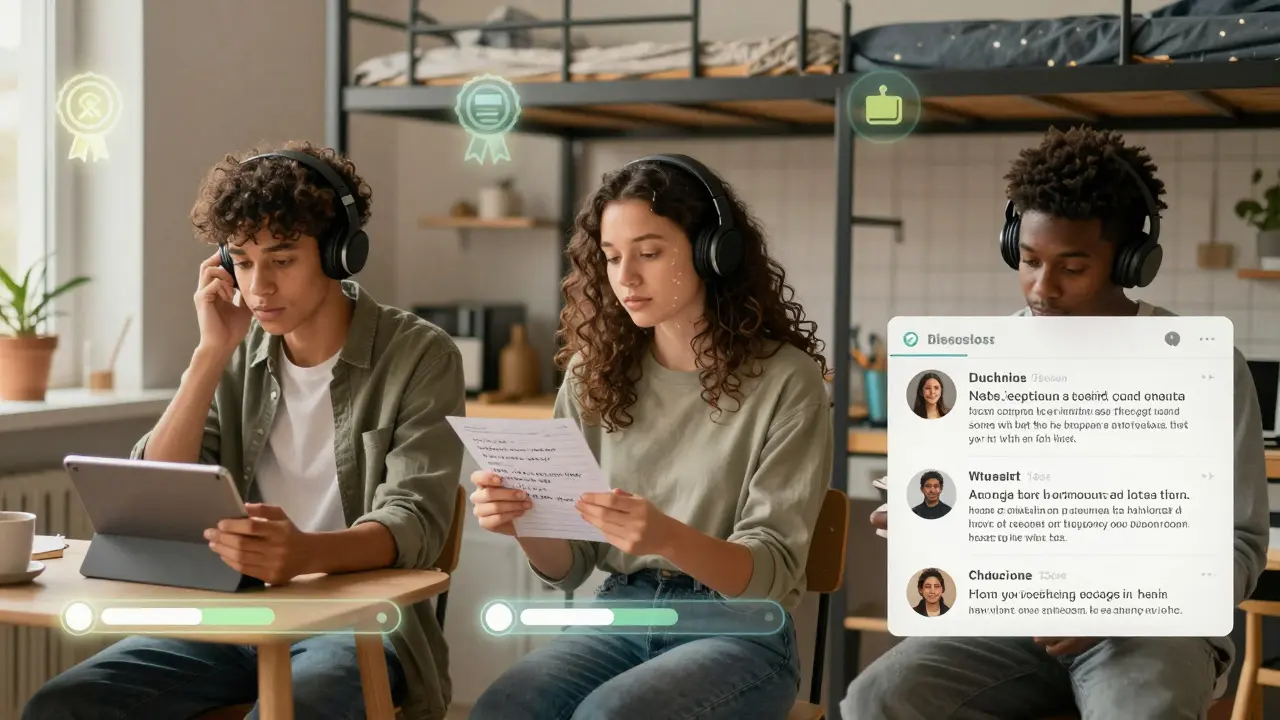
Here’s how it works: after submitting an assignment, each student is randomly assigned two others’ work to review. They answer three simple prompts:
- What did you notice that was strong?
- What’s one thing you’d try differently?
- What surprised you about their approach?
Then, they get feedback on their own work too. This creates a cycle of giving and receiving. A 2024 meta-analysis from the Journal of Online Learning showed that courses using peer feedback saw a 40% drop in dropout rates compared to those with instructor-only feedback.
Why? Because teaching something-even just giving feedback-reinforces your own understanding. And being reviewed by peers feels less intimidating than being judged by an expert. It builds community.
3. Progress-Based Milestone Rewards
People don’t stay motivated by vague goals like "Learn Python." They stay motivated by visible progress.
Set up small, meaningful milestones: "Complete Module 3 and get your first badge," or "Submit 5 discussion posts and unlock a live Q&A with the instructor."
These aren’t just digital trophies. They’re feedback too. When a student gets a badge, it says: "I see you. You’re doing this."
One language learning course added a "Streak Tracker"-showing how many days in a row a student had logged in. Students with streaks over 10 days were 5x more likely to finish the course. The system didn’t just track progress-it made progress visible, social, and rewarding.
What doesn’t work (and why)
Not all feedback systems help. In fact, some hurt.
Generic comments like "Good job!" or "Needs improvement" do nothing. They’re noise. Students can’t tell if you even read their work. And automated bots that say, "Thanks for submitting!"? They feel robotic. Worse-they make students feel invisible.
Overloading students with feedback is another trap. If you’re giving 10 pages of edits on every assignment, they’ll get overwhelmed. Feedback isn’t about quantity. It’s about clarity and timing.
And don’t wait until the end to give feedback. If someone struggles in Week 2 and you don’t respond until Week 6, they’ve already checked out.
Feedback isn’t optional-it’s infrastructure
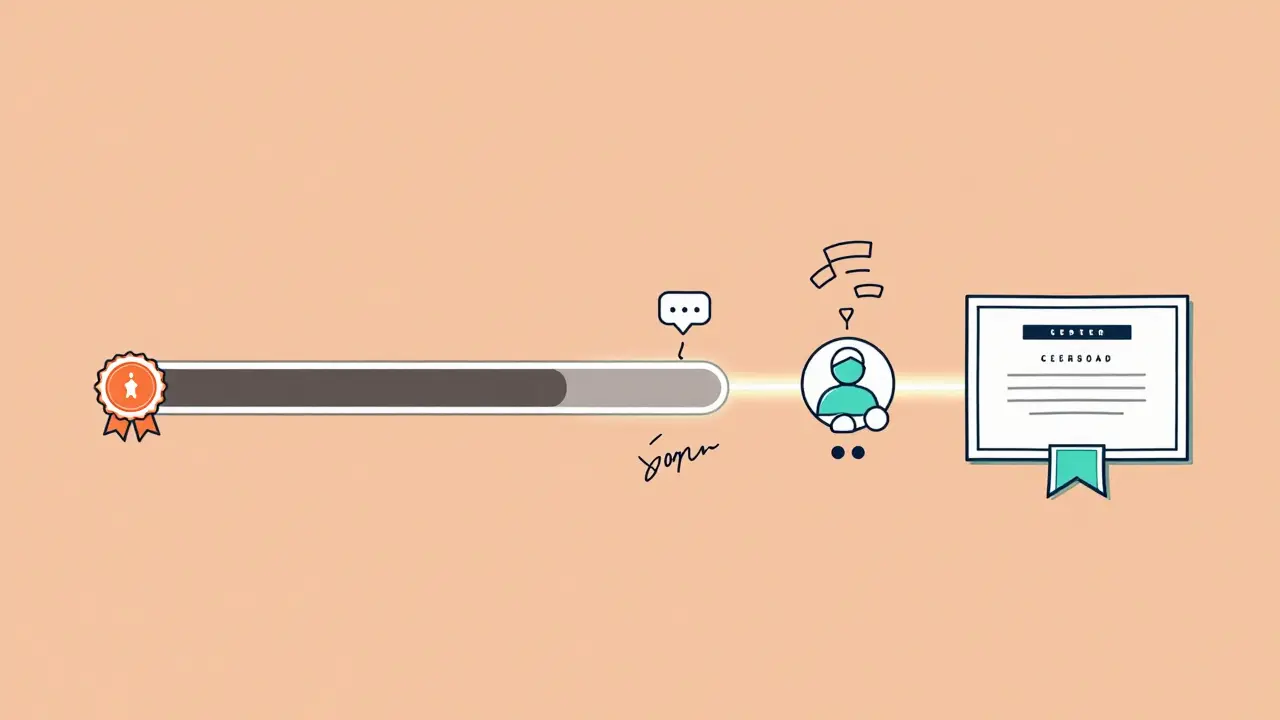
Think of feedback like the Wi-Fi in your home. You don’t notice it until it’s gone. When feedback is consistent, personal, and timely, students don’t even think about it. They just keep going.
The best online courses aren’t the ones with the flashiest videos or the most expensive instructors. They’re the ones where students feel like they’re part of something. Where their effort is seen. Where their voice matters.
That’s not magic. It’s design.
Simple steps to start today
You don’t need a team or a budget to build better feedback systems. Here’s how to begin:
- Record one personalized audio feedback message for each assignment this week.
- Set up peer review for your next module-use a simple Google Form or Loom to collect responses.
- Design one small milestone with a visual reward (a badge, a certificate, a shoutout in the group).
- Reply to every discussion post within 24 hours-even if it’s just "Thanks for sharing that."
- Track your course completion rate next month. Compare it to last month. You’ll see the difference.
It’s not about doing more. It’s about doing one thing differently: showing up for your students.
Comments
Nathaniel Petrovick
Man, I wish my old online course had this. I dropped out of three before this. Just one voice note from my instructor saying "I saw you stuck on the recursion problem but kept trying"? Changed everything. Felt like someone actually cared.
Honey Jonson
sooo trueee 😭 i used to just skip the discussion posts cause no one ever replied… then my teacher started leaving 10 second audio clips and suddenly i was staying up till 2am finishing modules. its not about the content its about the vibe
Paul Timms
The 24-hour response rule is the only scalable solution. Anything less is negligence. If you're not responding within one business day, you're not teaching-you're hosting a digital brochure.
Cynthia Lamont
PEER FEEDBACK IS A JOKE. Who are these students to judge each other? I've seen peer reviews where someone wrote "ur code looks cool" and the instructor called it "excellent engagement." This is why education is broken.
Jennifer Kaiser
You're missing the deeper point. Feedback isn't a tool-it's a ritual. It's the daily act of saying, "I see you trying," and that’s what rebuilds the human connection that algorithms erased. This isn't about course design. It's about healing.
Liam Hesmondhalgh
Stop wasting time with voice notes. Just grade faster. I did 30 courses. Half the time the feedback was just "good job" or "try again." The rest? Crickets. You don't need connection. You need a rubric.
Aimee Quenneville
Ohhh so now we're gonna make online learning into a warm hug? Next they'll hand out teddy bears with feedback stickers. "Here's your badge, sweetie, you tried!" 😂
Jeroen Post
They say feedback keeps people from dropping out but what if the real reason people quit is because they realized the course was meaningless? What if the feedback is just a placebo for a system built on lies? What if we're all just performing for algorithms?
Morgan ODonnell
I’ve run three courses. The peer feedback one had the highest completion. Not because it was perfect. But because people started talking to each other. That’s the real win. Not badges. Not voice notes. Just people noticing each other.
Patrick Tiernan
milestone rewards? bro i got a badge for posting 5 times and i felt like i won the lottery. like seriously. i showed my mom. she cried. i think she thought i was getting a degree in something legit
Jasmine Oey
I used to think feedback was just fluff… until I submitted a poem and got a reply that said, "Your line about the rain made me remember my grandmother’s kitchen." I cried. I finished the whole damn course. That’s not pedagogy. That’s magic.
Kirk Doherty
Audio feedback is great if you have time. But most of us are juggling jobs and kids. Sometimes "good" is enough. Don’t romanticize effort. Just deliver value.
Marissa Martin
I tried peer feedback once. It felt… unsafe. Like being asked to grade a stranger’s trauma. I stopped. I don’t need to be a therapist to learn Python.
Dmitriy Fedoseff
Feedback as infrastructure? That’s beautiful. In my country, we don’t call it feedback-we call it *respect*. And when respect is built into the system, people don’t leave. They rise. This isn’t a trick. It’s a tradition.
James Winter
US education is a joke. We give badges for breathing. In Canada, we just tell you if you failed. No sugar. No voice notes. Just results. That’s how you build discipline.