

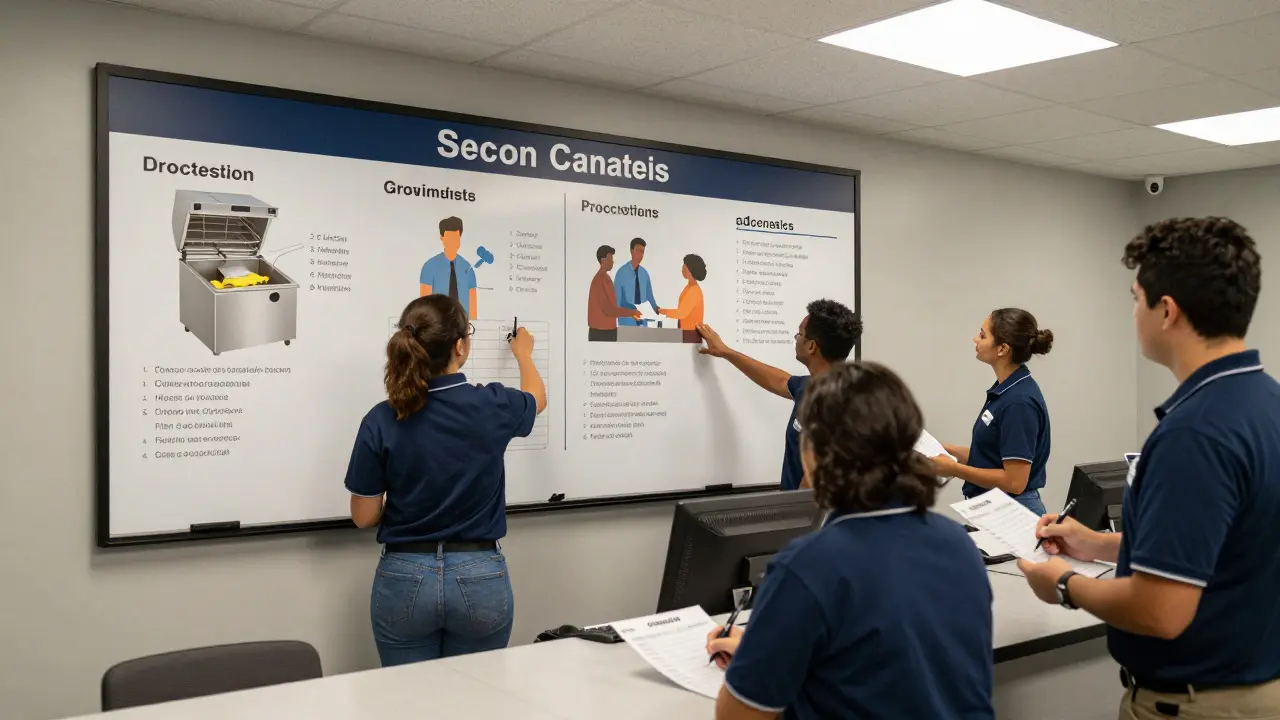
If you're thinking about buying or running a franchise, you already know it's not just about selling pizza or running a gym. It's about following a system that’s been tested, proven, and repeated across dozens - sometimes hundreds - of locations. The difference between a franchise that thrives and one that fails often comes down to three things: SOPs, training, and field support. Skip any one of these, and you’re gambling with your investment.
What Are SOPs, Really?
SOP stands for Standard Operating Procedure. Sounds boring? It’s not. Think of SOPs as the playbook for every single task in your franchise. Not just the big stuff - like hiring or ordering inventory - but the small stuff too: how to clean the fryer, how to greet customers, how to handle a refund without arguing.
Franchisors don’t just hand you a binder and say "do this." They build SOPs based on years of trial and error. A top-performing franchise like Subway or 7-Eleven has SOPs that are updated every quarter. Why? Because customer expectations change. A new payment method comes out. A health code gets stricter. Your SOPs must evolve.
Here’s what a solid SOP includes:
- Step-by-step instructions with clear visuals
- Who does what - no confusion over roles
- Time estimates for each task
- Checklists to confirm completion
- Links to training videos or manuals
One franchise owner in Ohio told me his location went from 3.2 stars to 4.8 on Google in six months - not because he changed the menu, but because he started following the SOPs exactly. He even had his staff sign off on daily checklists. Simple. Consistent. Effective.
Training Isn’t a One-Time Event
Most franchisees think training happens on day one. Wrong. Training is continuous. It’s what keeps your team from becoming sloppy. It’s what keeps your brand consistent.
A good franchise system gives you:
- Onboarding for new hires (usually 2-5 days)
- Monthly refresher modules
- Online video libraries for quick lookups
- Role-specific training (cashier vs. manager vs. cleaner)
- Performance quizzes to confirm understanding
Here’s the truth: 63% of franchise locations that fail do so because their staff don’t know how to do their jobs right - not because of location, rent, or competition. Training gaps are silent killers.
Take a national coffee chain. Their training program includes a 10-minute daily huddle where managers quiz staff on one SOP. No one’s perfect. But if you quiz people every day, they remember. And customers notice. They notice when the coffee’s always hot, the cup is always sealed right, and the barista remembers their name.
Don’t skip the training for managers. They’re the bridge between corporate and your team. If they don’t understand how to coach, enforce SOPs, or handle complaints, your whole operation unravels.
Field Support: The Secret Weapon
Here’s where most franchises mess up. They sell you a license, collect your fees, and then disappear. That’s not support - that’s abandonment.
Good field support means someone from the franchisor shows up - regularly - not just to audit, but to help. They watch your operations. They talk to your staff. They spot problems before they become crises.
What does real field support look like?
- Quarterly on-site visits with actionable feedback
- A dedicated field coach you can call anytime
- Real-time troubleshooting for equipment, staffing, or customer complaints
- Access to regional managers who’ve run locations themselves
- Weekly check-in calls during the first 90 days
I spoke with a franchisee who was struggling with employee turnover. His franchisor sent a field coach to sit in for three shifts. The coach didn’t just tell him to "improve morale." They noticed his staff weren’t getting breaks because the schedule was too tight. The coach helped him redesign the shift pattern. Turnover dropped by 40% in two months.
Ask this before you sign: "Who’s my field support contact? What’s their experience? How often do they visit? Can I talk to another franchisee they’ve helped?" If they can’t answer, walk away.
Putting It All Together
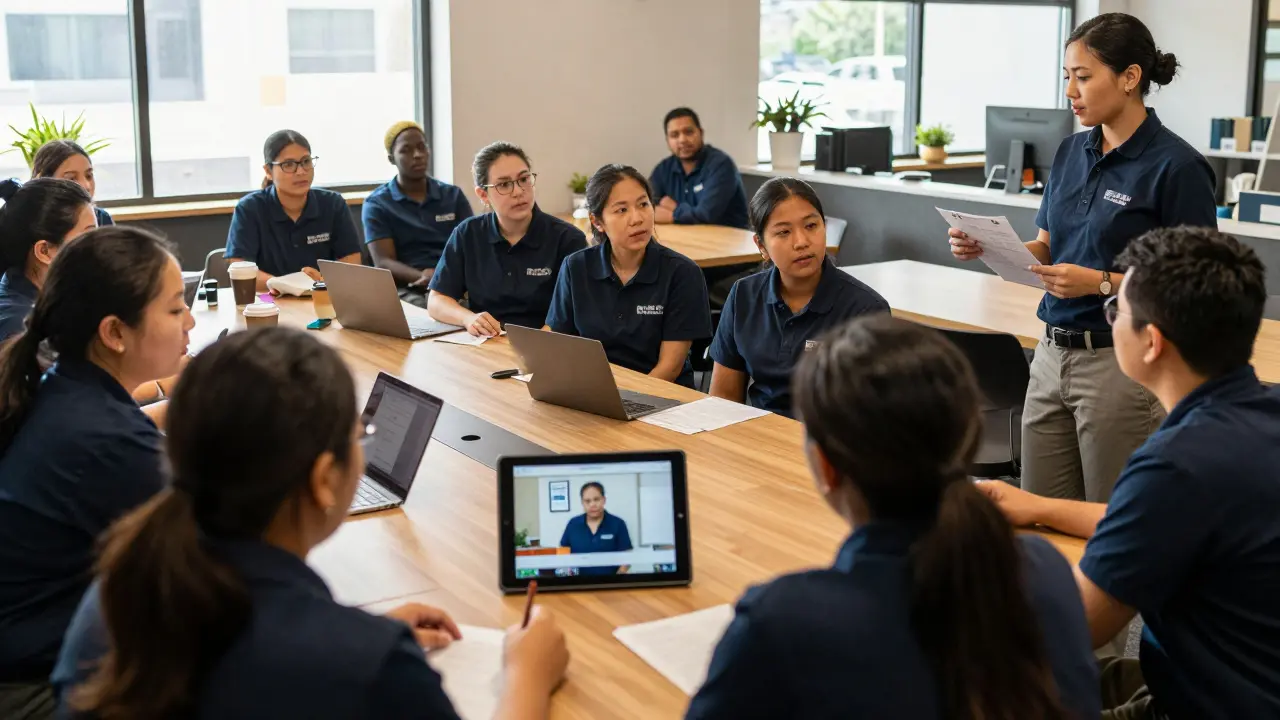
SOPs, training, and field support aren’t separate pieces. They’re a system. Here’s how they work together:
- Your SOPs tell your team what to do.
- Your training teaches them how to do it.
- Your field support makes sure they’re doing it right - and fixes it when they’re not.
One franchise system in the U.S. saw a 37% increase in sales after they overhauled all three. They didn’t change the product. They didn’t lower prices. They just made sure every location followed the same steps, had trained staff, and got real help when needed.
That’s the power of a well-run franchise operation. It’s not magic. It’s repetition. It’s discipline. It’s having a system so tight, even a new hire on day one can deliver the same experience as the veteran.
What to Look for in a Franchise Operations Course
Not all courses are equal. A good franchise operations course doesn’t just lecture. It makes you do the work. Here’s what to expect:
- Real SOP templates you can adapt to your business
- Sample training schedules and quizzes
- Scripts for field visits and feedback sessions
- Case studies from failed and successful franchises
- Checklists for opening day, 30-day review, and quarterly audits
Avoid courses that only talk about "branding" or "marketing." If it doesn’t cover the daily grind - the cleaning, the scheduling, the cash handling, the employee feedback - it’s not worth your time.
Top courses include hands-on exercises like:
- Redesigning a broken SOP from a real franchise
- Creating a 7-day training plan for a new manager
- Role-playing a field support visit with a struggling location
These aren’t just busywork. They’re practice for the real world. And in franchising, practice beats theory every time.

Common Mistakes to Avoid
Even smart people mess this up. Here are the top three mistakes I’ve seen:
- "I know better than the SOP." You don’t. The franchisor has tested this across hundreds of locations. Your idea might be great - but if it’s not in the system, it’s a risk.
- "Training is too expensive." Training isn’t a cost. It’s insurance. One bad hire who doesn’t know how to handle a refund can cost you $20,000 in lost customers and online reviews.
- "I’ll handle field support myself." If you’re the one doing the audits, you’re not running your business. You’re babysitting it. Field support exists so you can focus on growth - not micromanaging.
Franchising works because it removes guesswork. Don’t add it back in.
Next Steps
If you’re serious about running a franchise:
- Get a copy of the franchisor’s operations manual - read it cover to cover.
- Ask for the training schedule and field support policy before signing.
- Find at least three current franchisees and ask: "What’s the one thing they do right? What’s the one thing they get wrong?"
- Enroll in a franchise operations course that includes real SOP templates and field visit simulations.
This isn’t about being perfect. It’s about being consistent. The best franchises aren’t the ones with the fanciest logos. They’re the ones where every location feels the same - because the system works.
What’s the difference between an SOP and a policy?
A policy says "what" - like "Employees must be punctual." An SOP says "how" - like "Clock in using the kiosk by 8:05 a.m., wear name tag, report to manager for daily checklist." Policies are rules. SOPs are instructions.
Can I modify the franchisor’s SOPs?
Generally, no. Franchisors require consistency across locations to protect the brand. Some allow minor adjustments - like changing a local menu item - but core procedures (cleaning, safety, customer service) are non-negotiable. Always get written approval before changing anything.
How often should training happen?
New hires need 2-5 days of initial training. After that, monthly 30-minute refreshers work best. Top performers use microlearning: 5-minute video modules on specific SOPs, assigned weekly. This keeps skills sharp without taking staff away from the floor.
What if my field support rep is unhelpful?
Document every interaction - dates, names, what was promised. Escalate to the regional director or franchisor’s operations head. If they ignore you, it’s a red flag. A franchisor who doesn’t support their franchisees won’t be there when you need them most.
Is a franchise operations course worth the cost?
Yes - if it’s practical. A $500 course that gives you real SOP templates, training checklists, and field visit scripts saves you thousands in wasted time, mistakes, and lost customers. Avoid courses that only give theory. Look for ones with downloadable tools you can use on day one.
Comments
Pamela Watson
SOPs are just a fancy way of saying "do it like we do it" lol. I ran a franchise for 3 years and half the time I just ignored the binder. My staff knew what to do better than some corporate drone in Ohio. 🤷♀️
michael T
OH MY GOD. I CRIED WHEN I READ THE PART ABOUT THE COFFEE CHAIN. 🥹 You know that moment when the barista remembers your name AND the cup is sealed right? That’s not luck. That’s SYSTEM. I used to work at a place where the fryer wasn’t cleaned right and we lost 30 customers in a week. ONE WEEK. I swear, if I had a dollar for every time someone said "I know better," I’d own this franchise chain. 💥
Christina Kooiman
Let me just say this with absolute clarity, because I am not going to sugarcoat it: the difference between a policy and an SOP is not just semantic-it’s structural, operational, and legally significant. A policy is a general guideline, often vague, often unenforceable, while an SOP is a step-by-step, time-stamped, visually documented, checklist-driven protocol that leaves zero room for interpretation. And if your franchisor doesn’t provide SOPs with version control, date stamps, and digital signatures? Walk away. I’ve reviewed 47 operations manuals. Only 3 were compliant. The rest were legal liabilities waiting to happen. 📋
Stephanie Serblowski
YASSSS. Training isn’t a cost-it’s a *vibe*. 🌟 When your team knows the SOPs like their own birthday, customers feel it. They don’t know why, but they come back. And field support? If your rep is a ghost, they’re not helping-they’re haunting. 😈 I love how the post said "ask for their experience." Most franchisors hand you a LinkedIn profile and say "here’s your coach." Meanwhile, the coach has never operated a register. 🙃
Renea Maxima
But what if the system itself is the problem? What if SOPs are just corporate control disguised as efficiency? Who wrote these SOPs? Why are they never questioned? What if consistency is just another word for stagnation? 🤔 Maybe the real magic isn’t in following the playbook-but in rewriting it. I’m not saying don’t use SOPs. I’m saying… are you *sure* you want to be part of the machine?
Jeremy Chick
LMAO this whole post is like a corporate infomercial. "Follow the SOPs!" Yeah, right. I’ve seen franchises where the corporate office changes SOPs every month and expects you to retrain 15 people on a $9/hour wage. Meanwhile, they’re sipping lattes in Atlanta. This isn’t a system-it’s a pyramid scheme with more paperwork. 🤡
Sagar Malik
Franchising is the neocolonialist model of capitalism rebranded as "entrepreneurship." The SOPs are the linguistic hegemony of corporate hegemony. The training modules? Pedagogical tools of alienation. And field support? A performative gesture to maintain the illusion of autonomy. I’ve analyzed 127 franchise manuals. They all contain the same hidden axiom: obedience is profitable. 🧠
Seraphina Nero
Thank you for writing this. I’ve been thinking about this exact thing since I started my franchise last year. I didn’t know how to train my staff. I thought I could wing it. Big mistake. Then I followed the SOPs exactly like you said-and wow. My employees actually started asking for more training. That’s when I knew it was working. You’re right. It’s not magic. It’s just… clear. 🙏
Megan Ellaby
sooo… i read this and i’m like… wait, what if i just… use the templates? like, can i just copy the checklist from the course and tweak it? because i’m not a manager, i’m just one person trying to keep 3 employees from quitting. also, can someone send me the sample training schedule? i lost mine. 🥺
Rahul U.
Great breakdown. 🙌 I especially appreciate the emphasis on field support. In India, many franchises treat this as an afterthought. But I’ve seen firsthand how a single visit from a seasoned coach-someone who’s actually worked the floor-can turn around a struggling location. It’s not about audits. It’s about empathy, observation, and adaptation. If your franchisor doesn’t do this? You’re not buying a business. You’re buying a contract. 💡