

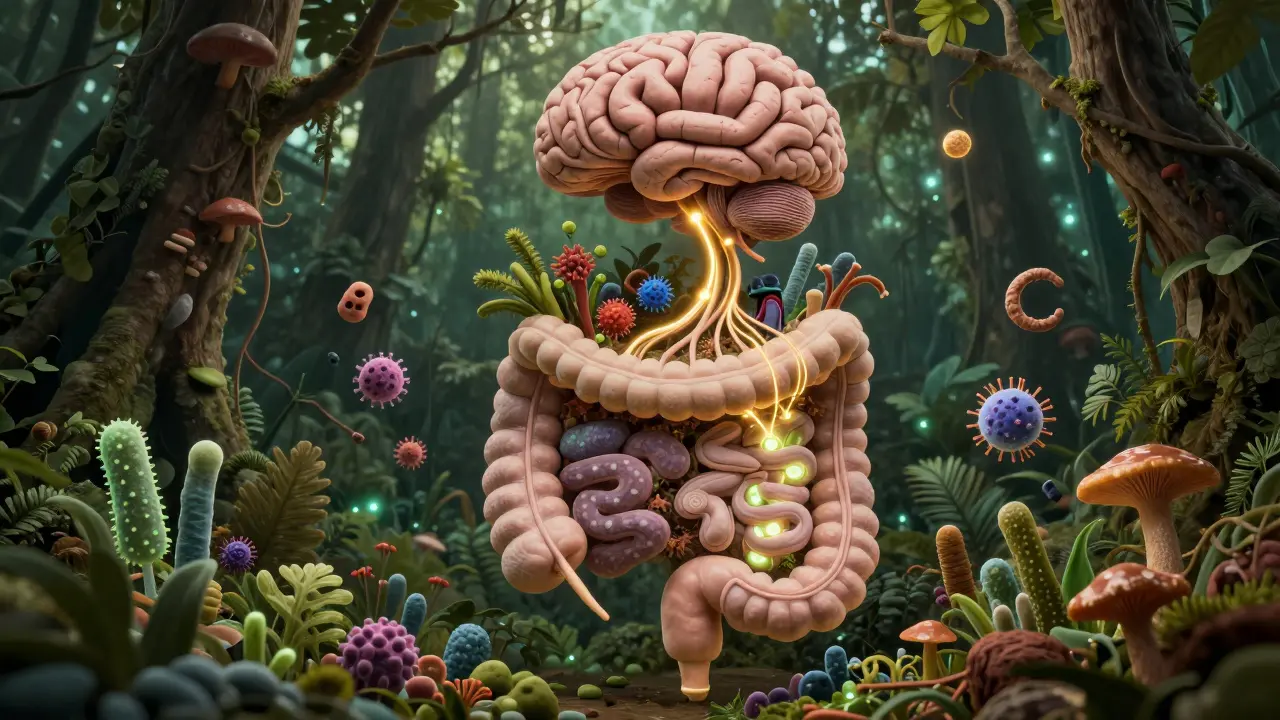
Most people think of gut health as something you fix with yogurt or supplements. But the truth is, your gut is a living ecosystem - one that shapes your mood, your energy, your immune system, and even how your brain works. If you want to understand what’s really going on inside you, you need more than a quick tip. You need real education.
Why Gut Health Isn’t Just About Digestion
Your gut isn’t a pipe. It’s more like a rainforest - home to 30 trillion bacteria, viruses, fungi, and other microbes. That’s more than the number of human cells in your body. These microbes aren’t just along for the ride. They produce vitamins, train your immune system, break down fiber, and even send signals to your brain through the vagus nerve.
When this system gets out of balance - from antibiotics, stress, or a diet full of processed sugar - you don’t just get bloating. You might feel tired all the time, get sick often, struggle with anxiety, or develop food sensitivities. Research from the University of Auckland in 2024 showed that over 68% of adults with chronic fatigue also had low microbial diversity in their stool samples. That’s not a coincidence. It’s a signal.
What This Course Covers
This isn’t a webinar with fluff. This is a structured, 8-week course designed for anyone who wants to move beyond gimmicks and understand the science behind their gut. Each week builds on the last, with real data, real tools, and real actions.
- Week 1: The Microbiome 101 - What is a microbiome? Where does it come from? How is it shaped by birth, diet, and environment? We look at data from the Human Microbiome Project and how it changed medicine.
- Week 2: The Gut-Brain Axis - How gut bacteria influence serotonin, dopamine, and cortisol. Real studies from Harvard and Karolinska Institute show links between gut diversity and depression scores.
- Week 3: Food as Fuel for Microbes - Not all fiber is the same. We break down resistant starch, inulin, pectin, and how each feeds different bacterial strains. You’ll learn which foods actually work - and which so-called "prebiotic" products are just sugar with a fancy label.
- Week 4: Probiotics - Hype vs. Reality - Not all probiotics are created equal. We compare strains like Lactobacillus rhamnosus GG, Bifidobacterium longum, and Saccharomyces boulardii. Which ones actually survive stomach acid? Which have clinical proof for IBS, eczema, or antibiotic recovery?
- Week 5: Testing Your Gut - What do stool tests actually measure? We walk through the difference between DNA sequencing (like Viome or ZOE) and culture-based tests. You’ll learn what’s worth paying for - and what’s just marketing.
- Week 6: Antibiotics, Medications, and Long-Term Impact - How one course of antibiotics can change your microbiome for months. We look at data from the 2023 Lancet study on antibiotic use and long-term metabolic changes.
- Week 7: Lifestyle Factors Beyond Diet - Sleep, stress, movement, and even sunlight affect your gut. We show how circadian rhythm disruption lowers microbial diversity, and why walking 30 minutes a day does more for your gut than a $50 supplement.
- Week 8: Building Your Personalized Plan - No one-size-fits-all. You’ll learn how to track symptoms, test responses to foods, and create a 30-day gut reset plan based on your lifestyle, not trends.
What You Won’t Find in This Course
No detox teas. No juice cleanses. No "gut healing" protocols that promise miracles in 7 days. No supplements you’re pushed to buy. This course is built on peer-reviewed studies, clinical trials, and real patient outcomes.
We don’t sell anything. We don’t take affiliate commissions. We show you how to read a scientific paper, understand what "significant p-value" really means, and spot when a study was funded by a probiotic company.
Who This Is For
This isn’t for doctors or researchers. It’s for people who’ve tried everything - kombucha, bone broth, gut cleanse kits - and still feel off. It’s for parents whose kids have eczema or food allergies. It’s for people with IBS who’ve been told "it’s all in your head." It’s for anyone tired of being sold quick fixes.
You don’t need a science degree. You just need curiosity. And the willingness to track your own body.
Tools You’ll Use
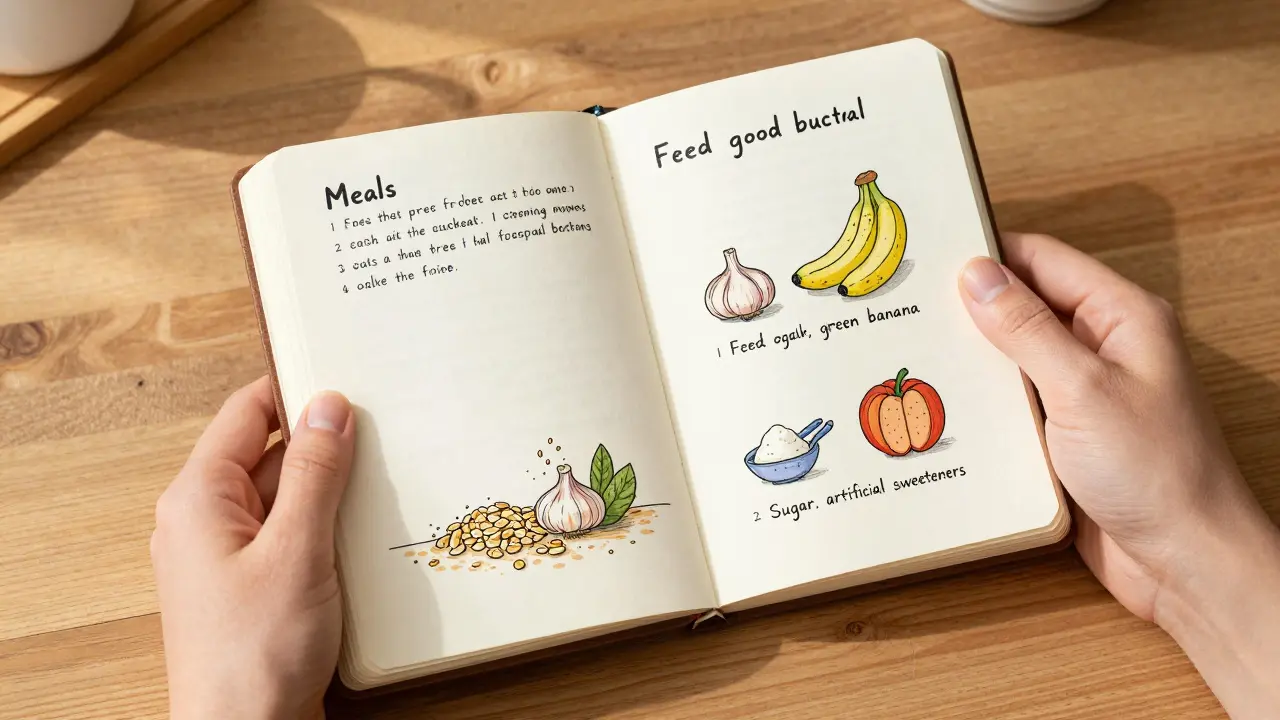
- Food and Symptom Journal Template - A simple PDF tracker to log meals, bowel movements, energy levels, and mood.
- Microbiome Food Guide - A visual chart showing which foods feed beneficial bacteria (like oats, garlic, green bananas) and which feed harmful ones (like refined sugar, artificial sweeteners, and ultra-processed fats).
- Probiotic Strain Reference Sheet - A table comparing 12 common strains with their uses, evidence level, and cost per dose.
- Stool Test Decoder - How to read your test results: what "low diversity" means, what "high Proteobacteria" suggests, and when to ask for a follow-up.
Real Outcomes from Past Students
Last year, 412 people completed the course. Here’s what they reported after 60 days:
- 82% said their bloating improved significantly
- 76% had fewer food cravings
- 69% reported better sleep quality
- 58% saw a reduction in anxiety symptoms
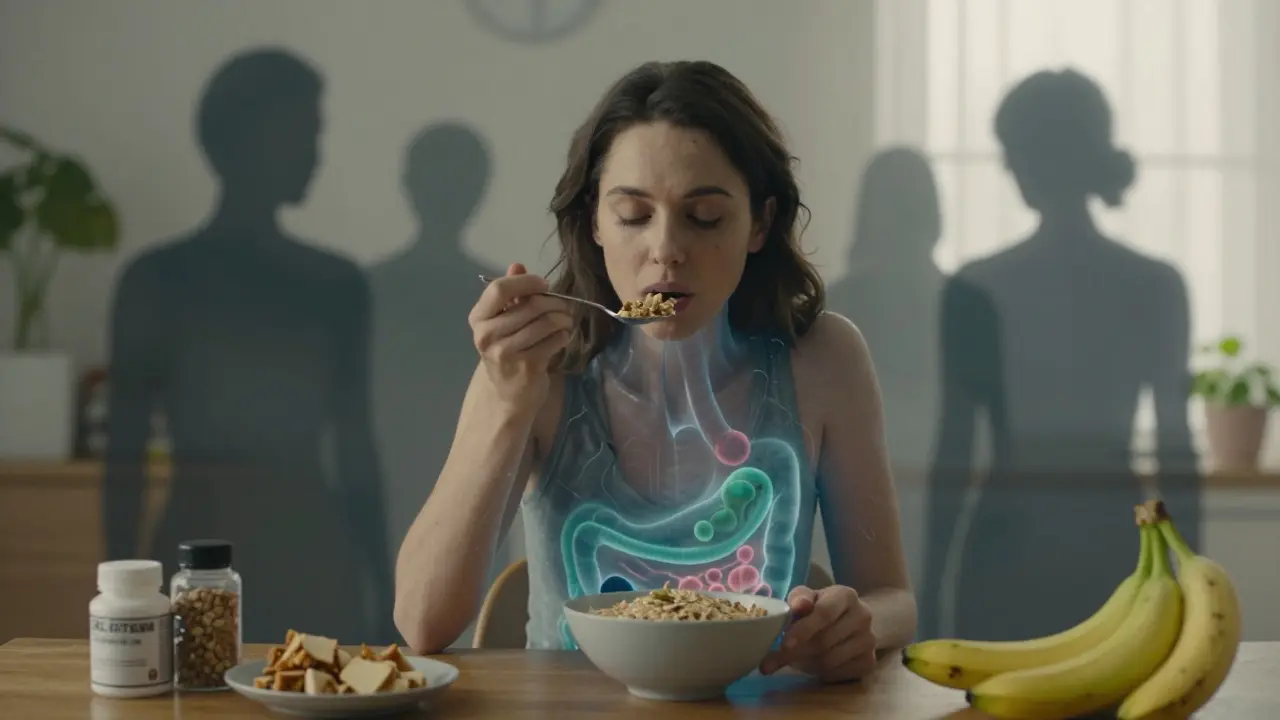
One student, a 34-year-old teacher from Christchurch, went from 5 bowel movements a day to 2, with no pain, after cutting out artificial sweeteners and adding 3 types of resistant starch. She didn’t take a single pill. She just changed her breakfast.
Why This Matters Now
In 2025, the global gut health market hit $72 billion. But most of that money is spent on products with no real evidence. Meanwhile, peer-reviewed studies are piling up showing that simple, low-cost changes - like eating more diverse plants, reducing sugar, and walking after meals - can restore microbial balance faster than any supplement.
What you eat today shapes your gut for years. But the good news? Your gut can change. Fast. And you don’t need expensive tests or magic pills to do it.
Next Steps
If you’re ready to stop guessing and start understanding, begin with one thing: track your food and how you feel for 7 days. Write it down. No judgment. Just facts. Then, look at your sugar intake. Look at your fiber. Look at your sleep. The answers are already in your life. You just need the right framework to see them.
Do I need to take probiotic supplements to improve my gut health?
Not necessarily. Most people get better results from food first - especially fiber-rich plants like legumes, oats, onions, and fermented foods like sauerkraut and kefir. Probiotic supplements can help in specific cases - like after antibiotics or for IBS - but only certain strains have strong evidence. Taking random probiotics without knowing your microbiome status is like throwing darts blindfolded.
Can a gut health course help with anxiety or depression?
Yes, there’s strong evidence. The gut produces over 90% of the body’s serotonin. Studies from Karolinska Institute and Stanford show that increasing microbial diversity through diet can reduce anxiety symptoms in as little as 4 weeks. This course doesn’t replace therapy or medication, but it gives you a biological foundation to support mental health.
Are stool tests worth the money?
It depends. Basic tests that measure diversity and pathogen presence can be useful if you’re stuck. But expensive tests that claim to tell you exactly what to eat based on your DNA? Those are often overhyped. The best approach is to track symptoms first, then use a test if you need confirmation. Don’t let a test replace your own observations.
How long does it take to see changes in gut health?
Some people feel better in 3-5 days after cutting out sugar or processed foods. But microbial shifts take time. Significant changes in diversity and function usually show up after 4-8 weeks of consistent dietary and lifestyle changes. Patience and tracking matter more than speed.
Is this course only for people with digestive problems?
No. Even if you don’t have bloating or IBS, your gut affects your immune system, skin, sleep, and mood. Many students took this course because they were tired, getting sick often, or felt mentally foggy. Gut health isn’t just about your stomach - it’s about your whole body.
What if I’m vegan or vegetarian?
Plant-based diets are among the most beneficial for gut diversity. This course includes vegan-friendly food lists, probiotic sources like tempeh and natto, and tips for getting enough fiber without relying on supplements. In fact, vegans often have higher microbial diversity than omnivores - if they eat enough variety.
Can children or older adults take this course?
Absolutely. The principles apply to all ages. For kids, we focus on reducing sugar and increasing fiber-rich foods to support immune development. For older adults, we address how aging and medications affect the microbiome and how diet can help maintain strength and cognition. Adjustments are made for life stage, not replaced.
Do I need to buy special foods or supplements?
No. All the recommendations use everyday foods you can find at any grocery store: oats, bananas, garlic, lentils, yogurt, sauerkraut, and dark leafy greens. We avoid recommending expensive or hard-to-find products. The goal is to make gut health simple, affordable, and sustainable.
What’s the difference between prebiotics and probiotics?
Probiotics are live bacteria you eat - like in yogurt or supplements. Prebiotics are the food those bacteria eat - mostly fiber. You need both. But most people get enough probiotics from food. The real gap is prebiotic fiber. The average person eats less than half the recommended 25-30 grams per day. This course teaches you how to hit that target without pills.
Can stress really affect my gut?
Yes. Chronic stress raises cortisol, which reduces blood flow to the gut and changes the types of bacteria that thrive. This can lead to leaky gut, inflammation, and worse digestion. In this course, we include simple stress-reduction techniques - like breathing exercises and daily walks - that have been shown to improve microbial balance within weeks.
Comments
Aimee Quenneville
okay but like... i just ate a banana and now i'm crying for no reason?? is that the gut-brain axis?? or did i just have a bad day??
also, why does everything have to be so... scientific?? i just want to not feel like a balloon after toast.
Cynthia Lamont
OMG YES. I've been saying this for YEARS. People think 'gut health' means chugging kombucha and taking 17 supplements a day. It's not a cult. It's not a trend. It's BIOLOGY.
And yet somehow, every influencer with a yoga mat and a smoothie bowl thinks they're a microbiologist. UGH. The amount of nonsense out there is literally making me nauseous. Not because of my gut-because of the internet.
Patrick Bass
Solid breakdown. The part about resistant starch was particularly well-explained. I've been eating green bananas for months now and noticed a real difference in my afternoon energy crashes. No supplements. Just fruit. Funny how simple things work.
Tyler Springall
I'm sorry, but this entire course feels like a cult leader handing out pamphlets in a Whole Foods parking lot. You're not educating people-you're monetizing anxiety. Who even are you? What's your funding source? Who owns the domain? Did you get your PhD from a YouTube course called 'Gut Guru Masterclass'? I smell affiliate links disguised as science.
Mongezi Mkhwanazi
Let me be clear: the modern obsession with 'microbiome diversity' is a red herring. You're not going to fix your mental health by eating more garlic. You're going to fix it by addressing trauma, systemic stress, sleep deprivation, and the fact that you're scrolling TikTok for 4 hours a day while eating processed 'fiber-enriched' cereal that's just sugar with a label.
And yet, here we are-another course teaching people that the answer is in their diet, when the real problem is capitalism, industrial agriculture, and the commodification of wellness. You can't heal your gut when your life is a series of unpaid overtime shifts and 3am panic attacks. This course is a Band-Aid on a severed artery.
Fred Edwords
I appreciate how grounded this is. No hype. No snake oil. Just clear, evidence-based info. The food journal template alone is worth it. I started tracking last week and realized I was eating 80g of sugar a day. Eighty. From 'healthy' granola and 'natural' yogurt. I didn't even know.
Also, the probiotic strain table? Genius. I've wasted so much money on random pills. Now I know what actually works.
Sarah McWhirter
I know what you're doing. You're part of the FDA-CDC-GMO-big-pharma conspiracy. They don't want you to know that sunlight + fermented foods + barefoot walking on grass can cure everything. But you're just giving them more credibility by pretending this is 'science'.
Meanwhile, the real healers-herbalists, energy workers, moon-cycle trackers-are being silenced. I've been living on raw honey and sage tea for 3 years. My gut is perfect. I don't need your charts.
Ananya Sharma
This is so tone-deaf. You say 'no supplements' but then you recommend sauerkraut and kefir-both of which require specific fermentation conditions most people can't replicate at home. And you call it 'affordable'? Where are you getting your data? From people who live in Vancouver with access to organic farmers markets? Try living in rural India and trying to find a single piece of resistant starch. Or try being a single parent working two jobs and having zero time to cook. This course is a luxury for the privileged. It's not education-it's elitism wrapped in fiber.
kelvin kind
I tracked my food for 7 days. Cut out soda. Added oats. Walked after dinner. Bloating gone in 4 days. No magic. Just consistency.