

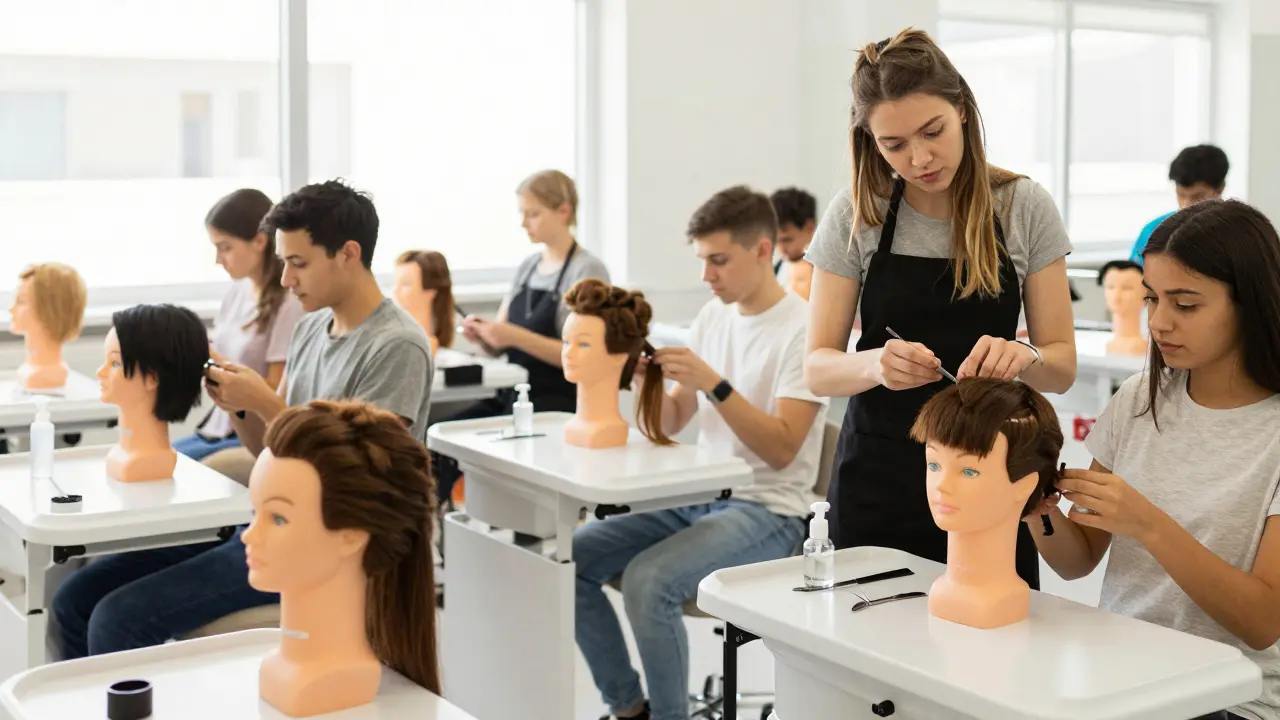
Getting certified in hairdressing and cosmetology isn’t just about learning how to cut hair or apply makeup. It’s about building a career that’s hands-on, creative, and in constant demand. Whether you’re switching careers, starting fresh after high school, or looking to upgrade your skills, the right certification course can open doors to salons, spas, film sets, and even your own business. But with so many options out there, how do you pick one that actually works?
What Exactly Is a Cosmetology Certification?
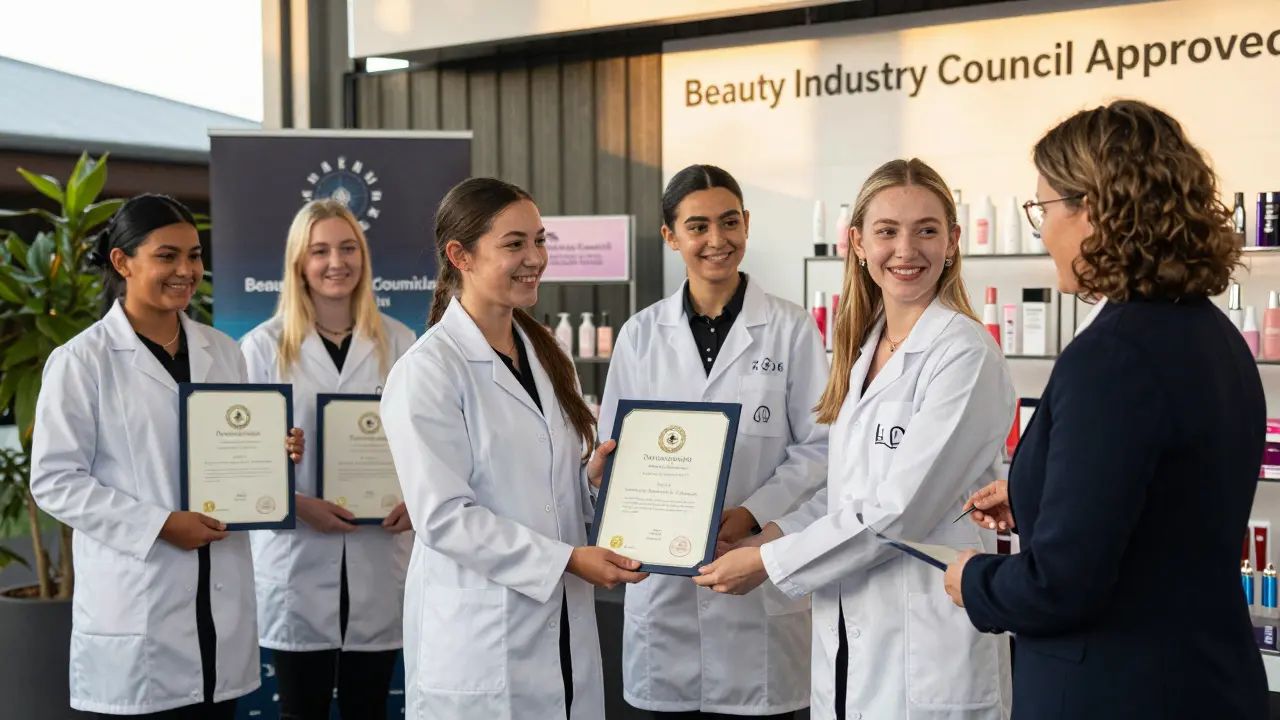
A cosmetology certification is a state-recognized license that lets you legally perform beauty services like cutting hair, coloring, skincare, nail care, and makeup application. It’s not just a certificate you hang on the wall-it’s proof you’ve met minimum safety, hygiene, and skill standards. In New Zealand, this is regulated by the Beauty Industry Council a national body that sets training standards and approves accredited schools for hairdressing and cosmetology. Each province has its own rules, but all require a mix of classroom learning and supervised practice hours.
You can’t walk into a salon and start doing clients without one. Even if you’ve been cutting hair for years, without certification, you’re operating illegally. And if something goes wrong-say, a chemical burn or infection-you’re not covered by insurance. Certification isn’t a formality. It’s your protection and your credibility.
What Do These Courses Actually Cover?
Most full cosmetology programs last between 9 months and 2 years. The exact length depends on whether you’re studying full-time or part-time. Here’s what you’ll actually learn:
- Hair cutting and styling - including layering, texturizing, and working with different hair types
- Hair coloring - from basic highlights to corrective color, plus understanding developer strengths and toners
- Chemical treatments - relaxers, keratin smoothing, perms, and how to avoid damage
- Skincare and facials - cleansing routines, exfoliation, acne treatment, and product knowledge
- Nail technology - manicures, pedicures, acrylics, gels, and sanitation
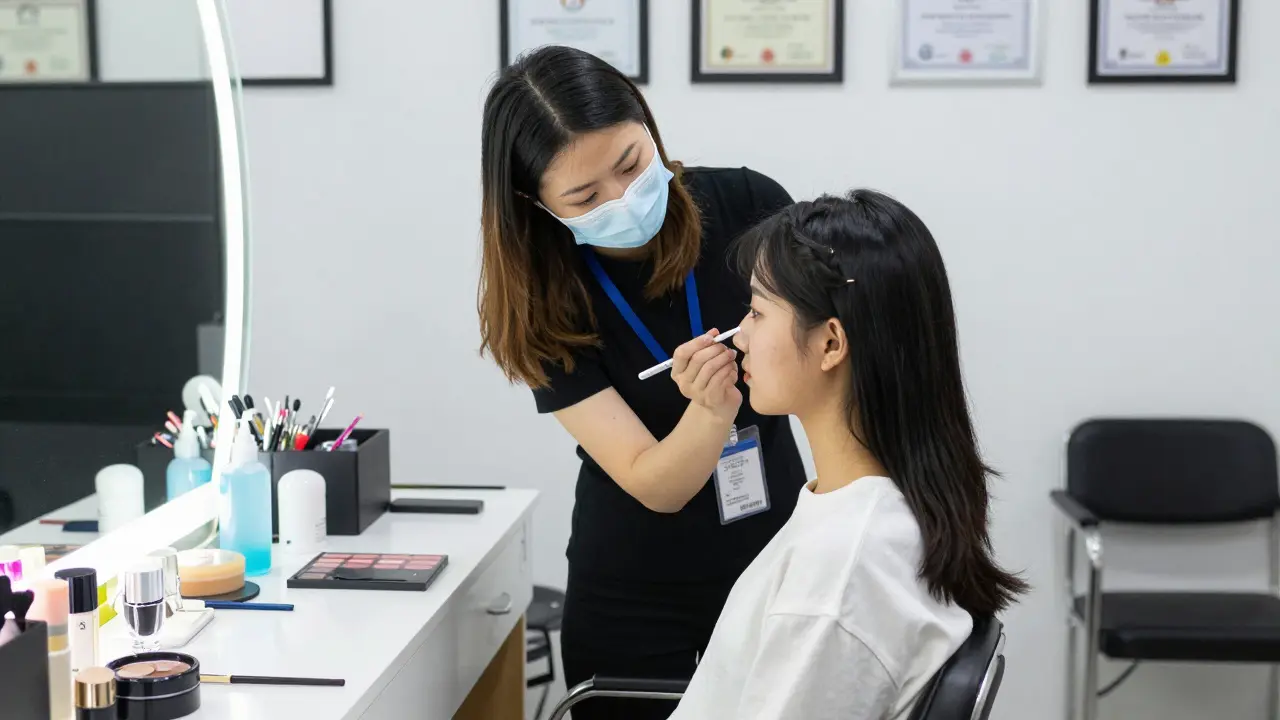
- Makeup artistry - day-to-day looks, bridal, editorial, and special effects
- Salon operations - client communication, booking systems, retail sales, and hygiene laws
- Business basics - how to write a resume, build a portfolio, and manage taxes if you go freelance
These aren’t just theory classes. You’ll spend most of your time working on real clients under supervision. Schools often run on-site salons where students serve the public at discounted rates. That’s where you get your confidence-and your first reviews.
How Do You Choose the Right Course?
Not all schools are created equal. Some cut corners. Others give you the full toolkit. Here’s how to tell the difference:
- Check accreditation - Make sure the school is approved by the Beauty Industry Council. You can find the list on their official website.
- Look at pass rates - Ask for the last three years’ pass rates for the state licensing exam. Anything below 80% is a red flag.
- See the facilities - Are the chairs clean? Are the tools sterilized? Is there a dedicated sink for washing tools? If it looks like a garage, walk away.
- Ask about instructors - Are they still working in salons? Or are they just retired teachers? The best instructors are active professionals who know what’s happening in real salons today.
- Check job placement - A good school will tell you where their grads work. If they say "we don’t track that," that’s a warning sign.
Also, watch out for schools that promise "certification in 4 weeks." That’s not enough time to learn sanitation protocols, let alone advanced coloring techniques. Real training takes time.
Costs and Financial Help
Full cosmetology programs in New Zealand usually cost between $4,500 and $12,000. The price depends on location, duration, and whether the school includes a starter kit (shears, combs, aprons, etc.). Some schools charge extra for supplies, so ask upfront.
Here’s what helps reduce the cost:
- Government subsidies - The Work and Income New Zealand program offers training grants for people switching into skilled trades.
- Student loans - If you’re under 55, you can apply for a student loan through StudyLink for approved programs.
- Payment plans - Many schools let you pay monthly instead of upfront.
- Scholarships - Some beauty brands like L’Oréal Professionnel and Redken offer small grants for students.
Don’t assume you can’t afford it. Most students fund their training through a mix of loans, part-time work, and family support.
What Happens After You Graduate?
Graduating isn’t the end-it’s the starting line. After finishing your course, you’ll need to:
- Apply for your license through the Beauty Industry Council
- Pass the written and practical exams
- Get your first job
Most new grads start as assistants in salons. That means washing hair, setting up stations, and learning from senior stylists. It’s not glamorous, but it’s where you build relationships and watch how the best pros handle difficult clients.
Within 6 to 12 months, many move into full stylist roles. Some open their own booths in salons. Others go freelance, doing weddings or photo shoots. A few even start their own studios. The industry is wide open if you’re willing to show up, keep learning, and build your reputation.
Common Mistakes People Make
Here’s what goes wrong for many students:
- Choosing the cheapest school - You get what you pay for. A $2,000 course won’t prepare you for real clients.
- Skipping the business side - You can be the best stylist in town, but if you don’t know how to book clients or manage money, you’ll struggle.
- Not building a portfolio - Your portfolio is your resume. Take photos of every cut, color, and style you do-even if it’s just for friends.
- Ignoring hygiene - One slip with unsterilized tools can shut down your career. Always clean between clients.
- Thinking certification is enough - The beauty world changes fast. New tools, products, and trends pop up every season. Keep taking short courses. Stay curious.
Is This Career Right for You?
It’s not for everyone. You need to enjoy:
- Working with people-sometimes for hours at a time
- Standing on your feet all day
- Being detail-oriented (a half-millimeter off on a cut can ruin the whole look)
- Handling criticism (not everyone loves their new haircut)
- Working weekends and evenings
If you love creativity, connection, and seeing the immediate result of your work, this is one of the most rewarding fields out there. You’re not just changing hair-you’re changing how someone feels about themselves.
Where to Find Approved Courses in New Zealand
The Beauty Industry Council maintains a public list of all approved training providers. Top schools include:
- Auckland Beauty College - Known for strong industry links and high exam pass rates
- Wellington Institute of Cosmetology - Offers specialized modules in bridal and editorial makeup
- Christchurch School of Hair & Skin - Focuses on natural products and holistic skincare
- Southern Institute of Beauty - One of the few offering online theory with in-person labs
Visit their websites, book a tour, and talk to current students. The right fit matters more than the name on the sign.
How long does it take to get a cosmetology license in New Zealand?
Most full-time programs take 12 to 18 months to complete, with a minimum of 1,200 practice hours required by law. Part-time students may take up to 2 years. After finishing the course, you’ll need to pass a state exam, which usually takes another few weeks to schedule and complete.
Can I do part of the course online?
Yes, some schools offer hybrid programs where theory-like anatomy, chemistry, and sanitation-is taught online. But the hands-on parts-cutting, coloring, and skincare-must be done in person. The Beauty Industry Council doesn’t allow fully online programs because practical skills and client interaction are essential.
Do I need a high school diploma to enroll?
No, a high school diploma isn’t required in New Zealand to start cosmetology training. But you must be at least 16 years old and able to pass a basic literacy and numeracy test. Some schools may ask for proof of English proficiency if you’re an international student.
What’s the difference between a hairdresser and a cosmetologist?
A hairdresser focuses only on hair-cuts, color, styling. A cosmetologist is trained in a broader range of services: hair, skin, nails, and makeup. Most certification programs today are for cosmetology because it gives you more job options. You can always specialize later, but starting broad gives you more flexibility.
Can I work in other countries with a New Zealand license?
Not automatically. Each country has its own rules. Australia has mutual recognition agreements with New Zealand, so it’s easier there. In the U.S., you’d need to pass their state exams. Canada and the UK require additional training or exams. Always check the licensing board in your target country before moving.
Comments
lucia burton
The foundational architecture of cosmetology certification is fundamentally a competency-based credentialing framework that operationalizes regulatory compliance through standardized curriculum delivery systems. You're not just learning how to section hair or apply toner-you're internalizing a protocol-driven service ecology that integrates infection control matrices, chemical interaction profiles, and client psychographic profiling. The 1,200-hour minimum isn't arbitrary-it's a statistically validated threshold for procedural muscle memory and risk mitigation. Without this structured exposure, you're essentially operating in a liability vacuum where one misapplied relaxer can trigger a cascade of legal, financial, and reputational collapse. This isn't vocational training; it's professional accreditation with teeth.
Denise Young
Oh absolutely, Lucia. And let’s not pretend that ‘affordable’ programs are somehow ‘accessible’-they’re just predatory. I’ve seen schools charging $1,800 with outdated shears, no sterilization station, and instructors who haven’t touched a human head since 2008. Meanwhile, the top-tier academies invest in digital client management systems, live-streamed technique modules, and post-grad mentorship pipelines. The difference isn’t just in the curriculum-it’s in the ecosystem. You don’t just get certified; you get embedded into an industry network. And yes, the $12K price tag? That’s an investment in your future earning potential. A licensed cosmetologist in a high-end salon can clear $60K+ in year one. The math doesn’t lie.
Sam Rittenhouse
I want to say something real here. I used to work in a salon where the owner had no certification. She’d been doing hair for 20 years. Looked great. Clients loved her. But when a client had a severe reaction to a dye-actually ended up in the ER-the insurance denied everything. No license meant no coverage. No coverage meant no business. She lost everything. That’s not a scare tactic. That’s the reality. Certification isn’t about bureaucracy. It’s about dignity. It’s about saying, ‘I’ve been trained, I’ve been tested, and I’m responsible.’ And if you’re serious about this career, that’s the bar you need to clear-not just for the law, but for yourself.
Peter Reynolds
The part about portfolio building is key. I’ve seen so many talented people fail because they didn’t document their work. Photos matter. Even if it’s just a selfie with a client before and after. It’s not vanity. It’s evidence. And if you’re doing freelance, that’s your resume. No one cares how long you went to school if you can’t show results.
Fred Edwords
It is imperative to note, with unequivocal precision, that the term 'cosmetologist' is not synonymous with 'hairdresser,' as the article correctly delineates. A cosmetologist, per the statutory definitions codified under the Beauty Industry Council's regulatory framework, is a multi-disciplinary practitioner licensed to perform services across five core modalities: hair, skin, nails, makeup, and electrology. A hairdresser, conversely, is a subset professional whose scope is limited to the manipulation of human hair. Therefore, selecting a program that confers a full cosmetology certification-not merely a hairdressing endorsement-is not a preference, but a strategic necessity for long-term occupational mobility and revenue diversification. Furthermore, the assertion that 'a high school diploma is not required' is factually accurate under New Zealand law; however, the implied assumption that literacy and numeracy standards are negligible is dangerously misleading. A candidate must demonstrate functional competency in reading comprehension, dosage calculation, and client communication protocols-skills that are, in practice, inseparable from secondary education benchmarks.
Sarah McWhirter
Okay, but let’s be real-how many of these ‘approved’ schools are just fronting for big beauty corporations? L’Oréal and Redken sponsor scholarships? Sure. But what do they get in return? Exclusive product placement? Mandatory use of their line? And who’s really teaching you? The instructors? Or the marketing reps who show up every third week with free samples and a PowerPoint titled ‘Why You Should Love Our Sulfates’? I’ve seen students graduate with 1,200 hours… but zero experience with natural oils, sulfate-free products, or skin conditions outside of textbook cases. This isn’t education. It’s branded indoctrination. And the ‘hygiene laws’? Half the schools I’ve visited had one sink for 20 chairs. That’s not sanitation. That’s a lawsuit waiting to happen.
Ananya Sharma
You people are delusional. This whole certification system is a scam designed to keep the working class trapped in low-wage service jobs while the elite own the salons. Who benefits? The schools that charge $12,000. The corporations that sell overpriced products. The salon owners who take 50% of your tips. And you? You’ll spend years paying off debt just to work 60-hour weeks for minimum wage. Meanwhile, the guy who learned to cut hair from YouTube? He’s making $80 an hour doing mobile services, no license, no debt, no bureaucracy. The system wants you to believe you need permission to be good. You don’t. You need courage. And a pair of shears. That’s it. The ‘Beauty Industry Council’? More like the Beauty Industry Cartel. They don’t care about safety-they care about control. Stop buying into the myth that certification equals legitimacy. Real skill doesn’t need a stamp from a government-approved institution.
kelvin kind
The part about standing all day is real. I didn’t realize how much your feet hurt until I tried it. Also, weekends are non-negotiable. If you want a normal life, don’t do this.
Ian Cassidy
Hygiene is everything. I saw a kid get a fungal infection because his school didn’t sterilize the clippers between clients. He had to quit. No one talks about that. It’s not glamorous. But it’s the difference between building a career and losing your license over a dirty tool. Don’t skip the basics. They’re not boring-they’re life-saving.
Zach Beggs
I did the course. It was hard. But the hands-on time with real clients? Priceless. The first time someone said ‘I love my hair’-that’s why you do it.