


The Math of Growth: Understanding Network Effects in Learning
In the tech world, we talk about network effects when a product becomes more valuable as more people use it. Think of a phone: if you're the only person with one, it's a paperweight. If everyone has one, it's essential. The same logic applies to Digital Education platforms. When a learning platform integrates social features, it creates a feedback loop. More students bring more diverse perspectives, which leads to more peer-to-peer troubleshooting, which makes the platform more attractive to new students. This isn't just about "having a forum"; it's about the exponential increase in value that occurs when students start teaching each other. In a traditional course, the value is linear (Content + Teacher). In a network-driven environment, the value is quadratic (Content + Teacher + (Students^2)).| Feature | Linear Learning (Traditional) | Network-Based Learning |
|---|---|---|
| Knowledge Source | Single Expert/Curriculum | Distributed Peer Network |
| Value Growth | Static (Fixed by content) | Exponential (Grows with users) |
| Primary Driver | Content Consumption | Social Interaction & Contribution |
| Feedback Loop | Delayed (Grading/Reviews) | Instant (Peer Feedback/Discussion) |
From MOOCs to Cohort-Based Learning
For years, Massive Open Online Courses (MOOCs) were the gold standard for digital scale. But they had a massive problem: completion rates were abysmal, often below 10%. Why? Because they were lonely. You were a tiny speck in a sea of 50,000 other students, watching the same videos in isolation. Then came Cohort-Based Courses (CBCs) an instructional model where a group of students move through a curriculum together on a fixed schedule . This shifted the focus from content delivery to community experience. By adding a social layer-weekly Zoom calls, shared Slack channels, and peer accountability partners-the learning experience transformed. Students didn't just learn the material; they built a professional network. The social pressure to show up for your peers acts as a powerful motivator that a pre-recorded video simply can't provide.The Power of Peer-to-Peer Knowledge Exchange
One of the most potent aspects of social learning is the "Protege Effect." This is the phenomenon where students who teach others end up learning the material more deeply themselves. When a student explains a concept to a struggling peer, they have to reorganize their own understanding, fill in their own gaps, and simplify complex ideas. In a digital environment, this happens through shared repositories and collaborative wikis. Consider how developers use GitHub a cloud-based service that lets developers store and manage their code, as well as track and control changes to their code . It's not just a tool for storing code; it's a massive social learning engine. A junior developer learns by reading a senior's pull request comments. They aren't reading a textbook; they're receiving real-time, contextual feedback on a real-world problem. This is network effects in action: the more contributors there are, the more "teaching moments" are created for everyone else.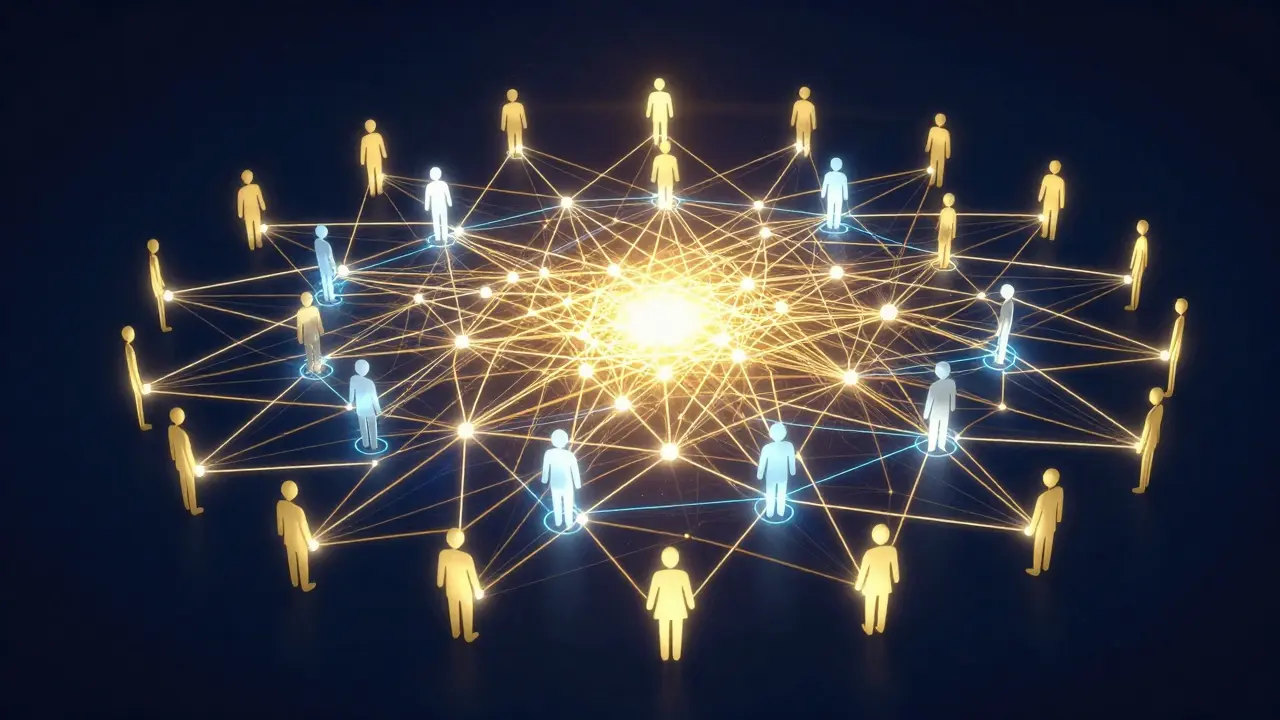
Gamification and Social Validation
Why do people spend hours contributing to Stack Overflow a question-and-answer website for professional and enthusiast programmers ? It's not for the money. It's for the reputation points. Digital education platforms are now baking this social validation into their DNA. Badges, leaderboards, and "top contributor" statuses are more than just digital stickers. They are signals of authority. In a social learning network, these signals help other students identify who the trusted experts are, reducing the time spent searching for accurate answers. This creates a meritocratic layer where the most helpful learners rise to the top, further incentivizing others to contribute high-quality explanations to earn their own status.The Role of AI in Accelerating Social Networks
Artificial Intelligence isn't replacing the social element of learning; it's acting as a catalyst. Imagine an AI that doesn't just answer your question but connects you with three other students who are struggling with the same concept right now. AI-driven matchmaking can create micro-cohorts based on complementary skill sets. If one student is great at the theoretical part of a project and another is a wizard at the technical implementation, an algorithm can pair them up. This transforms the digital platform from a library into a matchmaking service for collaborative growth. The AI handles the logistics of the network, while the humans handle the actual social learning.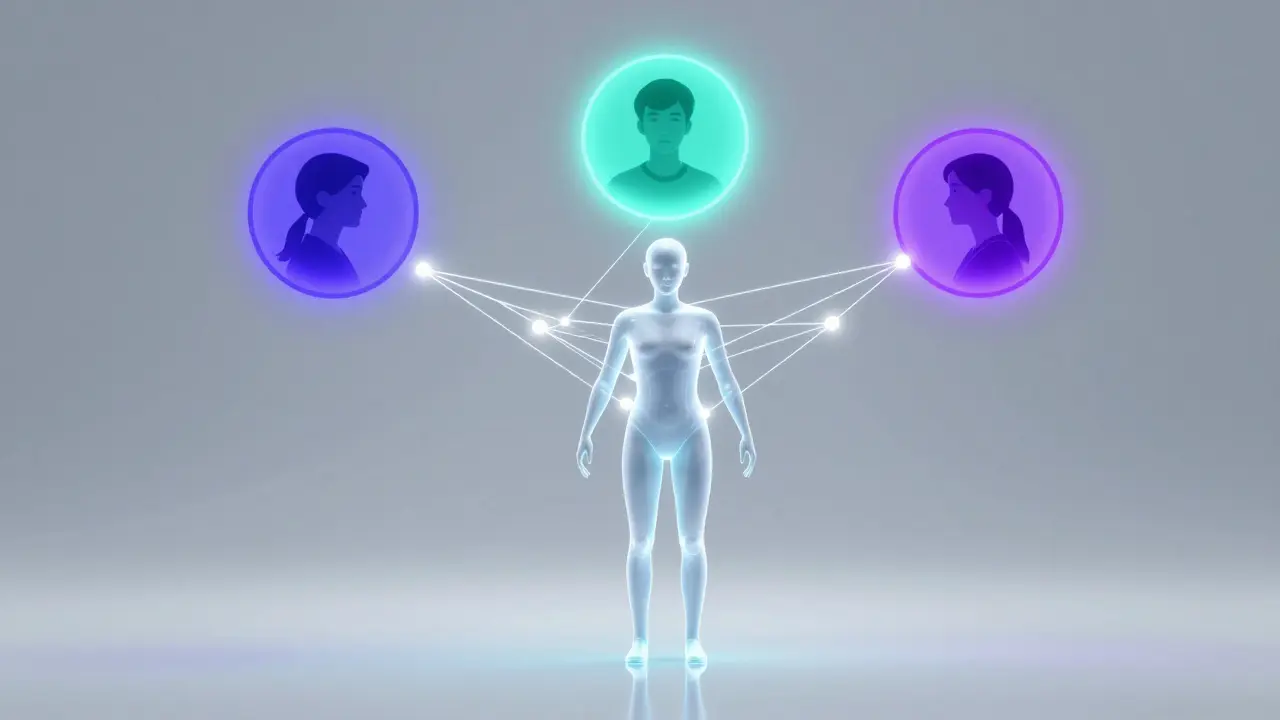
Avoiding the "Echo Chamber" Trap
It's not all sunshine and rainbows. There is a dark side to network effects: the echo chamber. If a social learning community starts rewarding a specific (but incorrect) way of doing things, that error can spread faster than the truth. Because we trust our peers, we are less likely to question a "common consensus" within a group. To fight this, the best digital education platforms build in "friction." They introduce curated challenges from external experts or force students to argue against the prevailing opinion in a structured debate. The goal is to ensure the network effects drive quality upward, not just volume upward.Practical Strategies for Implementing Social Learning
If you're building a course or managing a team, you can't just add a chat room and call it social learning. You need to design for interaction. Start by replacing one-way lectures with "flipped classroom" models: give them the content first, then spend the live time solving problems together. Create shared "knowledge gardens" where students are required to contribute a resource or a tip each week. This transforms the student from a consumer into a curator. When students feel responsible for the collective knowledge of the group, their engagement skyrockets.What is the main difference between social learning and traditional online learning?
Traditional online learning is usually asynchronous and solitary, focusing on a student consuming content from a teacher. Social learning is collaborative and interactive, treating peers as essential resources and emphasizing that knowledge is constructed through interaction and shared experience.
How do network effects actually increase the value of a course?
Network effects occur when each new user adds value for all other users. In education, this means more students bring more diverse perspectives, more peer-to-peer support, and more opportunities for high-level discussion, making the environment more valuable than a static set of videos.
Can social learning work for highly technical subjects?
Yes, and it's often more effective. Technical subjects benefit from "peer code reviews" and collaborative troubleshooting. Platforms like GitHub prove that social interaction is the fastest way to master complex technical skills through real-world application and feedback.
What is the 'Protege Effect' in digital education?
The Protege Effect is when a learner develops a deeper understanding of a topic by teaching it to someone else. Digital platforms enable this by allowing students to answer peer questions and create tutorials for others.
Do I need a huge number of students to benefit from network effects?
Not necessarily. While massive numbers increase the potential for diverse insights, small "micro-cohorts" can create very strong, high-density network effects where trust and accountability are higher, leading to faster individual progress.
Comments
Michael Jones
man this is the future of how we grow as humans actually just breaking down the walls between expert and amateur is where the real magic happens let's just keep pushing the boundaries of how we share knowledge and stop treating education like some dusty old museum piece we need more energy in these digital spaces
Lissa Veldhuis
honey please the idea that a bunch of randoms on a forum are a network effect is just adorable and honestly kind of delusional most of these circles are just echo chambers of mediocrity where people trade delusions for digital badges that mean absolutely nothing in the real world a total circus of noise
James Boggs
I find the concept of the Protege Effect quite compelling. It is an excellent way to reinforce learning.
Frank Piccolo
Typical academic fluff. If we just stuck to the proven American systems of rigorous instruction without this 'social' nonsense we'd actually have competent workers instead of people who 'collaborated' their way into a C-average. Absolute joke.
Addison Smart
While I understand the skepticism regarding the purity of these networks, I think it is vital to consider that different cultures approach collaborative learning with varying levels of social cohesion, and if we can bridge those gaps through digital platforms, we might actually find a way to foster a global intellectual community that respects boundaries while still pushing for collective advancement in a way that benefits everyone involved regardless of their starting point.
Michael Thomas
Exactly. US standards are better. This is just a way to lower the bar for everyone.
Gabby Love
Actually, the GitHub example is spot on because the version control system itself acts as a layer of truth that prevents the echo chamber effect mentioned later in the post.
Jen Kay
Oh, absolutely. Because nothing says "high-quality education" like a leaderboard and a gold star for the most active poster. I'm sure that's exactly how the next generation of geniuses will be forged. Truly a masterstroke of pedagogical design.
David Smith
This whole thing is just a tragedy. We've replaced actual mentors with Slack channels and we're calling it a revolution. It's honestly heartbreaking how we've commodified human interaction into "network effects" for some corporate bottom line. Just completely devoid of any real moral center or depth.
allison berroteran
I've been thinking a lot about the AI matchmaking part of this and it seems so wonderfully hopeful that we could be paired with people who not only share our struggles but also possess the exact complementary skills we lack, which would create such a beautiful synergy of growth and understanding that transcends the typical loneliness of the internet and allows us to feel seen and supported while we tackle these daunting technical hurdles together in a way that feels organic and kind.
Abert Canada
Stop overcomplicating it. Just use the tools and help people out. If you're too scared to post your code and get roasted, you'll never learn anyway.