


Running an online course is one thing. Getting enough people to buy it? That’s the real challenge. If you’re tired of relying only on ads or email lists to grow your course sales, it’s time to think about an affiliate program. It’s not magic, but it works - if you set it up right.
Why affiliates work better than ads for online courses
Ads cost money. Affiliates only get paid when they make a sale. That means you’re not spending a dime until you see real results. Think about it: someone who already trusts their audience - a blogger, a YouTube creator, a podcast host - recommends your course. Their followers are more likely to click because it’s not an ad. It’s a personal recommendation.
Take a real example: a fitness coach selling a 12-week nutrition course. She started with 3 affiliates - all small fitness influencers with 5K-15K followers. Within 60 days, they drove 217 sales. That’s $17,360 in revenue. She paid them $4,340 in commissions. Net profit? $13,020. No ad spend. No paid promotions. Just word-of-mouth from people who already had trust.
What makes a good affiliate for your course
Not everyone who says "I’ll promote your course" is worth working with. You need affiliates who match your audience. Ask yourself:
- Do they talk about topics related to your course? (e.g., if your course is about Excel for small businesses, do they cover productivity tools or startup finance?)
- Do they have an engaged audience? (Look at comments, not just follower count. 1,000 people who reply regularly beat 50,000 who never do.)
- Have they promoted similar courses before? (Check their past posts. If they’ve never mentioned an online course, they might not understand how to sell one.)
Affiliates who are already teaching something similar - even if it’s free - are your best bet. They know what their audience needs. They’ve already done the hard work of building trust.
How to structure your commission system
Most people make this mistake: they offer 30% and call it a day. That’s too vague. You need clarity.
Here’s a simple, proven structure:
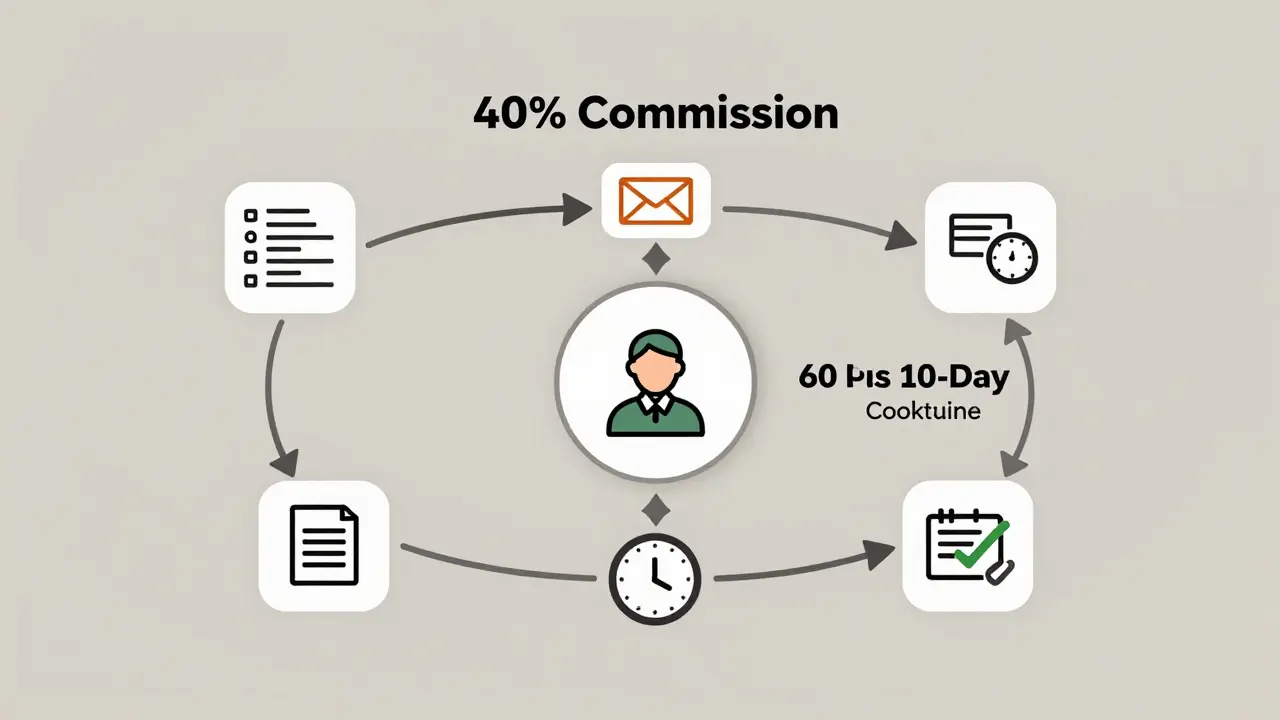
- Commission rate: 40% per sale. This is high enough to motivate affiliates but still leaves you with solid profit if your course price is $99 or more.
- Payout method: PayPal or direct bank transfer. Avoid platforms like Stripe if you’re just starting - too many hoops.
- Payout schedule: Monthly, on the 5th. Affiliates need predictability. No surprises.
- Cookie duration: 60 days. If someone clicks their link today but buys in 5 weeks, they still get paid. That’s fair.
- Recurring commissions: If your course has a monthly subscription, pay 20% for as long as they stay subscribed. This turns one-time promoters into long-term partners.
Don’t overcomplicate it. A simple system beats a fancy one every time.
Tools you actually need (not the flashy ones)
You don’t need a $200/month affiliate platform. Start simple.
If you’re using Teachable, Thinkific, or Kajabi - they all have built-in affiliate tools. Turn them on. Set your commission. Done.
If you’re on a platform that doesn’t support it (like Gumroad or Podia), use ShareASale is a free affiliate network that handles tracking, payments, and reporting for small businesses. It’s free to join. You pay only when someone makes a sale. No monthly fee. It even sends automated emails to affiliates with their links and promotional materials.
Or, if you’re tech-savvy, use a free UTM tracking system with Google Sheets. Create unique links for each affiliate (e.g., yourcourse.com?ref=jane123). Track clicks and sales manually. It’s low-tech but works until you hit 50+ affiliates.
How to recruit your first 10 affiliates
You don’t need to cold email hundreds of people. Start with people you already know - or should know.
- Look at your email list. Who’s commented or replied to your emails? Those are your warmest leads.
- Check your course students. Ask: "Would you recommend this to a friend?" If yes, invite them to become an affiliate. They already love it - they’ll sell it better than anyone.
- Search Instagram or YouTube for people who post about "online courses," "side hustles," or "teaching online." DM them with a short, personal message: "I saw your video on [topic]. I built a course on this too. I’d love to send you a free copy - if you like it, maybe you’d want to share it with your audience?"
- Join Facebook groups or Reddit threads where educators or creators talk about monetizing their knowledge. Offer value first. Don’t pitch.
One of my clients got her first 7 affiliates by sending 12 DMs. Three said yes. Two of them drove 60% of her sales in the first month.
Give your affiliates everything they need
Don’t assume they know how to sell your course. Give them:
- A short video (under 90 seconds) explaining what your course does and who it’s for.
- 3 ready-to-use social media posts (Instagram, Twitter, LinkedIn).
- A sample email they can send to their list.
- A one-pager with key benefits, testimonials, and a FAQ.
- Your affiliate link - easy to copy and paste.
Make it effortless. The easier it is, the more they’ll use it.
Track what matters - and tweak fast
Track three things:
- Which affiliates bring the most sales
- Which promo materials get the most clicks
- Where your conversions drop off (e.g., do people click but not buy? Then your sales page needs work.)
Every 30 days, send a quick email to your affiliates: "Thanks for helping! Here’s what’s working: [Affiliate A] drove 23 sales. [Video B] got 1,200 clicks. Here’s a new testimonial you can use. Want me to send you a custom link for your next post?"
Recognition goes a long way. Affiliates stick around when they feel seen.
What to avoid
- Changing commission rules mid-program. If you promise 40%, don’t drop it to 30% next month. It kills trust.
- Overloading affiliates with too many options. Five promo assets are enough. Ten is overwhelming.
- Ignoring low performers. If someone hasn’t made a sale in 90 days, politely ask if they still want to participate. If not, remove them. Clean lists perform better.
- Not testing pricing. If your course is $197 and no one’s buying, try $97 for the first 3 months. Affiliates sell more when the barrier is lower.
When you’re ready to scale
Once you’ve got 15-20 active affiliates and consistent sales, it’s time to level up:
- Create a private Slack or Discord group just for affiliates. Share tips, new content, and celebrate wins.
- Run a quarterly bonus: "Top 3 affiliates this month get a free 1:1 coaching session with me."
- Offer tiered commissions: 40% for the first 10 sales, 50% after that.
- Record a monthly live Q&A with your top affiliates. Let them ask questions - and let others learn from them.
At this point, your affiliate program isn’t just a sales channel. It’s a community. And communities grow on their own.
Final thought: Start small. Stay consistent.
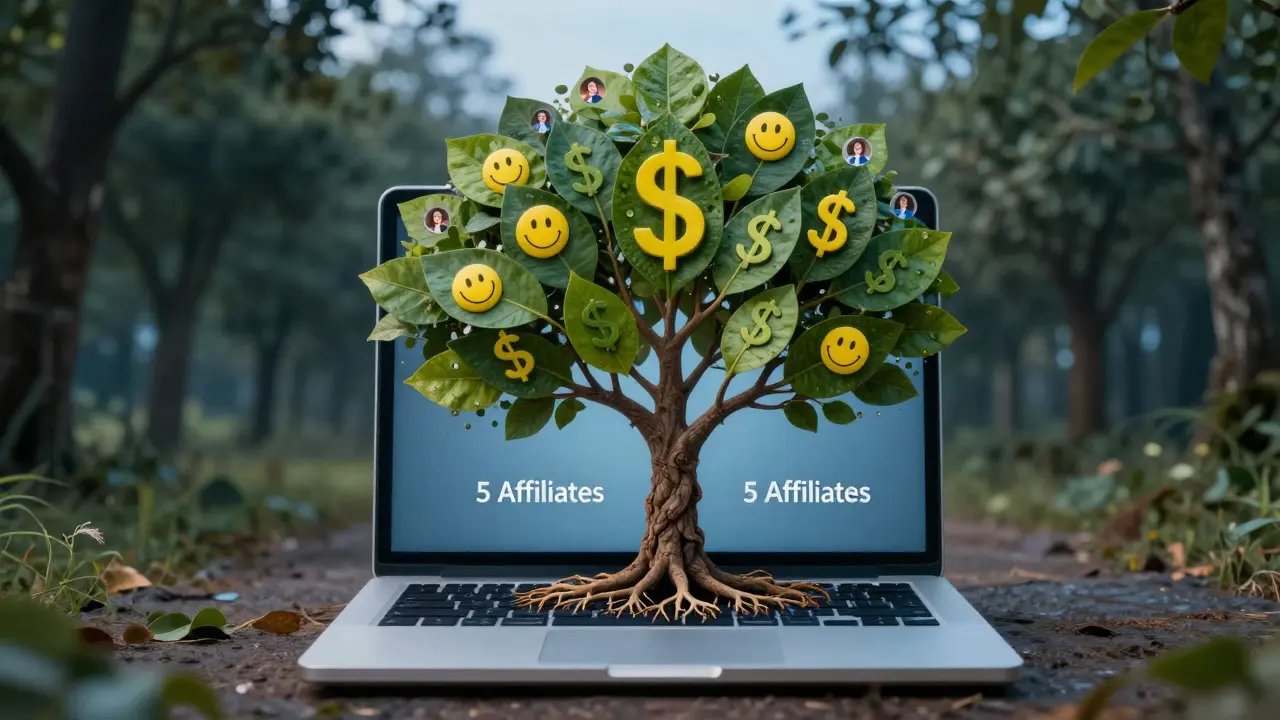
You don’t need 100 affiliates. You need 5 who really get it. One person with a loyal audience can outperform 20 random promoters. Focus on quality over quantity. Build relationships. Reward effort. Keep it simple.
Most online course creators quit after 30 days because they don’t see instant results. But affiliate programs don’t work like ads. They work like planting trees. You water them. You wait. Then one day, you look up - and you’re shaded by a forest you didn’t build alone.
Do I need a website to run an affiliate program for my online course?
No, you don’t need a website. But you do need a way for affiliates to track clicks and sales. Platforms like Teachable, Thinkific, or Kajabi handle this automatically. If you’re using a simple payment processor like Gumroad, you can still run an affiliate program using UTM links and manual tracking in Google Sheets. What matters is having a clear way to assign sales to each affiliate - not whether you have a fancy site.
Can I run an affiliate program if my course is free?
Yes - but you’ll need to adjust your incentive. Instead of paying cash, offer affiliates perks: early access to new content, exclusive resources, shoutouts on your newsletter, or even a free upgrade to your premium course. People promote free courses when they get something valuable in return - even if it’s not money.
How long does it take for an affiliate program to start generating sales?
Most people see their first sales within 2-4 weeks after recruiting their first 3-5 affiliates. But it takes 60-90 days to build momentum. That’s because affiliates need time to create content, post it, and wait for their audience to respond. Don’t expect Day 1 results. Focus on consistency.
Should I pay affiliates upfront?
Never. Paying upfront is a waste of money. Affiliates should only get paid when they make a sale. That’s the whole point. If someone asks for a payment before promoting, they’re likely not serious - or worse, they’re trying to scam you. Stick to performance-based payouts.
What if my course is in a niche market? Can I still find affiliates?
Yes - and you’ll have less competition. Niche audiences are easier to reach because there are fewer people promoting similar courses. Look for micro-influencers in your exact niche. For example, if your course is about restoring vintage typewriters, find bloggers who write about antique office equipment. They may have only 2,000 followers, but those followers are hyper-relevant. They’ll convert better than a general productivity coach with 100K followers.
Comments
Bhagyashri Zokarkar
ok so i just tried this affiliate thing for my calligraphy course and honestly? it was a disaster at first. i thought everyone would jump on it but nope. only 2 people signed up. then i started dm-ing my old students who actually replied to my emails. one of them had 800 followers but they were all obsessed with brush pens like me. she posted a story with her notebook and boom. 17 sales in 3 days. i didnt even give her fancy graphics. just a link and a heartfelt thank you. sometimes its not about the tool its about the person behind it.
Rakesh Dorwal
you know what they dont tell you? this whole affiliate thing is just a front for data harvesting. those "free" platforms like shareasale? they track every click, every scroll, every damn mouse movement. your affiliates are basically selling your students to advertisers. i saw a guy promote my course then 3 days later his followers started getting ads for weight loss supplements. same ip address. same browser fingerprint. dont be fooled. this is surveillance capitalism with a smiley face.
Vishal Gaur
honestly i tried the 40% commission thing and it worked but then i got lazy. i mean why go through all the trouble of making videos and social posts when you can just copy paste the same link over and over? i had 3 affiliates who did that. one of them literally just posted my link in every reddit thread about "how to make money online". no context. no explanation. just a url. i was like wow. and guess what? 62% of their traffic came from people who clicked thinking it was a scam. turned out they were looking for free courses. not buying. lesson learned: dont just recruit anyone. recruit people who care. even if they have 200 followers.
Nikhil Gavhane
i just want to say thank you for writing this. as someone who teaches coding to underprivileged kids in rural india, i never thought an affiliate program was possible for me. my course is free. i dont even have a website. but after reading your section on free courses, i reached out to three local teachers who post about tech education on facebook. i offered them early access to new lessons and a shoutout in my newsletter. two of them said yes. one of them shared it with her 1,400-member group. we had 43 new students last week. i dont care about the money. i care that more kids are learning. you made me believe this was possible.
Rajat Patil
it is important to note that the establishment of an affiliate program requires a structured and methodical approach. while the author provides practical suggestions, one must consider the ethical implications of incentivizing third-party promotion. transparency with audiences is paramount. furthermore, the use of tracking mechanisms such as utm parameters should be accompanied by clear disclosures. a well-intentioned initiative may inadvertently mislead consumers if not handled with due diligence. consistency and integrity are not optional components-they are foundational.
deepak srinivasa
you mentioned using google sheets for tracking. i tried that. it worked for 2 weeks. then i had 11 affiliates and i was manually updating 300+ rows every monday. i started crying. then i found out teachable has a built-in system. free. no setup. just turn it on. why did no one tell me this sooner? also-what if someone uses a vpn? does the tracking still work? i feel like there’s a loophole somewhere. anyone tested this?
pk Pk
you’re thinking too small. stop focusing on 5 affiliates. think 50. think 500. here’s what i did: i created a simple google form that said "i want to promote your course". asked for their email, niche, and audience size. i got 87 responses. i filtered out anyone who didn’t have at least 100 engaged followers. ended up with 18. i sent each one a personalized video message-not a link, not a pdf. just me saying "i saw your post about x and i think you’d love this". 15 said yes. 6 of them drove 70% of my sales. the key? you don’t recruit affiliates. you invite collaborators. treat them like partners. not vendors.
NIKHIL TRIPATHI
the part about recurring commissions for subscription courses? that’s genius. i run a language course with monthly membership. i offered 20% ongoing. one affiliate, a german tutor with 4k followers, started sending weekly emails to her list. she’s been with me for 14 months. she’s made over $2,100 in commissions. not one lump sum. just steady drip. i sent her a handwritten note last week. she cried. i cried. we didn’t even talk about money. she said "you made me feel like i’m part of something". that’s the real win. stop chasing numbers. chase connection.