

It starts with a single comment. Someone misinterprets a peer’s feedback as an attack. Another student accuses the instructor of bias because their grade didn’t match expectations. Within hours, the discussion thread turns toxic, engagement drops, and you’re left wondering how a supportive learning environment became a battleground. This is the reality of conflict resolution in online course communities, which involves strategies and practices for managing disagreements among students, instructors, and moderators in digital learning spaces. Unlike face-to-face classrooms where tone and body language soften blows, online interactions are text-heavy, asynchronous, and often stripped of context. That makes misunderstandings easier to spark and harder to extinguish.
You don’t need to be a psychologist or a lawyer to handle these situations. You just need a clear framework, empathy, and the willingness to act before small friction points become full-blown crises. The good news? Most conflicts in online courses stem from preventable issues like unclear expectations, poor communication norms, or lack of structured feedback mechanisms. Address those root causes, and you’ll spend less time putting out fires and more time fostering genuine collaboration.
Why Conflicts Erupt in Virtual Learning Spaces
Before you can resolve conflict, you have to understand why it happens. In physical classrooms, social cues regulate behavior. If someone raises their voice, others notice. If a student looks confused, the teacher adjusts. Online, none of that exists. Instead, you’ve got anonymity, delayed responses, and the illusion that typing something harsh feels less consequential than saying it aloud.
Research from the Association of College and University Educators (ACUE) shows that over 60% of online instructors report dealing with at least one significant interpersonal conflict per semester. Common triggers include:
- Misinterpreted tone: A blunt critique read as personal aggression.
- Unequal participation: Students feeling ignored while others dominate discussions.
- Grading disputes: Perceived unfairness when rubrics aren’t transparent.
- Cultural differences: Varying norms around directness, respect, and authority.
- Technical frustrations: Blaming peers or instructors for platform glitches.
These aren’t just annoyances-they erode trust, reduce completion rates, and damage your course’s reputation. Left unchecked, they create a hostile environment where learners disengage entirely.
The Four-Step Framework for Resolving Online Disputes
Effective conflict resolution doesn’t require dramatic interventions. It requires consistency, clarity, and speed. Here’s a proven four-step approach used by top online educators:
- Acknowledge early: Don’t ignore tension. When a thread turns heated, step in within 24 hours. Silence signals indifference; quick acknowledgment shows control.
- Clarify intent: Ask both parties to restate what they believe the other person meant. Often, people argue about assumptions, not facts.
- Redirect to policy: Reference your community guidelines-not as punishment, but as shared ground. “Our code of conduct says we give constructive feedback. Let’s revisit that standard together.”
- Follow up privately: Move sensitive conversations off public forums. Use DMs or email to de-escalate without embarrassment.
This isn’t about winning arguments. It’s about restoring safety so learning can continue. And yes, sometimes you’ll need to remove a participant. But that should be last resort, not first impulse.
Building Prevention Into Your Community Design
Resolution is reactive. Prevention is proactive-and far more effective. The best online courses don’t wait for conflict to arise. They bake structure into every interaction.
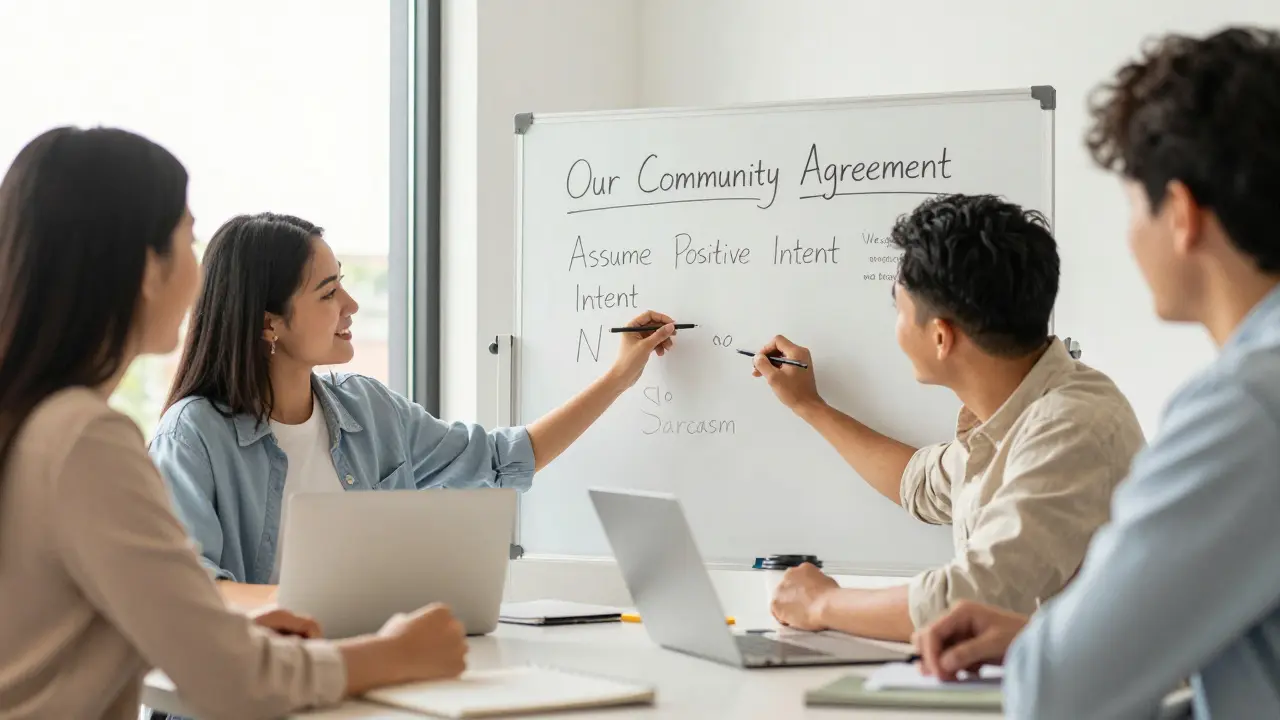
Start with a Community Agreement, co-created by students during Week 1. Instead of imposing rules, ask: “What do you need to feel respected here?” Then codify their answers. One cohort decided on “No sarcasm in written feedback.” Another chose “Assume positive intent unless proven otherwise.” These self-generated norms carry more weight than any syllabus clause.
Next, design discussion prompts that minimize ambiguity. Avoid open-ended questions like “What did you think?” Replace them with structured formats:
- “Share one strength and one suggestion for improvement.”
- “Respond using the ‘I noticed… I wonder…’ format.”
- “Tag your response to a specific point in the original post.”
Structure reduces chaos. Chaos breeds conflict.
Also consider rotating facilitation roles. Let students moderate weekly threads. Not only does this distribute workload, it builds ownership. When learners help enforce norms, they internalize them faster.
When Culture Collides: Navigating Global Classrooms
If your course attracts international students, expect cultural friction. High-context cultures (like Japan or South Korea) value indirect communication and harmony. Low-context cultures (like the U.S. or Germany) prefer directness and debate. Neither is wrong-but clashing styles cause real pain.
In a recent study published by The International Journal of Educational Technology in Higher Education, researchers found that cross-cultural misunderstandings accounted for nearly 30% of reported conflicts in MOOCs (Massive Open Online Courses). The solution? Explicitly teach communication styles early on.
Add a short module called “How We Talk Online” covering:
- Differences in politeness strategies across regions
- How silence can mean agreement-or disagreement-depending on culture
- Why some students hesitate to challenge ideas publicly
Pair this with anonymous polling tools so quieter voices still contribute. Tools like Mentimeter or Slido let shy participants share thoughts without fear of judgment.
Handling Instructor-Student Tensions
Not all conflicts involve peers. Sometimes the heat comes between student and instructor. Maybe a learner feels graded unfairly. Perhaps they accuse you of favoritism. Or worse-they claim harassment.
Here’s how to respond professionally:
- Stay calm: Never reply emotionally. Take 12 hours if needed.
- Document everything: Save screenshots, timestamps, prior messages.
- Refer to rubrics: Show exactly how grades were calculated. Transparency kills speculation.
- Offer appeals: Have a formal process outlined in your syllabus. Even if denied, knowing there’s recourse reduces anger.
- Escalate appropriately: If allegations involve misconduct, involve institutional support immediately. Don’t handle alone.
Remember: your role isn’t to be liked. It’s to be fair. Fairness earns respect-even when decisions hurt.

Tools That Make Moderation Easier
You don’t have to manage conflict manually forever. Smart platforms automate detection and flagging.
| Tool | Best For | Key Feature | Limitation |
|---|---|---|---|
| Discord | Real-time chat groups | Role-based permissions & auto-moderation bots | Steep learning curve for non-tech users |
| Canvas Discussions | LMS-integrated forums | Built-in reporting & admin alerts | Limited customization options |
| Kahoot! | Engagement through gamification | Reduces tension via playful competition | Not suitable for serious academic debate |
| Hootsuite Insights | Social media monitoring | AI-driven sentiment analysis | Expensive for individual instructors |
Choose based on your audience. Tech-savvy gen-Z learners thrive in Discord. Older professionals may prefer Canvas. Always test tools before rolling out widely.
Measuring Success: Did You Actually Resolve Anything?
Conflict resolution isn’t complete until you measure impact. Otherwise, you’re guessing.
Use three simple metrics:
- Return rate: Do involved students come back to participate after intervention?
- Tone shift: Does language in subsequent posts become more respectful?
- Feedback scores: Do end-of-course surveys show improved satisfaction?
If numbers drop, tweak your approach. Maybe your initial response was too rigid. Maybe you missed underlying grievances. Data tells you what feelings hide.
What Happens When All Else Fails
Sometimes, despite best efforts, a student remains disruptive. They insult others repeatedly. They refuse to follow guidelines. They threaten legal action over minor grading issues.
In those cases, removal isn’t failure-it’s protection. Document patterns clearly. Notify administration. Issue final warnings with deadlines (“If behavior continues beyond [date], access will be revoked”). Then execute consistently.
Yes, it feels bad. But one toxic member ruins the experience for dozens. Protect the majority. Always.
How quickly should I respond to conflict in an online course?
Within 24 hours. Delayed responses signal neglect and allow negativity to spread. Quick acknowledgment-even if just saying “I see this issue and am looking into it”-shows control and care.
Can I ban a student from my online course?
Yes, but only after documenting repeated violations of community standards. Provide clear warnings first. Involve institutional oversight if required by policy. Removal protects group well-being, not personal preference.
What’s the difference between conflict and abuse in online learning?
Conflict arises from differing opinions or misunderstandings. Abuse includes threats, hate speech, doxxing, or sustained harassment. Treat conflict with mediation. Treat abuse with immediate escalation and potential termination.
Should I mediate conflicts between students myself?
Only for mild tensions. For serious disputes, involve trained mediators or institutional support. Your role is educator, not therapist. Stay within professional boundaries to avoid liability and burnout.
How do I prevent future conflicts without stifling free expression?
Establish co-created community agreements early. Use structured discussion templates. Rotate facilitation duties. Teach cultural communication styles proactively. Structure enables freedom-it doesn’t restrict it.
Is it okay to delete offensive comments immediately?
Delete only if content violates explicit policies (threats, slurs, illegal acts). Otherwise, leave visible but pin a moderator note explaining why it breaches norms. Transparency teaches better than censorship.
What should I do if a student claims discrimination?
Take it seriously. Document all interactions. Consult HR or diversity office immediately. Do not investigate alone. Follow institutional protocols strictly to ensure fairness and legal compliance.
How can I tell if my community guidelines are working?
Track reduction in reported incidents. Monitor tone shifts in discussions. Survey students anonymously mid-course. If complaints decrease and engagement rises, your guidelines are effective.
Do younger students handle online conflict differently than older ones?
Often yes. Gen Z tends toward rapid emotional reactions but also quicker reconciliation. Older adults may withdraw silently rather than confront. Adapt your style accordingly-young learners benefit from swift check-ins; mature students appreciate private reflection space.
Can AI help detect conflict before it escalates?
Emerging tools use natural language processing to flag aggressive phrasing or declining sentiment trends. While promising, always verify AI flags manually. Context matters-humor, irony, and regional dialects confuse algorithms easily.