


Key Takeaways for Educators
- Shift from accuracy-first to fluency-first instruction.
- Use Task-Based Language Teaching (TBLT) to simulate real-world pressure.
- Focus on "strategic competence"-teaching students how to survive when they forget a word.
- Implement a feedback loop that doesn't interrupt the flow of speech.
Moving Beyond the Textbook
Traditional classrooms often rely on "controlled practice," where students repeat sentences from a book. While this helps with pronunciation, it doesn't build the mental muscles needed for a real conversation. To bridge this, we need Conversational Skills Teaching is an instructional approach that prioritizes the spontaneous use of language in social contexts over the rote memorization of linguistic rules.
Think about how you actually talk. You don't mentally scan a grammar chart before asking someone for the time. You use chunks of language, gestures, and social cues. A successful methodology incorporates Communicative Language Teaching (CLT), a method that emphasizes interaction as both the means and the ultimate goal of study. Instead of teaching the "present perfect" for an hour, you give students a goal-like planning a trip together-and let the grammar emerge as a tool to solve the problem.
The Power of Task-Based Language Teaching
If you want students to speak, give them a reason to. This is where Task-Based Language Teaching (TBLT) comes in. TBLT moves the focus from "what a student knows" to "what a student can do." A task isn't just an exercise; it's a goal-oriented activity that results in a tangible outcome.
For example, instead of a worksheet on "food vocabulary," tell your students they are at a restaurant and the waiter just brought them the wrong order. They have to resolve the issue politely but firmly. This creates a "need to communicate." When a student struggles to find the word for "undercooked," they aren't just failing a test; they are experiencing a communicative breakdown. That's when the most profound learning happens.
| Feature | Controlled Practice | Task-Based Learning |
|---|---|---|
| Goal | Correct grammar usage | Successful communication |
| Student Role | Passive repeater | Active problem-solver |
| Error Handling | Immediate correction | Delayed feedback |
| Context | Artificial/Textbook | Real-world simulation |
Teaching Strategic Competence
The biggest fear for any language learner is the "blank"-that moment where the brain stops and the word is gone. Most teachers try to fix this by giving the student more vocabulary. But the real fix is teaching Strategic Competence, which is the ability to use communication strategies to overcome gaps in knowledge.
Teach your students how to circumlocute. This is the art of describing a word you don't know. Instead of stopping the conversation because they forgot the word for "stapler," teach them to say "the small metal thing that holds papers together." When students realize they can survive without knowing every single noun in the dictionary, their anxiety drops and their fluency spikes. This shift in mindset is what transforms a student from a "learner" into a "speaker."

Managing the Feedback Loop
One of the fastest ways to kill a student's confidence is to interrupt them every three seconds to correct a preposition. This creates a mental block where the student focuses more on avoiding mistakes than on conveying a message. To avoid this, implement a "Dual-Track Feedback" system.
During the Fluency Phase, the teacher acts as an observer. Take notes on common errors without interrupting. Your only goal here is to keep the conversation moving. Once the activity is over, enter the Accuracy Phase. Write the errors you heard on the board (anonymously) and let the class figure out how to fix them. This allows students to experience the thrill of successful communication first, and the rigor of linguistic precision second.
Creating a Low-Affective Filter Environment
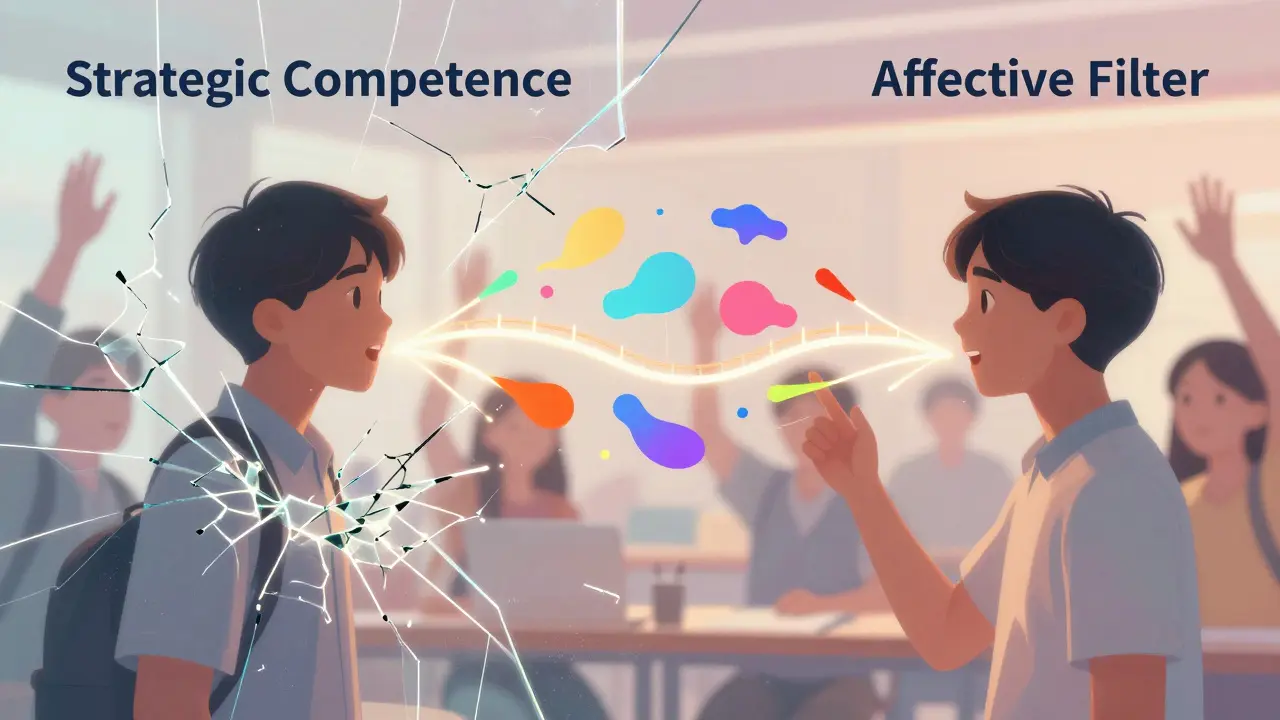
Language learning is deeply emotional. The Affective Filter Hypothesis, proposed by linguist Stephen Krashen, suggests that variables like anxiety, low self-esteem, and boredom can act as a mental block that prevents input from reaching the brain's language acquisition device. If a student is terrified of looking stupid, they simply cannot learn.
How do you lower this filter? Stop making the teacher the only authority in the room. Use peer-to-peer interaction through "Information Gap" activities. In these exercises, Student A has information that Student B lacks, and vice versa. Because they must exchange information to complete the task, the focus shifts from the teacher's judgment to the partner's need. It turns the classroom into a social hub rather than a courtroom.
Integrating Technology for Spontaneous Speech
While face-to-face interaction is king, Educational Technology can provide the scaffolding needed for confidence. Voice recording tools and AI chatbots allow students to practice the "rough draft" of a conversation in a zero-risk environment. Using tools that offer real-time speech-to-text can help students visualize their pronunciation errors without the embarrassment of a public correction.
Encourage students to use asynchronous voice messaging (like WhatsApp or Telegram) to send short updates to their classmates. This bridges the gap between the slow speed of writing and the high pressure of live conversation. It gives them a chance to think, record, listen, and refine before they ever hit "send."
How do I handle students with vastly different speaking levels in one class?
Use "scaffolded pairings." Pair a more advanced student with a beginner, but give them specific roles. The advanced student acts as the "facilitator" or "interviewer," which forces them to use complex questioning and paraphrasing, while the beginner focuses on providing essential information. This prevents the stronger student from doing all the talking and gives the weaker student a supportive environment.
Should I correct every mistake to prevent bad habits?
No. Over-correction leads to "monitor over-use," where the student becomes too self-conscious to speak. Only correct mistakes that actively block communication (global errors). For minor mistakes (local errors), like using the wrong tense in a way that is still understandable, use the delayed feedback method mentioned above.
What is the best way to start a conversation class for shy students?
Start with "low-stakes" interaction. Use visual prompts or a "Would You Rather" game where there are no wrong answers. Avoid open-ended questions like "What did you do this weekend?" which can feel overwhelming. Instead, give them options: "Did you go to the park or stay at home?" This reduces the cognitive load and makes the first few words easier to produce.
How often should I use TBLT compared to traditional grammar lessons?
A healthy balance is the 70/30 rule. Spend 70% of your class time on communicative tasks and 30% on the direct instruction of the linguistic tools needed to perform those tasks. The grammar should always feel like the "solution" to a problem the students encountered during the speaking activity.
Does the Affective Filter really matter for adult learners?
Actually, it matters more for adults. While children often learn implicitly and are less afraid of mistakes, adults have a stronger social identity and a higher fear of failure. Creating a safe, non-judgmental environment is critical for adults to lower their guard and start experimenting with the language.
Next Steps for Curriculum Design
If you are updating your syllabus today, start by auditing your current activities. Are your students spending more time listening to you than talking to each other? If so, flip the script. Move your grammar explanations to the end of the lesson and start with a challenging, real-world task. When students realize they can communicate, the desire to learn the formal rules follows naturally.
Comments
John Fox
this is the way
Anuj Kumar
The 70/30 rule is just a fake number to make people feel like there is a system. It is all a trick to stop us from actually learning the roots of the language. If you don't know the rules, you are just making noises that sound right but mean nothing. This is how they keep us dependent on the courses.
chioma okwara
imagine wanting a fluency-first approach while ignoring basic grammar. how can you even speak a lagnuage if you dont know how to structure a sentence properly? its just bad teaching if you let them make mistakes for too long. the
Jack Gifford
I actually disagree with the idea that we should stop correcting early on. If you let a bad habit set in for three months, it's ten times harder to fix later. I think a middle ground where you correct a few key errors but let the flow continue is much more effective for the long haul.
Wilda Mcgee
Oh, the circumlocution tip is a total game-changer! It's like giving students a magic key to unlock their own communication when they're feeling stuck in a linguistic fog. I've used this in my own workshops and it's absolutely dazzling to see that lightbulb moment when a student realizes they don't need the perfect word to be understood. It turns a scary wall into a little hurdle.
I also think integrating those asynchronous voice notes is a brilliant way to build a bridge for the more hesitant souls. It lets them polish their thoughts without the crushing weight of a real-time audience. It's all about building that confidence muscle in small, sparkly increments until they're ready to dive into the deep end of a real-world conversation. I love how this approach celebrates the effort of communicating over the sterile perfection of a textbook. It's much more human and inclusive to let people stumble their way to fluency. Definitely a vibrant way to breathe life into a stale curriculum!
Tasha Hernandez
Right, because nothing says "professional training" like pretending to be a waiter and pretending to be annoyed. I can already imagine the absolute chaos of a classroom full of adults playing make-believe. Truly a revolutionary way to spend an hour of my life that I'll never get back.
Kathy Yip
The idea of the information gap activity is really intruiging from a philisophical perspective. It shifts the power dynamic from the teacher to the learners. I wonder if this also help with the social anxiety part of learning since you're just trying to help your peer rather than perform for a judge.
Bridget Kutsche
I've tried incorporating TBLT in my adult classes and it's honestly such a breath of fresh air. The students are so much more engaged when they have a concrete goal to hit. Just a small tip for anyone trying this: start with very simple tasks so they don't get overwhelmed by the complexity of the goal and the language at the same time.