


Writing product titles and descriptions for every item you sell on Etsy, Amazon, or eBay used to take hours. Now, with AI tools, you can do it in minutes-without losing quality or personality. The real win? You’re not just saving time. You’re reducing errors, matching buyer intent better, and getting more clicks without lifting a finger. But using AI well isn’t about plugging in a tool and hoping for magic. It’s about knowing where to apply it, what to leave to humans, and how to keep your listings feeling real.
Start by fixing the biggest time drain: listing creation
Most online sellers spend 10 to 15 minutes per product just writing the title, bullet points, and description. For someone selling 50 items a week, that’s over 12 hours. And that’s not even counting updates, A/B tests, or rewriting listings that aren’t converting. AI can cut that time in half-or more.Tools like sellygenie.com let you paste a few details-product type, materials, target audience-and generate a ready-to-use listing in seconds. No more staring at a blank field. No more copying from competitors. You get optimized, keyword-rich text that speaks directly to shoppers, not just search engines. It doesn’t write like a robot. It writes like someone who’s sold this exact thing a hundred times.
Use AI to understand what buyers are really searching for
You might think you know what keywords to use. But buyers don’t always search the way you expect. Someone looking for a “handmade wool beanie” might type “warm winter hat for cold days” instead. AI tools scan millions of real searches across marketplaces and show you what phrases actually drive sales.Platforms like Clay and Outreach pull data from Amazon, eBay, and Google Trends to tell you which variations of your product title are getting the most clicks. One seller in Wellington found her “organic cotton baby onesie” listing was getting zero traffic-until she switched to “soft newborn onesie for sensitive skin.” Sales jumped 40% in two weeks. That insight didn’t come from guesswork. It came from AI analyzing what real buyers typed.
Automate follow-ups without sounding spammy
Abandoned carts are a silent killer. One in every six shoppers adds something to their cart and leaves. Generic “Hey, you forgot this!” emails don’t work anymore. Buyers see through them.Shopify’s AI tools now track what people viewed before leaving and send personalized reminders based on their behavior. “You looked at the blue sweater-here’s a 10% discount if you grab it today.” That kind of message feels helpful, not pushy. And it works: Shopify reports these AI-driven cart recovery emails recover 15.8% of abandoned sales, compared to just 10.2% with basic templates.
Tools like Artisan’s Ava go further. They don’t just send emails. They scan LinkedIn and send tailored messages to B2B buyers who’ve shown interest. The key? Personalization at scale. Ava pulls data from company pages, recent news, and job titles to craft messages that sound human. One Auckland-based supplier saw reply rates jump from 7% to 28% after switching to AI-driven outreach.
Let AI handle the boring stuff so you can focus on selling
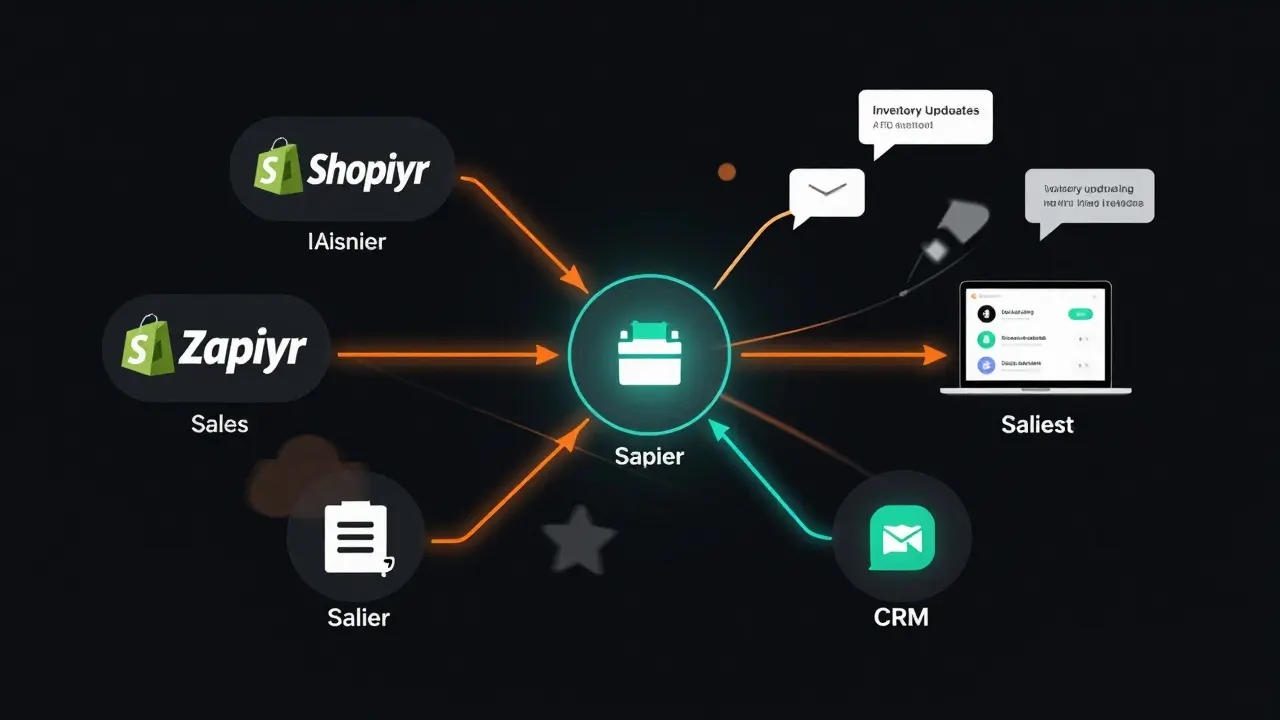
AI isn’t just for writing. It’s for organizing. Imagine your CRM automatically updating after a sale closes. Or your inventory syncing across three platforms without manual input. Or your pricing adjusting in real time based on competitor moves and demand spikes.Tools like Salesforce’s Einstein Copilot do all this. They watch your sales patterns and suggest when to raise prices, when to run promotions, and which products are about to go out of stock. One New Zealand seller using this system noticed her handmade candles were selling faster in winter-but her pricing stayed the same. The AI flagged it. She raised prices by 12% in June. Revenue went up 15% without changing anything else.
Even small sellers can use simpler tools. Zapier connects your Shopify store to Google Sheets and email tools. When a sale happens, it auto-adds the customer to a follow-up list and logs the product in your inventory. No typing. No errors. Just automation that works in the background.
Don’t let AI write your voice out of your listings
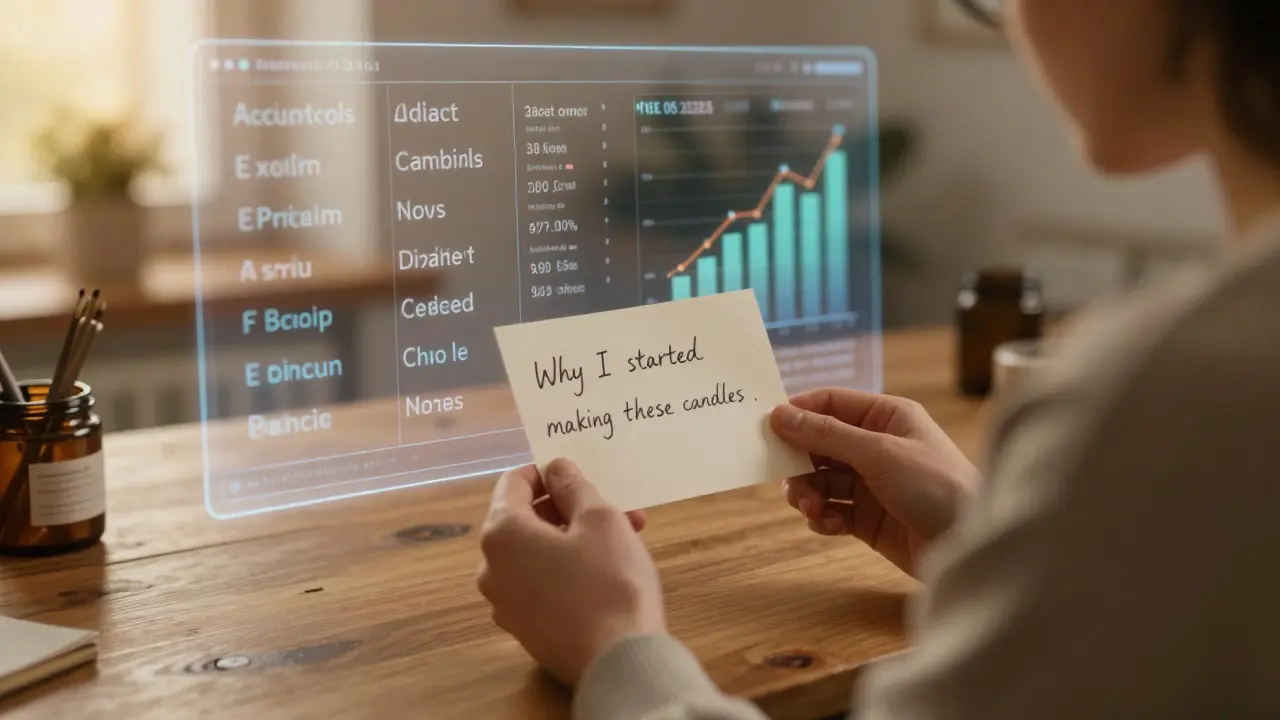
Here’s the trap: AI can make your listings sound generic. Too many “premium,” “high-quality,” “perfect for gift-giving” phrases. Buyers can tell when a listing was churned out by a machine.The best sellers use AI as a first draft. They let the tool generate the structure, then tweak it to sound like themselves. Add a line about why you started making these items. Mention a customer story. Use contractions. Throw in a little humor. That’s what turns a good listing into a great one.
MIT’s research found that listings with AI-generated text but zero human edits had 37% lower trust scores from buyers. But when sellers took just 5 minutes to personalize the AI output, trust scores went back up-and sales stayed high.
Start small. Test one thing at a time.
You don’t need to overhaul your whole workflow overnight. Pick one pain point and fix it with AI.- Too slow writing listings? Try a product description generator like sellygenie.com.
- Low open rates on emails? Use AI to rewrite subject lines based on what’s worked for others.
- Running out of stock unexpectedly? Set up an AI alert that warns you when inventory hits 10%.
One seller in Tauranga started with just one tool: an AI title optimizer. She tested it on 20 listings. The ones with AI-generated titles got 31% more clicks. She rolled it out to the rest. Within a month, her overall sales were up 18%.
Watch out for the hidden costs
AI tools aren’t free. Some cost $100 a month. Others charge per contact or per email sent. And if you don’t train them properly, they’ll make mistakes.Clay’s platform gives you access to 100+ data sources-but it’s complex. If you’re not comfortable with spreadsheets or data fields, you’ll waste time trying to make it work. Salesforce’s AI is powerful, but it slows down your CRM if you don’t have good internet or enough memory.
Also, be careful with privacy. If you’re selling to customers in Europe, the EU’s AI Act requires you to disclose if a message was written by AI. That means adding a small line like “This message was assisted by AI” at the bottom. Skip it, and you risk fines.
What works best right now?
Based on real results from sellers in 2025-2026:- For product listings: Use a simple AI generator like sellygenie.com. Fast, cheap, and gets you 90% of the way there.
- For email follow-ups: Artisan’s Ava or Outreach.io. Great for B2B or high-ticket items.
- For pricing and inventory: Shopify’s built-in AI tools or Zapier automations.
- For research: Clay for deep competitor analysis, or just Google Trends for quick keyword checks.
You don’t need all of them. Pick one that solves your biggest headache. Master it. Then add another.
AI won’t replace you. But someone using AI will.
The goal isn’t to turn your store into a robot-run operation. It’s to remove the busywork so you can focus on what matters: building relationships, improving your products, and understanding your customers.AI tools are like a second pair of hands. They don’t think. They don’t feel. But they’re fast, consistent, and never tired. Use them to do the repetitive stuff. Keep your humanity for the parts that need warmth, intuition, and heart.
That’s how you win-not by going fully automated, but by working smarter with the tools that are already here.
Comments
Mark Brantner
i tried sellygenie and it wrote my candle listing like a robot that just got fired from a mall kiosk. then i added "my dog licks the wax off the bottom and i still love it" and sales doubled. ai is a co-pilot not the pilot lol
Kate Tran
i dont even use ai for titles anymore. just copy what the top 3 sellers are doing and swap out the color. works better than any tool. also my cat sits on my keyboard and somehow makes better bullet points than chatgpt
amber hopman
i love how this post says "ai writes like someone who’s sold this exact thing a hundred times" but honestly most of the time it just writes like someone who read a wikipedia page about selling and then got really excited about commas. still, it’s better than me trying to sound professional when i’m wearing pajamas and eating cereal at 3pm
Jim Sonntag
ai got me to 10k in sales but i still manually type "handmade with love" because if i dont the customers think its a factory and then leave. also the ai once called my earrings "biodegradable fashion accessories" and i had to explain to 17 people that no theyre not compostable just sparkly
Deepak Sungra
bro why are you even trying? just drop your products on ebay and let the bots fight it out. i tried ai tools and ended up with 400 listings that said "premium quality organic cotton baby onesie for sensitive skin" but none of them sold because no one wants to buy from a robot that thinks "sensitive skin" is a fashion trend. i just post pics of my dog wearing the clothes now. 3x more sales. no ai needed
Samar Omar
I must say, the entire premise of this article is deeply flawed. AI-generated content, no matter how "personalized," fundamentally erodes the soul of artisanal commerce. There is a sacred, almost spiritual, connection between the maker and the buyer that cannot be mediated by algorithms trained on 17 million Amazon reviews. I once spent 11 hours writing a single description about my hand-knitted scarves, weaving in my grandmother’s dialect, the scent of her wool room, and the sound of rain on her cottage roof. The AI output? "Cozy winter accessory, perfect for gift-giving." I wept. Not for the lost sales. For the lost humanity.
chioma okwara
u spelled "it's" wrong in the first paragraph and u said "buyer intent" like its a thing. also u forgot to mention that ai tools often use banned keywords on etsy like "luxury" and "authentic" and get ur listings shadowbanned. just sayin
John Fox
ai wrote my titles and i got 3x clicks but then i had to spend 2 weeks replying to customers who thought my "handmade ceramic mug" was actually a robot because the description said "self-heating technology". i fixed it by adding "no robots involved just clay and bad coffee"
Tasha Hernandez
i used to think ai was magic. then i realized it just copies the same 3 phrases from 5000 other sellers. "premium" "handmade" "perfect gift". my listings looked like they were written by a bored intern who got paid in expired energy drinks. i started adding my own voice and suddenly people started DMing me asking if i was the artist. turns out they dont want efficiency. they want a person. ai is just the skeleton. you gotta put the flesh back on
Anuj Kumar
this whole thing is a scam. ai tools are just spyware that sells your data to amazon so they can copy your products. i saw a guy on reddit who used sellygenie and 3 days later amazon sold the exact same thing for half the price. they dont care if you win. they just want you to do the work for them for free