


Here is the uncomfortable truth about EdTech: most of it fails because it solves problems that don't exist. We have spent decades building platforms based on what administrators want to track or what developers find easy to code, rather than what students actually need to learn. As we move through 2026, the market has shifted. The novelty of digital classrooms has worn off. Now, survival depends on Human-Centered Design (HCD), a framework that puts the learner's cognitive and emotional reality at the center of product development.
You might think you already do this. You run surveys. You check analytics. But there is a massive difference between collecting data and understanding human behavior. If your platform feels like a chore, users will churn, no matter how robust your backend is. This article breaks down why HCD is no longer a "nice-to-have" feature but the primary competitive differentiator in modern education technology.
The Death of the Feature War
For years, EdTech companies competed on features. Who has the best gamification? Who has the deepest AI integration? Who can integrate with more LMS systems? This approach led to bloat. Platforms became Swiss Army knives when users just needed a screwdriver. A study by the Gates Foundation highlighted that adoption rates plummeted when tools required significant behavioral change from teachers without offering immediate time savings.
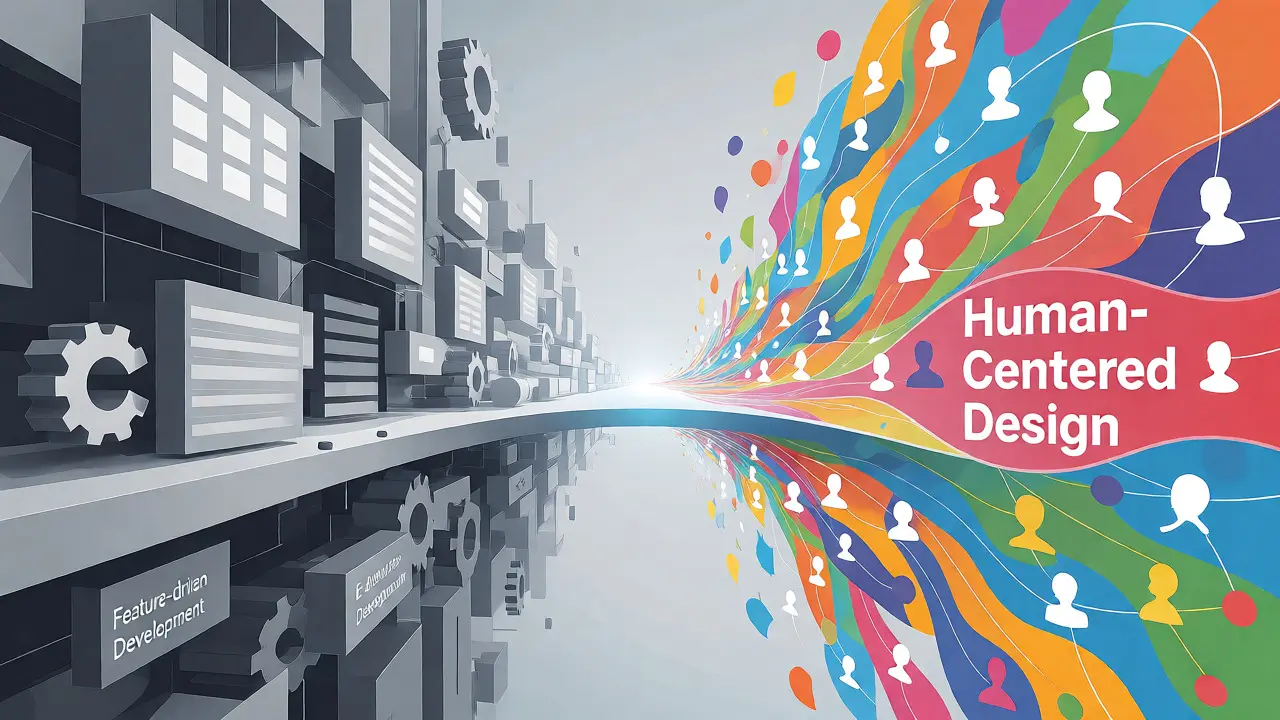
Human-Centered Design flips this script. It starts with empathy, not engineering. Instead of asking, "What can our database handle?", HCD asks, "Where does the student lose focus?" or "When does the teacher feel overwhelmed?" By addressing these friction points first, you create a product that feels intuitive. Intuition drives retention. Retention drives lifetime value. In a saturated market where switching costs are low, being the easiest tool to use is often more valuable than being the most powerful one.
Why Traditional UX Isn't Enough for Education
You might ask, "Isn't this just User Experience (UX) design?" Not quite. Standard UX focuses on usability-can the user complete the task? Human-Centered Design goes deeper into desirability and feasibility within a specific context. Education is unique because the "user" is rarely the "buyer." A school district buys the software, but a 14-year-old uses it. These two groups have conflicting needs. The buyer wants data dashboards; the user wants minimal clicks and engaging content.
HCD bridges this gap by mapping the entire ecosystem. It considers the teacher's workflow, the parent's anxiety, and the student's attention span simultaneously. For example, consider Kahoot!. Its success wasn't due to complex assessment algorithms but because it respected the social nature of learning. It made failure fun. That is a human insight, not a technical one. When you ignore the social and emotional layers of learning, you build sterile tools that get ignored the moment the Wi-Fi drops.
The Three Pillars of HCD in Learning Platforms
To implement this effectively, you need to anchor your strategy in three core pillars: Empathy, Iteration, and Co-creation. Let’s break these down with concrete applications.
- Empathy Mapping: Stop looking at click-through rates alone. Conduct shadowing sessions. Watch a teacher try to grade papers while managing a noisy classroom. Note their stress levels. Did they abandon the app because it was slow, or because it required too much visual processing power during a high-cognitive-load moment?
- Rapid Iteration: Traditional waterfall development takes months. In EdTech, semesters change fast. Use agile sprints to test micro-interactions. If a new quiz interface doesn't increase completion rates in two weeks, kill it. Don't wait for end-of-term reports.
- Co-creation with Educators: Teachers are your best R&D department. Involve them early. Not just as beta testers, but as designers. Ask them to sketch workflows on napkins. Their mental models reveal gaps that your product roadmap misses.
This approach reduces waste. You stop building features that look good in board meetings but fail in the classroom. You start solving real problems, like reducing administrative burden so teachers can spend more time mentoring.
Data vs. Insight: The Analytics Trap
Big Data gave us volume, but it didn't give us wisdom. Many EdTech leaders drown in metrics: daily active users, session duration, bounce rates. But these numbers describe what happened, not why. A student spending 30 minutes on a module isn't necessarily engaged; they might be confused, stuck, or distracted. Without qualitative context, quantitative data is misleading.
HCD demands mixed-methods research. Pair your analytics with contextual inquiry. If your data shows a drop-off at lesson four, go talk to five students who quit. You might find the font size was hard to read on mobile, or the audio quality was poor. These are small, fixable issues that cost millions in lost revenue if left unaddressed. Duolingo excels here. They constantly A/B test tiny elements-like the color of a button or the tone of a notification-based on psychological triggers, not just aesthetic preferences.
Case Study: From Friction to Flow
Let's look at a hypothetical scenario grounded in real-world patterns. Imagine a literacy app designed for elementary students. The initial version had a sleek, minimalist interface. Developers loved it. Students hated it. Why? It lacked feedback loops. Kids need immediate validation. The app provided none until the end of the section.
Using HCD principles, the team redesigned the feedback mechanism. They added haptic responses and simple sound cues for correct answers. They also introduced a "streak" mechanic that rewarded consistency over perfection. The result? Completion rates jumped by 40% in three weeks. The tech stack didn't change. The database schema remained identical. The only change was aligning the product with human psychological needs for reward and clarity.
| Metric | Feature-Driven Approach | Human-Centered Design Approach |
|---|---|---|
| Primary Goal | Maximize functionality | Minimize cognitive load |
| User Feedback Loop | End-of-cycle surveys | Continuous observation & testing |
| Adoption Strategy | Mandatory rollout by admins | Voluntary adoption via utility |
| Failure Response | Add more features to compensate | Simplify and refine existing flows |
| Teacher Role | Support ticket generator | Product co-designer |

Implementing HCD Without Breaking the Bank
A common objection is cost. "We don't have a UX research team," founders say. "We can't afford to slow down development." This is a myth. HCD is about mindset, not budget. You don't need a lab. You need curiosity.
Start small. Dedicate two hours a week for your product manager to sit in on live classes. Record short video clips of users struggling. Share these clips internally. Nothing motivates engineers to fix a bug faster than seeing a frustrated child cry because an icon was ambiguous. This cultural shift costs nothing but yields high returns. Prioritize fixes that remove pain, not those that add prestige.
Another tactic is leveraging existing communities. Online forums for teachers are goldmines of unsolicited feedback. Monitor Reddit threads or Facebook groups dedicated to specific subjects. What are they complaining about? What workarounds are they inventing? These hacks often point directly to missing features or poor design choices.
The Future: Adaptive Empathy
As we look toward 2027, the next frontier is adaptive empathy. Current AI personalizes content difficulty. Future AI will personalize the *interface*. Imagine a platform that detects frustration through typing speed or mouse jitter and simplifies the UI in real-time. Or one that recognizes boredom and switches to a game-based mode automatically.
This requires ethical care. Privacy concerns are paramount. Parents and schools will resist surveillance-heavy tools. Transparent data practices and clear value exchange will be critical. If you collect biometric data, you must prove it improves outcomes. Otherwise, it feels invasive. Trust is the currency of EdTech. Break it, and you lose the market.
Actionable Checklist for Product Teams
Ready to pivot? Here is your starter kit for integrating HCD into your current workflow:
- Audit Your Onboarding: Can a new user achieve value in under five minutes? If not, simplify.
- Map Emotional Peaks and Valleys: Identify moments of joy and frustration in the user journey. Attack the valleys first.
- Conduct "Day-in-the-Life" Interviews: Talk to ten teachers and ten students separately. Look for contradictions in their needs.
- Prototype Before Coding: Use paper sketches or Figma prototypes. Test with actual users before writing a single line of code.
- Measure Success by Retention, Not Just Acquisition: High sign-ups mean little if churn is high. Focus on keeping users engaged long-term.
Human-Centered Design isn't a destination; it's a discipline. It requires humility to admit that your assumptions were wrong. It requires agility to change course quickly. But in an industry plagued by high dropout rates and low engagement, it offers the only sustainable path forward. Build for humans, not just for data points.
Is Human-Centered Design expensive to implement?
Not necessarily. While hiring dedicated researchers costs money, the core principles-observation, prototyping, and iteration-can be integrated into existing workflows at low cost. Starting with informal user interviews and quick prototype tests provides immediate ROI by preventing costly development mistakes later.
How does HCD differ from standard Agile development?
Agile focuses on efficient delivery of requirements. HCD focuses on discovering the right requirements in the first place. Agile asks "Are we building it right?" HCD asks "Are we building the right thing?" Combining both ensures you deliver valuable solutions efficiently.
Can HCD work in B2B EdTech where buyers aren't users?
Yes, but it requires dual-track research. You must understand the buyer's business goals (ROI, compliance) and the user's operational needs (ease of use, time savings). Successful B2B EdTech products balance these competing interests, ensuring the tool is valuable enough for users to advocate for its purchase.
What are common pitfalls when applying HCD in education?
The biggest pitfall is "designing for the demo." Teams often optimize for how the product looks in a sales presentation rather than how it functions in a chaotic classroom. Another issue is ignoring accessibility. HCD must include diverse learners, including those with disabilities, to be truly effective.
How do I measure the success of HCD initiatives?
Look beyond vanity metrics. Track task completion rates, error rates, and net promoter scores (NPS) among actual users. Qualitative feedback, such as reduced support tickets related to usability, is also a strong indicator of successful HCD implementation.
Comments
LoriBeth Blair
Finally someone said it. Most edtech is garbage because developers don't teach.
SHANNON GRUBER
You're all missing the point. It's not about "empathy mapping," it's about budget cuts. Schools buy the cheapest thing that looks good on a slide deck, and HCD doesn't change procurement laws. 🙄
Liam Whelan
hey i think shannon has a point tho... but also if u actually sit in a class u see the kids r stressed out of their minds so maybe simplifying ui does help?? idk just my two cents 😅
Prayagraj Medicose
Wake up sheeple! The "Human-Centered Design" narrative is just a distraction from the fact that Big Data is harvesting student biometrics for corporate profit. They talk about "adaptive empathy" while secretly tracking your eye movements to sell ad space. It’s all surveillance capitalism disguised as pedagogy. Don’t let them fool you with fancy words like "co-creation." That’s just free labor from underpaid teachers. The real enemy isn't bad UX, it's the algorithmic control over young minds. We need to read the fine print before we hand over our children's data to Silicon Valley overlords. Every click is being monetized. Every hesitation is being recorded. This isn't design; it's digital feudalism. And we are the serfs paying with our privacy. If you think this is just about making apps easier to use, you haven't been paying attention to who owns the servers. The cloud is watching. Always. 👁️👁️
Sherri Jones
This is such a great breakdown! 💡 I’ve seen firsthand how involving teachers early prevents so many headaches later. One tip: make sure to include special education needs in those empathy maps too, otherwise you’re excluding a huge chunk of learners. 📚✨
Lauren Martin
The juxtaposition of "cognitive load" with "administrative burden" creates a false dichotomy that ignores systemic infrastructural deficits. Until schools have reliable bandwidth and hardware parity, HCD is merely an aesthetic veneer on a broken paradigm. You cannot design around structural inequality with Figma prototypes. The heuristic evaluation here lacks rigor regarding socioeconomic variables. It’s performative progressivism at best. 🧐
Brad Walker
We are building cathedrals of code on foundations of sand. The soul of learning is lost in the machine. When did we decide that efficiency was the highest virtue? The tragedy is not that the tech fails, but that we forgot why we teach. It is a spiritual void masked by analytics. 😭💔
Bryce Imbriale
Love this energy!! Seriously though getting teachers involved changes everything they know exactly where the friction points are and if you listen you can build something people actually want to use instead of forcing it down their throats keep pushing for user first approaches!!! 🔥🚀
Howard Hurd
Typical coastal elite nonsense. Real American classrooms don't have time for "shadowing sessions." We need tools that work offline when the internet crashes, which happens constantly in rural areas. Stop designing for ideal conditions that don't exist in flyover country. 🇺🇸😤
Kieran Mitchell
Wait-wait-WAIT!!! Did anyone else notice the Duolingo example?!?! That is NOT human-centered, that is manipulative dopamine hacking!!! They exploit psychological triggers to keep you addicted, not to help you learn!!! It is predatory design masquerading as HCD!!! I am literally shaking right now because this article misses the ethical implications entirely!!! How can we call it "empathy" when it uses variable reward schedules like a slot machine?!?! This is dangerous!!! Truly dangerous!!! 😱📉🚫
william mcstay
Agreed on the offline point. Also, most of these startups are just chasing VC money, not actual educational outcomes. Once the funding dries up, the platform dies and the students lose their data. Simple truth.