


Picture this: you’ve just finished a six-month intensive coding bootcamp from a provider based in another continent. You land the interview of your life, but when HR asks for proof of your qualifications, they pause. They can’t verify the credential. The institution isn’t on their approved list, and there’s no clear standard backing the certificate. It doesn’t matter how good your code is; the lack of recognized quality standards creates a wall between your skill and your career.
This scenario happens more often than we’d like to admit. As online education explodes globally, the market is flooded with courses, degrees, and certificates. Some are world-class; others are cash grabs with zero academic rigor. Without a universal language for quality, students, employers, and institutions are left guessing. That is where international quality standards come in. They are not just bureaucratic red tape-they are the trust signals that make global learning possible.
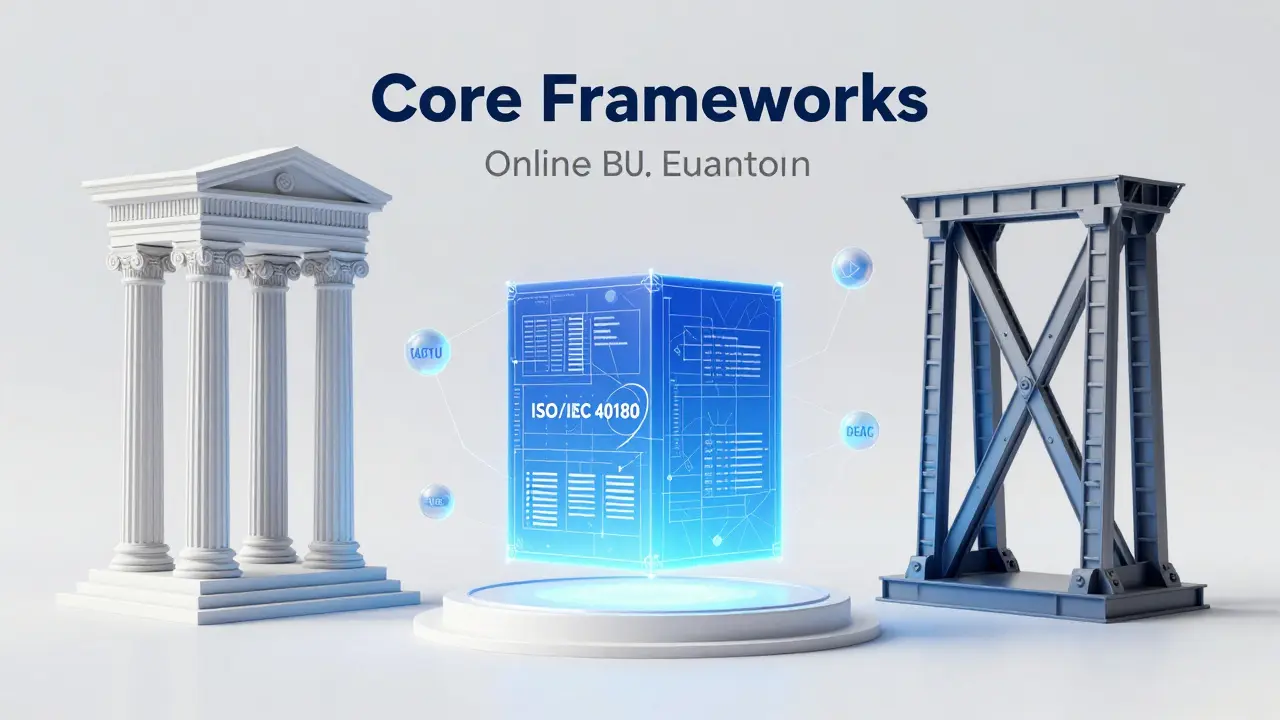
The Core Frameworks Defining Digital Education
When we talk about "standards" in online learning, we aren't talking about one single rulebook. We are looking at a few major players that set the tone for what constitutes quality. These frameworks help us answer the big question: Is this program actually good?
First, there is ISO/IEC 40180. This is arguably the most significant technical standard for digital education services. Released by the International Organization for Standardization (ISO) and the International Electrotechnical Commission (IEC), it provides a framework for defining, implementing, and evaluating digital education services. Think of it as the blueprint for building an online course. It covers everything from the initial design phase to the actual delivery and post-course support. If an institution claims compliance with ISO/IEC 40180, it means they have followed a rigorous, internationally recognized process for creating their content.
Then you have the Quality Assurance (QA) frameworks used by regional bodies. In Europe, the European Association for Distance Teaching Universities (EADTU) has developed the "Distance Learning Guidelines." These guidelines focus heavily on learner support, accessibility, and pedagogical soundness. Meanwhile, in North America, agencies like the Distance Education Accrediting Commission (DEAC) look at institutional stability and student outcomes. While these aren't always "global" in name, they set the benchmark that many other regions try to match or adapt.
Why does this distinction matter? Because ISO/IEC 40180 is about the *service*-the mechanics of the digital product. Regional QA frameworks are often about the *institution*-the school behind the screen. A truly high-quality online program usually satisfies both: it is built on solid technical standards and backed by a reputable, accredited institution.
Key Pillars of Quality in Online Programs
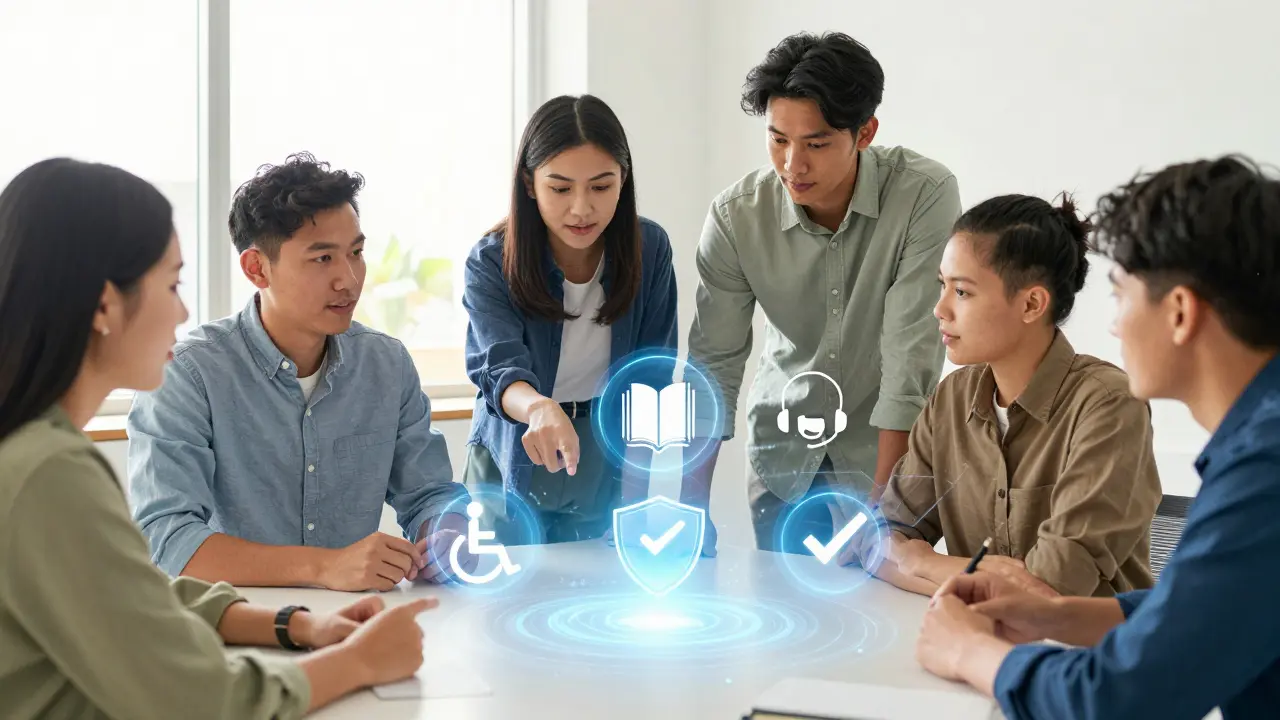
If you strip away the acronyms and the legal jargon, international standards generally boil down to five non-negotiable pillars. Any serious evaluation of an online program should check these boxes.
- Pedagogical Soundness: Does the course use evidence-based teaching methods? Good standards require that content isn't just dumped onto a platform. It needs interactive elements, formative assessments, and clear learning objectives. If it feels like reading a textbook alone, it fails this pillar.
- Learner Support: This is where many cheap programs fail. Standards mandate access to technical support, academic advising, and peer interaction. You shouldn't be shouting into the void if your login breaks or you're stuck on a module.
- Accessibility and Inclusivity: Modern standards, aligned with WCAG (Web Content Accessibility Guidelines), ensure that content is usable by people with disabilities. This means captions for videos, screen-reader compatibility, and flexible pacing options.
- Data Privacy and Security: With GDPR in Europe and various laws elsewhere, how an institution handles your data is part of quality. Secure platforms protect your intellectual property and personal information.
- Assessment Integrity: How do they know you did the work? Standards require robust proctoring methods, plagiarism detection, and authentic assessment designs that measure real skills rather than just memory recall.
When you evaluate a course, run it through this mental checklist. If it misses two or more of these, proceed with caution.
Accreditation vs. Certification: Know the Difference
Confusion between accreditation and certification is rampant. Understanding the difference is crucial for protecting your time and money.
| Feature | Accreditation | Certification |
|---|---|---|
| Who issues it? | Independent accrediting bodies (e.g., DEAC, regional councils) | Industry organizations or private companies (e.g., Google, AWS) |
| What does it validate? | The entire institution or specific degree program meets educational standards | An individual possesses specific skills or knowledge |
| Longevity | Ongoing, requires regular review and renewal | Often expires after 1-3 years, requiring recertification |
| Employer recognition | High for academic roles and general hiring filters | High for technical/specialized roles |
Accreditation is the gold standard for formal education. It tells you that a third party has audited the school's finances, faculty, curriculum, and student outcomes. Certification is valuable for upskilling, but it doesn't carry the same weight regarding educational rigor. For example, a Master’s degree from an accredited university will open doors that a standalone certification might not, even if the certification is from a tech giant.
The Role of Global Bodies in Setting Benchmarks
Who watches the watchmen? Several global organizations work to harmonize standards across borders. The United Nations Educational, Scientific and Cultural Organization (UNESCO) plays a pivotal role here. Their reports on digital learning emphasize equity and quality, pushing governments and institutions to adopt transparent metrics.
Another key player is the Council for Higher Education Accreditation (CHEA) in the US, which collaborates with international counterparts to recognize accrediting agencies. This cross-recognition is vital. If a US accreditor recognizes a European agency, a degree from that European school becomes more portable in the American job market. These diplomatic efforts in education reduce friction for mobile learners.
In Asia, bodies like the Asian Network for Quality Assurance (ANQA) are developing regional frameworks that align with global best practices while respecting local contexts. This decentralization of standard-setting is healthy-it prevents a single Western model from dominating, allowing for diverse approaches to quality that still meet core benchmarks.
Practical Steps for Students and Employers
So, how do you use this information? Whether you are buying a course or hiring a candidate, here is your action plan.
For Students:
- Check the Accreditor: Look for the institution's accrediting body on their website. Then, go to that accreditor's official site and search for the institution. If they aren't listed, run.
- Look for ISO Compliance: While rare for smaller providers, larger platforms may mention ISO/IEC 40180 compliance. This is a strong signal of operational maturity.
- Review Student Outcomes: Quality standards require transparency. Does the program publish graduation rates, employment statistics, or student satisfaction scores? If not, they are hiding something.
- Test the Support: Before paying, contact their support team. Ask a complex question. Measure their response time and helpfulness. This is a direct test of the "Learner Support" pillar.
For Employers:
- Update Job Descriptions: Instead of just asking for a "degree," specify "accredited degree" or "recognized certification." This filters out low-quality credentials.
- Partner with Providers: If you offer tuition reimbursement, restrict it to institutions that meet specific quality criteria. This protects your investment.
- Focus on Skills Verification: Use practical assessments during hiring to verify the skills claimed by online certifications. Don't take the paper at face value; test the ability.
Future Trends in Quality Assurance
The landscape is shifting fast. By 2026, we are seeing a move toward micro-credentials and digital badges. These small, stackable credentials need their own quality standards. Organizations like the IMS Global Learning Consortium are working on standards for interoperability, ensuring that a badge earned on one platform is readable and verifiable on another.
Artificial Intelligence is also changing the game. AI-driven analytics can now monitor student engagement in real-time, providing data that feeds back into quality assurance processes. Institutions can identify struggling students earlier and adjust curricula dynamically. However, this raises new ethical questions about data privacy and algorithmic bias, which future standards will need to address.
We are also seeing a rise in "peer-to-peer" quality models. Platforms like Coursera and edX rely heavily on user reviews and ratings. While not formal accreditation, these social signals are becoming increasingly important indicators of quality. The challenge is distinguishing between genuine feedback and manipulated reviews.
What is the most important international standard for online learning?
The ISO/IEC 40180 standard is widely considered the most comprehensive international framework for digital education services. It covers the entire lifecycle of an online course, from design to delivery and support, providing a common language for quality across different countries and cultures.
How can I tell if an online university is legitimate?
Check for regional or national accreditation from a recognized body. In the US, look for accreditation from agencies recognized by the Department of Education or CHEA. Internationally, check if the institution is listed in government registries or recognized by bodies like UNESCO. Be wary of schools with names similar to prestigious universities but slightly different domains.
Do employers care about online degrees?
Yes, provided the degree is from an accredited institution. Most employers prioritize the accreditation status over the mode of delivery. An accredited online degree from a reputable university holds the same weight as its on-campus counterpart. However, unaccredited online diplomas are often viewed skeptically.
What is the difference between a diploma mill and a legitimate online school?
Diploma mills sell degrees without requiring significant academic work. They often promise quick graduations, have vague admission requirements, and lack proper accreditation. Legitimate schools have rigorous admissions processes, require substantial coursework, and are accredited by independent bodies that regularly audit their practices.
Are international quality standards legally binding?
Generally, no. Standards like ISO/IEC 40180 are voluntary frameworks. However, accreditation can be legally required for certain professions (like law or medicine) or for eligibility for government financial aid. Institutions choose to adhere to these standards to build trust and credibility with students and partners.