

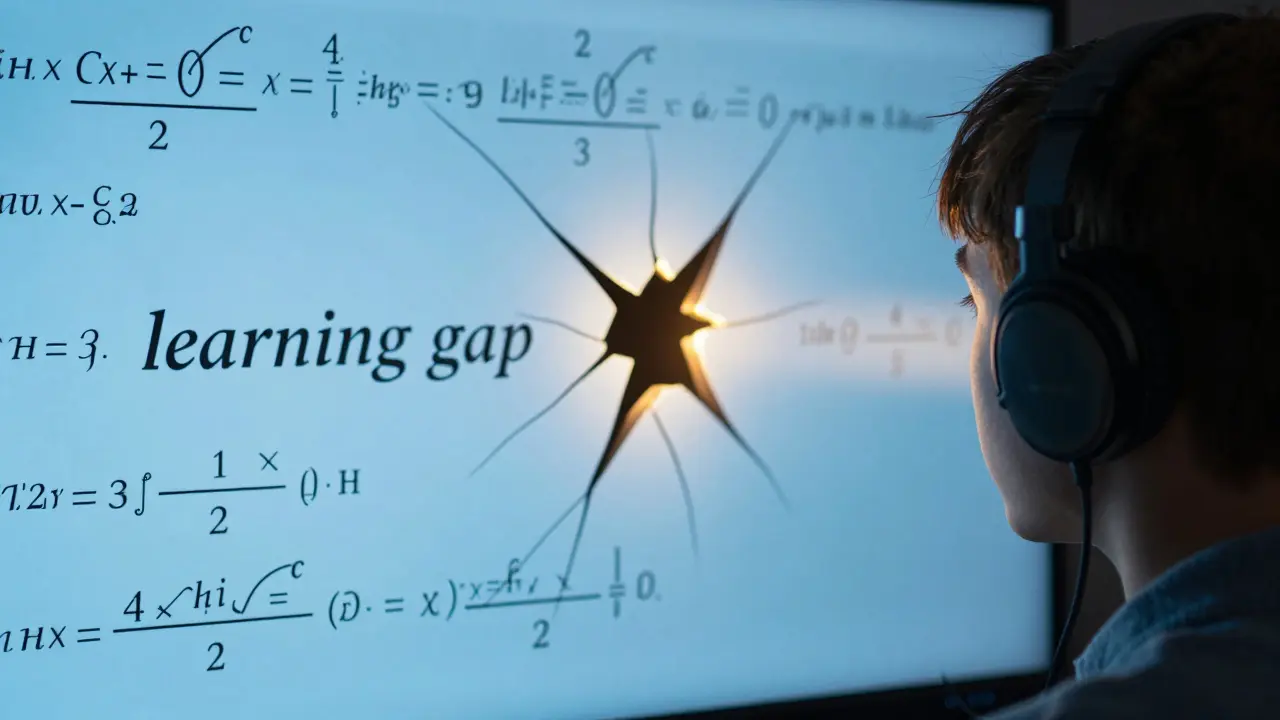
When we talk about these tools, we aren't talking about high-stakes midterms that make students sweat. We're talking about tiny, frictionless pulses of feedback. If you place them too far apart, your students get lost. If you pepper them every two sentences, you'll annoy them into quitting. The goal is to find that 'Goldilocks zone' where the assessment feels like a helpful nudge rather than a roadblock.
Quick Takeaways for Course Creators
- Micro-assessments should happen immediately after a complex concept is introduced, not just at the end of a module.
- Use low-stakes formats (like single-choice questions) to reduce anxiety and increase engagement.
- Frequency should be tied to the 'cognitive load' of the material-harder topics need more frequent checks.
- Feedback must be instant; telling a student they were wrong three days later is useless.
What Exactly Are Micro-Assessments?
Before we get into the timing, let's define our terms. Micro-assessments is a targeted evaluation method used in e-learning to measure a learner's understanding of a specific, narrow objective. Unlike a summative assessment-which is the big test at the end-these are formative. They are designed to help the learner identify their own gaps and help the creator see where the course material might be confusing.
Think of it like a GPS for learning. If a student takes a wrong turn in their understanding, a micro-assessment is the "recalculating" alert that pops up immediately. Common formats include a quick multiple-choice question, a drag-and-drop matching exercise, or a simple "true or false" toggle. The key attribute here is brevity; if it takes more than 60 seconds to complete, it's no longer a micro-assessment.
The Strategic Placement of Knowledge Checks
Where you put your checks is just as important as what you ask. A common mistake is the "End-of-Chapter Dump," where ten questions are piled at the end of a long lesson. By the time the student gets there, they've forgotten the nuance of the first few slides. Instead, use these three placement strategies:
1. The Pre-Check (The Primer)
Place a question before you start a new section. This isn't to test them, but to prime their brain. For example, if you're teaching a module on
Cognitive Load Theory, ask: "Which of these do you think drains your mental energy the fastest?" This forces the learner to engage their existing mental models before you provide the new information.
2. The Pivot Point (The Mid-Lesson Check)
Identify the "aha!" moment in your lesson. This is the point where a concept shifts from simple to complex. Place a check right here. If you're explaining how to use a
Learning Management System (LMS) and you've just explained how to set up a user profile, stop. Ask them to identify which button they'd click to save changes. If they can't do it now, they won't be able to do it when they're actually using the software.
3. The Synthesis Check (The Wrap-Up)
At the end of a logical cluster of ideas, use a question that requires them to apply two different concepts together. Don't just ask "What is X?" Ask "Given X and Y, how would you solve Z?" This ensures they aren't just memorizing definitions but are actually synthesizing the material.
| Feature | Micro-Assessment | Summative Assessment |
|---|---|---|
| Primary Goal | Immediate Course Correction | Final Grade/Certification |
| Frequency | High (Every 5-15 mins) | Low (End of Unit/Course) |
| Stakes | Low/No Grade | High/Graded |
| Feedback Loop | Instant and Detailed | Delayed/Summary |

Determining Frequency: The Rule of Cognitive Load
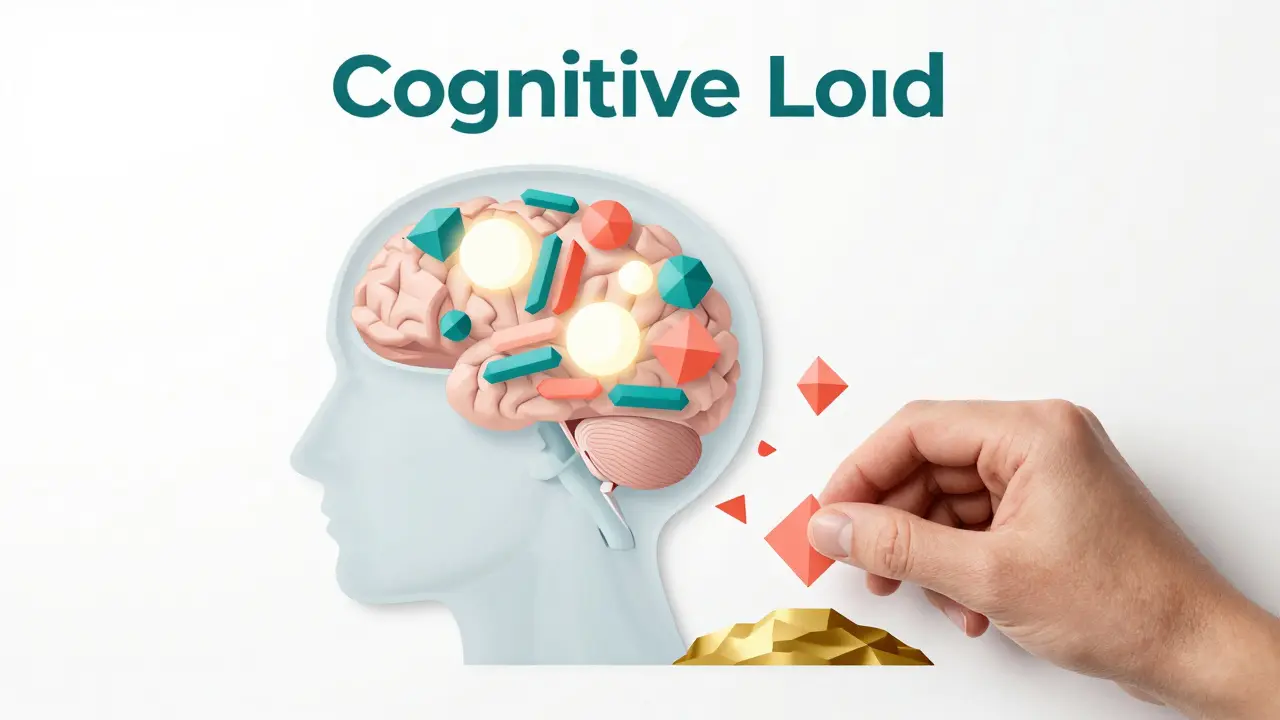
How often is too often? There is no single number, but there is a rule of thumb based on Cognitive Load, which is the amount of working memory used. When the material is dense, the frequency of checks must increase.
If you are teaching a simple process-like "How to log into a portal"-one check at the end is plenty. But if you're teaching something abstract, like Instructional Design principles, you should aim for a check every 3 to 7 minutes of content. Why? Because the human brain can only hold a few pieces of new information at once before it starts to drop the older ones. By inserting a check, you're forcing the learner to retrieve that information from their short-term memory, which actually helps move it into long-term storage.
Watch out for "assessment fatigue." If a student sees a question every 60 seconds, they stop thinking and start guessing. They'll start clicking "C" just to get to the next screen. To avoid this, vary the format. Swap a multiple-choice question for a "spot the error" image or a quick reflection prompt. The change in visual stimulus keeps the brain alert.
The Power of Corrective Feedback
A knowledge check without feedback is just a quiz. The real magic happens in the explanation that follows the answer. Many creators just put "Correct!" or "Incorrect. The right answer was B." This is a wasted opportunity.
Effective feedback should be conversational and instructional. If a student picks the wrong answer, don't just tell them they're wrong; tell them why that specific mistake is common. For example: "You chose B, which is a common mistake because it looks like X, but in this specific scenario, Y is the priority because..."
This turns a failure into a learning moment. In a well-designed course, the feedback for a wrong answer is often where the most profound learning occurs. It's a guided correction that prevents the learner from carrying a misconception forward into the rest of the course.

Common Pitfalls to Avoid
Even experienced designers fall into these traps. Keep an eye out for these three common errors:
- The "Trick" Question: Never try to fool your students. If the goal is to verify knowledge, don't use double negatives or ambiguous wording. If they get it wrong because they were confused by the sentence structure, you've measured their reading comprehension, not their knowledge of your subject.
- The Lack of Variety: Using the same 4-option multiple-choice format for every single check becomes robotic. Try using a "scenario-based" question where the learner has to choose the best course of action for a fictional character.
- Ignoring the Data: If 70% of your learners are getting a specific micro-assessment wrong, the problem isn't the learners-it's your teaching. Use your LMS data to find these "bottleneck questions" and rewrite the preceding content to be clearer.
Do micro-assessments need to be graded?
Generally, no. For the best results, keep knowledge checks low-stakes. If students are worried about their grade, they will focus on "getting the right answer" rather than actually learning from the material. Use them as tools for self-discovery, not as a way to penalize the learner.
How many questions should a single micro-assessment have?
One to three questions. The goal is to maintain the flow of the lesson. If you have five or more questions, you've moved from a "check" into a "mini-quiz," which can break the learner's momentum and lead to cognitive fatigue.
What is the best format for a quick knowledge check?
Multiple-choice is the most efficient for automatic grading, but "scenario-based" questions (where the learner applies knowledge to a real-world problem) provide the highest quality of learning. A mix of both is usually the best approach.
Should I let students retake micro-assessments?
Yes, absolutely. The point of a micro-assessment is to close a gap in understanding. Allowing unlimited attempts encourages a growth mindset and ensures the learner doesn't move forward with a fundamental misunderstanding.
How do I handle learners who skip the checks?
You can set your LMS to make these checks "required" to unlock the next section. However, if you find most people are skipping them, it's a sign that the checks are too long or feel irrelevant. Try making them more interactive or tying them more closely to a practical reward.
Next Steps for Your Course
If you're staring at an existing course and wondering where to start, don't rewrite everything at once. Start by auditing your longest videos or text blocks. Anywhere you see a block of content longer than ten minutes without an interaction, insert a micro-assessment.
For those creating a new course from scratch, map out your learning objectives first. For every objective, create one "synthesis question" that proves the learner has mastered that specific goal. Then, work backward to insert smaller checks that build the foundation for that final question. This ensures your assessments aren't just random hurdles, but a deliberate path toward mastery.
Comments
Nathaniel Petrovick
This is such a solid way to look at it. I've always felt that the immediate feedback loop is what actually makes a course feel interactive instead of just a lecture video.
James Winter
Waste of time. Real learning is just doing the work. This is all just hand-holding for people who can't focus.
Meghan O'Connor
The formatting of the table is amateur at best. Also, calling it a "secret weapon" is such a cliché that it's almost painful to read. Most of us in the field have known about formative assessment for decades, so pretending this is some new revelation is just annoying.
Angelina Jefary
Wait, "cognitive load"? Is that just a fancy term they're using to track how our brains react to specific stimuli for some data-mining project? They want us to "prime" our brains just so they can map exactly how we think. And for heaven's sake, someone should tell the author that "formative" and "summative" aren't just buzzwords for the elite to feel smart.
Jennifer Kaiser
There is a deeper philosophical tension here between the desire for efficiency and the organic nature of curiosity. By breaking everything into these micro-segments, we risk turning the pursuit of knowledge into a series of checkboxes. We must ask ourselves if we are fostering actual understanding or simply training the brain to recognize patterns for the sake of a "correct" answer. The beauty of a struggle with a complex concept-that frustration of not knowing-is often where the most profound cognitive growth occurs. When we remove the friction entirely with these constant nudges, we might be robbing the learner of the intellectual resilience required for true mastery. It's about the balance between support and the necessary void where the student must find their own way. If the GPS always tells you where to turn, you never actually learn the map of the city. We need to ensure that the architecture of our courses leaves room for the silence and the confusion that precedes a real epiphany. Without that space, education becomes a mere transaction of data rather than a transformation of the mind. We should be careful not to optimize the soul out of the learning process in the name of completion rates.
Jasmine Oey
Omigosh, the drama of a student failing a final is just so tragic!!
I totally agree that the feedback needs to be, like, super conversational. It's honestly such a crime when courses are just cold and robotic. It's just so sad when people don't get the vibe right in their teaching designs. Like, why would you even make it boring?? Some people just have no taste in how to engage an audience, it's truly a travesty lol.
Aimee Quenneville
lol... as if anyone actually reads the feedback anyway!!! we just click the right answer until it lets us move on...’
Marissa Martin
It would be more ethical to focus on the learner's well-being than just their completion metrics.
Cynthia Lamont
The logic here is fundamentally flawed because it assumes the learner is a passive vessel. Also, the use of "Goldilocks zone" is an incredibly lazy metaphor that adds absolutely nothing to the technical validity of the argument! It's honestly embarrassing to see this level of writing passed off as a guide for "course creators." Get a grip on your vocabulary!
Kirk Doherty
i just like the idea of not having big tests
TIARA SUKMA UTAMA
Do you use this for kids too? My son hates school. Maybe this helps him?
Dmitriy Fedoseff
The arrogance of assuming that a digital tool can replace the Socratic method is staggering. You are reducing the sacred act of mentorship to a series of binary choices. This is a sterile approach to a human problem, and it ignores the cultural nuance of how different people process information. To suggest that a 60-second window is the limit of a micro-assessment is a narrow-minded constraint that stifles intellectual exploration.