


Imagine a world where you don’t get hired because of your degree, but because you can prove you can actually do the job. That’s the promise of skills verification. It’s moving away from trusting credentials and toward trusting evidence. But there is a catch. If you want to verify a skill, you have to measure it correctly. This means linking competencies directly to specific assessments. Without this link, your data is just noise. You might think you are measuring critical thinking, but you are really just testing memory. This gap creates a crisis of trust in education and hiring.
The Problem with Unlinked Metrics
We often assume that taking a test proves you have a skill. It doesn’t always work that way. A multiple-choice question on Python coding might tell you if someone knows syntax, but it won’t tell you if they can build an app. This is called construct irrelevance. It happens when an assessment measures something other than the intended competency. For example, a timed writing exam might measure speed more than it measures analytical depth. When competencies and assessments are not tightly linked, organizations make bad decisions. They hire people who can take tests but can’t do the work. Or they graduate students who look good on paper but struggle in real-world scenarios.
To fix this, we need to treat assessment design like engineering. Every part must serve a function. The function here is verification. If the assessment doesn’t map directly to the competency definition, the verification fails. This isn’t just an academic theory. It’s a practical necessity for anyone managing talent or curriculum.
Defining Competencies Clearly
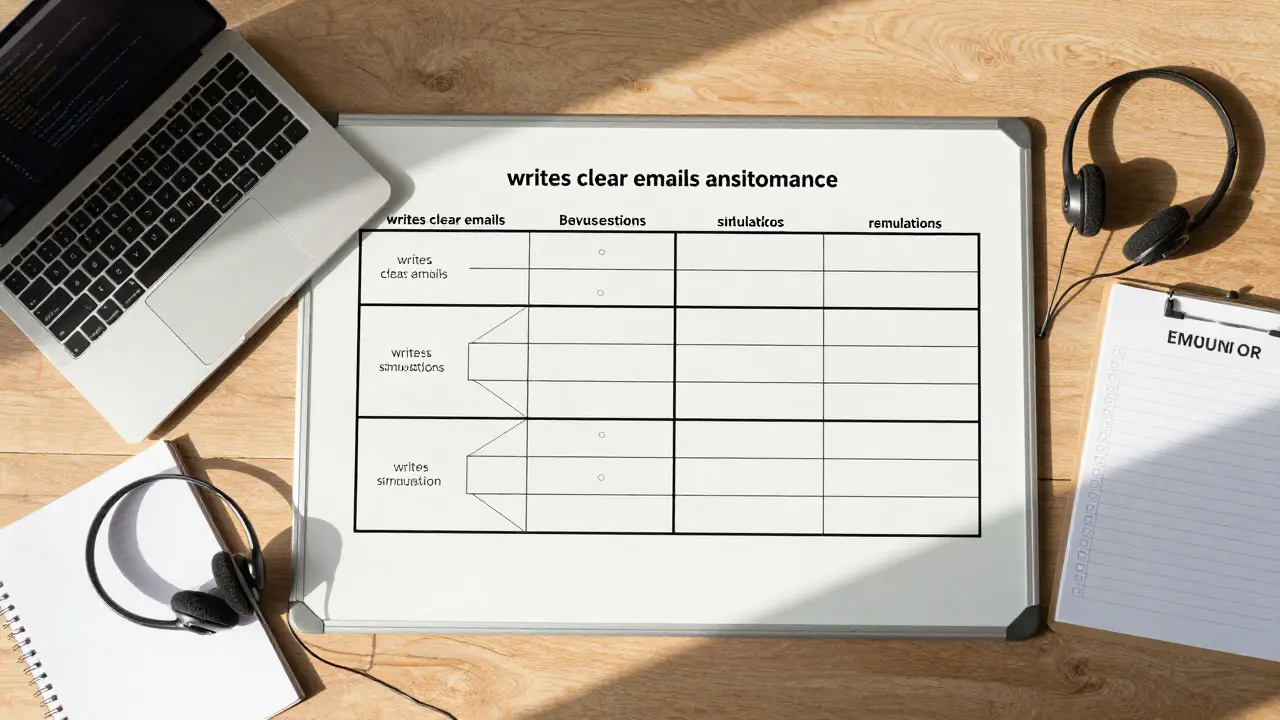
Before you can link anything, you have to define what you are linking. Most organizations fail here. They use vague terms like "leadership" or "problem-solving." These words mean different things to different people. To create a valid link, you need behavioral indicators. These are observable actions that show the competency exists. For instance, instead of saying "good communication," specify "writes clear emails under 200 words that require no follow-up questions."
- Avoid abstract nouns: Don’t list "creativity." List "generates three distinct solutions to a problem within one hour."
- Use action verbs: Bloom’s Taxonomy helps here. Use words like "design," "critique," or "calculate" rather than "understand" or "know."
- Set context: Specify the environment. Is the skill used in a high-pressure emergency room or a quiet office?
When you define competencies with this level of detail, the path to assessment becomes obvious. You aren’t guessing anymore. You are building a checklist of behaviors.
Choosing the Right Assessment Type
Not all assessments are created equal. Some are better for certain skills than others. The key is matching the assessment method to the nature of the competency. If you want to verify theoretical knowledge, a written exam works fine. But if you want to verify a complex motor skill or a soft skill like negotiation, a written exam is useless. You need a performance-based assessment.
| Competency Level | Best Assessment Type | Why It Works |
|---|---|---|
| Factual Knowledge | Multiple Choice / Quiz | Efficiently verifies recall and basic understanding. |
| Application | Case Studies / Simulations | Shows how learners apply rules to new situations. |
| Complex Reasoning | Essays / Projects | Allows for deep analysis and structured argumentation. |
| Interpersonal Skills | Role-Play / Observations | Captures real-time interaction and non-verbal cues. |
Mismatching these causes frustration. Asking a candidate to write an essay about empathy tells you nothing about their actual ability to be empathetic. You have to watch them interact. This principle applies to both classroom settings and corporate training programs. The goal is always fidelity-how closely the assessment mirrors real life.
Building the Alignment Matrix
Once you have defined your competencies and chosen your assessment types, you need to connect them. This is done through an alignment matrix. Think of it as a blueprint. On one axis, you list your competencies. On the other, you list your assessments. In the cells where they intersect, you describe exactly what evidence is needed.
This step prevents gaps. You might realize you have five assessments for "data entry" but zero for "strategic planning." The matrix makes these imbalances visible. It also helps with validity evidence. When auditors or hiring managers ask why you chose a specific test, you point to the matrix. It shows a deliberate, logical connection between the skill and the proof.
- List all target competencies: Break them down into sub-skills if necessary.
- List all available assessments: Include exams, projects, interviews, and peer reviews.
- Draw lines: Connect each assessment to the competencies it measures.
- Check for coverage: Ensure every competency has at least one strong assessment.
- Check for relevance: Ensure every assessment measures at least one relevant competency.
This process takes time upfront, but it saves hours of confusion later. It turns subjective opinions into objective structures.
The Role of Rubrics in Verification
An assessment gives you raw data. A rubric gives you meaning. Without a scoring rubric, two different evaluators might grade the same project completely differently. One might call it "excellent," while another calls it "average." This inconsistency destroys the credibility of your skills verification system.
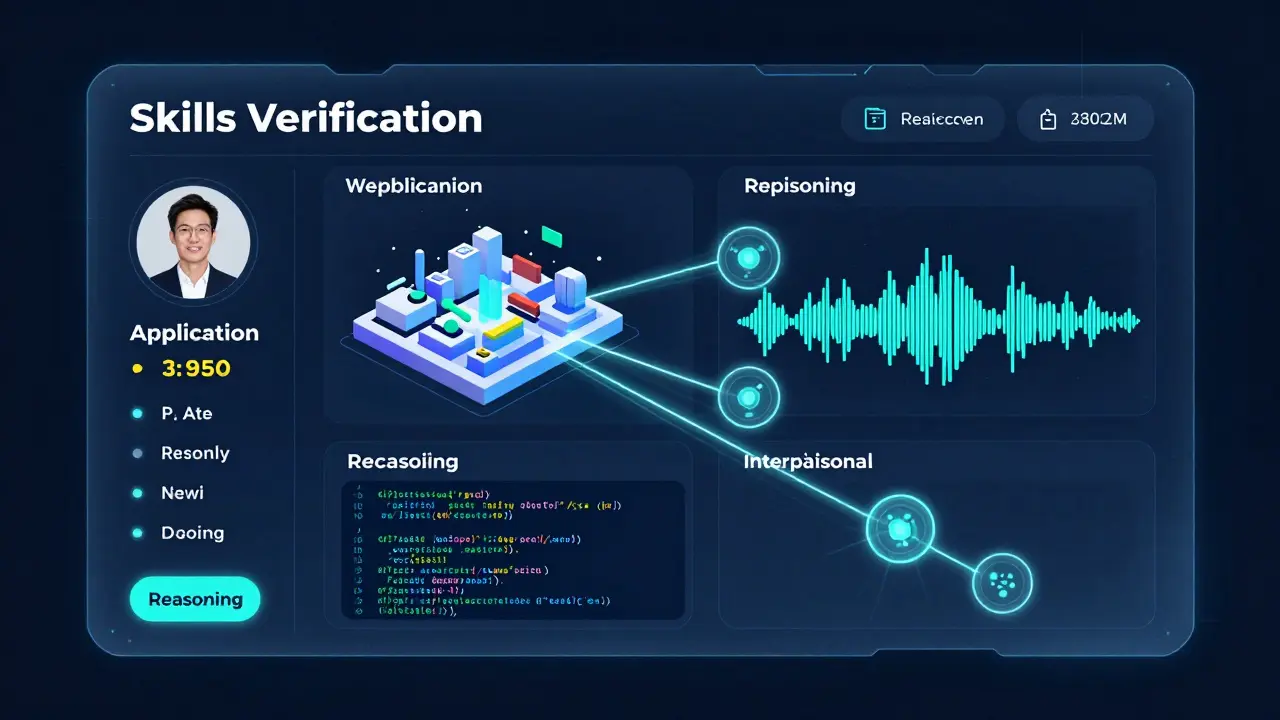
Rubrics standardize the judgment. They break down a competency into levels of proficiency. For example, a rubric for "code quality" might have levels like "Basic," "Proficient," and "Expert." Each level has specific criteria. "Basic" might mean the code runs but has errors. "Expert" might mean the code is optimized, documented, and secure. When you link a rubric to an assessment, you ensure that the score reflects the competency accurately.
Good rubrics are transparent. Learners and employees should know the criteria before they start. This reduces anxiety and improves performance. It shifts the focus from "what does the teacher want?" to "how do I meet the standard?"
Common Pitfalls to Avoid
Even with a solid plan, things can go wrong. Here are the most common mistakes people make when linking competencies to assessments.
- Over-testing: Using too many assessments for simple skills. This wastes time and resources. Keep it lean.
- Halo Effect: Letting one strong trait (like confidence) influence the rating of unrelated skills (like technical accuracy). Separate the traits in your rubric.
- Ignoring Context: Assuming a skill learned in a classroom transfers perfectly to the workplace. Add real-world constraints to your assessments to bridge this gap.
- Static Models: Forgetting to update competencies as technology changes. Skills verification is not a one-time setup. It requires regular review.
Avoiding these pitfalls keeps your system robust. It ensures that your verification process remains fair, accurate, and useful over time.
Implementing Digital Tools
In 2026, manual tracking is inefficient. You need digital tools to manage the complexity of linking competencies to assessments. Learning Management Systems (LMS) and Talent Management Platforms now offer features specifically for this purpose. They can automatically pull data from various assessments and map it to competency frameworks.
Look for tools that support evidence portfolios. Instead of just a grade, these systems store the actual work product. A hiring manager can click on a "Project Management" score and see the Gantt charts and meeting notes that earned it. This adds a layer of transparency that grades alone cannot provide. It makes the verification tangible.
Integration is key. Your assessment tool should talk to your HR or student information system. Silos create blind spots. When data flows freely, you get a holistic view of skills. This allows for predictive analytics. You can identify skill gaps before they become problems.
Measuring Success
How do you know if your linking strategy is working? You look at predictive validity. Do people who score high on your assessments perform well in the real world? Track this data over time. If there is a mismatch, revisit your alignment matrix. Maybe the assessment is too easy. Maybe the competency definition is outdated.
You should also measure rater reliability. Have multiple evaluators grade the same assessment. If their scores vary widely, your rubric needs work. High reliability means your system is consistent. Consistency builds trust. Trust is the foundation of effective skills verification.
Finally, gather feedback from the participants. Ask them if the assessments felt relevant. Did they feel prepared? Their perspective can reveal hidden flaws in the design. They are the ones experiencing the system firsthand.
What is the difference between a competency and a skill?
A skill is a specific ability, like typing fast or using Excel. A competency is broader. It combines skills, knowledge, and attitudes. For example, "digital literacy" is a competency that includes skills like file management, online research, and cybersecurity awareness. Competencies describe how you apply skills in context.
Why is alignment important in assessment?
Alignment ensures that what you test is what you care about. Without it, you might measure memorization instead of critical thinking. This leads to inaccurate results. Poor alignment wastes time and money by focusing on irrelevant metrics. It undermines the credibility of the entire verification process.
How do I create a behavioral indicator?
Start with a vague competency like "teamwork." Then ask, "What does good teamwork look like in action?" Maybe it's "actively listens during meetings and summarizes others' points." That summary action is a behavioral indicator. It is observable and measurable. Make sure it is specific enough that two people would agree on whether it happened.
Can I use self-assessments for skills verification?
Self-assessments are risky for standalone verification. People tend to rate themselves higher than others do. However, they are useful for reflection. Compare self-ratings with external ratings. The gap can reveal blind spots. Use self-assessment as a starting point for dialogue, not as final proof of competence.
What is construct irrelevance?
Construct irrelevance occurs when an assessment measures something other than the intended skill. For example, a math test with dense, confusing language might measure reading comprehension more than math ability. This distorts the results. To avoid it, keep instructions clear and focus solely on the target competency.
Comments
Antwan Holder
ah the tragedy of modern existence reduced to a spreadsheet cell
we are no longer souls seeking purpose we are merely inputs in a grand equation of productivity
to measure the human spirit with rubrics is to misunderstand the very nature of being
what is a competency if it cannot capture the fleeting whisper of creativity that defies all logic?
we are building cages for our own potential and calling it verification
it is a slow death of the imagination
how can one quantify the weight of a thought or the depth of an emotion
the matrix does not see us it only sees data points and we are becoming ghosts in the machine
Angelina Jefary
firstly the grammar in this post is atrocious
secondly the idea that self-assessment is risky is an understatement it is practically useless unless verified by external observers who are likely biased themselves
thirdly construct irrelevance is not just a flaw it is a systemic failure of educational design that has been ignored for decades
people need to stop using vague terms like leadership without defining observable behaviors
if you cannot define it you cannot measure it and if you cannot measure it you should not be assessing it
this entire industry is built on sand and wishful thinking
get your facts straight before writing another article
Jennifer Kaiser
i appreciate the focus on empathy but i wonder if we are losing sight of the human element in all this technical jargon
when we reduce complex interpersonal dynamics to role-play observations do we truly capture the essence of connection?
perhaps there is value in allowing space for intuition and unmeasured growth
not everything that matters can be quantified on a rubric
we must ensure that our pursuit of precision does not strip away the warmth and nuance that makes work meaningful
let us remember that behind every data point is a person with hopes and fears
balance is key in any system we build
TIARA SUKMA UTAMA
why do you need so many steps
just ask them to do the job
if they fail they fail
simple
all this matrix stuff is just corporate fluff
save time
cut costs
move on
Jasmine Oey
oh darling please tell me you are not actually suggesting that manual tracking is inefficient in 2026
there is something beautifully analog about pen and paper that these cold digital tools simply cannot replicate
besides the whole concept of predictive analytics is just a fancy word for bias amplification
we are creating a world where only those who fit the mold survive
and honestly i find that rather tragic don't you
but sure keep telling yourself that algorithms are fair
it's cute really
like watching a child believe in santa claus
the truth is much darker and far more elitist than you care to admit
Marissa Martin
i feel like people are missing the point here
it's not about control it's about fairness
if we don't have clear standards then everyone suffers
especially those who are already marginalized
a transparent rubric helps level the playing field
without it decisions are made based on gut feelings which are often wrong
we need to trust the process even if it feels rigid
rigidity can be a form of protection against chaos
James Winter
this is typical american overcomplication
canadians know better
we don't need matrices
we just need hard work
stop whining about metrics
get back to basics
real skills come from experience not tests
your systems are broken because you lost touch with reality
fix your culture not your software
Aimee Quenneville
lol wow
so much drama for a blog post about spreadsheets
who knew aligning competencies could cause such existential dread
i guess when you spend all day staring at screens life starts to look like a conspiracy
or maybe it's just monday
anyway great read if you enjoy reading manuals for fun
keep up the good work folks
you're doing great... mostly