


Most course creators burn cash before they ever hit scale. You launch a online course, spend $2,000 on ads, get ten sales, and wonder why the bank account is empty. The problem isn’t usually the product quality. It’s the marketing budget allocation strategy. When you’re small, you can afford to guess. When you want to scale, guessing is expensive.
Scaling an education business requires shifting from creative experimentation to mathematical precision. You need to know exactly how much each dollar spends on acquisition, retention, and production. This guide breaks down the specific percentages, metrics, and channels that separate struggling courses from scalable empires in 2026.
The Foundation: Understanding Unit Economics Before Spending
Before allocating a single cent, you must understand your unit economics. If you don't know your numbers, you are flying blind. Two metrics matter more than any other: Customer Acquisition Cost (CAC) and Lifetime Value (LTV).
CAC is the total amount of money you spend on marketing divided by the number of new customers acquired. If you spend $1,000 on Facebook Ads and get 10 students, your CAC is $100. LTV is the total revenue a student generates over their entire relationship with you. This includes the initial course purchase, upsells, coaching programs, and community memberships.
The golden rule for scalable online businesses is the 3:1 LTV to CAC ratio. Your lifetime value should be at least three times your acquisition cost. If your course costs $500, you can afford to spend up to $166 to acquire one customer. If your CAC is $200, you are losing money long-term unless you have massive upsell potential. Calculate this first. It dictates every budget decision that follows.
The 70-20-10 Rule for Course Marketing Budgets
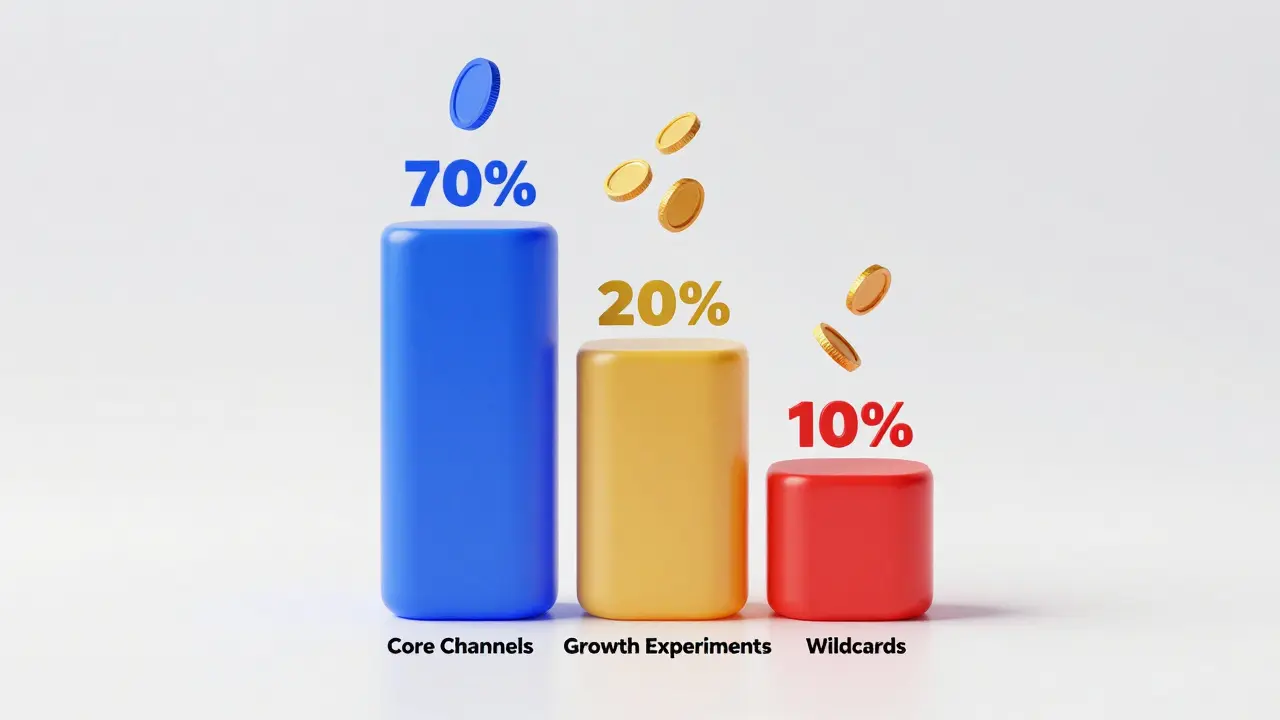
A balanced budget prevents stagnation while managing risk. Use the 70-20-10 framework to allocate your monthly marketing spend. This model ensures you are feeding what works, testing what might work, and innovating for the future.
- 70% Core Channels: Allocate the majority of funds to proven acquisition channels. If organic social media drives consistent leads, put most of the budget here. If paid search converts best, fund it heavily. This stabilizes your revenue stream.
- 20% Growth Experiments: Use this portion to optimize existing channels or test adjacent ones. Try a different ad creative on Facebook, test a new landing page headline, or explore affiliate partnerships. These are low-risk bets with moderate upside.
- 10% Wildcards: Reserve this for high-risk, high-reward opportunities. Maybe it's sponsoring a podcast, trying TikTok live shopping, or hiring an influencer for a one-off campaign. Most will fail, but one success could redefine your growth trajectory.
This structure keeps your business predictable while allowing room for explosive growth. Adjust the ratios slightly based on your stage. Early-stage creators might shift to 50-30-20 to find their voice. Established brands often move to 80-15-5 to maximize efficiency.
Organic vs. Paid: Where to Place Your Dollars
The debate between organic and paid marketing never ends because both serve different purposes. Organic content builds trust and authority over time. Paid advertising accelerates reach and provides immediate data. For scaling, you need both, but the allocation changes as you grow.
| Channel Type | Best For | Typical ROI Timeline | Budget Flexibility |
|---|---|---|---|
| Organic Content | Brand awareness, trust building, SEO traffic | 3-6 months | Fixed (time-intensive) |
| Paid Social Ads | Immediate lead generation, retargeting | 1-4 weeks | Highly flexible |
| Email Marketing | Nurture sequences, upsells, retention | Ongoing | Low cost, high yield |
In the early stages, lean heavily into organic content. Write blog posts, record YouTube videos, and engage on LinkedIn. This costs time, not money. As you gain traction, reinvest profits into paid ads to amplify your best-performing organic content. Don't pay for visibility if no one trusts you yet. Build the audience first, then buy the attention.
Optimizing Customer Acquisition Cost (CAC) Through Funnel Efficiency
Lowering CAC doesn't always mean spending less on ads. It often means improving the efficiency of your sales funnel. Every leak in your funnel increases the cost of acquiring a customer. Fix the leaks before pouring more water into the bucket.
- Landing Page Optimization: Ensure your landing page clearly communicates the transformation your course offers. Use social proof, clear calls-to-action, and mobile-friendly design. A 10% increase in conversion rate can halve your effective CAC.
- Lead Nurturing Sequences: Most people won't buy immediately. Set up automated email sequences that provide value, address objections, and gently guide prospects toward purchase. Tools like Mailchimp or ConvertKit make this easy.
- Retargeting Campaigns: Install pixels on your website to track visitors. Show targeted ads to those who visited your pricing page but didn't buy. Retargeting has a significantly lower CAC than cold outreach because these users already know you.
Focus on reducing friction at each step. If your checkout process takes too long, you lose sales. If your webinar is boring, you waste ad spend. Optimize the experience, and your budget goes further.
Retention and Upselling: The Hidden Budget Allocator
Acquiring a new customer is five to twenty-five times more expensive than retaining an existing one. Yet, many course creators ignore retention until it's too late. Allocating budget to customer success and upselling dramatically improves your overall ROI.
Consider creating tiered offerings. Start with a low-cost entry point, like a $49 mini-course or workshop. Then, offer a high-ticket masterclass or coaching program for $2,000+. Use your marketing budget to nurture existing students toward these higher-value offers. Email marketing is particularly effective here because it targets warm audiences.
Invest in community platforms like Circle or Discord. Engaged students stay longer, refer others, and provide testimonials. Word-of-mouth referrals reduce CAC significantly because they come without ad spend. Allocate 10-15% of your marketing budget to community management and customer support tools.

Tracking Performance: Metrics That Matter
You can't manage what you don't measure. Set up robust tracking systems to monitor your marketing efforts. Use Google Analytics 4 for website behavior, Meta Business Suite for ad performance, and your email platform for engagement metrics.
Key metrics to track weekly include:
- Cost Per Lead (CPL): How much does it cost to get someone onto your email list?
- Conversion Rate: What percentage of leads become paying customers?
- Return on Ad Spend (ROAS): For every dollar spent on ads, how much revenue do you generate?
- Churn Rate: How many students leave your community or stop engaging?
If ROAS drops below 2.0, pause underperforming campaigns and reallocate budget to winners. If churn rises, investigate customer satisfaction issues before increasing acquisition spend. Data-driven decisions prevent emotional spending.
Common Pitfalls in Budget Allocation
Even experienced marketers make mistakes. Avoid these common traps when scaling your online course business.
Spreading Too Thin: Trying to be everywhere at once dilutes your message and budget. Focus on two or three core channels where your ideal customers hang out. Master them before expanding.
Igoring Creative Fatigue: Ad performance declines over time as audiences see the same content repeatedly. Refresh creatives every 2-4 weeks. Test new headlines, images, and video hooks to maintain engagement.
Underinvesting in Sales Infrastructure: Great marketing brings people to your door, but poor sales processes let them walk away. Invest in CRM tools, sales training, and automation software. These aren't just expenses; they're revenue multipliers.
How much should I spend on marketing for my online course?
A general rule of thumb is to allocate 20-30% of your projected revenue to marketing. However, this varies based on your stage. New courses may need higher upfront investment to build awareness, while established brands can rely more on organic channels and retention strategies. Always ensure your LTV to CAC ratio remains above 3:1.
What is the best channel for promoting online courses?
There is no single "best" channel. It depends on your target audience. B2B professionals respond well to LinkedIn and webinars. Creatives thrive on Instagram and TikTok. Tech enthusiasts prefer YouTube and blogs. Test multiple channels with small budgets, identify where your audience engages most, and scale those efforts.
How do I calculate my Customer Acquisition Cost (CAC)?
Calculate CAC by dividing your total marketing spend by the number of new customers acquired in a specific period. Include all costs: ad spend, software subscriptions, content creation, and salaries related to marketing. For example, if you spend $5,000 and gain 50 students, your CAC is $100 per student.
Is it better to focus on organic or paid marketing?
Both are essential for scaling. Organic marketing builds long-term trust and reduces dependency on ad platforms. Paid marketing provides immediate results and precise targeting. Start with organic to validate your message, then use paid ads to amplify successful content and accelerate growth.
How can I improve my Return on Ad Spend (ROAS)?
Improve ROAS by optimizing your sales funnel, refining audience targeting, and enhancing ad creatives. Ensure your landing pages load quickly and clearly communicate value. Use retargeting to capture interested users who didn't convert initially. Continuously A/B test different elements to identify what resonates best with your audience.