

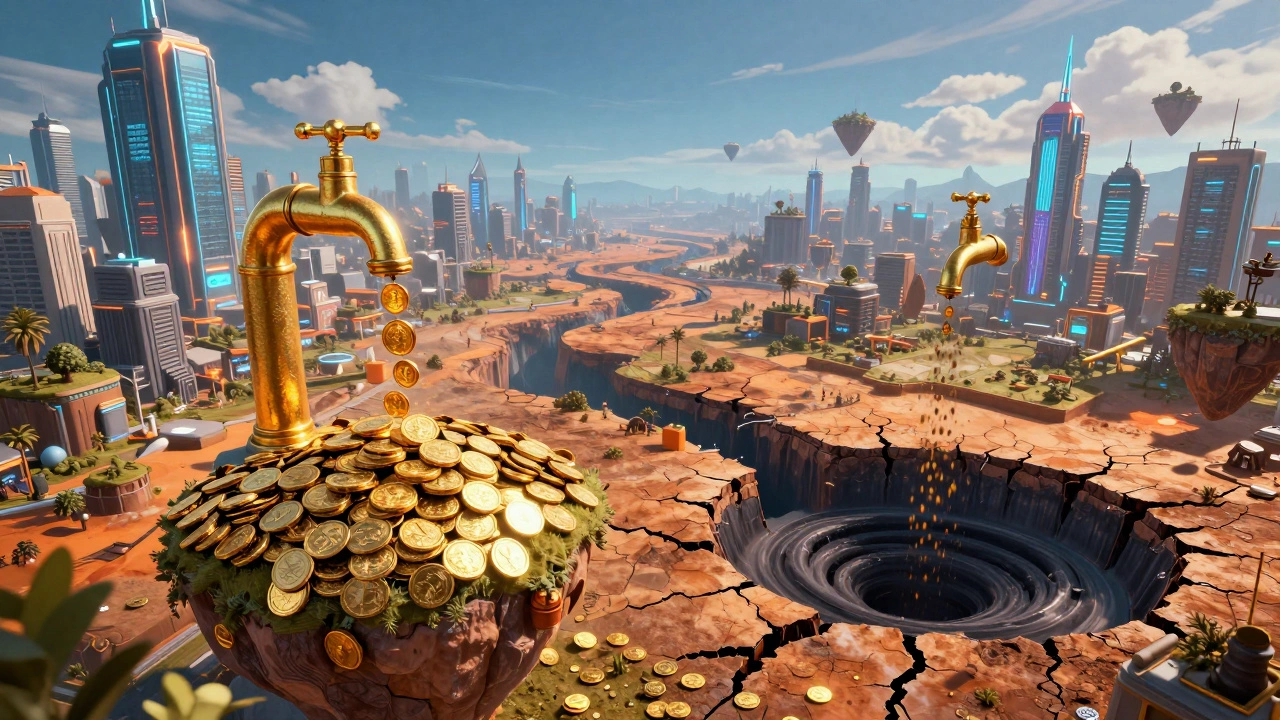
Most metaverse economies collapse within two years. Not because the tech is broken, but because they print too much money and forget to take it away.
Imagine spending hours building a virtual house in The Sandbox, only to find out that the LAND you bought for $8,000 last year is now worth $900. Or grinding daily in Axie Infinity to earn SLP tokens - only to see them drop 99% in value. This isn’t science fiction. It’s what happened. And it’s happening again.
The secret to making a metaverse economy last isn’t flashy NFTs or viral marketing. It’s inflation control. It’s knowing where to put money in and where to pull it out. It’s balancing rewards so players feel rewarded - not exploited.
Why Metaverse Economies Fail (And How to Fix Them)
Every successful economy has two sides: faucets and sinks. Faucets are how money enters the system - quests, land sales, daily logins, selling items. Sinks are how money leaves - taxes, crafting fees, rare item purchases, land upkeep.
Most Web3 games start with too many faucets and zero sinks. They give away tokens like candy to attract users. But when everyone has 10,000 SLP tokens and no way to spend them meaningfully, the value crashes. That’s inflation. And in virtual worlds, it kills engagement faster than lag.
Splinterlands got it right. They introduced a 5% trade tax on every NFT sale. Then they made it drop to 3% during downturns - giving players breathing room. That small adjustment kept their token within 15% volatility for 18 months. Meanwhile, STEPN blew up because they let users earn GMT tokens just by walking, but offered almost nothing to spend them on. The result? A 97% price drop in under a year.
The fix? Build sinks before you launch faucets. Don’t wait for inflation to happen. Design it in from day one.
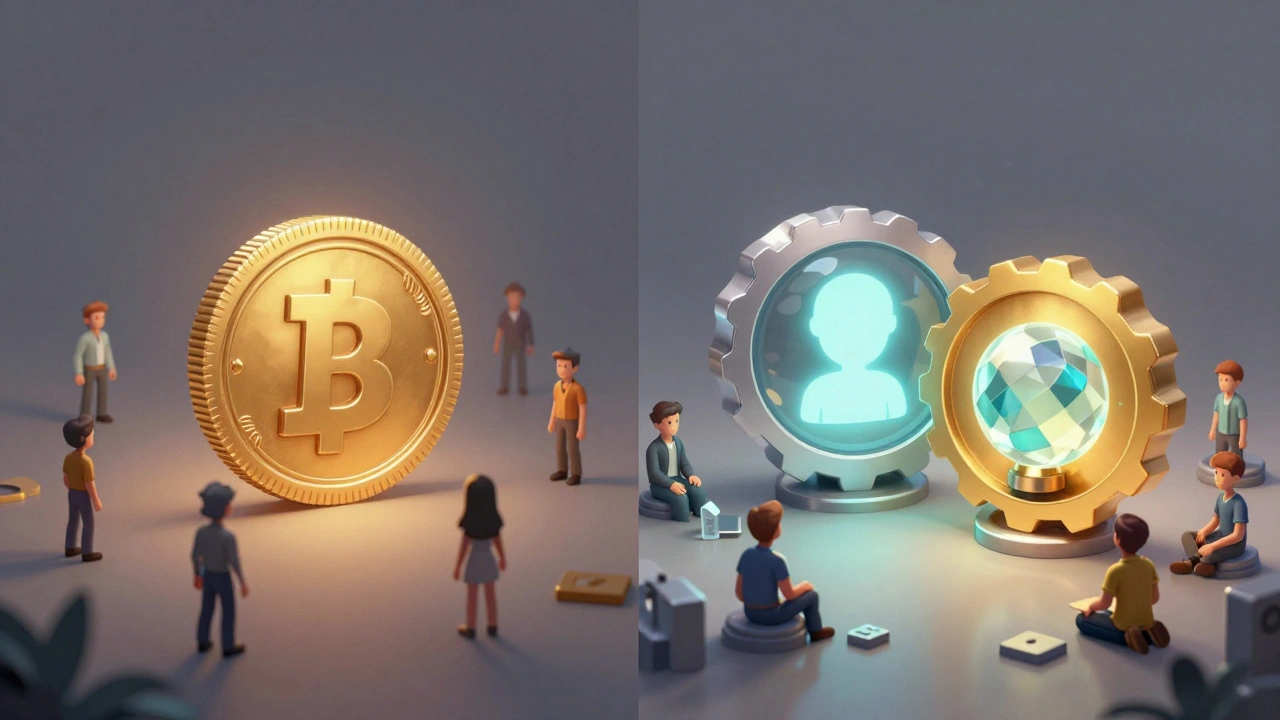
The Two-Token System: Utility vs. Governance
Single-token economies are a trap. They try to make one currency do everything - buy items, vote on decisions, earn rewards. It doesn’t work.
The best systems use two tokens:
- Utility tokens (like SAND in The Sandbox or AXS in Axie Infinity) are for buying, trading, and spending. They’re the cash in your wallet.
- Governance tokens (like MANA in Decentraland) let you vote on rules, upgrades, or new features. They’re your voice in the system.
This separation prevents chaos. If you want to buy a rare avatar, you spend SAND. If you want to change how land taxes work, you stake MANA. The utility token can fluctuate without breaking the governance system.
Platforms like Decentraland and The Sandbox use this model because they learned from early failures. Single-token games like Gala or Pixels saw their economies spiral when rewards flooded the market with no clear way to remove value.
Real Sinks That Work (And Which Ones Don’t)
A sink isn’t just a fee. It’s a meaningful, engaging way to remove tokens from circulation. Here’s what actually works:
- Crafting fees - Spend 20-100% of two items to create a better one. Example: Combine two common swords to make a rare one, but lose 40% of the value in the process. This removes tokens and rewards skill.
- Land taxes - Charge 2.5%-10% monthly to hold virtual land. This forces owners to use their land or sell it. In Decentraland’s Economic 2.0 update, they now burn 35% of all MANA collected as land tax each month.
- Trade taxes - A 3%-5% fee on every NFT sale. This slows down speculation and funnels money into the treasury for ecosystem development.
- Rare collectibles - Drop legendary items with 0.1%-1% chance. Players spend hundreds of tokens chasing one. It’s psychological. It works.
- Avatar and mount upgrades - A flashy new outfit costs 500 SAND. A jetpack? 2,000. These aren’t necessities - they’re status symbols. And they drain cash fast.
What doesn’t work? Paying users to do nothing. Walking apps that pay you for steps. Logging in for free coins. These create passive income, not engagement. And passive income leads to dumping.
How Rewards Should Feel - Not Just Pay
People don’t play for money. They play for meaning.
Yu-kai Chou’s Octalysis Group found that the most successful metaverse economies don’t just reward players with tokens. They pair those rewards with intrinsic motivation. That means:
- Letting players create - build, design, share.
- Giving feedback - seeing your avatar improve, your land grow.
- Offering recognition - ranking systems, leaderboards, community votes.
Gold Fever failed because it locked creators into rigid templates. Players couldn’t express themselves. The Sandbox succeeded because builders could design anything - and sell it. That’s why creators in The Sandbox earn $750/month on average from LAND rentals, according to Reddit users.
Ember Sword’s Artist Workshop lets players submit custom NFTs for in-game cosmetics. If selected, they get paid in tokens - and their name is displayed in the game. That’s not just a reward. It’s legacy.
When players feel like creators, not just miners, they care about the economy’s health. They’ll hold tokens longer. They’ll spend them wisely. They won’t dump.
Mobile vs. Web3: Different Rules, Same Goal
Traditional mobile games like Candy Crush or Clash of Clans control inflation by design. They cap daily rewards. They limit how much you can earn. They use soft currency - diamonds, gold coins - that can’t be traded outside the game.
Web3 games can’t do that. Players own their assets. They can sell them. That’s the whole point. But that also means they need stronger sinks.
Mobile games use daily limits - 5,000-10,000 coins max per day. Web3 games need dynamic sinks. The Sandbox’s Project X (launched March 2024) now adjusts tax rates and crafting costs in real time based on token velocity. If too many tokens are circulating, the system automatically increases sink strength.
That’s the future: AI-driven economic tuning. Meta’s Horizon Worlds beta uses AI to personalize store pricing based on what you buy. If you always spend on hats, the system lowers hat prices and raises sword prices. It’s not random. It’s adaptive.
The Hidden Risk: Over-Monetization
Just because you can charge for something doesn’t mean you should.
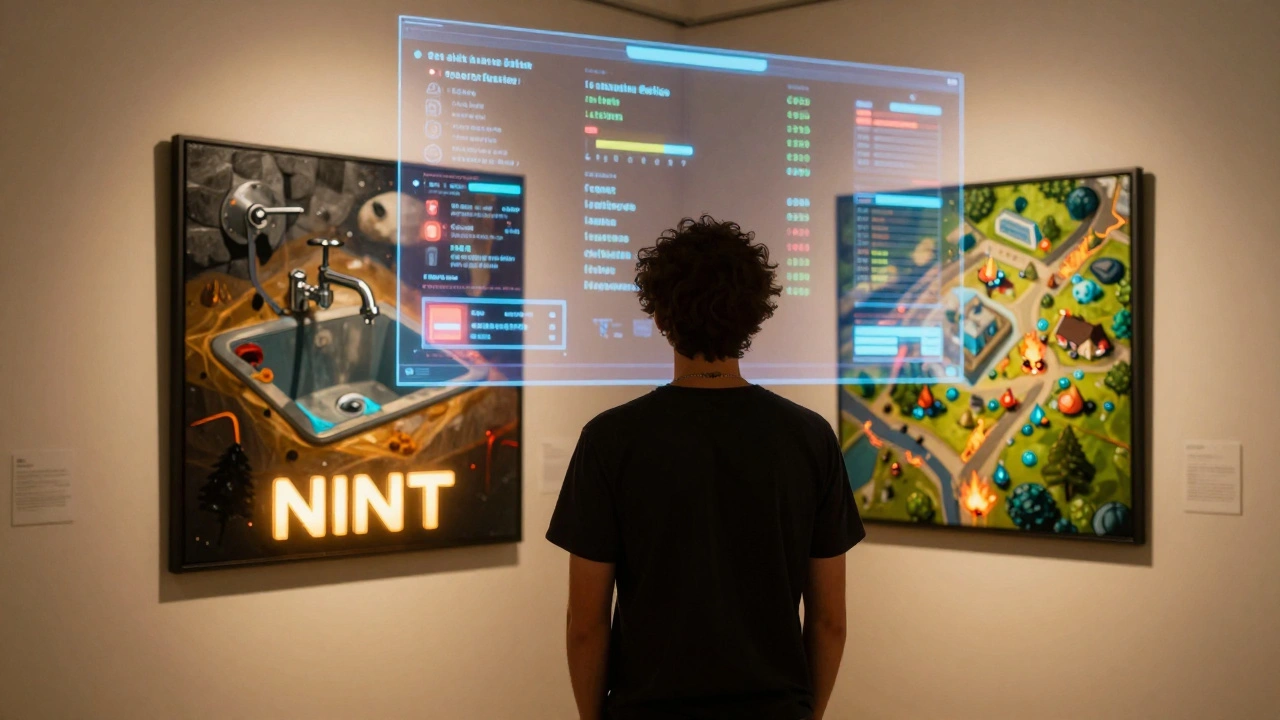
Some platforms turn every action into a paywall - paying to open chests, pay to upgrade tools, pay to enter events. Players feel nickel-and-dimed. They leave.
300mind Studio found that platforms offering non-monetary progression paths - like skill trees, reputation systems, or community roles - retain 47% more users. You can still monetize, but give people free ways to grow.
Example: In Guild of Guardians, you can earn tokens by playing. But you can also earn status by helping new players, submitting art, or organizing events. That status unlocks better rewards - not because you paid, but because you contributed.
That’s the difference between a casino and a community.
What’s Next? Real-World Assets and Regulation
By 2025, major platforms plan to tie virtual assets to real-world value. Imagine owning a virtual storefront that gives you a cut of sales from a real boutique. Or holding digital land that grants you access to a real concert venue.
But this is dangerous. If a virtual asset becomes tied to a real asset, and the token crashes, people lose real money. That’s when regulators step in.
The EU’s MiCA law (effective 2024) now requires full transparency on token supply, burn rates, and revenue use. The SEC is watching reward structures closely - if they look like unregistered securities, they’ll shut them down.
Platforms that survive will be the ones who publish quarterly economic reports. Who show their sink-to-faucet ratios. Who let users see the math behind the magic.
Final Rule: Build for People, Not Profit
The metaverse isn’t a Ponzi scheme. It’s a new kind of social space - one where your time, creativity, and effort have tangible value.
But value only lasts if it’s protected. If you flood the system with rewards, you destroy trust. If you make everything pay-to-win, you kill joy.
The winners won’t be the ones with the biggest token supply. They’ll be the ones who made players feel like owners, creators, and contributors - not just miners.
Build sinks before you launch. Tie rewards to meaning. Let people build things they’re proud of. And never forget: the most valuable asset in any economy isn’t money. It’s trust.
Comments
Michael Gradwell
Most of these games are just crypto scams with better graphics. You call it inflation control? Nah, it's just delaying the inevitable. People aren't playing for fun, they're gambling. And when the rug gets pulled, they cry about trust. Classic.
Flannery Smail
Actually, I think you're wrong about the two-token system. Single token economies work fine if you just cap daily earnings. Look at RuneScape. No governance token, still thriving. You're overcomplicating it.
Emmanuel Sadi
Oh wow, another white guy with a spreadsheet telling third world players how to not get ripped off. You think a 5% trade tax fixes anything when your entire economy is built on exploiting kids in Nigeria grinding Axie for $2 a day? Wake up. This isn't economics. It's colonialism with NFTs.
Chuck Doland
The fundamental flaw in contemporary metaverse economic design lies in its conflation of monetary incentive with intrinsic motivation. While sinks and faucets represent a necessary mechanical framework, they are insufficient without the cultivation of psychological ownership. The Octalysis framework, as referenced, correctly identifies that autonomy, mastery, and purpose are non-negotiable pillars. Without these, even the most meticulously balanced tokenomics will collapse under the weight of transactional disengagement.
Franklin Hooper
You wrote "it’s" without an apostrophe. Three times. And you used "they’re" incorrectly in the governance section. Also "soft currency" isn't a term. It's "internal currency" or "virtual currency." You're not helping your credibility with sloppy grammar.
Jess Ciro
This whole thing is a Fed-backed operation. The SEC is already drafting rules to kill these economies before they get big. Mark my words: by 2026, all metaverse assets will be classified as securities. The "trust" you're talking about? It's a lie. They want you to invest, then they shut it down and call it fraud. I saw this coming in 2021.
John Fox
I played Splinterlands for a year. The tax thing did help. But honestly? I stopped because the battles got boring. No amount of token sinks fixes a game that's just click click click.
Tasha Hernandez
You think people care about sinks and faucets? No. They care about being seen. About being cool. About having something no one else has. That's why the avatar upgrades work. Not because they're sinks. Because they're status. And when you make someone feel like a nobody? They leave. And you're left with a ghost town and a bunch of sad NFTs.
Anuj Kumar
All this talk about sinks and tokens? Just means rich guys will buy land and rent it out. Poor people will grind for scraps. Same as real world. Nothing new here.