

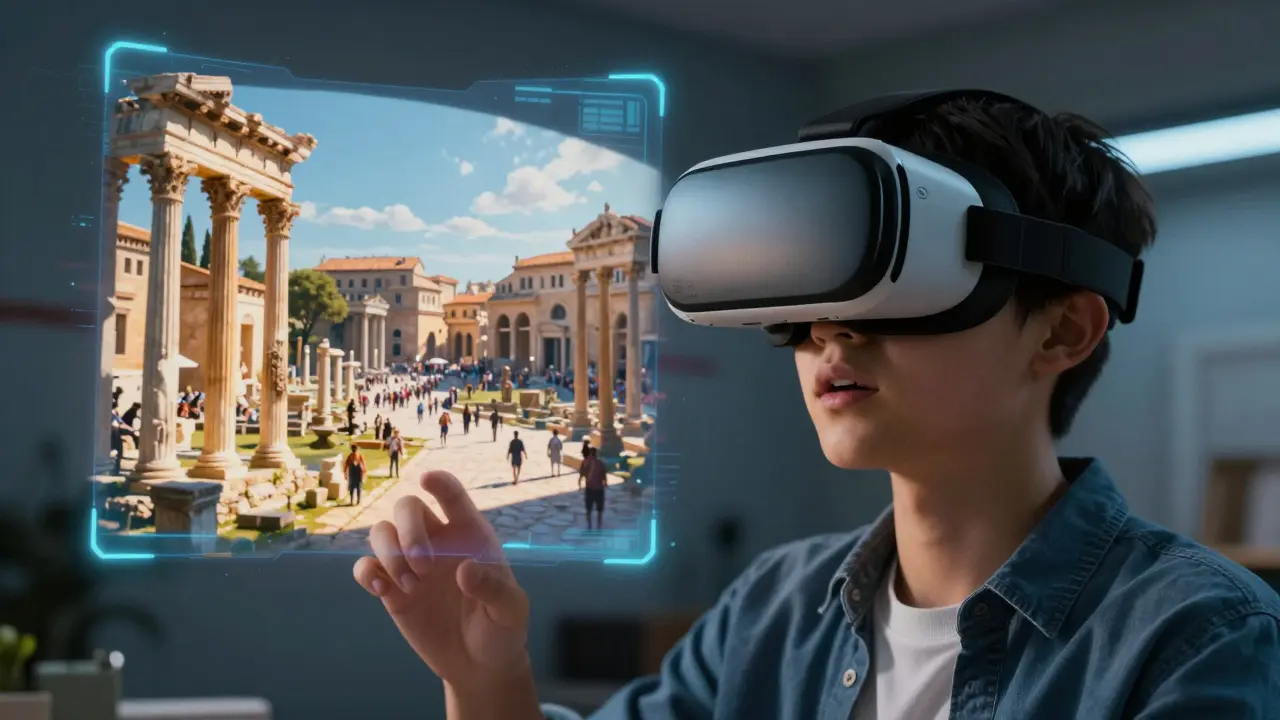
Imagine walking into a classroom where the walls dissolve into ancient Rome, or practicing surgery on a patient that bleeds realistically without any risk to human life. This isn't science fiction anymore. By mid-2026, Metaverse Learning Environments are shifting from hype to practical application, fundamentally changing how we absorb information. Traditional video calls are flat, often boring, and lack the presence needed for deep engagement. Virtual classrooms built on spatial computing offer something different: immersion.
You might be wondering if this is just another tech trend that will fade away. It’s not. The convergence of affordable hardware, better internet speeds, and robust software platforms has made these environments viable for schools, universities, and corporate trainers. But what exactly makes them different from the Zoom meetings you’ve been sitting through for years? And more importantly, do they actually help you learn better?
What Exactly Is a Metaverse Classroom?
To understand the shift, you first need to define the space. A virtual classroom in the metaverse context is not just a video conference with avatars. It is a persistent, three-dimensional digital space where users interact with objects, data, and each other as if they were physically present. Unlike a standard webinar, your position matters. If you turn around, you see what’s behind you. If you walk up to a whiteboard, you can write on it with your hand.
This environment relies on specific technologies working together. You have Virtual Reality (VR) headsets for full immersion, Augmented Reality (AR) glasses for overlaying digital info on the real world, and high-fidelity spatial audio that lets you hear voices coming from the direction of the speaker. The result is a sense of "presence"-the psychological feeling that you are actually there. For a student studying anatomy, seeing a beating heart float in front of them is vastly different from looking at a static diagram in a textbook.
Why Immersion Changes How We Learn
The core argument for metaverse education isn’t about cool graphics; it’s about cognitive load and memory retention. When you learn by doing, your brain encodes memories differently than when you learn by reading. This is known as experiential learning. In a traditional setting, explaining complex mechanical systems requires heavy use of imagination. In a metaverse environment, you can take apart an engine, piece by piece, using virtual tools.
Consider medical students. For decades, they relied on cadavers or simulations that lacked tactile feedback. Now, platforms like Osso VR allow surgeons to practice procedures repeatedly. Studies suggest that trainees who use VR simulation perform significantly better in actual surgeries compared to those trained only via traditional methods. The key here is safe failure. In the metaverse, making a mistake doesn’t cost a patient’s life; it costs you five minutes of reset time. That safety net encourages experimentation and deeper understanding.
Real-World Applications Across Industries
While K-12 schools are still figuring out logistics, higher education and corporate training are leading the charge. Let’s look at where this technology is delivering tangible results right now.
- Healthcare: Nursing students practice patient triage in simulated emergency rooms. They learn to read vital signs, communicate under pressure, and manage resources without risking real patients.
- Engineering & Manufacturing: Companies create digital twins of factories. Engineers can walk through a plant design before it’s built, identifying bottlenecks or safety hazards early. This saves millions in construction errors.
- Hospitality & Retail: Hotel management students run virtual hotels. They handle check-ins, resolve guest complaints, and manage staff schedules in a dynamic environment that reacts to their decisions.
- History & Humanities: Instead of reading about the Great Fire of London, students stand in the middle of the event. They witness the spread of flames and hear the chaos, creating an emotional connection to historical facts that textbooks rarely achieve.
These aren't hypothetical scenarios. Universities like Stanford and companies like Walmart have already integrated these tools into their curricula and onboarding processes. The common thread? High-stakes skills that benefit from repetition and realistic context.

The Hardware and Software Landscape in 2026
If you want to build or access these environments, you need to know what tools are available. The market has matured significantly since the early days of clunky headsets. Today, the barrier to entry is lower, but the quality is higher.
| Platform | Primary Use Case | Hardware Requirement | Key Feature |
|---|---|---|---|
| Engage | Corporate Training & Higher Ed | PC/Mac + Optional VR | Browser-based accessibility, easy integration with LMS |
| Mozilla Hubs | Casual Collaboration & Workshops | Web Browser | No download required, open-source community support |
| Meta Horizon Workrooms | Team Meetings & Design Reviews | Meta Quest Headset | High-fidelity spatial audio and gesture tracking |
| Spatial | Creative Presentations & Events | Mobile/Desktop/VR | Beautiful default worlds, strong focus on visual aesthetics |
Notice that not all platforms require expensive VR headsets. Many, like Engage and Mozilla Hubs, work directly in a web browser. This is crucial for scalability. If every student needs a $500 headset, adoption stalls. Browser-based solutions allow schools to use existing laptops while still offering a 3D collaborative space. However, for true haptic feedback and full immersion, dedicated VR hardware remains the gold standard.
Challenges: It’s Not All Smooth Sailing
Despite the excitement, significant hurdles remain. Ignoring them would be dishonest. First, there’s the issue of motion sickness. While modern headsets have improved refresh rates to reduce latency, some users still experience discomfort after prolonged sessions. This limits the duration of effective learning blocks, typically capping them at 45-60 minutes.
Then there’s the cost. While software subscriptions are manageable, hardware procurement for entire school districts is a massive budget item. Maintenance, updates, and IT support add hidden costs. Schools must weigh these expenses against proven outcomes. If the metaverse doesn’t demonstrably improve test scores or skill acquisition, the investment is hard to justify.
Data privacy is another major concern. These platforms collect immense amounts of biometric data-eye tracking, movement patterns, voice recordings. Who owns this data? How is it stored? Regulations like GDPR and emerging AI laws are catching up, but educators need clear guarantees that student data won’t be sold or misused. Trust is the currency of education, and tech companies are still earning it.
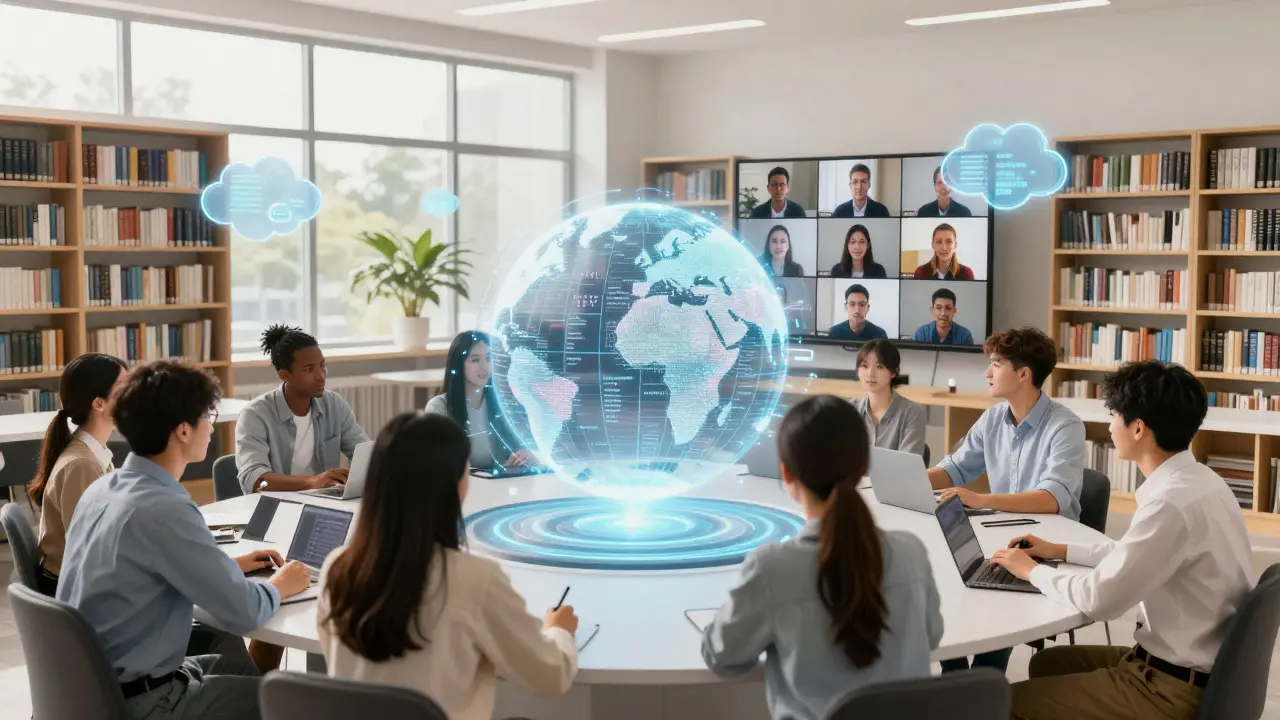
Designing Effective Virtual Lessons
Throwing students into a virtual world without guidance leads to confusion, not learning. Good metaverse pedagogy requires intentional design. Here’s what works:
- Clear Objectives: Define exactly what skill or knowledge point the session addresses. Don’t use VR just because it’s cool. Use it when physical presence adds value.
- Scaffolded Experiences: Start simple. Teach users how to move and interact before introducing complex tasks. Cognitive overload kills engagement.
- Social Interaction: The magic of the metaverse is collaboration. Design activities that require students to talk, negotiate, and solve problems together. Solo exploration is less effective than guided group work.
- Debriefing: After the virtual session, bring students back to reality to discuss what happened. Connect the virtual experience to theoretical concepts. Reflection solidifies learning.
Teachers also need training. Just as they learned to use PowerPoint or Zoom, educators must become comfortable navigating 3D spaces. Professional development programs should focus on both technical skills and pedagogical strategies for immersive environments.
The Road Ahead: What Comes Next?
We are still in the early innings. Over the next few years, expect tighter integration between AI and metaverse environments. Imagine a virtual tutor that watches how you solve a problem and offers real-time hints based on your gaze and gestures. Or language learning apps where native speakers appear as realistic avatars, correcting your pronunciation instantly.
Accessibility will also improve. As hardware becomes lighter and cheaper, more students globally will gain access. The goal isn’t to replace teachers or textbooks, but to augment them. The best future classrooms will blend physical instruction with immersive digital experiences, creating a hybrid model that leverages the strengths of both.
If you’re an educator, start small. Experiment with one platform. Try a single lesson. Gather feedback from your students. If you’re a student, embrace the opportunity to learn in new ways. The metaverse isn’t replacing education; it’s expanding its boundaries. And that’s a change worth paying attention to.
Do I need a VR headset to use metaverse learning environments?
Not necessarily. Many platforms like Engage and Mozilla Hubs operate directly in web browsers on laptops or desktops. While VR headsets provide deeper immersion, browser-based options are sufficient for many collaborative and educational tasks, making them more accessible for schools with limited budgets.
Is metaverse learning suitable for young children?
It depends on the age and content. Most VR manufacturers recommend minimum ages (often 12+) due to eye development concerns. For younger children, AR experiences or large-screen collaborative projects may be safer and more appropriate. Always consult pediatric guidelines and prioritize short, supervised sessions.
How does metaverse learning compare to traditional online classes?
Traditional online classes rely on 2D video and audio, which can feel passive. Metaverse learning offers spatial presence, allowing for interaction with 3D objects and a stronger sense of social connection. This leads to higher engagement and better retention for hands-on or complex conceptual topics.
What are the biggest risks of using the metaverse in education?
Key risks include data privacy issues (biometric tracking), potential motion sickness, high initial costs for hardware, and the digital divide where wealthier schools get better access. Ensuring equitable access and robust data protection policies is critical.
Can metaverse classrooms replace face-to-face teaching?
Unlikely to fully replace it. The most effective approach is hybrid. Metaverse tools excel at simulation, visualization, and remote collaboration, but human connection, nuanced mentorship, and physical play remain vital. Think of it as a powerful supplement, not a total substitute.