

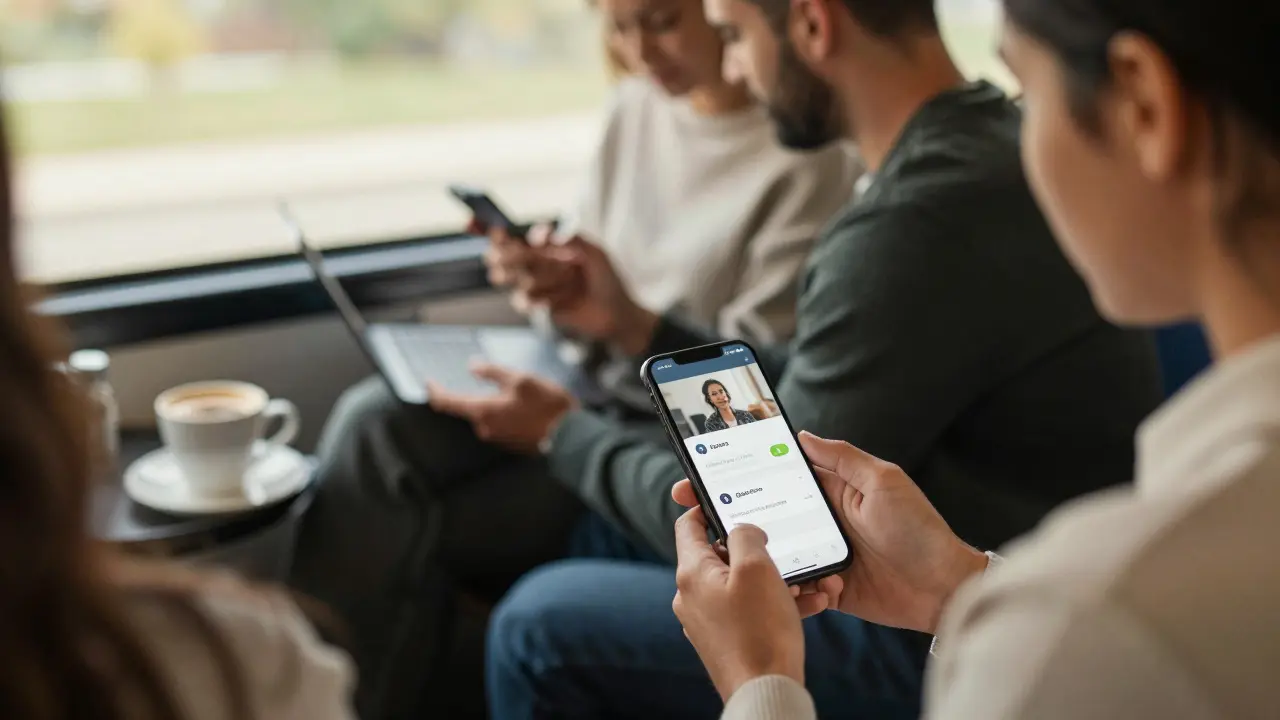
What if you could learn something new in under five minutes-while waiting for your coffee, during a commute, or between Zoom calls? That’s the power of microlearning in online training. It’s not just a trend; it’s a shift in how people actually learn today. Instead of sitting through hour-long video lectures or dense PDFs, learners now get short, focused bursts of content that stick. And companies, schools, and trainers who use it are seeing real results: better retention, higher completion rates, and less dropout fatigue.
What Exactly Is Microlearning?
Microlearning breaks down complex topics into tiny, digestible pieces-usually under 10 minutes long. Think of it like snack-sized learning: a 3-minute video on how to reset a password, a 90-second quiz on safety procedures, or a single infographic explaining how to file expenses. Each piece covers one clear objective. No fluff. No filler.
It’s not just short content. It’s designed with cognitive science in mind. Studies from the Journal of Educational Psychology show that the brain retains information better when it’s presented in small chunks spaced over time. This is called the spacing effect. Microlearning leans into that. A learner might watch a 4-minute video today, then get a quick reminder via mobile push notification two days later, followed by a short quiz. That’s microlearning in action.
It works for everything from software training to compliance updates to language practice. A nurse learning new handwashing protocols doesn’t need a 45-minute webinar. They need a 3-minute video with visuals they can watch on their phone during a break. A sales rep doesn’t need a 20-page manual on CRM updates. They need a 5-minute walkthrough with real examples from their own pipeline.
Why Microlearning Works Better Than Traditional Online Training
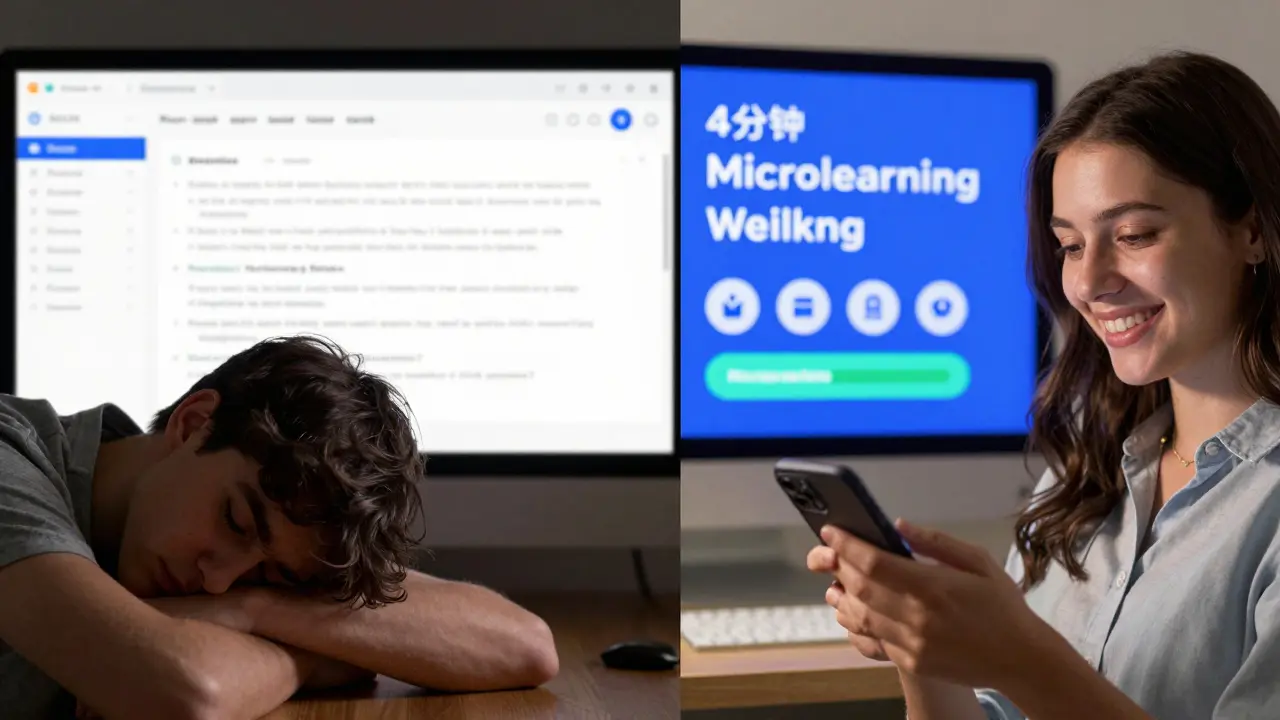
Traditional e-learning often fails because it asks too much. People are busy. Attention spans are short. And let’s be honest-most online courses feel like chores. The average completion rate for a standard online course is under 10%. Microlearning flips that script.
Here’s why:
- Higher completion rates: Learners finish 90% of microlearning modules compared to under 10% for traditional courses. (Source: eLearning Industry, 2025)
- Better retention: People remember 80% of what they learn in a 3-minute module after 30 days, versus 20% from a 60-minute lecture.
- Lower cognitive load: The brain doesn’t get overwhelmed. One idea at a time means less mental friction.
- Mobile-friendly: Most microlearning is built for phones. You can learn while standing in line, on a bus, or during lunch.
- Easier to update: Need to change a policy? Just update the one 2-minute video. No re-recording a 3-hour course.
Companies like Amazon and Siemens have seen a 40% increase in skill application after switching to microlearning. Why? Because learners aren’t waiting for "the right time" to learn. They learn in the flow of work.
Best Practices for Designing Effective Microlearning
Not every short video counts as microlearning. Poorly designed content still fails-even if it’s only 2 minutes long. Here’s what actually works:
- One goal per module: Don’t try to teach payroll and tax codes in the same 5-minute video. Pick one thing and nail it.
- Start with a hook: The first 5 seconds matter. Ask a question: "Did you know 7 out of 10 employees make this mistake when logging in?"
- Use real examples: Show, don’t tell. Instead of explaining how to use a new feature, show someone using it in their actual workflow.
- Include a quick action: End with a challenge: "Try this now. Open your dashboard and do it." Or a one-question quiz: "Which button do you click next?"
- Make it mobile-first: Design for small screens. Use large text, clear visuals, and avoid long paragraphs. Audio should work without headphones.
- Space it out: Don’t dump 10 modules on day one. Release one per day for a week. Use reminders. This builds habits, not just knowledge.
One healthcare provider in New Zealand redesigned their onboarding using microlearning. Instead of a 3-hour orientation, they created seven 4-minute videos delivered over a week. New hires reported feeling less overwhelmed. Managers noticed a 65% drop in errors during the first month.
Tools That Make Microlearning Easy to Build
You don’t need a big budget or a team of video editors. Here are a few tools that work well right now:
- Articulate Rise: Drag-and-drop builder for mobile-friendly modules. Great for non-designers.
- Edpuzzle: Turn YouTube videos into interactive lessons with embedded questions.
- Canva: Create simple infographics and animated explainer videos in minutes.
- Loom: Record a quick screen share with your voice. Perfect for quick walkthroughs.
- Quizizz or Kahoot!: Turn key concepts into fun, gamified quizzes that take 90 seconds to complete.
Even WhatsApp and Microsoft Teams can be used to send out microlearning snippets. A manager in Auckland sends out a daily 60-second tip to her team via Teams chat. No LMS needed. Just consistency.
Who Benefits Most From Microlearning?
It’s not just for tech companies or corporate training. Microlearning helps:
- Remote workers who need quick refreshers without scheduling meetings.
- Frontline staff like retail workers, paramedics, or warehouse teams who don’t have time for long training sessions.
- Students studying for exams-especially when reviewing flashcards or short concept videos.
- Language learners practicing vocabulary daily through spaced repetition apps like Anki or Duolingo.
- Older learners who get overwhelmed by long videos or complex menus.
The common thread? Everyone benefits when learning fits into their life-not the other way around.
Common Mistakes to Avoid
Even smart teams mess this up. Here’s what not to do:
- Using microlearning as a shortcut: Don’t just chop a 30-minute video into six 5-minute clips. That’s not microlearning-it’s fragmentation.
- Ignoring assessment: If you don’t check understanding, you’re just broadcasting. Always add a quick check: a multiple-choice question, a drag-and-drop, or a "rate your confidence" slider.
- Forgetting context: A module about "how to submit timesheets" means nothing if the learner doesn’t know why it matters. Always link it to their role.
- Overloading with features: No need for animations, sound effects, or gamified badges unless they serve the goal. Simplicity wins.
One education nonprofit spent $12,000 on a flashy microlearning platform with animations and avatars. Learners ignored it. They switched to plain Loom videos sent via email. Completion jumped from 35% to 89%.
How to Start With Microlearning Today
Don’t wait for permission. Start small:
- Pick one common problem: What do people keep asking about? (e.g., "How do I reset my password?" or "Where do I find the expense form?")
- Create one 3-minute solution: Use your phone to record a screen share or speak into a voice note.
- Send it to five people: Ask them if it helped. Did they understand? Could they do it after watching?
- Improve and repeat: Fix what didn’t work. Add one more module next week.
You don’t need a training department. You just need to be consistent. One module a week for a month will transform how your team learns.
Is microlearning only for corporate training?
No. Microlearning works in schools, healthcare, nonprofits, and even personal development. Students use it to review math formulas. Nurses use it to remember emergency protocols. Language learners use it daily on apps like Duolingo. It’s about matching content length to attention span and need-not the setting.
How long should a microlearning module be?
Ideally, 3 to 7 minutes. Anything longer than 10 minutes loses the "micro" advantage. The sweet spot is under 5 minutes for most topics. If the topic is complex, break it into a series of 3-minute modules instead of one long one.
Can microlearning replace full courses?
Not always-but it can replace the boring parts. Think of it as the daily maintenance of learning. A full course is like building a house. Microlearning is like changing a lightbulb or fixing a leak. Use full courses for deep skill building. Use microlearning for reinforcement, updates, and just-in-time learning.
Does microlearning work for complex subjects like coding or accounting?
Yes-but only if you break them down right. Instead of teaching "how to do a balance sheet," teach "how to categorize rent expense." Instead of "Python loops," teach "how to repeat a task 5 times." Focus on one tiny skill at a time. Build complexity slowly through linked modules.
Do I need an LMS to use microlearning?
No. Many teams use simple tools like email, Slack, WhatsApp, or Google Drive to deliver microlearning. An LMS helps track progress, but it’s not required. The key is consistency and accessibility-not the platform.
Final Thought: Learning Should Fit Your Life
The future of training isn’t bigger courses. It’s smarter, smaller, and more personal. Microlearning works because it respects time, attention, and the way the brain actually learns. You don’t need to change your whole system to start. Just pick one thing your team struggles with. Make one 4-minute video. Send it out. See what happens. You might be surprised how much difference a few minutes can make.
Comments
Bridget Kutsche
Microlearning changed how I train my remote team. Used to spend hours onboarding new hires-now it’s one 4-minute Loom video per topic. Completion rates went from 12% to 94%. No more boredom. No more guilt trips. Just real learning that fits into their day.
Also, the "one goal per module" rule? Game changer. Tried teaching two things at once once. People got confused. Now I keep it laser-focused. Even if it feels too simple, it works.
And yes-you don’t need an LMS. We use Slack. Send a video. Ask one question. Done.
Jack Gifford
Someone said microlearning is just "chunking"-but that’s not right. Chunking is what you do when you’re lazy. Microlearning is cognitive design. It’s spaced repetition + active recall + mobile accessibility. It’s not a shortcut. It’s science.
Also, the 3–7 minute sweet spot? Spot on. Anything longer and you’re just repackaging a lecture. Anything shorter and you’re not giving the brain time to latch on. Balance matters.
Sarah Meadows
Why are we letting foreign edtech companies dictate how Americans learn? We used to build world-class training programs. Now we’re watching 90-second TikTok-style videos on how to file a TPS report? This isn’t innovation-it’s surrender. We need to reclaim real education. Not snack-sized nonsense.
Nathan Pena
It’s amusing how the author conflates "short" with "effective." A 4-minute video is not inherently superior to a 45-minute one-it’s merely more digestible for the cognitively overwhelmed. But let’s not mistake convenience for pedagogy.
Also, citing "eLearning Industry, 2025" as a source? That’s not a peer-reviewed journal. That’s a marketing blog. The data is likely cherry-picked. And "80% retention after 30 days"? Without a control group, that’s anecdotal.
Mike Marciniak
They’re using microlearning to train people to accept surveillance capitalism. Every 3-minute video is a data point. Every quiz is a behavioral nudge. They’re not teaching you how to file expenses-they’re conditioning you to be more productive for the algorithm. This isn’t learning. It’s compliance engineering.
VIRENDER KAUL
Microlearning is a Western construct born out of impatience and digital distraction. In India we still believe in depth. In our engineering colleges we spend weeks on a single concept. You cannot teach control systems in 5 minutes. You need context. You need repetition. You need struggle. This obsession with speed is eroding true mastery.
Also the tools listed? Articulate Rise? Loom? These are American products. What about Indian alternatives? We have platforms built for low-bandwidth environments. Why are we importing solutions that assume 4G everywhere?
Mbuyiselwa Cindi
I’ve used this with my nursing team in Cape Town. We had staff forgetting infection control steps after big shifts. We started sending a 2-minute video every morning via WhatsApp. No pressure. No quiz. Just a reminder. Within 3 weeks, compliance jumped. No one even noticed they were learning.
It’s not about the tech. It’s about consistency. One tiny thing. Every day. That’s how habits form.
Krzysztof Lasocki
Oh wow, so now we’re supposed to be impressed that people are learning how to reset passwords in 4 minutes? Next they’ll tell us this is the future of higher education.
Meanwhile, my kid is doing a 12-week deep dive into quantum physics on YouTube. She didn’t need a micro-module. She needed space to get lost in the topic. Sometimes depth isn’t a bug-it’s the point.
Henry Kelley
Just wanted to say I tried this with my team. Made a 3-minute video on how to use the new time tracker. Sent it out. One person replied saying "thanks, finally got it." That was it. No drama. No meeting. Just solved a problem.
Don’t overthink it. Just make one. Send it. See if it helps. If it does, make another. That’s it.
Victoria Kingsbury
Microlearning is the only reason I still retain anything from corporate training. Used to zone out during hour-long compliance webinars. Now I get a 90-second video on phishing scams. I watch it while brushing my teeth. I remember it. I even flagged a fake email last week.
And yes, Kahoot! is magic. I didn’t think quizzes could be fun. I was wrong.
Tonya Trottman
"Microlearning works because it respects time" - wow. What a profound insight. Next you’ll tell us water is wet.
Also, "don’t need an LMS"? Really? You’re proud of using Slack to deliver training? That’s not innovation, that’s negligence. You’re creating chaos. No version control. No tracking. No compliance logs. You’re one audit away from disaster.
And why is everyone using Loom? Because it’s easy. Not because it’s effective. This isn’t progress. It’s laziness dressed up as efficiency.
Rocky Wyatt
I’ve seen this happen. Companies adopt microlearning, then cut their L&D budget. Suddenly, no more trainers. No more curriculum designers. Just a bunch of managers recording videos on their phones. It’s not about learning anymore. It’s about cutting costs under the guise of innovation.
They call it "microlearning." I call it corporate abandonment.
Santhosh Santhosh
Allow me to share my experience as an educator in rural India. We have no high-speed internet. Students use smartphones with 2G connections. We tried delivering full-length videos. They buffered endlessly. Frustration mounted. Then we broke every lesson into 3-minute segments, compressed them into audio files under 5MB, and sent them via WhatsApp. Students could download during peak hours. Listen while walking to school. Repeat. The retention rate tripled. Not because it was trendy. Because it was accessible. Microlearning isn’t about attention span. It’s about equity. It’s about meeting people where they are-not where we wish they were.
Veera Mavalwala
Microlearning is the glitter on a dumpster fire. You think you’re learning, but you’re just scrolling. You get a dopamine hit from a quiz, then forget everything five minutes later. Real learning is messy. It’s struggle. It’s rereading. It’s arguing with your textbook at 2 a.m. You can’t reduce calculus to a 4-minute TikTok and call it education. You’re not training minds-you’re training pets with treats.