


You know the feeling. A student is stuck on a calculus problem at 10 PM, frustrated and ready to give up. They open an app, hoping for help, but get matched with a tutor who speaks too fast, doesn't understand the specific curriculum, or worse, gives the wrong answer. The interaction feels transactional, cold, and ultimately useless. This isn't just bad luck; it's a failure of system design. Peer tutoring platforms are digital ecosystems that connect students with fellow learners for academic support, relying on sophisticated matching algorithms, structured training protocols, and rigorous quality assurance mechanisms to ensure effective learning outcomes. If you're building one, managing one, or just trying to survive as a student using one, you need to look under the hood. It’s not just about connecting two people; it’s about engineering trust and competence into every session.
The Matching Engine: Beyond Simple Filters
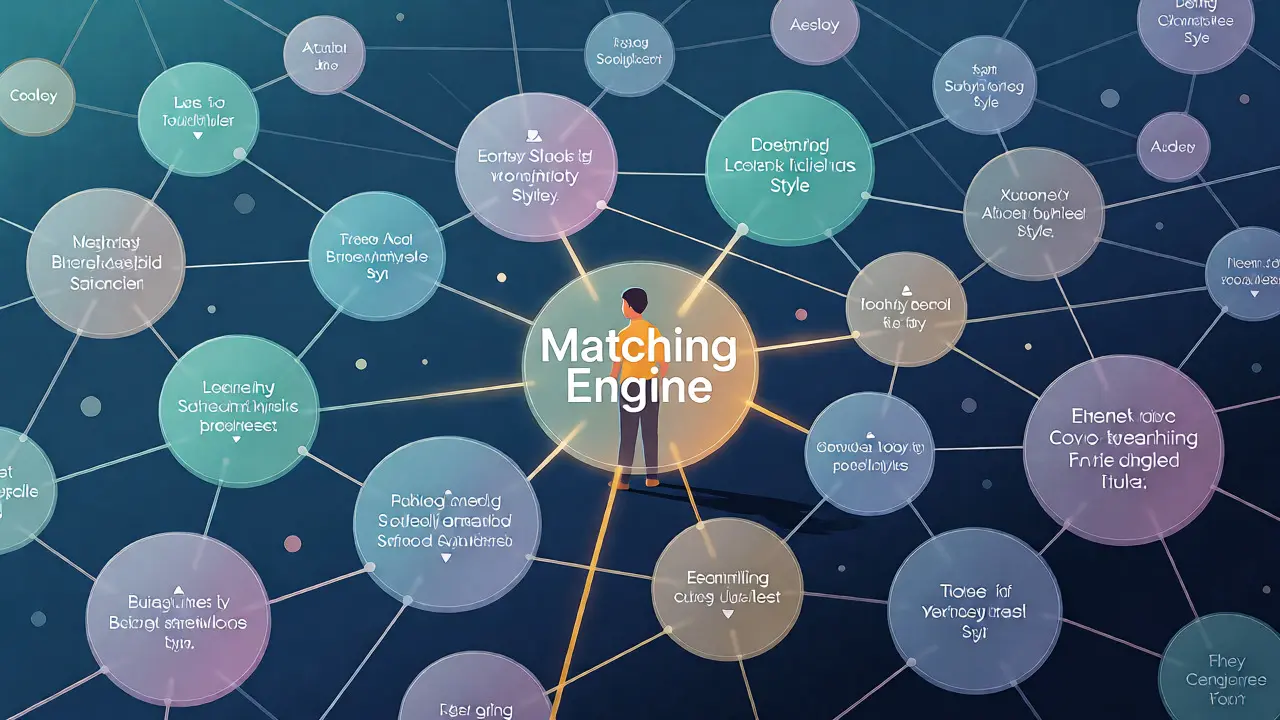
Most people think matching is just filtering by subject and availability. That’s like saying driving is just steering. Real tutor matching algorithms are complex decision trees that weigh dozens of variables to predict compatibility. Think about your own learning style. Do you need someone who challenges you, or someone who gently guides you? Do you learn better visually or through verbal explanation? A good platform captures these nuances during onboarding.
Static filters fail because they ignore context. A student struggling with anxiety needs a different tutor than a high-achiever aiming for top grades, even if both need help with AP Biology. Advanced platforms use behavioral data. They track how long a student engages with certain types of explanations. Did the student ask for more examples? Did they switch away from video tutorials to text summaries? These signals feed back into the algorithm. For instance, if a student consistently leaves sessions early when paired with tutors who speak quickly, the system learns to deprioritize fast talkers for that user. This dynamic adjustment reduces churn and improves satisfaction scores significantly.
There’s also the human element of scheduling. Time zone alignment is obvious, but cognitive load matters too. Matching a tired student after a long day of school with a hyper-energetic tutor might lead to friction. Some platforms now integrate calendar APIs to detect 'low energy' windows-like late Friday nights-and suggest calmer, more patient tutors for those slots. It sounds subtle, but it changes the vibe of the entire session.
Tutor Training Programs: Standardizing Empathy and Pedagogy
Here’s a hard truth: being good at math doesn’t make you good at teaching math. In fact, sometimes it’s the opposite. Experts often suffer from the "curse of knowledge," where they forget what it’s like not to know something. Without proper tutor training programs, peer tutors tend to lecture rather than guide. They solve the problem in front of the student instead of helping the student solve it themselves. This passive learning is ineffective.
Effective training focuses on pedagogical techniques, not just content mastery. Platforms should mandate modules on active listening, questioning strategies, and emotional regulation. For example, the Socratic method-asking guiding questions instead of giving answers-is a core skill. Tutors need practice recognizing when a student is stuck versus when they are thinking. Interrupting a thinking pause kills confidence. Good training uses role-playing scenarios with recorded feedback. Tutors watch themselves and see their own habits. Are they talking too much? Are they checking for understanding?
Another critical component is cultural competency and inclusivity. In diverse classrooms, a tutor’s ability to relate to a student’s background can determine success. Training should cover implicit bias and communication styles across cultures. A tutor in Auckland working with a student from a different educational background needs to understand that directness might be perceived as rudeness in some contexts, while indirectness might seem evasive in others. Standardized training ensures that every tutor, regardless of their personal background, adheres to a baseline of respectful, inclusive interaction.
Quality Assurance: Measuring What Matters
If you don’t measure it, you can’t improve it. But measuring quality in tutoring is tricky. You can’t just count hours spent. Quality assurance in tutoring involves multi-layered monitoring systems that combine automated analytics with human review. Relying solely on star ratings is dangerous. Students often rate based on personality, not pedagogy. A charming tutor who teaches nothing gets five stars; a strict tutor who forces deep learning gets three.
Platforms need objective metrics. Session duration consistency is one. If sessions end abruptly or run long regularly, it flags a mismatch or a lack of structure. Engagement metrics, such as chat activity levels or whiteboard usage frequency, provide insight into whether the student was actually participating. Did the student type anything? Did they move objects on the digital canvas? Low engagement suggests the tutor wasn’t facilitating interaction effectively.
Then there’s the human audit layer. Random sampling of session recordings allows QA teams to evaluate adherence to best practices. Did the tutor set clear goals at the start? Did they summarize key takeaways at the end? Were technical issues handled gracefully? This qualitative data helps refine the automated thresholds. For instance, if QA finds that low-rated sessions often lack a summary phase, the platform can prompt tutors to include a recap feature, improving future ratings without penalizing the current tutor unfairly.
Technology Stack and Data Privacy
Behind every smooth match is a robust tech stack. Most modern platforms rely on cloud infrastructure for scalability, especially during exam seasons when traffic spikes. Video conferencing tools must be integrated seamlessly, avoiding the friction of switching between apps. Latency matters. If the audio lags, the conversational flow breaks, and frustration builds.
Data privacy is non-negotiable. Peer tutoring involves minors and sensitive academic performance data. Platforms must comply with regulations like GDPR in Europe or FERPA in the US. Storing session recordings requires secure encryption and clear retention policies. Users need to know who sees their struggles. Transparent privacy settings build trust. If a student knows their recording is only accessible to the tutor and QA team for a limited time, they’re more likely to engage openly.
Integration with Learning Management Systems (LMS) like Canvas or Blackboard adds value. When a platform pulls assignment deadlines directly from the LMS, it can proactively suggest tutoring slots before major exams. This predictive capability shifts the model from reactive help to proactive support, which is far more effective for student retention.
The Human Factor: Retention and Community
Tutors burn out. Students ghost. Keeping users engaged requires community-building features. Isolated tutoring can feel lonely. Platforms that foster a sense of belonging see higher retention rates. Features like group study rooms, shared resource libraries, or peer forums allow users to interact outside of one-on-one sessions.
Incentive structures also play a huge role. Gamification elements, such as badges for consistent attendance or streaks for daily practice, tap into intrinsic motivation. However, over-gamifying can distract from learning. Balance is key. Recognition systems that highlight tutor excellence-like "Tutor of the Month" awards based on impact metrics, not just volume-boost morale and encourage quality over quantity.
Feedback loops must be bidirectional. Students rate tutors, but tutors should also rate the difficulty of topics or the preparedness of students. This data helps the platform adjust expectations and provide better prep materials. If many tutors flag a specific chemistry module as difficult, the platform can create specialized resources for that topic, closing the loop on quality improvement.

Key Takeaways for Platform Success
- Dynamic Matching: Move beyond static filters to behavioral-based algorithms that adapt to learning styles and energy levels.
- Pedagogical Training: Focus on teaching skills like the Socratic method and active listening, not just subject expertise.
- Multifaceted QA: Combine automated engagement metrics with human audits of session recordings to ensure true learning outcomes.
- Data Privacy: Implement strict encryption and transparent retention policies to protect student data and build trust.
- Community Integration: Use gamification and social features to reduce isolation and boost long-term retention for both tutors and students.
| Feature | Traditional Model | AI-Enhanced Model |
|---|---|---|
| Matching Logic | Subject & Availability | Behavioral Compatibility & Learning Style |
| Tutor Selection | Manual Application Review | Automated Screening + Skill Assessment |
| Quality Monitoring | Sporadic Feedback Forms | Real-time Analytics + Random Audits |
| Training Scale | One-off Workshops | Continuous Micro-learning Modules |
| Personalization | Low | High (Adaptive Content Recommendations) |
Frequently Asked Questions
How do peer tutoring platforms prevent fraud or unqualified tutors?
Platforms typically use a multi-step verification process. This includes identity verification via government ID, credential checks (such as transcripts or degree certificates), and practical assessments. Many require tutors to complete a mock session or submit a sample teaching video before being approved. Continuous monitoring through student feedback and QA audits also helps identify and remove underperforming or fraudulent tutors quickly.
What metrics best indicate the effectiveness of a tutoring session?
While satisfaction ratings are useful, they are subjective. Better metrics include student engagement levels (e.g., chat messages sent, whiteboard interactions), session completion rates, and post-session assessment scores. Long-term metrics like grade improvement or reduced drop-out rates in a course provide the most accurate picture of overall platform effectiveness.
Can AI replace human tutors in peer tutoring platforms?
Not entirely. AI excels at matching, scheduling, and providing instant factual answers. However, human empathy, nuanced understanding of emotional barriers, and adaptive pedagogical strategies are difficult to replicate. The most effective models use AI to handle administrative tasks and basic queries, freeing up human tutors to focus on complex conceptual guidance and motivational support.
How important is tutor training compared to subject expertise?
Both are crucial, but training is often the differentiator. A subject expert who cannot explain concepts clearly will frustrate students. Training in communication, patience, and teaching methodologies ensures that experts can transfer their knowledge effectively. Platforms that prioritize pedagogical training see higher student retention and better learning outcomes than those that hire based solely on GPA or test scores.
What are the main risks of poor quality assurance in tutoring platforms?
Poor QA leads to inconsistent experiences, loss of trust, and high churn rates. If students receive incorrect information or encounter unprofessional behavior without recourse, they stop using the service. Additionally, reputational damage can spread quickly through word-of-mouth and online reviews, making it difficult to attract new users or retain existing ones.
Comments
Sundaraiah Kollipara
the matching engine is the real beast here because most platforms treat students as static data points when we are constantly shifting in energy and understanding
i have been thinking about this for a while now and it seems like we ignore the cognitive load aspect entirely
if you match a tired student with an energetic tutor at 10 pm it is going to fail no matter how smart the algorithm claims to be
we need to respect the human element more than the code that drives the interface
it feels like these companies forget that learning is an emotional process not just a transactional exchange of information
when i look at my own experiences the best tutors were never the ones who knew the most facts but the ones who sensed when i needed silence versus when i needed guidance
this article touches on that but i feel it could go deeper into the psychology of fatigue and how it impacts retention rates over long semesters
the idea of deprioritizing fast talkers based on early session exits is brilliant but also raises questions about accessibility for neurodivergent students who might prefer speed or clarity over patience
are we optimizing for comfort or for actual learning efficiency which are often two different things entirely
i worry that by smoothing out all friction we might remove the productive struggle that leads to deep mastery of difficult concepts
perhaps the algorithm needs a toggle for challenge level rather than just compatibility score to let users choose their own path
it is fascinating to consider how much of our educational failure is actually just poor system design rather than lack of effort from either party involved
SHANNON GRUBER
Star ratings are garbage because popular people get high scores even if they teach nothing useful.
Ejike Ugwu
You think they care about your grades? They care about your data. Every click, every pause, every time you hesitate before answering is being mined. It's not education; it's surveillance capitalism disguised as peer support. The 'behavioral data' mentioned isn't there to help you learn better; it's there to predict your spending habits and manipulate your next purchase decision. Why do you think the apps are free? You are the product. The 'trust' they engineer is just a leash. I bet the QA teams aren't looking for pedagogical excellence; they're looking for compliance with corporate liability standards. If a student fails, it's easier to blame the 'algorithm' than admit the platform sold them a lemon. Wake up. The 'curse of knowledge' is a marketing term to make you feel special while they automate your brain.
jyotshna Senapati
It is absolutely disappointing that this analysis completely ignores the cultural context of Indian students who dominate many of these global platforms. We don't just need 'cultural competency' training; we need structural recognition of our educational systems which are vastly different from Western models. The assumption that Socratic questioning works universally is naive at best. In many Asian cultures, directness is valued, and excessive questioning can be seen as incompetence or disrespect. This platform approach is inherently biased towards American communication styles. Furthermore, the 'lazy critic' attitude towards star ratings misses the point that in collectivist cultures, public ratings carry social weight that individualistic cultures do not understand. You cannot apply a one-size-fits-all QA metric to a global user base without acknowledging these profound differences. It feels like another example of Western tech arrogance assuming their methods are superior without adaptation.
Brad Walker
We are trying to solve human connection with code, but code has no soul.
The article speaks of 'engineering trust' as if trust is a mechanical component that can be calibrated like a gear ratio. But trust is fragile, irrational, and deeply personal. When a student connects with a tutor, it is often due to a spark that no algorithm can quantify. Is it the voice? The shared background? The sheer luck of timing?
By reducing these complex human interactions to 'engagement metrics' and 'chat activity levels,' we risk dehumanizing the very essence of tutoring. A student typing less might be thinking deeply, yet the algorithm flags it as low engagement. This creates a perverse incentive for tutors to force interaction, breaking the natural flow of thought.
I fear we are creating a world where efficiency trumps empathy. The 'quality assurance' described sounds like factory line inspection, not mentorship. Do we really want our children's intellectual growth measured by whiteboard usage frequency? What happens to the quiet geniuses who absorb knowledge through observation rather than participation?
The tragedy here is not the technology itself, but our hubris in believing it can fully replace the nuanced judgment of a human observer. We are building cages of data around organic learning processes, calling it progress while stripping away the magic of discovery.
Kathy Mccoy
This is such a vital perspective! I love how you highlighted the difference between personality-based ratings and pedagogy-based metrics. As someone who has coached many students, I've seen so many talented tutors leave platforms because they got bad reviews for being 'too strict' or 'not fun enough,' even though their students' grades improved significantly. That disconnect is heartbreaking.
Your point about behavioral data is spot on too. I remember using a platform where the matching was terrible because it only looked at subject expertise. My student needed confidence-building, not just calculus answers, and the algorithm kept pairing us with intense, lecture-heavy tutors. It took months to find a good fit.
The suggestion about detecting 'low energy' windows via calendar APIs is genius. I always tell my mentees to schedule sessions when they are fresh, not when they are burnt out. Integrating that logic automatically would save so much frustration.
Also, the emphasis on cultural competency is something we often overlook. I work with international students, and sometimes a tutor's well-meaning directness comes off as rude simply due to cultural norms. Training on implicit bias is essential.
I hope more platforms adopt these holistic approaches. It’s not just about fixing bugs; it’s about fostering genuine human connection in a digital space. Thank you for shedding light on the behind-the-scenes mechanics!
Prayagraj Medicose
bro seriously the whole thing is rigged. why do you think they hide the source code of the matching algorithm? they don't want you to know that 'compatibility' is just a fancy word for maximizing ad revenue per minute. i tried one of these apps and the 'AI' kept matching me with bots. yes bots. the 'tutor' was just a script responding to keywords. and the QA team? lol they probably don't even exist. it's all automated rejection emails. they say they value quality but they just want volume. more sessions equals more subscription renewals. don't fall for the 'pedagogical training' fluff. it's a checkbox to charge higher fees. i'm convinced half these 'peer tutors' are just college kids gaming the system for cash without any real intent to teach. the data privacy stuff is a joke too. who knows where those recordings go? probably sold to insurance companies to assess your stress levels. stay woke.
Charles Reah
I appreciate the depth of this discussion, particularly regarding the limitations of purely algorithmic matching. From an inclusive mentorship standpoint, we must recognize that technology should serve to augment human connection, not replace the intuition required to gauge a student's emotional state.
The critique regarding star ratings is valid; however, we should also consider how structured feedback forms can mitigate this issue by separating satisfaction from efficacy. Regarding the concerns about data privacy, transparency remains our strongest tool. Platforms must clearly communicate retention policies to maintain trust.
Furthermore, the integration of LMS data allows for proactive support, which aligns with best practices in educational psychology. By anticipating needs before they become crises, we empower students to take ownership of their learning journey.
Let us continue to advocate for systems that prioritize both pedagogical rigor and human empathy.