

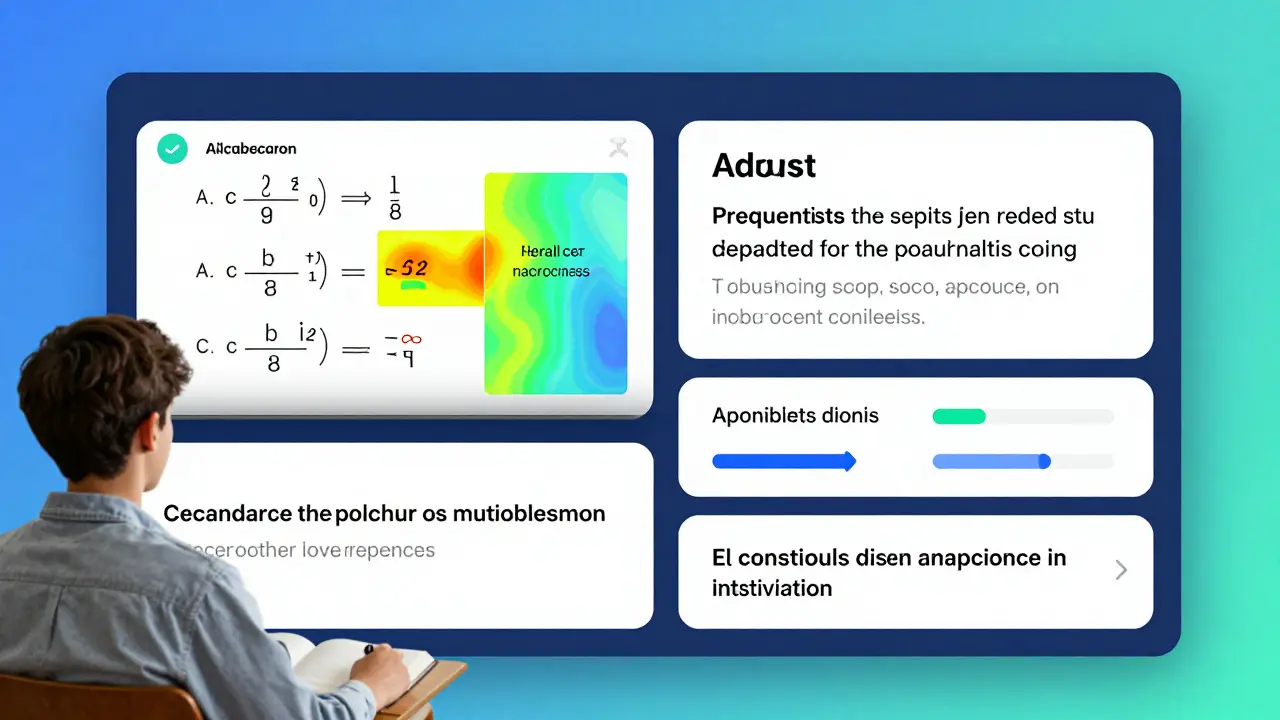
Imagine a course that changes as you learn. Not just because you click ahead or skip a lesson, but because it knows you. It notices you struggle with quadratic equations but breeze through word problems. It sees you watch videos at 1.5x speed and rewatch the same 3-minute segment three times. It remembers you aced the last quiz on fractions but bombed the one on decimals-and adjusts the next lesson accordingly. That’s not science fiction. That’s personalized learning powered by AI and data analytics, and it’s already in use in classrooms and online platforms around the world.
How AI Builds a Learning Profile for Each Student
Traditional courses treat every learner the same. You watch the same lecture, take the same quiz, and move on when the deadline hits. But people don’t learn the same way. Some need visuals. Others need to talk it out. Some learn fast but forget quickly. Others take longer but remember deeply.
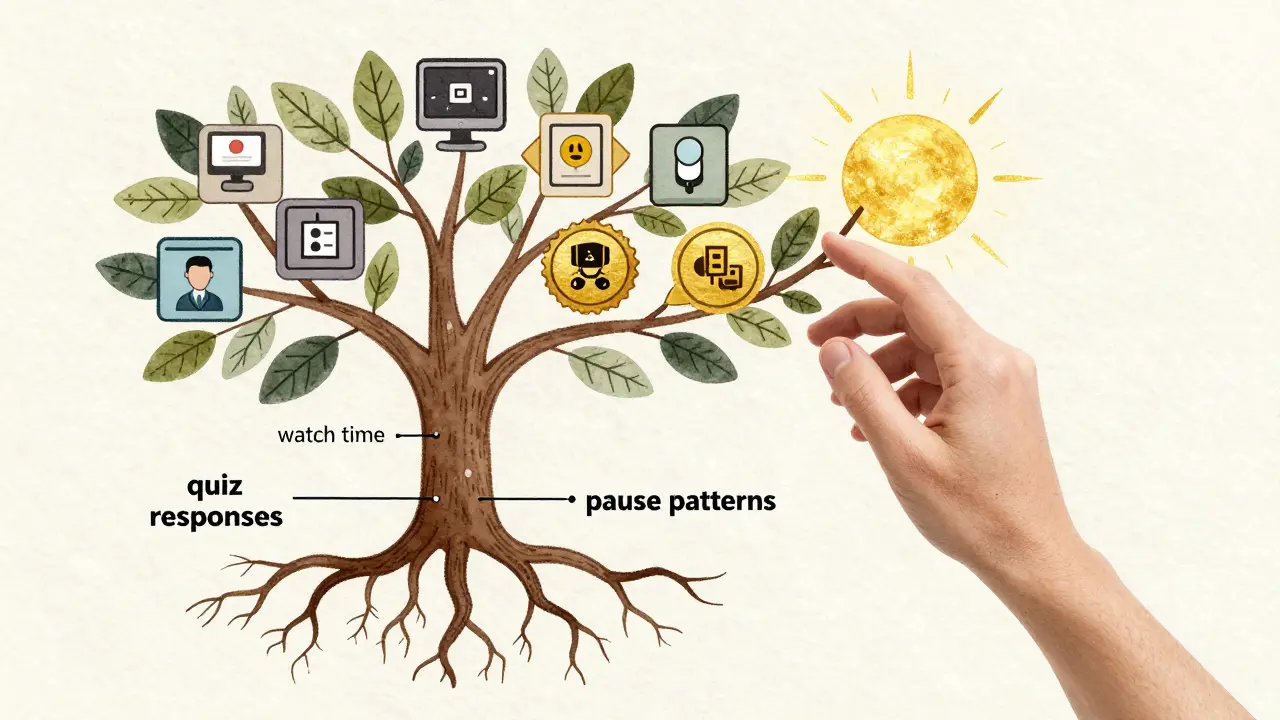
AI changes that by building a real-time learning profile. Every click, every pause, every wrong answer, every time you revisit a concept-it all gets recorded. This isn’t just about scores. It’s about behavior. Did you spend 12 minutes on a single problem? Did you skip the video and go straight to the quiz? Did you get the same question right last week but wrong today?
Platforms like Khan Academy, Coursera, and Duolingo already use this. But now, universities and corporate training systems are catching up. AI tools analyze patterns across thousands of students to predict what’s likely to trip you up before you even get there. If you’re a visual learner who’s struggling with algebra, the system might swap the text explanation for an animated breakdown. If you’re a fast learner who keeps finishing early, it might offer optional challenges or push you ahead to the next module.
Data Analytics: The Hidden Engine Behind Personalization
AI doesn’t work in a vacuum. It needs data. Lots of it. And not just your quiz scores. Think about how you interact with the platform: how long you hover over a term, whether you use the glossary, if you pause to take notes, how often you go back to previous lessons. These micro-behaviors are gold.
One study from Stanford’s Learning Analytics Lab tracked 12,000 students in an online calculus course. They found that students who rewatched the same video segment within 24 hours of first viewing had a 42% higher chance of passing the final exam. The system didn’t just flag those students-it automatically sent them a targeted review quiz and a peer discussion prompt. That’s data-driven intervention.
Analytics also spot trends across groups. If 70% of students in a biology course fail the same question about cell membrane transport, the system alerts instructors. Maybe the explanation was unclear. Maybe the diagram was confusing. The course can be updated-not for next year, but next week. This turns static content into a living, breathing resource.
What Personalized Learning Looks Like in Practice
Let’s say you’re taking an online marketing course. Here’s what personalized learning might look like for you:
- You struggle with SEO keyword research. The system notices you’ve watched the same video five times and skipped two practice exercises. It replaces the next lesson with a step-by-step interactive tool that lets you test keywords in real-time.
- You’re great at writing ad copy. The system skips the basic templates and gives you advanced A/B testing scenarios using real campaign data from past clients.
- You log in at 2 a.m. three nights in a row. The system detects your peak focus time and starts sending short review prompts during those hours.
- You’ve completed 80% of the course but haven’t touched the final project. The system sends a gentle nudge: “You’re 80% done. Want to finish this week? Here’s a 15-minute template to get started.”
This isn’t just about helping struggling students. It’s about keeping high achievers engaged. Boredom is just as deadly as confusion. When learning is tailored, no one is left behind-or left unchallenged.
Why This Works Better Than One-Size-Fits-All
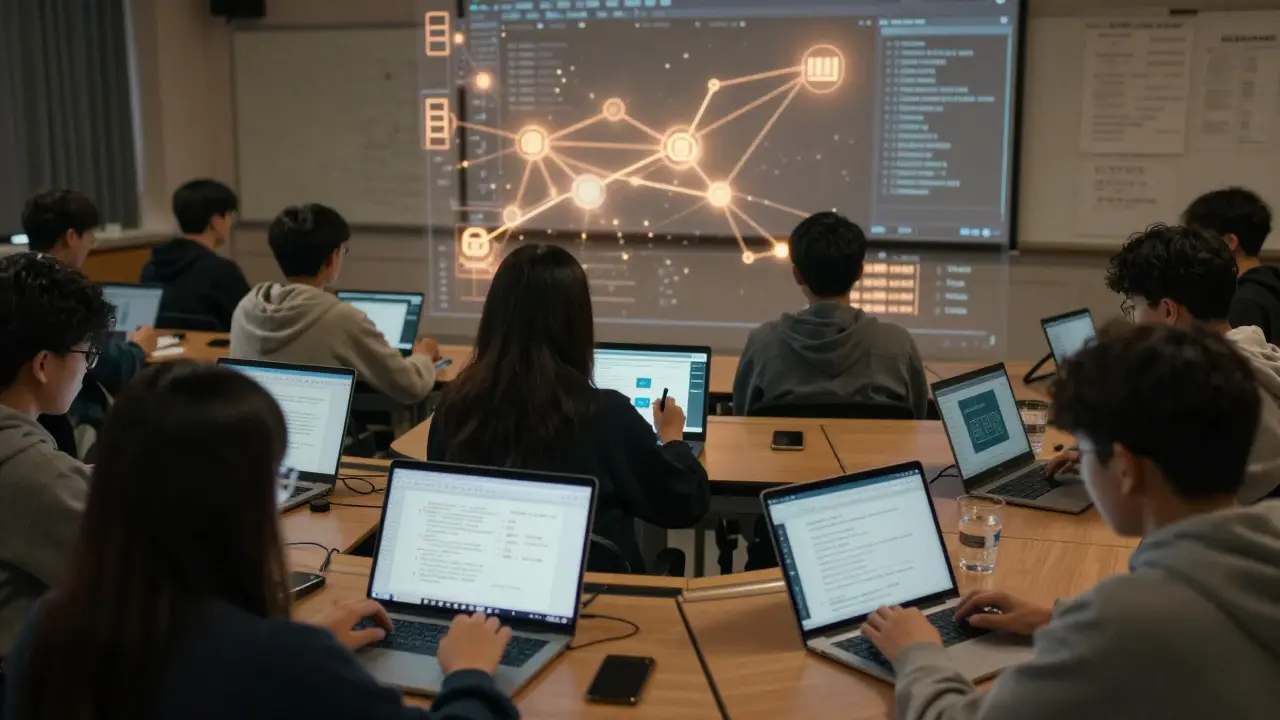
Traditional courses assume everyone learns at the same pace. That’s not how the brain works. Research from the University of Michigan shows that students in personalized learning environments retain 68% more information after six months compared to those in standard courses. Why? Because they’re not rushing through things they don’t get. They’re not wasting time on what they already know.
It’s like having a tutor who knows your strengths, weaknesses, and habits-and adjusts on the fly. No more sitting through a 40-minute lecture on something you mastered in high school. No more feeling lost because you missed a foundational concept two weeks ago and no one noticed.
Companies using this approach report 30-50% faster skill acquisition. In healthcare training, nurses using AI-driven simulations improved patient safety outcomes by 27% because the system flagged their blind spots before they ever stepped into a real unit.
Challenges and Ethical Considerations
Personalized learning isn’t perfect. It requires data-and that raises privacy questions. Are you comfortable with your learning habits being tracked? Who owns that data? Can it be used to judge your potential? These aren’t theoretical concerns. In 2024, a university in Australia faced backlash after its AI system flagged students as “at risk” based on login frequency and quiz timing-without context. Some were wrongly labeled as disengaged when they were actually working night shifts.
Good systems give learners control. You should be able to see your own learning profile. You should be able to turn off certain tracking features. You should know how your data is being used. Transparency isn’t optional-it’s the foundation of trust.
Another risk? Over-reliance. AI can suggest the next step, but it can’t replace human mentorship. A good instructor still matters. They read tone, notice when a student is overwhelmed, offer encouragement when the algorithm just sees a drop in completion rate.
The goal isn’t to replace teachers. It’s to give them better tools. AI handles the data. Humans handle the heart.
What You Can Do Right Now
You don’t need to wait for your school or employer to adopt AI-driven learning. Here’s how you can start using it today:
- Use platforms that show learning analytics-like Duolingo’s streak tracker or Coursera’s progress heatmaps. Pay attention to what they highlight.
- If you’re stuck on a topic, don’t just rewatch. Try switching formats. Watch a YouTube summary. Read a blog. Listen to a podcast. The system will learn what works for you.
- Track your own patterns. Do you learn better in the morning? After coffee? After a walk? Note it. Your brain is your best data source.
- Ask your course provider: “Can I see my learning profile?” If they don’t offer it, ask why. Demand transparency.
Personalized learning isn’t about making education easier. It’s about making it more effective. It’s about respecting the fact that every learner is different-and that’s not a problem to fix. It’s an opportunity to unlock.
How does AI know what I need to learn next?
AI uses your past interactions-quiz scores, time spent on lessons, which videos you rewatch, how often you skip ahead-to build a profile of your learning style and gaps. It compares that profile to patterns from thousands of other learners to predict what concept you’re likely to struggle with next. Then it adjusts the next lesson accordingly, offering extra practice, simpler explanations, or advanced challenges based on your needs.
Is personalized learning only for online courses?
No. Many universities now use AI tools in hybrid classrooms. Learning management systems like Canvas and Moodle integrate analytics that help instructors see which students need help. Some schools use AI-powered tutoring bots during lab sessions or office hours. Even in-person courses can use clickers, apps, or digital handouts that feed data into personalized learning engines.
Does personalized learning make students dependent on technology?
It can-if it’s not designed well. But the best systems teach self-awareness. Instead of just giving answers, they show you patterns: “You tend to rush through math problems.” “You learn best with visuals.” This helps you understand your own habits so you can make better choices, even outside the platform. The goal is autonomy, not dependence.
Can AI personalize learning for students with learning disabilities?
Yes, and this is one of its most powerful uses. AI can adapt content delivery in real time-for example, offering text-to-speech for dyslexic learners, simplifying language for cognitive processing differences, or adjusting pacing for ADHD. Unlike human instructors who may not have time to customize for every student, AI can provide individualized support at scale without stigma.
What happens if the AI gets it wrong?
It’s not perfect. Sometimes it suggests the wrong resource or misreads your pace. But good systems let you override suggestions. If you’re pushed into a harder module and feel lost, you can say, “This is too fast.” The system learns from your feedback. It’s not a black box-it’s a conversation. Your input improves the model over time.
What’s Next for AI in Education
The next wave isn’t just about adapting content. It’s about predicting learning outcomes before they happen. Imagine a system that tells you, “Based on your progress, you have a 90% chance of passing this certification if you spend 3 hours this week on practice tests.” Or one that connects you with a peer who’s in the same spot-and has already succeeded.
Some institutions are testing AI-generated study groups based on learning styles. Others are using it to recommend real-world projects that match your strengths. In New Zealand, a pilot program at Auckland University of Technology uses AI to match nursing students with clinical placements based on their learning patterns-not just grades.
The future of learning isn’t about more content. It’s about smarter delivery. It’s about listening-not just to what you know, but to how you learn.
Comments
Mbuyiselwa Cindi
I’ve been using Duolingo for my Spanish and the way it adapts to my mistakes is wild. I kept mixing up ser and estar, so it started throwing me mini quizzes every time I logged in-like a little grammar ghost whispering in my ear. After two weeks, I stopped forgetting. No lectures, no flashcards-just smart nudges. This tech isn’t magic, it’s just better than yelling at a textbook.
Krzysztof Lasocki
So let me get this straight-we’re giving algorithms control over what I learn because I once paused a video for 17 seconds? Next they’ll be judging my life choices based on how often I rewatch cat videos. 😂 I mean, sure, it works… but I still miss the days when my teacher just said, ‘You suck at fractions, here’s a popsicle stick.’
Henry Kelley
Honestly? I used to hate online courses ‘cause I’d get lost in the wall of text. But then I found this one that noticed I kept skipping the readings and just did the quizzes. So it started giving me 3-min audio summaries instead. Now I actually finish stuff. It’s not perfect, but it gets me. And that’s more than most professors ever did.
Victoria Kingsbury
Let’s talk about the data exhaust we’re generating. Every click, every pause, every ‘I’m not ready for this’ sigh captured as a behavioral metric. This isn’t personalization-it’s behavioral surveillance wrapped in a UX bow. And don’t get me started on how these systems are trained on biased datasets. You think your ‘learning profile’ is unique? Nah. It’s just a cluster in a 12,000-student PCA.
Tonya Trottman
Ugh. Another ‘AI is the future’ piece written by someone who thinks ‘adaptive learning’ means a bot saying ‘Good job!’ when you get a question right. Let me break it down for you, folks: AI doesn’t ‘know’ you. It guesses. Based on correlations. From data you didn’t consent to give. And if you think your ‘learning profile’ is private-congrats, you’re the kind of person who still believes in the Tooth Fairy. Also, ‘personalized learning’ doesn’t fix bad pedagogy. It just makes it faster.
Rocky Wyatt
You think this is helping? I’ve seen students get flagged as ‘at risk’ because they didn’t log in on weekends. Guess what? They were working two jobs. The algorithm doesn’t care. It just sees a drop in engagement and assumes laziness. This isn’t education. It’s a corporate efficiency scam dressed up as innovation. You’re not being helped-you’re being optimized.
Santhosh Santhosh
I come from a small village in Odisha where internet is spotty and most kids don’t even have smartphones. But when I first saw an AI tutor helping a girl with her math through a low-bandwidth app-she didn’t have a teacher, she didn’t have books, she had a phone and a Wi-Fi hotspot from the neighbor’s house-I cried. This isn’t about data. It’s about dignity. When you’re told you’re not smart enough, AI doesn’t say that. It just says, ‘Try again.’ And that’s more than most humans ever did for me.
Veera Mavalwala
Oh sweet merciful chaos, we’re letting machines decide what I need to learn next? Like, I’m a 32-year-old woman who rewatched the same 3-minute video on quadratic equations because my brain is a rusty gear and I needed the damn thing to click. And now some algorithm is gonna hand me a ‘challenge module’ because I ‘breezed through word problems’? Honey, I didn’t breeze-I survived. And I’m not some data point in your shiny dashboard. I’m a person who needs patience, not a predictive model.
Ray Htoo
What if the AI gets it wrong? Like, what if I’m just having a bad day and I bomb a quiz, but I actually know the material? Does it lock me out? Or worse-does it assume I’m ‘not a math person’ and start pushing me toward ‘easier’ content? That’s not personalization, that’s algorithmic gatekeeping. I want a system that adapts to my mood, not just my clicks. Because sometimes the problem isn’t the concept-it’s the fact that I haven’t slept in 36 hours.
Natasha Madison
Who owns this data? Who’s selling it? Did you know that in 2023, a major edtech firm was caught selling student learning patterns to insurance companies? They used ‘engagement metrics’ to predict who’d get sick or stressed. And now you’re sitting here like this is some kind of miracle? This isn’t education. It’s social credit for nerds. Turn it off. Now.
Sheila Alston
It’s not just about the tech-it’s about the moral decay. We’re outsourcing empathy to machines. Kids are growing up thinking if they’re not ‘optimized,’ they’re broken. Where’s the compassion? Where’s the teacher who says, ‘I see you’re struggling, let’s talk’? This system rewards efficiency over humanity. And if you’re okay with that, then you’re not an educator-you’re a spreadsheet.
sampa Karjee
Let’s be real: this is just the latest capitalist fantasy dressed in pedagogical jargon. You think a billionaire in Silicon Valley gives a damn about your ‘learning profile’? No. They care about retention metrics, upsell opportunities, and data monetization. This isn’t democratizing education-it’s commodifying it. And the real tragedy? The people who need this the most-the underfunded, the overlooked-are the ones who’ll be fed the most garbage algorithms because they can’t afford the premium version. The system isn’t broken. It’s working exactly as intended.