

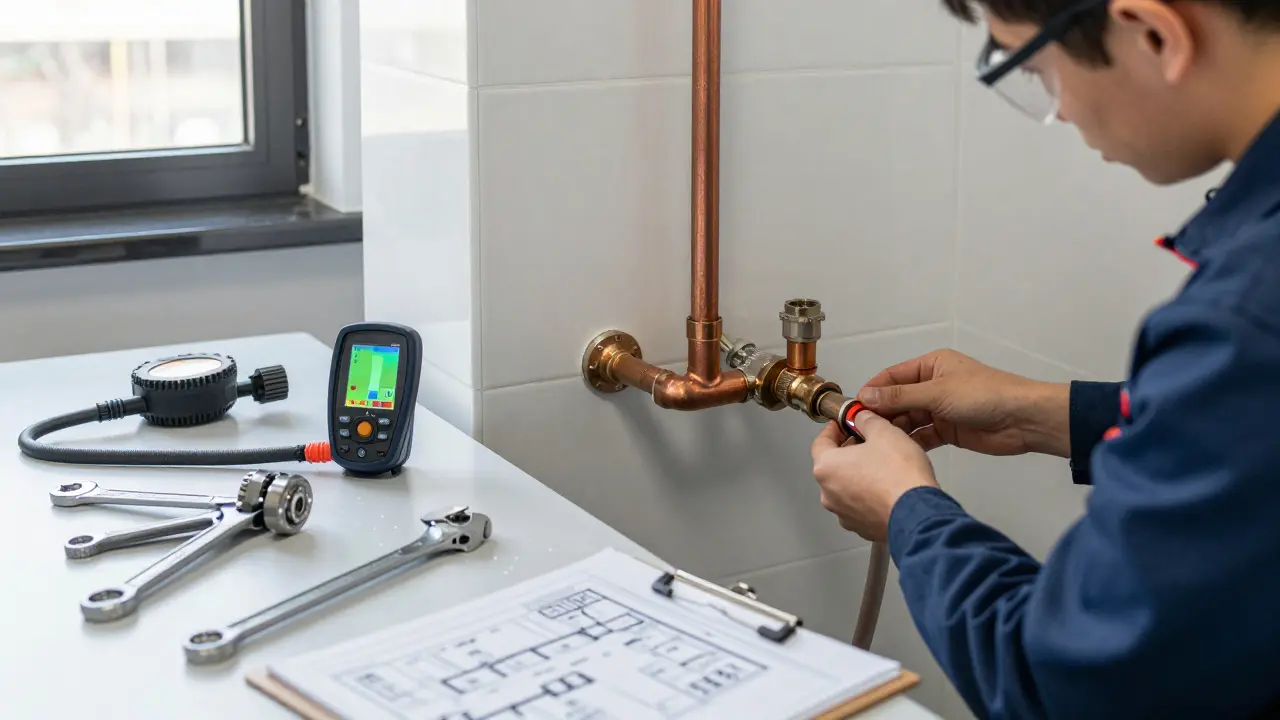
When you sign up for a plumbing or construction trade course, you're not just learning theory-you're training to build, fix, and maintain the systems that keep homes and buildings running. These programs are designed for people who want to work with their hands, solve real problems, and earn a solid wage without a four-year degree. But what exactly do these courses cover? And how do the labs turn classroom lessons into real skills?
What’s in a Plumbing Trade Course?
Plumbing isn’t just about fixing leaky faucets. Modern plumbing systems involve water pressure, drainage, gas lines, sewage treatment, and even smart home integration. A solid plumbing course breaks this down into clear sections.
The syllabus typically starts with basic safety and tool use. You’ll learn how to handle pipe cutters, threaders, wrenches, and pressure testers. Then you move into pipe materials: copper, PEX, PVC, and cast iron. Each has different uses, installation rules, and local code requirements. You’ll also study how to read blueprints-something many beginners overlook but is critical on job sites.
Core topics include:
- Water supply systems and pipe sizing
- Drain-waste-vent (DWV) systems
- Water heater installation and maintenance
- Gas line routing and safety protocols
- Backflow prevention and cross-connection control
- Local plumbing codes (IPC and UPC)
By the end of the course, you should be able to install a full bathroom fixture set-from toilet to shower valve-while meeting code. That’s not guesswork. It’s tested in the lab.
Construction Trade Course Structure
Construction trade courses cover more than just framing. They include electrical rough-ins, HVAC ductwork, insulation, roofing, and foundation work. Many programs combine plumbing with general construction to give you broader job options.
A typical 12-week construction trade course might look like this:
- Weeks 1-2: Tool safety, blueprint reading, and material identification
- Weeks 3-5: Framing walls, floors, and roofs using dimensional lumber
- Weeks 6-7: Installing windows, doors, and exterior finishes
- Weeks 8-9: Rough-in plumbing and electrical systems
- Weeks 10-11: Insulation, drywall, and finishing touches
- Week 12: Final project-building a small shed or modular room from scratch
Unlike college classes, there’s no final exam. Instead, you’re graded on how well you complete each lab project. If your wall isn’t plumb, your roof leaks, or your pipe joints fail pressure tests, you redo it. No pass/fail. Just done right-or not done.
How Labs Work: No Theory, Just Practice
The lab is where everything clicks. In a plumbing lab, you’ll find mock walls with embedded pipes, simulated sewer lines, and full bathroom setups. You might be asked to:
- Replace a corroded P-trap under a sink in under 20 minutes
- Install a water heater with proper venting and shutoff valves
- Pressure-test a newly assembled water line until it holds 80 psi for 15 minutes
- Locate and fix a hidden leak using a thermal imaging camera
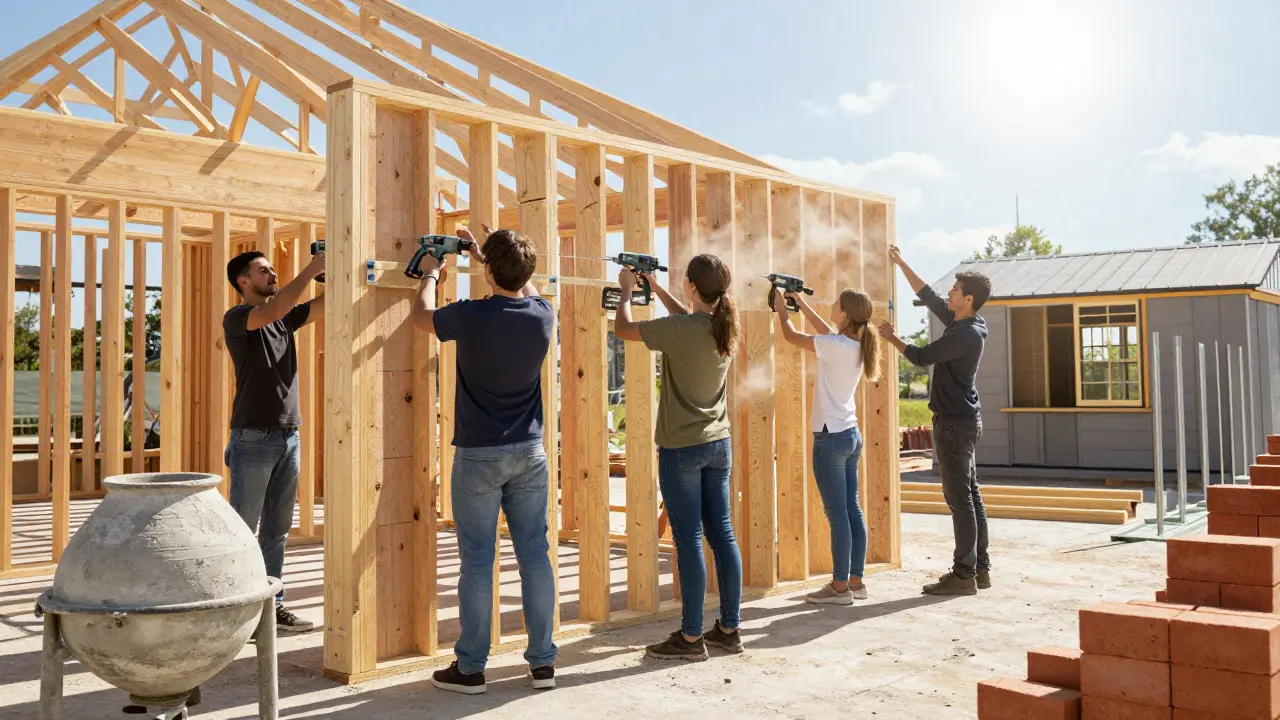
Construction labs are even more hands-on. You’ll build full-scale wall sections, install real trusses, and run electrical conduit through studs. Some schools even have outdoor training pads where students pour concrete footings, lay brick, and erect temporary structures.
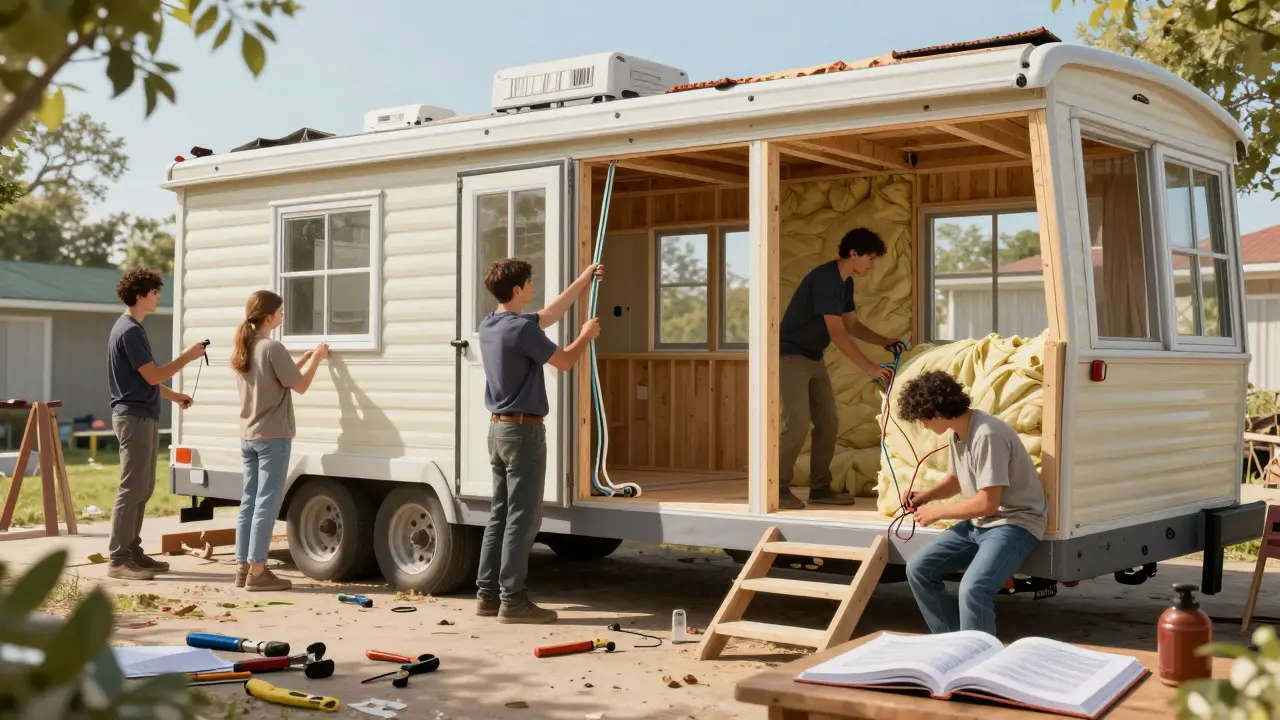
One program in Ohio uses a real, donated mobile home as a training lab. Students strip it down, rewire it, replumb it, and re-insulate it-all while following current building codes. By the end, they’ve done the work of three trades in one project.
Tools You’ll Use (And Why They Matter)
You won’t be using cheap hardware store tools. Trade schools invest in professional-grade equipment because the job demands it.
Plumbing students learn to use:
- Tube cutters and deburring tools-for clean, leak-free copper joints
- Pipe threaders-to create male/female threads on steel pipes
- Hydrostatic pressure testers-to verify system integrity
- Drain snakes and camera inspection tools-to find blockages without tearing walls open
Construction students handle:
- Framing nail guns-firing 3-inch nails with precision
- Circular saws and compound miter saws-for accurate cuts on lumber and trim
- Stud finders and laser levels-to ensure walls are straight and aligned
- Concrete mixers and trowels-for foundations and slabs
These aren’t optional. If you can’t use a pipe wrench correctly, you’ll damage a $2,000 water heater. If your wall is 2 degrees off, it won’t pass inspection. Labs teach you to get it right the first time.
Real-World Projects: Beyond the Classroom
Many trade programs partner with local nonprofits or housing agencies to give students real jobs. In Atlanta, students from the Urban Trades Institute rebuilt 17 homes for low-income families last year. Each home got new plumbing, electrical, and insulation-all done by students under licensed supervision.
In Michigan, a community college runs a “Build a Home” program where students construct a tiny home from the ground up. It’s sold at auction, and proceeds fund next year’s materials. Last year’s tiny home sold for $38,000. The students who built it earned their journeymen certifications before graduation.
These aren’t charity projects. They’re job interviews. Contractors come to watch. Employers hire directly from these builds. In 2025, 68% of plumbing graduates from accredited trade schools had job offers before they finished their final lab.
What Happens After the Course?
Completing a trade course doesn’t mean you’re done. Most states require an apprenticeship before you can get a license. That’s usually 4 years of on-the-job training plus 144 hours of classroom instruction per year.
But here’s the key: a good trade course gives you a head start. You’ll enter your apprenticeship already knowing how to read blueprints, use tools safely, and follow codes. That means you’ll be assigned harder tasks sooner-and get paid more.
Plumbers in the U.S. earn a median wage of $64,470 per year. Construction technicians with multiple skills can earn over $75,000. And demand is rising. The Bureau of Labor Statistics projects a 10% growth in plumbing jobs by 2030. Construction laborers? Even higher.
Who These Courses Are For
These aren’t for everyone. But if you:
- Prefer doing over talking
- Like seeing the result of your work
- Don’t want student debt
- Are okay with physical work
Then this path makes sense. You don’t need to be an engineering genius. You need to be detail-oriented, reliable, and willing to learn. The tools and codes change-but the core skills? They’ve stayed the same for 50 years. And they always will.
Do I need prior experience to enroll in plumbing or construction trade courses?
No, most trade programs are designed for beginners. You’ll start with basic tool handling and safety. The only requirements are being at least 18 years old, having a high school diploma or GED, and passing a basic math and reading assessment. Some schools offer prep classes if you need to brush up on those skills.
How long do these trade courses usually last?
Most full-time programs run 6 to 12 months. Part-time options can stretch to 18-24 months. Intensive programs-like those offered by community colleges or union apprenticeship prep centers-often complete in 8 to 10 weeks for plumbing basics. Construction courses tend to be longer because they cover more trades.
Can I get financial aid for trade school?
Yes. Many trade schools accept federal Pell Grants, state workforce grants, and union scholarships. Some programs even offer tuition reimbursement if you commit to working for a local contractor after graduation. In 2025, over 60% of students in accredited trade programs received some form of financial assistance.
Are these courses available online?
Theory parts-like codes, blueprint reading, or safety regulations-can be taken online. But the labs? They require hands-on practice. You’ll need to attend in person for the majority of the training. Any program claiming to teach plumbing or construction entirely online is not accredited and won’t prepare you for licensing.
What’s the difference between a trade school and a community college for these programs?
Trade schools focus only on hands-on skills and certification prep. Community colleges often combine those labs with general education classes (like English or math), which can extend the program. Trade schools move faster and cost less. Community colleges may offer transferable credits if you later want to pursue a degree. Both lead to the same job outcomes-just different paths.
If you're serious about a career that pays well, doesn’t require a degree, and lets you build something real-plumbing and construction trade courses are one of the most direct paths available. The tools are real. The work is real. And the results? They last.
Comments
Ronak Khandelwal
I love how trade schools are turning hands into livelihoods 💪🔧 Just watched my cousin finish a plumbing course in Mumbai-now he’s running his own shop. No student debt, just pride. The world needs more doers, not just talkers. 🌍✨
Jeff Napier
They say these courses are real but what if the whole trade school system is just a glorified labor pipeline for contractors who want cheap workers with no benefits
Sibusiso Ernest Masilela
Oh please. You think hammering pipes makes you a professional? I’ve seen so-called 'trade graduates' fail basic pressure tests. This isn't a career-it's a consolation prize for people who couldn't hack college. 🤷♂️
Daniel Kennedy
I’ve trained dozens of apprentices. The ones who thrive aren’t the ones with the highest GPA-they’re the ones who show up early, ask the right questions, and don’t blame tools when they mess up. This post nails it. The lab doesn’t lie. If your joint leaks, you didn’t learn. Period.
Taylor Hayes
I used to think trade work was just grunt labor. Then I helped my brother rebuild his bathroom. The precision required-leveling, pressure testing, code compliance-it’s like surgery with pipes. I’m seriously considering enrolling. There’s dignity in making something that lasts.
Sanjay Mittal
In India, we have similar programs under NSQF. The real difference? Hands-on labs with real copper and PVC, not just simulations. My nephew did a 6-month course and got hired by a Delhi contractor before graduation. No degree, but he earns more than some B.Com grads.
Mike Zhong
You think plumbing is about pipes? It’s about systems. And systems are metaphors for life. Every valve, every joint, every pressure test-it’s a reflection of how we hold ourselves together. You fix a leak, you fix a piece of the world. Deep stuff.
Jamie Roman
I’m 42 and just finished my plumbing certification last year. I was a warehouse worker before. The first time I successfully soldered a copper joint without a drip, I cried. Not because I was proud of the skill-but because I finally felt like I was building something real, not just moving boxes. This path doesn’t just change your job-it changes your identity.
Salomi Cummingham
Let me tell you about the time I watched a student in Glasgow fix a burst pipe in a freezing old tenement with nothing but a torch, a wrench, and sheer grit. The landlord was ready to evict the family. She didn’t just fix the pipe-she saved their winter. That’s not a trade. That’s heroism. And it’s happening every single day in labs across the world. Don’t you dare call it ‘just a course’.
Johnathan Rhyne
You say ‘no degree needed’? Technically, you’re wrong. You need a license. And to get that, you need to pass state exams that test code knowledge, math, and safety protocols. So yes, you need education. Just not a four-year one. Also, ‘PEX’ is not pronounced ‘pecks’. It’s ‘pe-ex’. Please stop mispronouncing trade terms.
Jawaharlal Thota
I’ve been teaching construction in Jaipur for 12 years. The most rewarding moment? When a student who couldn’t read a tape measure at first ends up building a full house by week 10. It’s not magic. It’s repetition. It’s patience. It’s showing up. And honestly? The best learners aren’t the smartest-they’re the ones who don’t quit when their hands blister.
Lauren Saunders
I’ve seen these programs. They’re cute. But let’s be real: the only people who succeed are those who already had family connections in the trade. The rest? They get stuck doing grunt work for $18/hour while the ‘licensed’ guy takes the cut. This isn’t upward mobility-it’s a trap with tools.
sonny dirgantara
i did a 8 week plumbing course last year and now i work for a guy in phoenix. its not glam but i make good money and dont have to sit at a desk. also i like that when i fix something it stays fixed. lol
Andrew Nashaat
You say ‘no degree needed’? That’s dangerously misleading. You still need a license. And to get a license, you need to pass written exams that require understanding of IPC/UPC, math calculations, and safety law. You’re not ‘just fixing pipes’-you’re legally responsible for public health. And if you don’t know the difference between a DWV and a vent stack? People could die. Please stop romanticizing this.
Gina Grub
I work in building inspection. I’ve seen the aftermath of ‘self-taught’ plumbers. Leaks that turned into mold. Gas lines installed with Teflon tape and hope. You think this is about ‘getting your hands dirty’? It’s about accountability. And if your lab doesn’t test you like a real job site? You’re not being trained-you’re being set up for disaster.