

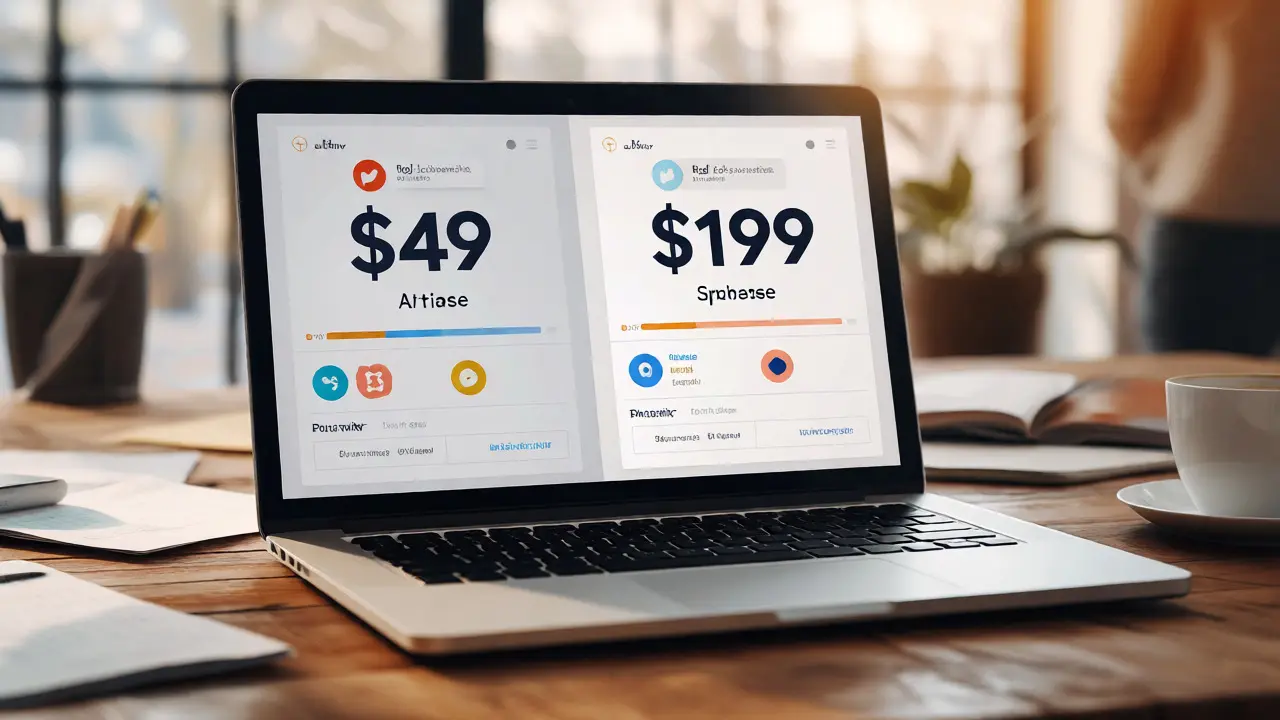
Imagine you’ve just launched a comprehensive Python for Data Science course. You’re confident the content is top-tier. But when you set the price at $199, sales trickle in. Drop it to $49, and they flood in-but now you’re working for pennies. Where’s the sweet spot? It’s not a guesswork game; it’s a science called price testing. This process helps you find the exact number that maximizes revenue without alienating your audience.
Most course creators fear raising prices. They worry about losing customers. But data shows that perceived value often outweighs cost, provided you test correctly. By understanding price elasticity, you can stop leaving money on the table. Let’s break down how to run simple experiments and interpret the results so you can charge what your course is actually worth.
Why Guessing Prices Kills Your Revenue
You might think you know your market. Maybe you looked at three competitors and split the difference. That’s a starting point, but it’s rarely optimal. If your course solves a painful problem-like helping a nurse pass a certification exam quickly-students will pay more than if it’s a hobbyist guide to knitting. The gap between "what I think" and "what they’ll pay" is where profit leaks happen.
A/B testing removes the emotion from pricing. Instead of debating whether $97 or $147 feels right, you let real buyers decide. You show half your traffic one price and the other half another. The winner isn’t who sells more units; it’s who generates more total revenue. Sometimes selling fewer courses at a higher price beats selling twice as many at a lower one.
Understanding Price Elasticity of Demand
Before you run tests, you need to grasp the core concept: price elasticity of demand measures how sensitive customer demand is to changes in price. In plain English: if you raise the price by 10%, do sales drop by 5% (inelastic) or 50% (elastic)?
- Inelastic Demand: Sales barely change when prices go up. This happens with niche, high-value skills (e.g., specialized medical coding). You have pricing power here.
- Elastic Demand: Small price hikes cause massive sales drops. This is common in crowded markets like general productivity tips. You must compete on volume or differentiation.
Your goal is to move your course into the inelastic zone by increasing perceived value. If you can prove your course saves someone 10 hours a week, they won’t care if it costs $50 more. If it’s just "another video series," they’ll scrutinize every cent.
Setting Up Your First A/B Test
You don’t need expensive software to start. Most learning management systems (LMS) like Teachable, Thinkific, or Kajabi allow basic split testing, or you can use tools like VWO or Optimizely. Here’s the simplest way to structure your first experiment.
- Isolate One Variable: Change only the price. Keep the landing page copy, images, and testimonials identical. If you change both the headline and the price, you won’t know which drove the conversion.
- Choose Two Price Points: Don’t test $10 vs $1000. Pick two realistic options. If you currently sell for $99, try $99 vs $129. Or $99 vs $79. Small steps yield clearer data.
- Run for Statistical Significance: Don’t stop after 10 sales. You need enough data to be sure the result isn’t luck. Aim for at least 100 conversions per variation, though this depends on your traffic volume.
Remember, speed matters. If you wait six months to gather data, the market might shift. Run shorter, focused tests during peak traffic periods, like launch weeks or holiday sales.

Interpreting the Results: Revenue vs. Volume
This is where most creators get tripped up. They see Version B sold 50% more units than Version A and declare it the winner. Wrong. Check the math.
| Scenario | Price Per Unit | Units Sold | Total Revenue | Verdict |
|---|---|---|---|---|
| Variation A (Low) | $50 | 100 | $5,000 | Lower Revenue |
| Variation B (High) | $80 | 70 | $5,600 | Higher Revenue |
In this example, Variation B sold fewer courses but made more money. Plus, you served 30 fewer students, saving on support costs and server load. Always optimize for net profit, not just gross sales numbers.
Beyond Simple A/B: Advanced Pricing Strategies
Once you’ve mastered basic A/B testing, you can layer in more complex strategies. These methods leverage psychological triggers and segmentation to capture maximum value.
Tiered Pricing (Good-Better-Best)
Offer three packages. The middle option usually gets the most attention because it looks reasonable compared to the premium tier. For instance:
- Basic: Video access only ($99)
- Pro: Videos + Worksheets + Community ($199)
- Premium: All above + 1-on-1 Coaching ($499)
Time-Limited Discounts
Use scarcity carefully. A permanent $10 discount doesn’t create urgency. A "48-hour launch offer" does. However, avoid constant sales. If students learn to wait for discounts, they’ll never buy at full price. Use discounts to acquire new customers, then upsell them later.
Payment Plans
Some users want your course but lack cash flow. Offering three monthly payments of $40 instead of $100 upfront can increase conversions by 20-30%. Just ensure the total amount collected covers processing fees and provides a slight premium over the one-time payment.

Common Pitfalls in Course Price Testing
Even well-intentioned tests can fail if you ignore these traps.
Testing Too Few Variables: If your traffic is low, splitting it into four variations means each group gets tiny data. Stick to two variations until you have steady traffic.
Ignoring Customer Acquisition Cost (CAC): If you spend $50 in ads to sell a $49 course, you’re losing money. Price testing must account for ad spend. Calculate your break-even ROAS (Return on Ad Spend) before setting floors.
Changing Everything Else: Did you update the thumbnail image mid-test? Did you add a new testimonial? Contaminate the test, and the data becomes useless. Freeze everything except the price tag.
Tools and Metrics You Need
You don’t need a data scientist on staff. Basic analytics tools suffice if you know what to track.
- Conversion Rate: Percentage of visitors who buy. Compare this across price points.
- Average Order Value (AOV): Total revenue divided by number of orders. Helps if you offer bundles.
- Lifetime Value (LTV): If your course leads to coaching or advanced workshops, a lower initial price might boost long-term LTV. Track downstream purchases.
Platforms like Hotjar can also help. Watch session recordings of users hovering over the price button. Do they hesitate? Do they scroll back up to check features? Heatmaps reveal friction points that raw numbers miss.
When to Revisit Your Pricing
Pricing isn’t a "set it and forget it" task. Market conditions change. New competitors enter. Your course gets updated with new modules. Review your pricing strategy quarterly.
If your conversion rate spikes unexpectedly, your price might be too low. If churn increases in subscription models, your price might be too high relative to ongoing value. Stay agile. The best course creators treat pricing as a living part of their product, not a static label.
How long should I run an A/B price test?
Run it until you reach statistical significance, typically requiring at least 100 conversions per variation. For low-traffic sites, this might take several weeks. Avoid stopping early based on gut feeling, as short-term fluctuations can mislead you.
Can I test different prices for new vs. returning students?
Yes, and you should. Returning students often have higher trust and may pay more for advanced content. New students might need a lower entry price to overcome skepticism. Segment your audience to maximize conversion rates for each group.
What if my A/B test shows no significant difference?
If results are inconclusive, your price range might be too narrow. Try widening the gap between variations (e.g., $50 vs $75 instead of $50 vs $55). Alternatively, your audience might be insensitive to small price changes, indicating strong brand loyalty or low competition.
Does offering a payment plan affect price elasticity?
Yes, payment plans reduce the immediate financial barrier, effectively lowering the perceived price. This can make demand less elastic, allowing you to maintain higher total prices while improving conversion rates for budget-conscious buyers.
Should I always choose the highest price that converts?
Not necessarily. Consider customer satisfaction and refund rates. A very high price might lead to higher expectations and more refunds if the course doesn't deliver. Balance revenue goals with long-term reputation and customer lifetime value.