

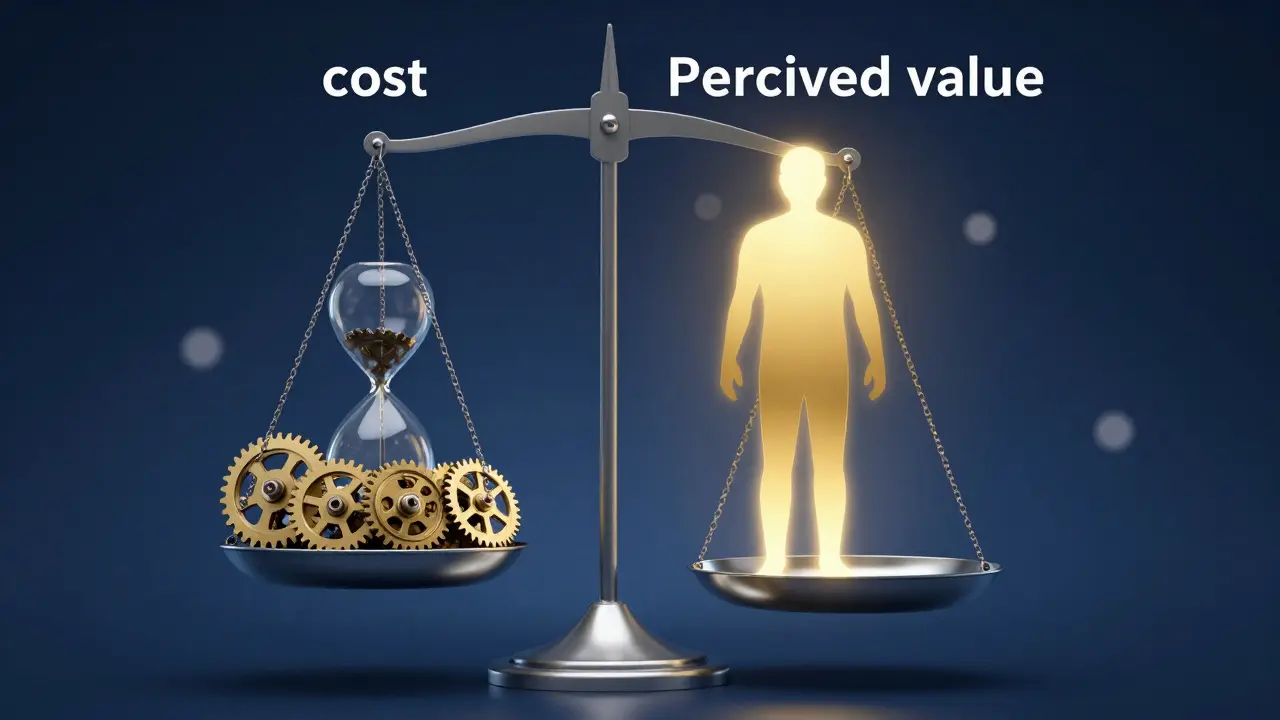
You’ve spent months building a curriculum or developing a learning app, but now you hit a wall: how much should you actually charge? Most people just look at what their competitors do and subtract ten dollars to seem "affordable." That's a recipe for leaving thousands of dollars on the table or, worse, making your product look cheap and untrustworthy. Pricing isn't about math; it's about how the human brain perceives value.
Key Takeaways for Pricing Success
- Value over Cost: Price based on the outcome the student achieves, not the hours you spent recording videos.
- The Power of Three: Use three pricing tiers to nudge users toward the middle option.
- Avoid the "Cheap" Trap: Low prices can signal low quality in education, which kills trust.
- Psychological Anchoring: Set a high reference point first to make your actual price feel like a steal.
The Psychology of Perceived Value in Learning
In the world of pricing psychology is the practice of using cognitive biases and emotional triggers to influence how customers perceive the cost of a product, education has a unique quirk: people often associate a higher price with better results. If you offer a "Masterclass on AI Architecture" for $10, a professional might ignore it because it feels like a toy. If you price it at $997, they start wondering what secret knowledge is inside.
This is because education is an investment, not a consumption. When someone buys a Course, they aren't paying for 10 hours of video; they are paying for the version of themselves that knows the skill. If your product promises a salary bump of $10,000 a year, charging $500 is a bargain. That's the core of monetization models that actually scale.
The Decoy Effect and Tiered Pricing
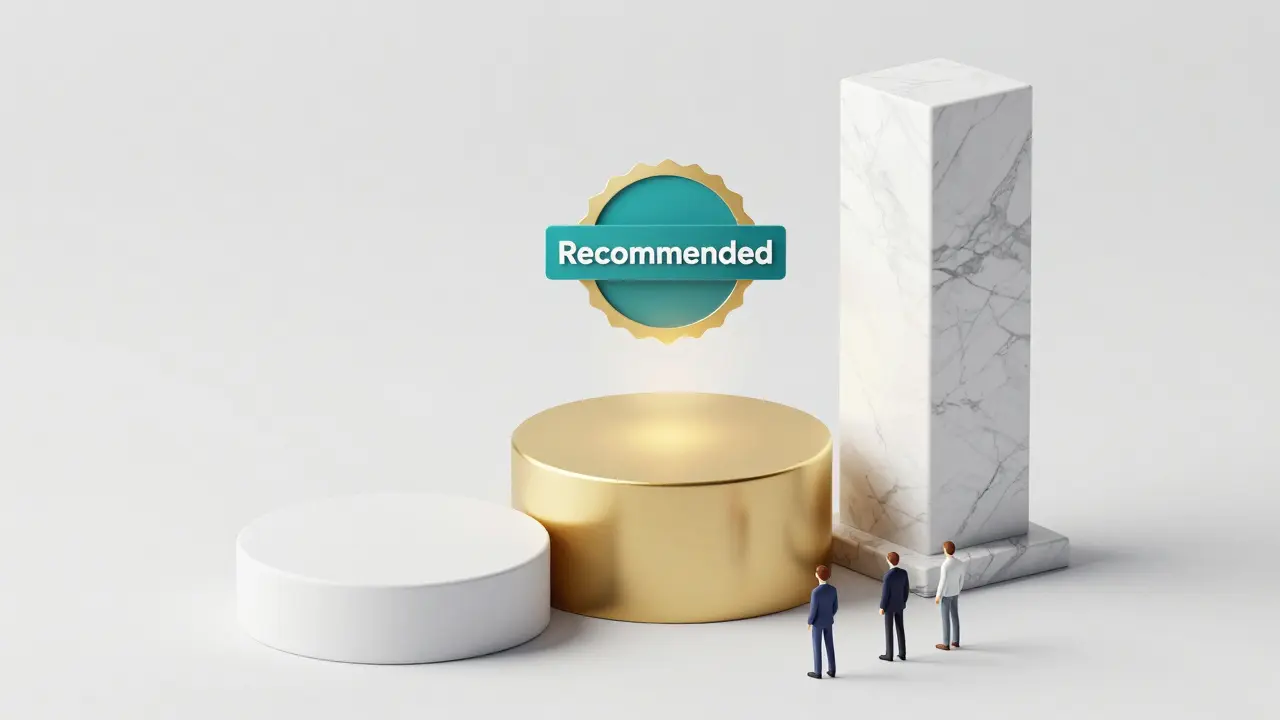
Ever wonder why movie theaters sell a small popcorn for $6 and a large for $8.50, while the medium is $8? The medium is a decoy. It exists only to make the large look like a logical choice. You can apply this exact same logic to your education product using a three-tier structure.
| Tier | Price | Features | Psychological Role |
|---|---|---|---|
| Basic | $49 | Self-study videos, PDF guides | The Entry Point (Anchor) |
| Pro | $149 | Videos, PDF, Community Access, Certificate | The Sweet Spot (Target) |
| Elite | $899 | Everything + 1-on-1 Coaching | The Prestige Anchor |
By placing a high-ticket "Elite" option, the "Pro" version suddenly feels affordable. Without the Elite tier, $149 might feel expensive compared to $49. With it, $149 feels like a balanced compromise. This leverages the Compromise Effect, where humans naturally gravitate toward the middle option to avoid extremes.
Anchoring and the Art of the First Number
The first price a customer sees sets the mental benchmark for everything that follows. This is called anchoring. If you start your sales page by saying, "A typical university degree in this field costs $40,000," and then introduce your $500 certification, the $500 feels like a massive discount, even if the student wasn't planning on going to university.
You can also use "crossed-out pricing." While it feels like a cliché, showing a Price Anchor (e.g., ~~$499~~ $199) works because it triggers a fear of missing out (FOMO). The brain registers the $499 as the "true" value and the $199 as a temporary gift. However, be careful: if you keep a product "on sale" for a year, you destroy your credibility. The anchor must feel legitimate.
The Subscription Trap vs. Lifetime Access
Choosing between a SaaS Model (monthly subscription) and a one-time payment depends entirely on your content's lifespan. If you are teaching a skill that changes every six months-like Digital Marketing or AI prompting-a subscription makes sense. The user pays for the freshness of the information.
But for evergreen skills, like leadership or basic accounting, subscriptions can feel like a burden. This is known as "subscription fatigue." In these cases, a lifetime access fee is often more attractive. It removes the psychological pressure of a recurring bill and creates a sense of ownership. If you want the best of both worlds, offer an annual plan that is significantly cheaper than 12 individual months. This locks in the user for a year and improves your cash flow immediately.
Charm Pricing and the Power of Number 9
Why is it always $29, $99, or $197? It's not just a tradition; it's a cognitive shortcut. The "left-digit effect" means our brains process the first digit most heavily. $19.99 feels significantly cheaper than $20.00, even though it's a one-cent difference. In education, this works well for low-ticket lead magnets or introductory courses.
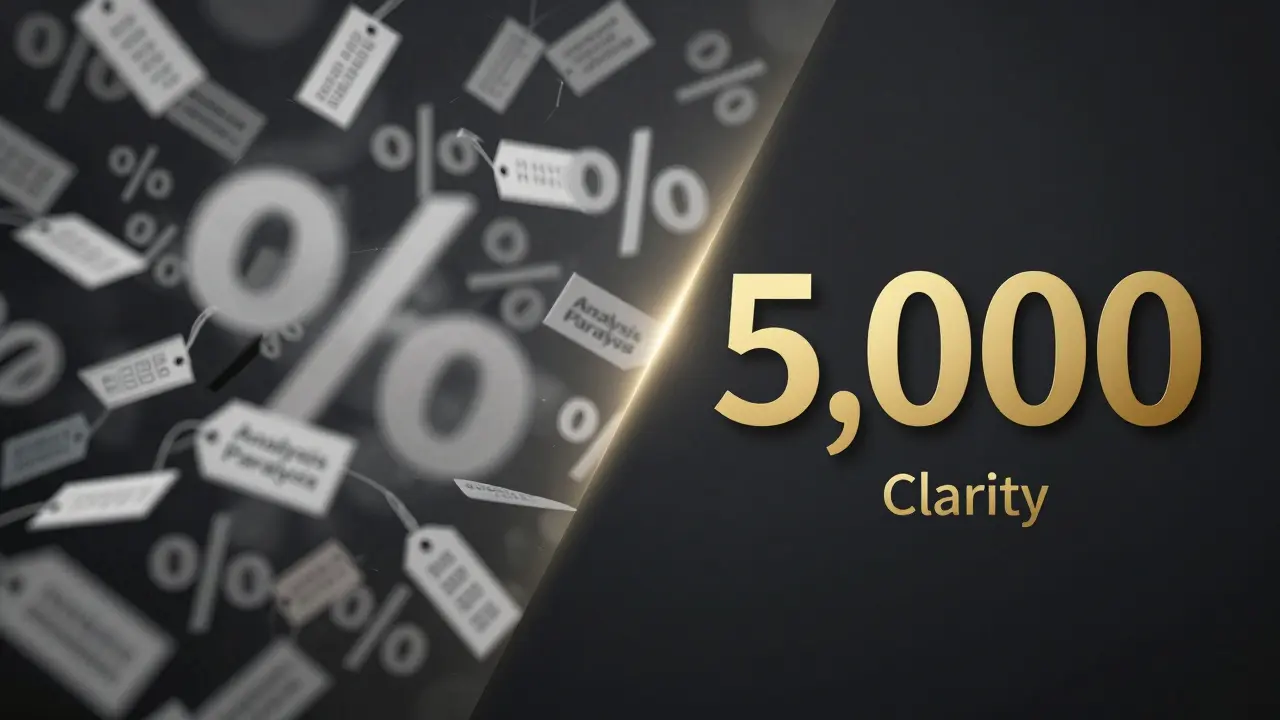
However, there is a flip side. When you move into high-ticket consulting or executive coaching, rounded numbers (like $5,000 or $10,000) actually perform better. Rounded numbers signal prestige, luxury, and confidence. If you charge $4,997 for a corporate leadership retreat, you look like a discount store. If you charge $5,000, you look like an expert. Match your pricing format to the identity of your target student.

The Paradox of Choice and Decision Paralysis
Giving your students too many options will actually stop them from buying. When a person is faced with ten different bundles and pricing plans, they experience Analysis Paralysis. Instead of choosing the best one, they close the tab to "think about it later" and never come back.
Keep your options limited. Two to three choices are the gold standard. If you have different versions of a product, use a "Recommended" badge on your preferred tier. This reduces the cognitive load on the buyer. You are essentially telling them, "Don't stress about the choice; most people like you pick this one." This social proof removes the fear of making the wrong decision.
Should I offer a free trial for my education app?
It depends on the "Aha! Moment" of your product. If your app provides immediate value (like a language learning tool where you learn 5 words in 2 minutes), a free trial is great. However, if the value only comes after 10 hours of study, a free trial might lead to high churn because users quit before they see the benefit. In that case, a limited-access "freemium" model or a heavily discounted introductory module is better.
Is it better to price by the hour or by the result?
Always price by the result. If you price by the hour, you are essentially penalizing yourself for being efficient. A student doesn't want 10 hours of your time; they want the skill you possess. By switching to value-based pricing, you can charge based on the economic impact the skill has on the student's life, which is almost always higher than your hourly rate.
How do I handle discounts without devaluing my brand?
Avoid generic "20% off" sales. Instead, tie discounts to a specific event or milestone, such as a "Founder's Launch Price" or a "Scholarship Tier" for students in developing nations. This gives the discount a logical reason and prevents the perception that your product is permanently cheap.
Does pricing psychology work for B2B education products?
Yes, but the triggers change. B2B buyers are less driven by FOMO and more by risk mitigation and ROI. Use "per seat" pricing for corporate teams to make the initial entry cost low, and emphasize the cost of not training their employees (the "cost of inaction") as your primary anchor.
What is the best way to increase the price of an existing course?
The safest way is to add a new feature or a new module and announce a "Price Increase" date. Give your existing audience a window (e.g., 14 days) to buy at the old price before the new one kicks in. This rewards loyalty while simultaneously using urgency to drive a spike in sales before the price hike.
Next Steps for Your Pricing Strategy
If you're feeling overwhelmed, start with a simple experiment. Take your current best-selling product and add one high-priced "VIP" tier that includes a live call or a personalized audit. You'll be surprised how many people suddenly find your middle tier more attractive. From there, analyze your churn rates-if people are leaving your subscription too quickly, consider shifting toward a high-ticket one-time payment model. Remember, the goal is to align the price with the transformation you provide, not the time you spend.
Comments
Ashley Kuehnel
This is such a great breakdown!! I've used the three-tier model in my own coaching biz and it really helps people feel more confident about what they're pickin. Just a litle tip, if you're doing the 'Elite' tier, make sure your onboarding is super smooth or they'll feel the sticker shock immediately! Love the focus on results over hours too.
Saves so much stress for the creator!
Colby Havard
One must ponder whether the systemic manipulation of human cognition, via these so-called 'anchors', is truly an ethical pursuit...; for when we reduce education to a mere game of perception, do we not erode the intrinsic value of knowledge itself...;? It is a precarious slope, indeed, to prioritize the 'perceived' over the 'actual'!
Mark Nitka
Look, we can argue about the ethics all day, but the reality is that if your product actually helps people, you're doing them a disservice by pricing it so low that they don't take it seriously. It's about finding a balance that works for everyone involved.
Amy P
OH MY GOD, I never even thought about the 'medium' popcorn thing applying to online courses! That is absolutely wild! I've been pricing my stuff just by guessing and it's probably why I'm not seeing those huge conversion spikes! I need to overhaul my entire landing page right now!
adam smith
I find this information to be quite useful. It is a very good post.
Mongezi Mkhwanazi
It is frankly amusing that so many 'entrepreneurs' believe a simple price change can save a mediocre product...; as if the mere application of a 'decoy' can mask a lack of genuine substance...; those who rely on these psychological tricks rather than delivering transcendental value are simply rearranging deck chairs on the Titanic...; and the market eventually corrects such delusions...; always.
Kelley Nelson
While the concepts presented are elementary to anyone with a basic grasp of behavioral economics, I suppose they are marginally useful for those attempting to monetize rudimentary skills. One does wonder, however, if the 'Elite' tier doesn't simply attract the least discerning clientele.
Aryan Gupta
The irony of a post about 'psychology' containing several comma splices is not lost on me. Besides, this whole 'pricing strategy' is just another layer of the corporate matrix designed to extract more capital from the working class using subliminal triggers. They want us focused on the 'digit effect' so we don't notice the actual inflation of costs!
Fredda Freyer
There is a profound connection here between the cost and the commitment of the learner. When a student pays a premium, they aren't just buying content, they are buying an identity and a promise of change. If the price is too low, the cognitive dissonance makes them feel like the transformation isn't real, so they quit.
I've found that the most successful models are those where the price acts as a filter, ensuring only those truly dedicated to the process enter the ecosystem. It's less about 'tricking' the brain and more about aligning the financial investment with the emotional effort required to actually learn a difficult skill. If you want a high-tier result, you need a high-tier barrier to entry. That is the actual philosophy behind value-based pricing.