


You have the data. You have the dashboards. You have the algorithms ready to predict which students will drop out of your course next month. But before you hit "run" on that predictive model, there is a massive, glowing red light on your dashboard that most tech teams ignore: FERPA is the Family Educational Rights and Privacy Act, a US federal law protecting the privacy of student education records. If you are building learning analytics for a US-based institution, or even working with global clients who have US campuses, this isn't just a legal checkbox. It's the difference between a successful pilot program and a lawsuit.
Here is the reality: traditional IT security focuses on keeping hackers out. Learning analytics focuses on getting insights in. These two goals often clash. When you pull grades, attendance logs, and clickstream data into a central warehouse to find patterns, you are moving protected data outside the systems where it was born. That movement creates risk. Let’s break down how to navigate this without killing the innovation.
The Core Conflict: Data Utility vs. Student Privacy
Think about what makes learning analytics powerful. It relies on granularity. To know if a student is struggling, you don’t just look at their final grade; you look at when they logged in, how long they spent on a specific module, and whether they emailed the professor. This granular data is highly sensitive. Under FERPA, these are not just "data points"; they are part of the student's Education Record, which includes any information directly related to a student maintained by an educational agency or institution.
The problem arises when third-party vendors-like the company hosting your analytics platform-need access to this data. Are they a "school official" with a legitimate educational interest? Or are they a commercial entity trying to improve their AI model using your students' lives as training data? The line is blurry. In 2024, the US Department of Education issued guidance emphasizing that while schools can share data with vendors, those vendors must use the data *only* for the purposes specified in the contract. They cannot repurpose it for marketing or general product development without explicit consent or de-identification.
| Data Use Case | FERPA Status | Risk Level | Action Required |
|---|---|---|---|
| School Official (Vendor) | Permitted Exception | Low | Contractual control & definition of role |
| De-identified Data | Not Protected | Medium | Robust anonymization protocols |
| Research Study | Conditional | High | IRB Approval & Parental Consent |
| Commercial Product Dev | Requires Consent | Critical | Explicit opt-in/opt-out mechanisms |
Defining "School Official": The Vendor Loophole
This is the term that saves most EdTech projects from legal paralysis. FERPA allows schools to disclose personally identifiable information (PII) to "school officials" with a "legitimate educational interest." But here is the catch: the school must maintain direct control over the data, and the vendor must perform an institutional service or function for which the school would otherwise use employees.
If you hire a consultant to analyze test scores, they are likely a school official. If you subscribe to a SaaS platform that analyzes engagement to help teachers intervene, they are likely a school official. However, if that same platform takes your data to train a generic recommendation engine used by other clients globally, you might be crossing the line. The key is control. Your contract needs to explicitly state that the vendor cannot retain data after the project ends and cannot use it for independent research without permission.
A common mistake I see in Auckland and beyond is assuming that because a tool is "cloud-native," it is automatically compliant. It is not. Cloud storage introduces jurisdiction issues. If your data sits on servers in Ireland but the student is in Ohio, GDPR and FERPA both apply. You need a data processing agreement (DPA) that satisfies both regimes. Do not let your legal team hand-wave this away. Ask them specifically: "Does this vendor have the right to aggregate our data with others?"
De-identification: Is Anonymity Really Enough?
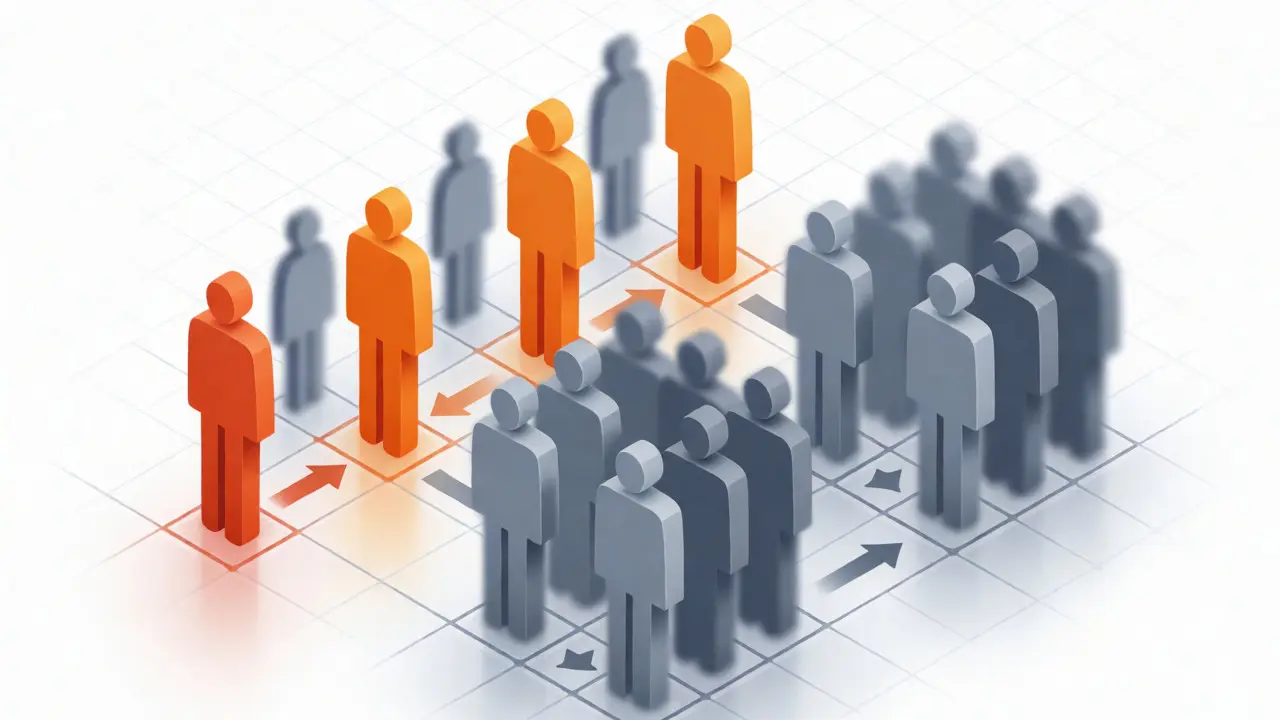
Many developers think, "If we strip names and IDs, it’s anonymous. FERPA doesn’t care about anonymous data." This is dangerous thinking. True anonymity is incredibly hard to achieve in small cohorts. If you have a dataset showing "Male, Age 19, Major: Astrophysics, GPA: 3.8, Lives in Dorm B," and you know there is only one person like that in your university, re-identification is trivial.
To comply with FERPA when using de-identified data, you must ensure that no reasonable person could identify the student based on the remaining attributes. This often requires k-anonymity, a technique ensuring each record is indistinguishable from at least k-1 other records. For learning analytics, this means you might need to suppress rare combinations of variables. If only five students failed a specific quiz, you might need to group them into a broader category rather than showing individual failure events. This reduces the utility of the data slightly but protects the student significantly.
- Direct Identifiers: Name, SSN, Student ID. Remove these immediately.
- Indirect Identifiers: Birthdate, gender, race, major, enrollment status. These require careful handling.
- Quasi-Identifiers: Unique behavioral patterns (e.g., logging in at 3 AM every Tuesday). These are the hardest to scrub.
Practical Steps for Compliance in Your Project Lifecycle
So, how do you actually build this? You don’t wait until the end to check compliance. You bake it in during the design phase. Here is a workflow that has worked for several universities transitioning from spreadsheets to automated dashboards.
- Data Inventory: Map exactly what fields you are pulling. Do you really need the student’s home address? Probably not. Minimize collection.
- Purpose Specification: Write down exactly why you need each field. "To predict dropout risk" is vague. "To correlate library login frequency with midterm performance" is specific. Specificity helps defend against scope creep.
- Access Control Matrix: Who sees what? A teacher should see their own students’ alerts. An administrator might see aggregated trends. Never give raw PII to everyone. Use role-based access controls (RBAC).
- Consent Management: Even if FERPA permits sharing with school officials, transparency builds trust. Inform students and parents about what data is being analyzed and how it helps them. For minors (K-12), parental consent is non-negotiable for many uses.
- Security Protocols: Encrypt data at rest and in transit. Implement multi-factor authentication for all analysts accessing the raw data lake. Log every query made against the database.
One specific pitfall: Directory Information is exempt from FERPA, meaning schools can release names and addresses unless the student opts out. However, just because you *can* share directory info doesn't mean you should include it in your analytics dataset. Keep it separate. Linking directory info to behavioral data increases re-identification risk unnecessarily.

Beyond FERPA: The Global Context
If you are working in New Zealand, Australia, or Europe, FERPA is not the only rulebook. The General Data Protection Regulation (GDPR) applies if you handle data of EU citizens, regardless of where your server is located. GDPR is stricter than FERPA in some areas, particularly regarding the "right to be forgotten" and automated decision-making. If your algorithm decides who gets a scholarship, GDPR requires human intervention options.
In New Zealand, the Privacy Act 2020 governs personal information. It emphasizes purpose limitation and data minimization. While it doesn’t have the exact same "school official" exception structure as FERPA, the principles align. If you are building a global learning analytics platform, aim for the highest standard. Design for GDPR/FERPA hybrid compliance. This usually means defaulting to the strictest interpretation of consent and data retention.
Building Trust Through Transparency
Compliance isn’t just about avoiding fines; it’s about maintaining the social license to operate. Students are increasingly aware of their digital footprints. If they feel surveilled rather than supported, they will resist the tools you build. Use your analytics interface to show students their own data. Give them agency. Let them see the predictions and perhaps flag them if they disagree.
Consider implementing a "privacy dashboard" within your LMS integration. Show students what data is collected, who accesses it, and allow them to opt out of non-essential tracking features. This proactive approach turns a compliance burden into a feature. It shows respect for the learner, which ultimately improves adoption rates of your analytics tools.
Does FERPA apply to private online courses?
Yes, if the institution receives federal funding from the US Department of Education. Most public universities and many private ones do. If a private bootcamp does not receive federal aid, FERPA may not apply, but contractual privacy promises and state laws still do.
Can we use student data for AI training without consent?
Generally, no, not for commercial product development. If the data is used solely to provide the service to that specific school (as a school official), it is permitted. If the vendor wants to use the data to improve models for other customers, explicit written consent or robust de-identification is typically required.
What is considered "personally identifiable information" (PII) in learning analytics?
PII includes the student's name, address, social security number, student ID, mother's maiden name, or any other identifier that makes the student's identity easily traceable. Indirect identifiers like birth date, gender, and major can also constitute PII if combined.
How long can we keep student data after graduation?
FERPA does not set a specific retention limit, but state laws and institutional policies do. Generally, you should retain data only as long as necessary for the stated purpose. For analytics, this often means archiving or deleting raw behavioral logs after 3-5 years, keeping only aggregated results longer.
Do parents have rights to student data in higher education?
Once a student turns 18 or attends a postsecondary institution, FERPA rights transfer to the student. Parents generally lose automatic access to records unless the student grants permission or the student is claimed as a dependent on tax returns, allowing parents to inspect certain financial records.
Comments
tiffany King
This is such a vital reminder for all of us in the EdTech space! It’s easy to get lost in the excitement of new algorithms and forget that behind every data point is a real student with rights. I love the idea of turning compliance into a feature by giving students their own privacy dashboards-it really empowers them instead of making them feel watched. We need more transparency like this to build genuine trust!
Art HND
Most of these projects fail because legal teams are too slow.
The "school official" loophole is already being stretched thin by vendors who want to use our data for their own R&D without asking.
If you don't have ironclad contracts, you're just donating your students' privacy to Silicon Valley.
Brandon Olvera
Good. Let the law do its job.
Foreign companies trying to parse American student data always overstep.
Keep it domestic or keep it out.
Elizabeth Brooks
I totally agree with the points about k-anonymity but honestly implementing it is super hard in practice
We tried to strip IDs from our LMS logs last semester and realized that behavioral patterns alone can identify people if they are outliers
Does anyone else struggle with balancing data utility vs privacy when the cohort size is small?
Also dont forget about state laws which can be even stricter than FERPA in some cases
Deb Kortyna, MBA
It is absolutely imperative that institutions recognize the gravity of non-compliance. The potential for litigation is not merely a theoretical risk; it is a tangible threat to institutional stability. One must consider the reputational damage incurred when parents discover their children's educational records were mishandled by third-party vendors. This is not just about IT security; it is about ethical stewardship of young minds. We cannot afford to treat student data as a commodity to be traded freely without explicit consent mechanisms in place.
alex kobri
the tension between utility and privacy is ancient really
we want to know everything about the learner to help them but knowing too much feels like surveillance
maybe the solution isnt better encryption but better relationships
if students trust the teacher they might share more willingly
data is just a shadow of the person though
we should be careful not to mistake the map for the territory
Zach Loescher
I wonder how the definition of "legitimate educational interest" holds up when AI models start making autonomous decisions about course placement rather than just providing insights to human advisors.
It seems like we are moving toward automated decision-making which triggers different regulatory concerns under GDPR and potentially future US regulations.
Quintin Franzese
Sure, let's add another layer of bureaucracy to make sure no one actually builds anything useful.
Meanwhile, the students are already sharing way more personal info on TikTok than they ever will with their university's analytics platform.
But hey, at least we'll feel morally superior while doing nothing.
Susan Cole
I appreciate the focus on de-identification challenges.
It is often overlooked how easily re-identification occurs in smaller programs.
Keeping directory information separate from behavioral data is a smart practical step.
Tamara Miller
Finally!!!
Someone has said what needs to be said...
Vendors are NOT school officials unless you say so!!!
They are greedy corporations...
Do not let them train their AI on YOUR kids...
Get written consent OR get out!!!
Savara Gunn
yeah this is helpful
just remember to talk to your students first
they care more than you think