


Teaching online isn’t just putting a lecture on Zoom and hitting record. It’s a whole different skill set-one that keeps changing as fast as the internet does. If you’re an online educator, you’re not just delivering content. You’re designing experiences, reading silence in video calls, holding attention through screens, and supporting students who might be halfway across the world-or just in the next room but feeling completely alone. The truth? Most teachers weren’t trained for this. And that’s okay. What matters now is what you do next.
Start with your teaching style
Before you jump into tools or certifications, ask yourself: How do you actually teach? Do you lecture? Facilitate? Guide? If you’re still using the same methods you used in a physical classroom, you’re missing half the game. Online learning thrives on interaction, not transmission. A 45-minute video with no breaks, no questions, no prompts? That’s not teaching. That’s broadcasting.Try this: Record one of your sessions. Play it back. How often do you pause? Do you ask for input? Do students have a way to respond without speaking? If the answer is rarely or never, you’re teaching like it’s 2010. Online learners need frequent, low-stakes touchpoints. A poll every 10 minutes. A quick reflection prompt. A discussion board question tied directly to the video. These aren’t extras-they’re the backbone of retention.
Master the tech, but don’t let it drive you
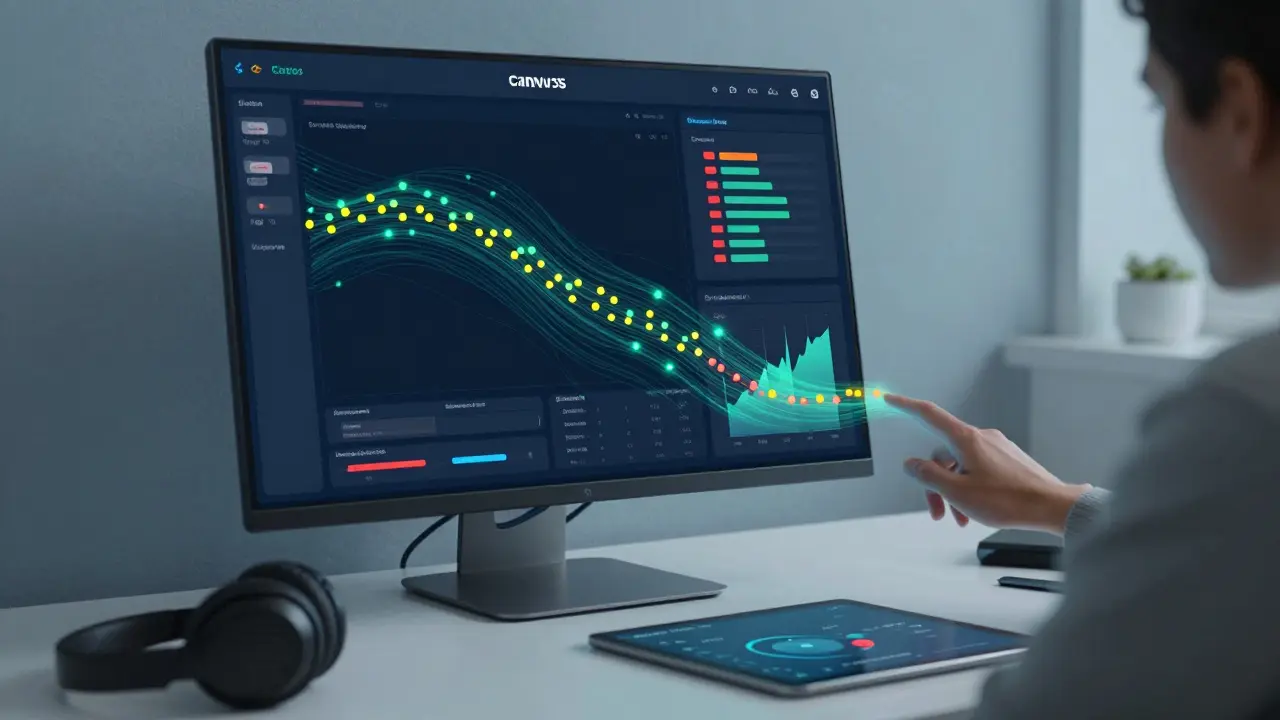
You don’t need to be a coder. You don’t need to know how to build an LMS from scratch. But you do need to understand what your platform can and can’t do. Most online educators rely on platforms like Canvas, Moodle, or Google Classroom. These tools have features most teachers ignore-automated feedback, adaptive quizzes, peer review workflows, analytics dashboards that show who’s falling behind.Take Canvas, for example. It lets you set up completion rules: a student can’t move to Module 3 until they’ve watched Module 2 and answered three reflection questions. That’s not control. That’s structure. It tells students what’s expected without you having to chase them down. Use it. Learn one new feature every two weeks. Don’t try to master everything at once. Start with the analytics tab. See who’s logging in, who’s watching videos, who’s not submitting. That data tells you more than any student evaluation ever could.
Build a learning community, not just a course
One of the biggest reasons students drop out of online courses? They feel alone. You’re not just a teacher. You’re the glue. The first week of any course should be about connection, not content. Have students introduce themselves with a 60-second video. Ask them to share one thing they’re proud of, one thing they’re nervous about. Respond to each one personally. Not with a generic “Great post!” but with something specific: “I loved how you mentioned your daughter’s science fair project-that’s exactly the kind of real-world connection we’ll use in Week 3.”Set up a weekly live Q&A, even if only 3 people show up. Record it. Make it optional. But make it real. Students who feel seen stick around. And they do better. Research from the University of Michigan shows that students in courses with regular, instructor-led community building are 37% more likely to complete their program. That’s not magic. That’s human connection.
Get certified-but choose wisely
There are dozens of online certificates for educators: Coursera, edX, TeachThought, the Online Learning Consortium (OLC). Don’t just pick the cheapest or the flashiest. Look for ones that are backed by universities or professional associations. The OLC’s Online Teaching Certificate is widely respected. It’s not free, but it’s practical. You’ll design a full online module, get feedback from real instructors, and walk away with something you can actually use.Another solid option: the University of British Columbia’s Digital Pedagogy Certificate. It’s focused on equity, accessibility, and inclusive design-exactly what modern online teaching needs. Avoid certificates that just teach you how to use Zoom. That’s not professional development. That’s tech support.
Learn from your students
The best professional development isn’t in a webinar. It’s in your inbox. At the end of each term, send a short, anonymous survey. Ask: What kept you engaged? What made you want to quit? What tool or activity helped you learn the most? Don’t just ask for ratings. Ask for stories.One teacher in New Zealand got this response: “I didn’t understand the reading until I heard my classmate explain it in the forum.” That changed her whole approach. She started requiring every student to post one peer explanation per module. The pass rate jumped 22%. That insight didn’t come from a training manual. It came from listening.
Join a peer network
You don’t have to do this alone. There are quiet but powerful communities of online educators-Facebook groups, Slack channels, Reddit threads. The Online Educators Collective on Slack has over 8,000 members. They share templates, troubleshoot tech issues, and vent about students who think “online” means “no deadlines.”Find one group that feels real. Not the ones with 10,000 members where no one replies. Find the small ones where people actually help. Post a question. Share a win. Ask for feedback on your syllabus. You’ll get better faster by talking to someone who’s been there than by reading another article.
Track your growth
Professional development isn’t a checkbox. It’s a habit. Keep a simple log. Every month, write down:- One new skill you tried
- One thing that didn’t work
- One student comment that stuck with you
After six months, look back. You’ll see patterns. Maybe you keep trying new tools but never change your feedback style. Or maybe you notice that students respond better when you use voice notes instead of written comments. That’s your data. That’s your growth.
What’s next? Pick one path
You don’t need to do everything at once. Choose one area to focus on over the next three months:- Improve accessibility: Learn how to caption videos, use alt text, and design for screen readers.
- Build better assessments: Replace multiple-choice quizzes with project-based tasks that show real understanding.
- Develop equity practices: Audit your course materials for cultural bias. Include voices from diverse backgrounds.
- Master asynchronous teaching: Learn how to design learning paths that work for students in different time zones.
Do one thing well. Then move to the next. Progress isn’t about being perfect. It’s about being consistent.
Why this matters
Online education isn’t going away. In fact, it’s growing. The global online learning market is expected to hit $400 billion by 2027. But the best teachers aren’t the ones with the fanciest platforms. They’re the ones who know how to connect, adapt, and listen. Your students aren’t just learning from your content. They’re learning from your commitment to get better. That’s the real professional development.Do I need a formal degree to advance as an online educator?
No. While some leadership roles may require a master’s, most professional growth comes from practical experience, targeted training, and peer feedback. Certificates from organizations like the Online Learning Consortium or universities like UBC carry more weight than generic online courses. Focus on skills you can apply immediately, not just credentials.
How much time should I spend on professional development each month?
One to two hours a week is enough to make real progress. That’s about 5-8 hours a month. Use it to try one new tool, read one article, or chat with a peer. Consistency beats intensity. You’ll see results faster by making small changes regularly than by cramming once a year.
What’s the biggest mistake online educators make when trying to grow?
Trying to do everything at once. You don’t need to master video editing, gamification, AI tools, and accessibility all in the same semester. Pick one area that’s holding you back-maybe feedback or student engagement-and improve that first. Mastery comes from focus, not fragmentation.
Are there free resources for online educator development?
Yes. The OLC offers free webinars and templates. YouTube has excellent tutorials on accessible design and asynchronous teaching. Edutopia and the Chronicle of Higher Education publish practical guides. Your institution may also have internal training-ask your department head. Free doesn’t mean low quality. It just means you have to be selective.
How do I know if my professional development is working?
Look at your student outcomes. Are more students completing the course? Are their final projects showing deeper understanding? Are you getting more positive feedback? If your course completion rate is up, your evaluations are better, and you feel less burned out-you’re on the right track. Numbers don’t lie.
Comments
Eric Etienne
Ugh, another one of these ‘online teaching is art’ essays. I’ve been doing this for 8 years and the only thing that matters is whether students pass or not. Stop overcomplicating it.
Dylan Rodriquez
What struck me most is how this post frames teaching not as content delivery but as human connection. That shift in mindset changes everything. It’s not about the platform, it’s about whether your students feel seen. That’s the real curriculum.
Amanda Ablan
I started using those 10-minute polls last semester and my dropout rate dropped by almost half. Seriously. Students don’t need more videos-they need to feel like they’re part of the conversation. Also, the UBC equity certificate? Life-changing. Worth every penny.
Meredith Howard
The emphasis on listening to student feedback is critical and often overlooked. Many institutions prioritize metrics over meaning. But real pedagogical growth emerges from humility and responsiveness. The data is not just numbers-it’s narrative. And narrative informs practice.
Yashwanth Gouravajjula
In India, many students join online courses because they can’t afford to move. Structure matters more than flashy tools. Your Canvas tip? Gold.
Kevin Hagerty
Wow another guru telling teachers they’re not good enough unless they watch 17 webinars a week. Newsflash: most of us are just trying to survive. Also why is everyone on Reddit suddenly a pedagogy expert?
Janiss McCamish
Try the weekly Q&A. Even if only 2 people show up. They’ll remember you showed up for them. That’s the magic. No fancy tech needed.
Richard H
Why are we letting foreigners dictate how American teachers should teach? We don’t need no UBC certificate to know how to run a classroom. Just sayin’.
Kendall Storey
Bro this is the most actionable guide I’ve read all year. The analytics tab? Game changer. I used to think I was being ‘present’ by posting daily. Turns out I was just spamming. Now I check who’s lagging and DM them. No fluff. Just care. My completion rate went from 58% to 82%. Simple.
Ashton Strong
I would like to express my sincere appreciation for the thoughtful and comprehensive nature of this post. The emphasis on incremental, sustainable growth over performative innovation is both pragmatic and deeply humane. Thank you for articulating what many of us feel but rarely articulate with such clarity.
Steven Hanton
One thing I’ve noticed is that the most effective online educators aren’t the ones with the most certifications-they’re the ones who consistently show up. Even when it’s hard. Even when no one replies. That quiet persistence is what builds trust. And trust is the foundation of learning.
Pamela Tanner
Correct punctuation and grammar are non-negotiable in educational materials. If your feedback is riddled with typos, students assume you don’t care. Clarity isn’t optional-it’s ethical.
Kristina Kalolo
I’ve been using the anonymous survey for two semesters. The results were surprising. Students didn’t care about the videos. They cared about the one comment I wrote back to their intro post. That’s it.
ravi kumar
My students in rural India don’t have good internet. So I send audio notes via WhatsApp. They listen while walking to school. It works. No LMS needed.
Megan Blakeman
OMG YES!! I just started doing the monthly log thing and I cried when I looked back at my first entry vs now… I’ve actually grown?? Like… real growth?? 😭 Thank you for this. I needed to be reminded I’m not just spinning my wheels.