

Have you ever tried to say a word that looks simple but sounds completely wrong? You know the spelling, you understand the grammar, yet when you speak, native listeners look confused. This happens because reading rules are different from speaking rules. In language courses, bridging this gap requires more than just listening to audio files. It demands precise pronunciation drills and a solid understanding of the International Phonetic Alphabet, commonly known as IPA. These tools transform vague imitation into accurate sound production.
Most learners rely on their native language’s sound system to interpret new words. If your first language doesn’t have a specific vowel sound found in English or French, your brain will automatically substitute it with the closest match. This creates an accent that can sometimes hinder clarity. Using the IPA provides a visual map for these sounds, while targeted drills build the muscle memory needed to produce them consistently.
Why Standard Spelling Fails Learners
English is notoriously difficult to read aloud if you don't already know how it's spoken. Take the letter 'a'. It sounds different in "cat," "car," "cake," and "about." Spanish and Finnish are much easier to read because they are phonetic; every letter corresponds to one sound. But even in those languages, regional accents change pronunciation significantly.
The International Phonetic Alphabet was created by linguists to solve this exact problem. Each symbol represents exactly one sound, regardless of the language. When you see the symbol /ʃ/, you know it’s the 'sh' sound in "ship". When you see /θ/, it’s the unvoiced 'th' in "think". There are no exceptions. This consistency allows learners to decode any word correctly without guessing.
For course designers, integrating IPA charts isn't about turning students into linguists. It’s about giving them a reference tool. Instead of saying "make the sound like in 'fish'", you can point to the symbol and explain the tongue position. This removes ambiguity and speeds up the learning process.
Understanding the Mechanics of Sound Production
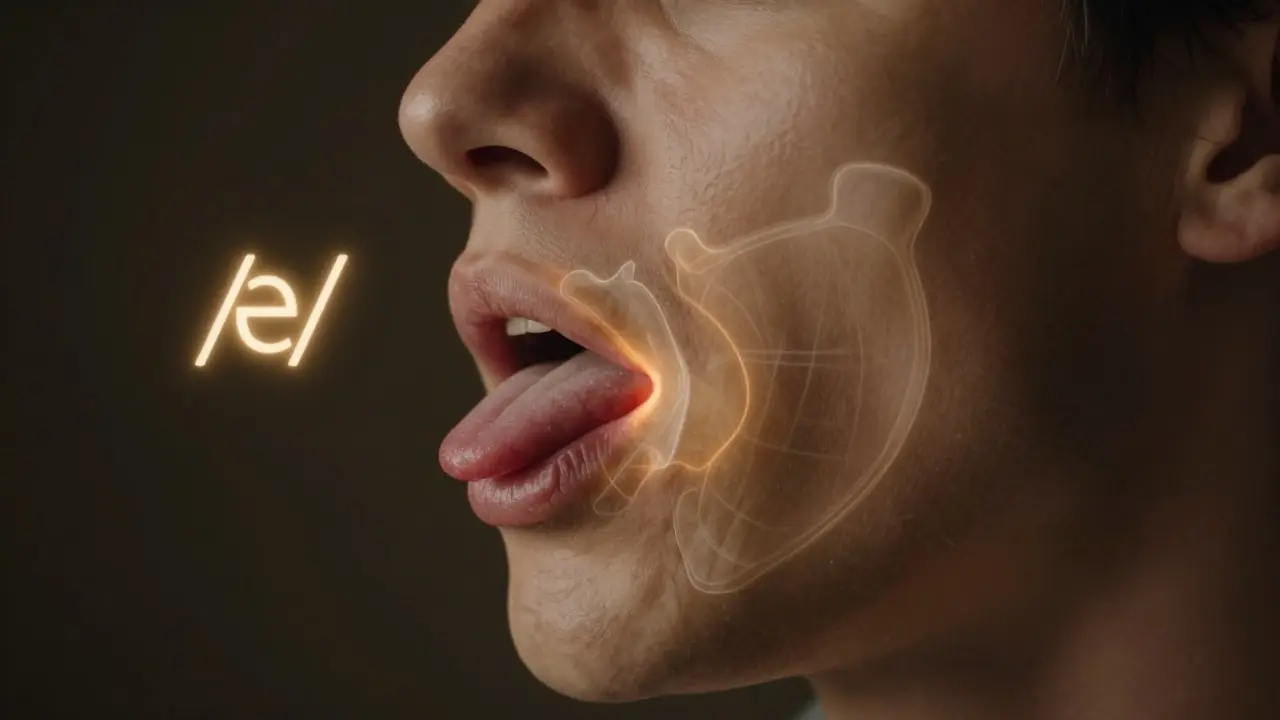
Pronunciation is physical. It involves the coordination of your lips, teeth, tongue, soft palate, and vocal cords. To master a new sound, you need to understand where these parts move. This is called articulatory phonetics.
- Voiceless vs. Voiced: Place your hand on your throat. Say "zzzz". Feel the vibration? That’s voiced. Now say "ssss". No vibration? That’s voiceless. Many learners struggle to distinguish between pairs like /s/ and /z/ or /f/ and /v/.
- Tongue Position: For the 'r' sound in American English, the tongue curls back slightly without touching the roof of the mouth. In British English, it might touch the alveolar ridge (the bump behind your upper teeth). Small differences create huge changes in perception.
- Lip Rounding: The difference between /i:/ (as in "see") and /u:/ (as in "too") relies heavily on lip shape. One requires spread lips, the other rounded lips.
When designing drills, start with isolated sounds. Have students repeat the target phoneme twenty times. Then, pair it with vowels. Finally, place it in syllables and words. This gradual increase in complexity prevents cognitive overload.
Designing Effective Pronunciation Drills
A drill is not just repetition. Mindless repeating reinforces bad habits. Effective drills require active monitoring and correction. Here are three types of drills that work well in both online and classroom settings.
- Minimal Pair Drills: Minimal pairs are words that differ by only one sound, such as "bat" and "pat" or "sheet" and "shit". Students listen to one word and must identify which one they heard. Then, they practice saying both. This trains the ear to detect subtle differences before the mouth can produce them accurately.
- Shadowing Technique: This involves listening to a native speaker and repeating what they say almost simultaneously, like a shadow. The goal isn't just to copy the words but to mimic the rhythm, intonation, and stress patterns. Use short clips from podcasts or news broadcasts. Pause after every sentence to let the student repeat.
- Backchaining: Long words are hard because we tend to focus on the beginning and rush the end. Backchaining starts from the last syllable. For example, for "comfortable", you say "-table", then "-fortable", then "com-for-table". This ensures the ending sounds are clear and stressed correctly.
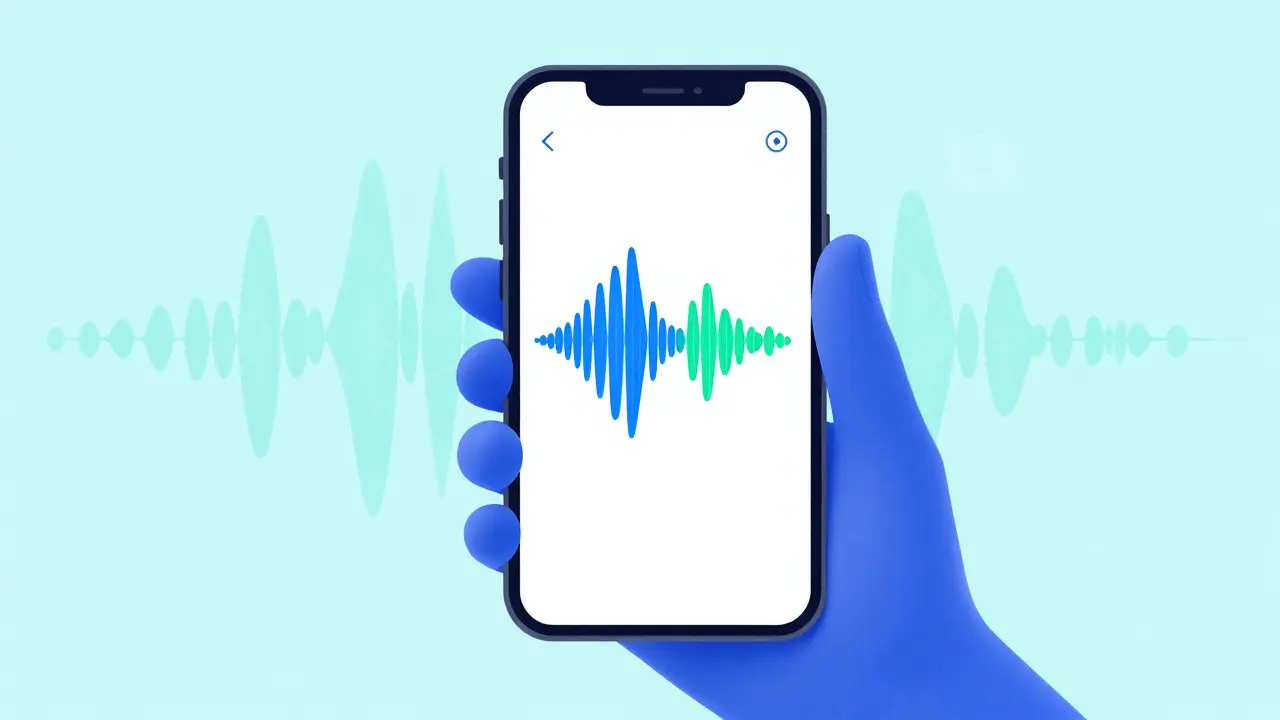
In digital courses, use interactive audio players that allow looping specific segments. Visual feedback tools, such as waveform displays, can also help students see if their volume and duration match the model.
Integrating IPA into Digital Learning Platforms
Adding IPA to e-learning modules doesn't mean cluttering the screen with symbols. It means using them strategically. When a vocabulary word appears, include its IPA transcription next to it. Make the IPA clickable so students can hear the correct pronunciation instantly.
| IPA Symbol | Sound Description | Example Word |
|---|---|---|
| /æ/ | Short 'a' as in cat | Cat, Map |
| /ɪ/ | Short 'i' as in sit | Sit, Bit |
| /ʃ/ | 'Sh' sound | Ship, Shoe |
| /θ/ | Unvoiced 'th' | Think, Path |
| /ð/ | Voiced 'th' | This, That |
Use pop-up tooltips. When a user hovers over the IPA symbol, show a small animation of mouth positions or a video snippet. This contextualizes the abstract symbol with concrete physical action. For advanced courses, introduce stress marks (ˈ) and secondary stress marks (ˌ). Stress determines the rhythm of English sentences. Misplaced stress makes speech sound robotic or unclear.
Addressing Common Pitfalls in Accent Reduction
Many learners fear losing their identity by removing their accent. Clarify that accent reduction is about intelligibility, not erasure. The goal is to be understood easily by a global audience, not to sound like a specific native speaker from London or New York.
A common mistake is focusing too much on individual letters instead of whole words. English has many consonant clusters, like "str" in "street" or "pl" in "play". Non-native speakers often insert a vowel sound between these consonants, saying "es-treet". Drills should specifically target these clusters. Practice saying "str" quickly and smoothly without breaking the flow.
Another issue is intonation. English is a stress-timed language. We stretch out stressed syllables and rush through unstressed ones. Content words (nouns, verbs) usually carry stress. Function words (prepositions, articles) are reduced. If every syllable has equal weight, the listener gets tired. Use color-coding in transcripts: highlight stressed words in red and unstressed words in gray. Ask students to clap on the red words while reading.

Technology Tools for Self-Correction
Self-study is effective when paired with immediate feedback. AI-powered speech recognition tools can now analyze pronunciation accuracy. Apps like ELSA Speak or Speechling provide scores based on how closely your audio matches a native model. They break down errors by phoneme, telling you exactly which sound was off.
However, technology has limits. An app might tell you your 'r' was wrong, but it won't always explain *why*. Is your tongue too far forward? Are your lips too tight? Combine tech tools with instructional videos that demonstrate mouth mechanics. Record yourself speaking and compare the waveform to a native speaker’s recording. Look for differences in pitch contours and amplitude.
Also, consider asynchronous peer review. In online courses, have students record short dialogues and swap them with partners. Listening to others’ mistakes helps you recognize your own. Peer feedback builds a community of practice where everyone is focused on improvement rather than judgment.
Creating a Sustainable Practice Routine
Pronunciation improvement takes time. Daily practice is better than weekly marathons. Suggest a ten-minute daily routine to your students:
- Minutes 1-3: Warm-up with tongue twisters targeting specific problem sounds.
- Minutes 4-7: Shadowing exercise with a short audio clip.
- Minutes 8-10: Record yourself reading a paragraph and self-evaluate against the IPA guide.
Consistency builds neural pathways. Over time, the conscious effort to position the tongue correctly becomes automatic. Encourage students to keep a journal of their progress. Note which sounds feel difficult and revisit those drills regularly.
Finally, remember that context matters. A word pronounced in isolation might sound different in a fast-paced conversation. Linking occurs when the final consonant of one word blends into the initial vowel of the next. "Pick it up" sounds like "pi-ki-tup". Teach connected speech patterns alongside individual phonemes to ensure natural-sounding fluency.
Do I need to learn all IPA symbols to improve my pronunciation?
No, you don't need to memorize the entire chart at once. Focus on the symbols for sounds that do not exist in your native language. Start with the most frequent phonemes in the target language, such as vowels and common consonant clusters. Gradually expand your knowledge as you encounter new words.
What is the best way to practice minimal pairs?
Start by listening to both words repeatedly until you can distinguish them clearly. Then, try to say them aloud while looking in a mirror to check your mouth position. Record yourself and compare the audio to a native speaker. Repeat this cycle until the distinction feels natural.
Can apps replace human teachers for pronunciation training?
Apps are excellent for consistent practice and immediate feedback, but they lack the nuance of human interaction. A teacher can observe subtle physical tensions or misarticulations that microphones miss. Use apps for daily drills and schedule occasional sessions with a tutor for personalized correction.
How long does it take to fix a persistent pronunciation error?
It varies depending on the learner and the specific sound. Simple substitutions might take a few weeks of daily practice. Deeply ingrained habits, especially those involving complex tongue movements, can take months. Consistency is key; short, frequent sessions yield better results than infrequent long ones.
Is shadowing suitable for beginners?
Yes, but beginners should use slower, clearer audio sources. Start with single sentences rather than full paragraphs. Ensure you understand the meaning of the text before shadowing to avoid mindless repetition. As you gain confidence, increase the speed and complexity of the material.
Comments
Jacob Baby Official
the whole premise of this article is fundamentally flawed because it assumes that the ipa is a universal solution when in reality it is just another layer of academic gatekeeping designed to make language learning unnecessarily complex for the average person who just wants to communicate effectively without memorizing symbols that look like alien hieroglyphics
Anthony Miller
you are missing the point entirely and your arrogance is showing because you fail to understand that precision matters more than convenience so stop complaining about complexity and start doing the work required to master the sounds properly instead of relying on lazy approximations that native speakers have to decode constantly
john randall
i guess both of you have valid points but i think most people just want to be understood rather than perfectly articulated so maybe finding a middle ground where we use these tools as aids rather than strict rules would help everyone feel less stressed about their accent while still improving clarity over time
Jeff Falcon
oh man, i totally agree with john here because i spent years trying to perfect my pronunciation using every single symbol in the book and it was exhausting until i realized that shadowing and listening to natural speech patterns helped me way more than staring at charts all day long so yeah, balance is key, folks!
Alyson Karson
yeah exactly!! i used to stress out so much about getting every little sound right but then i started recording myself and comparing it to native speakers and noticed that intonation matters way more than individual phonemes sometimes so dont beat urself up if u cant pronounce th perfectly yet just keep practicing daily!
Chris Neal
actually, the reason shadowing works better for some people is due to mirror neurons firing during simultaneous auditory and motor processing which creates stronger neural pathways than visual analysis of ipa symbols does since visual processing engages different cognitive resources that may not transfer efficiently to motor skills required for articulation
Kyle Ware
that is an interesting perspective chris and it highlights why personalized approaches are necessary because what works for one learner might not work for another so combining multiple methods like ipa for tricky sounds and shadowing for rhythm seems like the most effective strategy overall
Vishnu Vardhan Reddy M S
ha! so you're telling me i should stop mocking people who obsess over ipa charts? okay fine but seriously though i find it hilarious how americans get so defensive about their accents when half the world speaks english better than they do anyway but sure lets pretend that mastering the schwa sound makes you superior to everyone else
Iva Grekova
haha vishnu always keeping us grounded with his sarcasm but hey at least hes engaging with the topic even if its through mockery so thanks for the laugh and maybe a bit of truth there too about not taking ourselves too seriously in the learning process
Onyinyechi Nwosu
i just find it funny how everyone gets so heated about pronunciation when communication is really about connection and understanding each other regardless of accent or minor errors so let's try to be kinder to ourselves and others in this journey
michelle veluz
of course they do!!! because the global elite want to control language and enforce their own standards on the rest of us poor souls who just want to speak freely without being judged by snobby linguists who think they know better than everyone else!!!