


Buying your first home or managing a rental portfolio is exciting, but the paperwork can be overwhelming. If you want to make this career path official, you need more than just good instincts; you need the right credentials. Real estate and property management licensing courses are structured educational programs that prepare candidates for state-issued licenses required to legally sell, buy, or manage real property. These programs vary significantly by location, duration, and delivery method, making it easy to feel lost in the sea of options.
Whether you are a complete beginner looking to enter the industry or an experienced manager seeking to formalize your skills, understanding the landscape of these courses is your first step toward professional legitimacy. This guide breaks down exactly what these courses cover, how long they take, and how to choose the one that fits your specific career goals and budget.
Key Takeaways
- Licensing requirements differ by state and country, so always verify local regulations before enrolling.
- Most pre-license courses require between 60 and 90 hours of instruction, which can often be completed online at your own pace.
- There is a distinct difference between a salesperson license (for agents) and a broker license (for independent business owners).
- Continuing education is mandatory after licensure to keep your certification active, typically every two years.
- Online platforms offer flexibility, but accredited institutions provide stronger networking opportunities and employer recognition.
Understanding the Difference Between Sales and Management Licenses
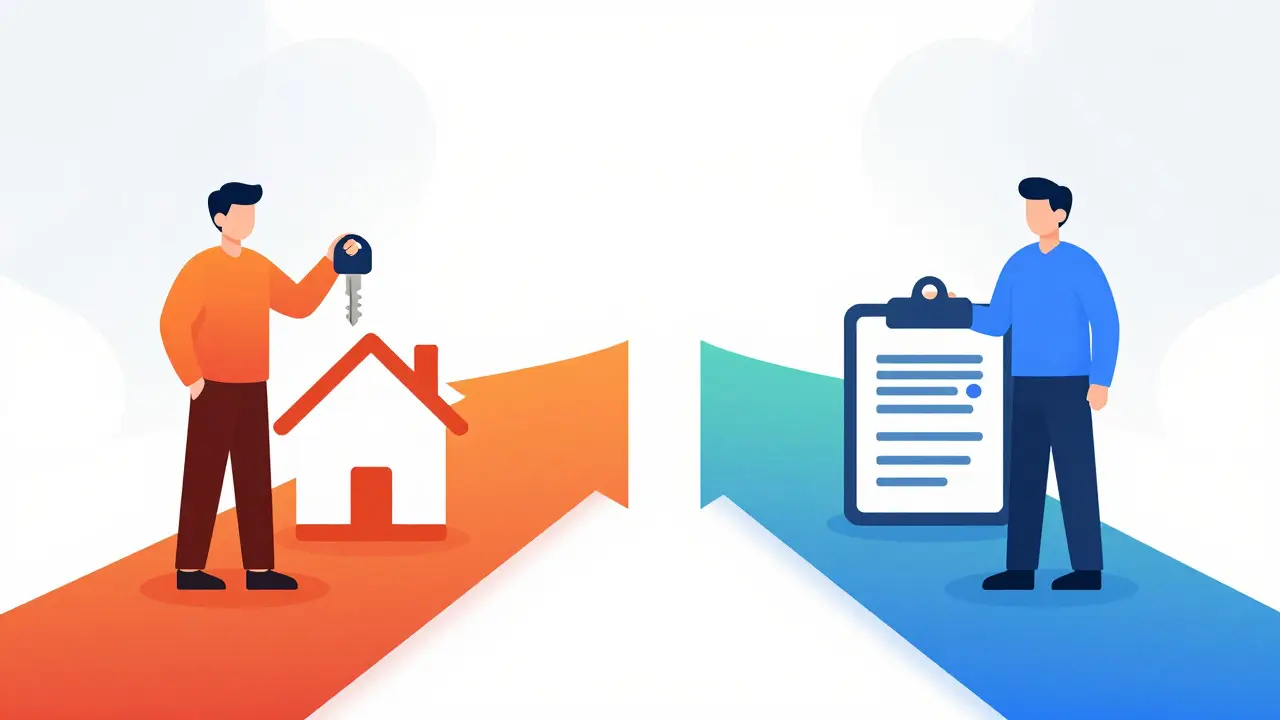
One of the biggest mistakes new applicants make is assuming all real estate licenses are the same. In reality, the curriculum and legal scope change depending on whether you intend to sell properties or manage them for clients.
A standard Real Estate Salesperson License allows you to represent buyers and sellers under the supervision of a licensed broker. The coursework here focuses heavily on contract law, ethics, fair housing laws, and marketing strategies. You will spend a lot of time learning how to calculate commissions, draft purchase agreements, and navigate closing processes.
On the other hand, a Property Management Certification or specialized license focuses on the operational side of real estate. This involves tenant screening, lease enforcement, maintenance coordination, and financial reporting for landlords. While some states allow property managers to operate under a general real estate license, others require specific additional training or a separate designation. Knowing which path you are taking determines which course modules you must prioritize.
The Core Curriculum: What You Will Actually Study
You might expect these courses to be dry lectures full of legalese, but modern curricula are designed to be practical. Most Pre-license Education Programs are divided into several core units. Here is what you can typically expect to cover:
- Principles of Real Estate: This covers the basics of land ownership, easements, liens, and the different types of deeds. It sets the foundation for everything else.
- Federal and State Law: You will study the Fair Housing Act, the Residential Landlord and Tenant Act, and local zoning ordinances. Mistakes here can lead to lawsuits, so this section is rigorous.
- Finance and Appraisal: Learn how mortgages work, how to read a Comparative Market Analysis (CMA), and how to calculate ROI (Return on Investment) for investment properties.
- Ethics and Professional Standards: Governed by bodies like the National Association of Realtors (NAR), this section teaches you the Code of Ethics that protects both consumers and professionals.
- Transaction Management: Step-by-step guides on handling offers, counter-offers, inspections, and closing escrow.
For those focusing on property management, expect additional modules on Lease Administration and Tenant Relations. These sections teach conflict resolution and legal eviction procedures, which are critical skills for keeping a portfolio profitable and hassle-free.
Online vs. Classroom: Choosing Your Learning Format
The pandemic accelerated the shift to digital learning, and now most Online Real Estate Courses are fully accredited. This is great news if you have a full-time job or family commitments. Online platforms allow you to pause videos, download transcripts, and retake quizzes until you pass.
However, classroom-based instruction still has its merits. If you thrive on interaction, face-to-face Q&A sessions with instructors can clarify complex legal concepts faster. Many community colleges and local real estate boards offer evening classes that cater to working professionals.
| Feature | Online Course | Classroom Instruction |
|---|---|---|
| Cost | $150 - $300 | $400 - $800 |
| Duration | Self-paced (2-6 weeks) | Fixed schedule (4-8 weeks) |
| Flexibility | High (learn anytime) | Low (fixed times) |
| Networking | Limited (forums only) | Strong (in-person peers) |
| Best For | Busy professionals, self-starters | Visual learners, extroverts |
If you choose online, look for platforms that offer live webinars or access to mentors. Purely automated video courses can feel isolating, and having a human to ask questions when you get stuck on tax implications makes a huge difference in retention.
How Long Does It Take to Get Licensed?
Time is money, especially when you are trying to start earning. The total timeline from enrollment to holding a license usually falls between 4 and 12 weeks, depending on your speed and the state’s processing times.
First, you must complete the required education hours. In many US states, this is 60 hours for a salesperson license. If you study 4 hours a day, you can finish the coursework in about two weeks. However, don’t rush the final exam. Most states require a score of 75% or higher to pass the state test. Taking practice exams is crucial; aim for at least three mock tests before sitting for the real thing.
After passing the national and state portions of the exam, you must apply for the license. This involves background checks and fingerprinting, which can add another 2 to 4 weeks. During this waiting period, you can start networking with local brokerages to find a sponsoring firm, as you cannot operate independently without one.

Costs and Hidden Fees to Watch Out For
The sticker price of the course is only part of the equation. To avoid budget shocks, consider the full cost stack:
- Course Tuition: As noted, ranges from $150 to $800.
- State Exam Fee: Typically $50 to $150 per attempt. Retakes cost the same, so budget for a potential second try.
- License Application Fee: Usually $100 to $300, paid directly to the state regulatory body.
- Brokerage Commission Split: Once licensed, you won’t pay a fee, but you will share your earnings with your brokerage. Expect splits ranging from 50/50 to 70/30 in your favor.
- Continuing Education: Every 1-2 years, you must take 12-24 hours of CEU (Continuing Education Units). These courses cost $100-$300 each cycle.
Some courses bundle the exam prep materials, while others charge extra for the testing voucher. Always ask if the price includes the application assistance. A good provider will walk you through the paperwork, saving you hours of confusion with state portals.
Choosing the Right Provider: Accreditation Matters
Not all providers are created equal. Before paying, check if the course is approved by your state’s Department of Real Estate or equivalent regulatory board. An unaccredited course might save you $50, but if the state doesn’t recognize the hours, you’ll have to retake the entire program.
Look for providers with high student pass rates. If a company claims a 95% pass rate, ask how they measure it. Reputable schools publish data from the last two years. Also, check reviews on independent sites, not just the provider’s website. Look for comments about customer support responsiveness-do they answer emails quickly? Do they help if you fail a quiz?
For property management specifically, consider getting certified by a professional body like the Institute of Real Estate Management (IREM). While not always legally required, an IREM certification signals to landlords that you understand the business side of real estate, potentially allowing you to command higher management fees.
Next Steps for Your Career Launch
Once you have your license, the race is on to build your book of business. Start by joining local real estate associations. Attend open houses hosted by established agents to observe their techniques. For property managers, reach out to local landlords who currently manage their own units. Offer a free consultation on their current leasing process. Showing up prepared with knowledge from your licensing course demonstrates immediate value.
Remember, the license gets you in the door, but consistency and client service keep you there. Use the foundational knowledge from your Licensing Courses as a reference guide during your first year. Keep a notebook of tricky questions that arise in real transactions and cross-reference them with your course materials. This habit will sharpen your expertise far faster than any additional certificate could.
Do I need a degree to take real estate licensing courses?
No, a college degree is not required for entry-level real estate licenses in most jurisdictions. You typically need to be at least 18 years old, have a high school diploma or GED, and possess a clean criminal record. However, some advanced broker roles or corporate positions may prefer candidates with degrees in business or finance.
Can I take my licensing exam immediately after finishing the course?
Yes, once you complete the required education hours and receive your certificate of completion, you are eligible to schedule the state exam. There is no waiting period mandated by most states, though you should wait until you feel confident in your material. Rushing the exam without adequate practice increases the risk of failure and extra costs.
Is property management a better career path than sales agency?
It depends on your personality and financial goals. Sales agency offers higher income potential with no cap, but income is variable and commission-based. Property management provides more stable, recurring monthly income but requires more administrative work and lower hourly rates. Many professionals hold both licenses to diversify their income streams.
How often do I need to renew my real estate license?
Most states require renewal every two years. To renew, you must complete a specific number of continuing education hours (usually 12-24) and pay a renewal fee. Some states also require proof of error and omission insurance. Set calendar reminders six months before your expiration date to avoid lapses.
What happens if I fail the state licensing exam?
Failing the exam does not disqualify you permanently. You can retake the exam after a waiting period, which varies by state (often 24 hours to 30 days). You will need to pay the exam fee again. Analyze your score report to identify weak areas and focus your study on those topics before retaking the test.
Comments
Alyson Karson
OMG this guide is a lifesaver!! I was so confused about the whole licensing thing and felt like i was drowning in paperwork. The part about online vs classroom is super helpful because i work full time so flexibility is key for me. Also loved that they broke down the costs so you dont get surprised by hidden fees later. Its motivating to see that you can actually do this in like 4-12 weeks if you stay on track. Keep pushing through, future agents! You got this!
Chris Neal
The article glosses over the fact that state laws vary wildly. For instance, in Texas, you need 180 hours of pre-license education, not the 60 mentioned as a general average. This is a critical distinction for anyone reading this who lives outside of states with lighter requirements. Don't just assume the national standard applies everywhere; check your specific state's real estate commission website before buying any course.
Vishnu Vardhan Reddy M S
Oh, absolutely! And let's not forget the networking aspect. Online is great for speed, but if you want to actually meet people who might become clients or colleagues, those evening classes are gold. I took mine in person and ended up with three job leads just from chatting with classmates. So yeah, 'limited networking' is an understatement, it's basically non-existent if you go solo online. But hey, if you're a hermit, then go ahead, enjoy your isolation!
Chandan Singh
While the guide is decent, it misses the nuance of property management certifications like IREM. Many landlords don't care about your state license alone; they look for specialized designations. A generic salesperson license doesn't automatically make you a qualified property manager in many eyes. You need to understand lease enforcement and maintenance coordination deeply, which isn't always covered thoroughly in basic pre-license courses. It's a different beast entirely.
Brannen Hall
Great post. Very informative. Nothing new though. We all know licenses are required. Thanks for telling us what we already knew. Next time maybe tell us something we don't know? Like how to actually close a deal without crying? That would be more useful than this basic overview.
tiffany King
Don't let the negativity get you down! Every expert started somewhere. The guide is a perfect starting point for beginners. It's nice to have all the info in one place instead of googling random forums. I'm currently studying for my exam and this helped me organize my study plan. You've got this! The community here is supportive and ready to help you succeed. Just keep at it!
Brenna Gonedrman
I love the colorful breakdown of costs. It's like a financial roadmap. The section on hidden fees is particularly smart because nobody talks about the brokerage split until after you're signed. It's a sneaky little trap that catches a lot of newbies off guard. Good to know what to expect before you dive in. Makes the whole process feel less scary and more manageable. Thanks for laying it all out so clearly.
Courtney Wagstaff
You guys are missing the bigger picture. Real estate isn't just about passing a test; it's about understanding human psychology. The license gets you in the door, sure, but if you can't read a room, you'll fail. The curriculum focuses too much on law and math, not enough on soft skills. But hey, maybe that's why pass rates are high? Because it's easy? Anyway, food for thought. The world is changing, and so should these courses.
Elisabeth Ballet
Love this perspective! It’s true that soft skills are crucial. I’ve seen plenty of licensed agents who struggle because they can’t handle difficult clients. But don’t throw the baby out with the bathwater. The foundational knowledge is still necessary. You need to know the rules before you can bend them. Mix both: study hard for the license, but also practice your communication skills. You’re building a career, not just passing an exam. Stay focused and keep learning!
Joanna Mucha
In a sense, the entire concept of licensure is a modern construct designed to regulate the market. Before these formalized courses, real estate was handled by guilds and informal networks. Now we have standardized tests and bureaucratic hurdles. It’s fascinating how society has chosen to quantify trust through paper credentials rather than reputation. But perhaps that is the price of progress? Or is it merely a barrier to entry for the uninitiated? Let us ponder these existential questions while we wait for our background checks to clear.
Kim Edwards
DID YOU KNOW THAT THE EXAM IS ACTUALLY HARDER THAN IT LOOKS?? I failed my first attempt because I rushed. DO NOT RUSH. Take the mock tests. Seriously. I cried in the testing center. It was dramatic. But I passed the second time. So if you're scared, join the club. We're all in this together. Just breathe and focus. You will conquer this mountain. Let's gooo!