

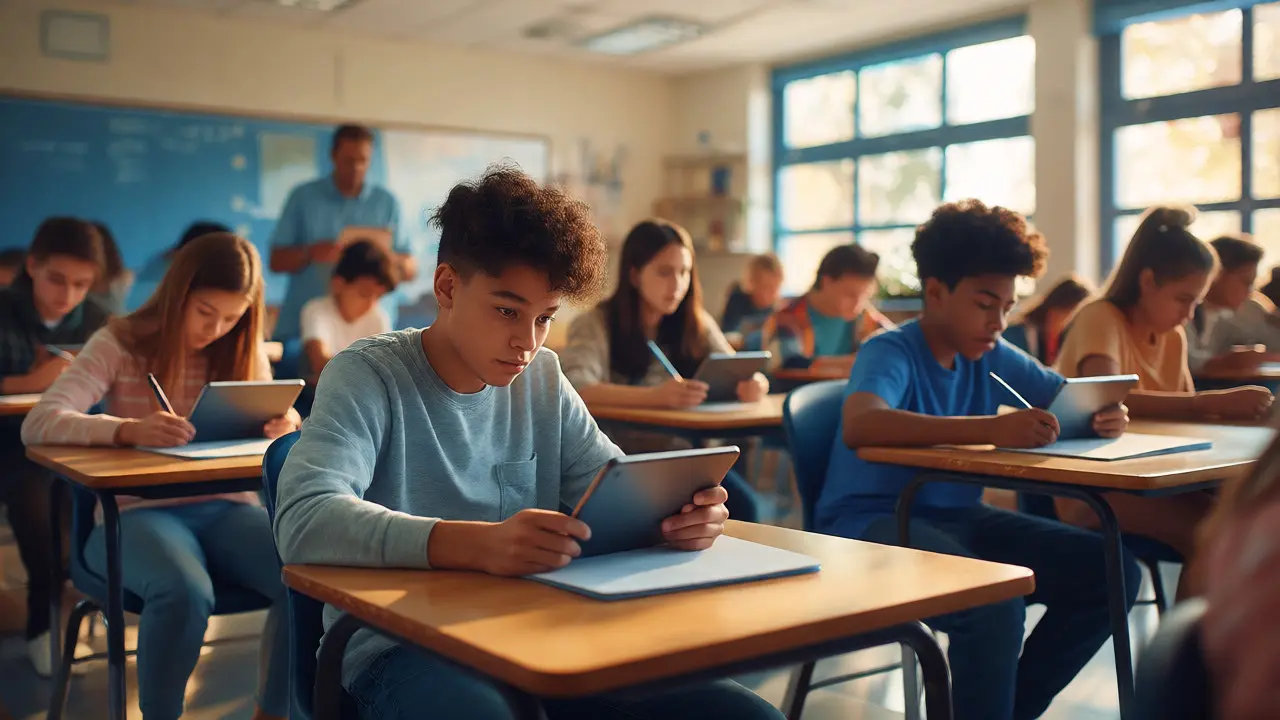
Imagine walking into a classroom where every single student is working on exactly what they need, right when they need it. No one is bored because the material is too easy. No one is overwhelmed because it’s too hard. This isn’t a utopian dream from a sci-fi movie; it’s the promise of real-time learner modeling, a dynamic process that continuously updates a digital representation of a student's knowledge state to tailor instruction instantly. If you’ve ever felt like traditional education treats students as identical widgets on an assembly line, this tech is your escape route.
But how does it actually work? And more importantly, does it actually help people learn faster and retain information better? Let’s break down the mechanics behind the magic, without getting lost in academic jargon.
What Is Real-Time Learner Modeling?
At its core, real-time learner modeling is about building a live profile of what a student knows and doesn’t know. Unlike old-school testing, where you take a final exam and get a grade weeks later, this system watches you as you learn. It tracks every click, every hesitation, every wrong answer, and even how long you stare at a question before responding.
This model isn't static. It changes with every interaction. If you struggle with quadratic equations but breeze through linear ones, the model adjusts. It shifts the difficulty curve specifically for you. This creates a feedback loop: the system presents content, you interact with it, the model updates, and the next piece of content is chosen based on that update. It’s a conversation between the software and your brain.
| Feature | Traditional Assessment | Real-Time Learner Modeling |
|---|---|---|
| Data Collection | Periodic (quizzes, finals) | Continuous (every click, pause, error) |
| Feedback Loop | Delayed (days or weeks) | Instantaneous (milliseconds) |
| Personalization | Low (one-size-fits-all curriculum) | High (individualized learning paths) |
| Teacher Role | Lecturer and grader | Facilitator and mentor |
The Tech Stack Behind the Curtain
You might be wondering what powers this level of responsiveness. It’s not just simple algorithms checking if an answer is A, B, C, or D. It involves a mix of sophisticated technologies working in harmony.
First, there’s Bayesian Knowledge Tracing (BKT). A statistical method used to model a student's proficiency in a specific skill by estimating the probability that they have mastered it. Think of BKT as a detective trying to figure out if you really understand fractions or if you’re just guessing. Every time you answer correctly, the probability goes up. Every time you slip up, it goes down. It’s probabilistic, not binary.
Then there are deep learning models, often using Recurrent Neural Networks (RNNs) or Transformers. These handle complex sequences of behavior. They can detect patterns that simpler stats miss, like noticing that you always make mistakes after skipping three questions in a row. This suggests fatigue or confusion rather than lack of knowledge.
Finally, we have the recommendation engines. These are similar to what Netflix uses to suggest movies. But instead of "Because you watched Inception," it’s "Because you struggled with verb conjugations, try this interactive grammar game." The goal is to keep you in the "zone"-not too easy, not too hard.
Why Static Profiles Fail Students
For years, ed-tech companies tried to use static profiles. You’d take a diagnostic test at the start of the year, and the system would lock you into a path. Sounds logical, right? Wrong. Humans don’t learn in straight lines. We forget things. We have bad days. We suddenly grasp a concept after struggling for weeks.
A static profile assumes your knowledge state is fixed at the moment of assessment. Real-time modeling acknowledges volatility. For example, a student might ace a quiz on historical dates on Monday but fail the same quiz on Tuesday because they didn’t sleep well. A real-time model catches this variance. It doesn’t label the student as "bad at history"; it recognizes a temporary dip in performance and adjusts the scaffolding accordingly.
This distinction matters because labeling students early can create self-fulfilling prophecies. If a system decides you’re "struggling" based on one bad week, it might lower expectations too much. Real-time modeling keeps the bar flexible, challenging you when you’re ready and supporting you when you’re not.
Implementing Adaptive Learning in Classrooms
So, how do schools actually use this? It’s rarely a case of replacing teachers with robots. Instead, it’s about augmenting human insight with machine precision.
- Differentiated Instruction: Teachers see dashboards showing which concepts the whole class missed versus which individual students are stuck. This saves hours of grading and allows for targeted small-group interventions.
- Just-in-Time Remediation: If a student fails a prerequisite skill, the system automatically inserts a micro-lesson to fix that gap before moving forward. No more building castles on shaky foundations.
- Engagement Tracking: The model detects disengagement. If a student stops interacting or clicks randomly, the system can prompt them with a different type of activity, like a video instead of text, to re-spark interest.
Consider a math platform like Khan Academy or DreamBox. When you miss a problem, you don’t just see "Incorrect." You see a hint, then a worked example, then a similar practice problem. The sequence depends entirely on your previous errors. If you made a calculation error, you get another calculation problem. If you misunderstood the concept, you get a conceptual explanation. That nuance comes from the model distinguishing between types of mistakes.
Challenges and Ethical Considerations
It’s not all smooth sailing. There are significant hurdles to overcome before this becomes standard everywhere.
Data privacy is the big elephant in the room. To build accurate models, systems need massive amounts of data. Who owns that data? Can advertisers buy it? Parents are rightly concerned about tracking their children’s cognitive patterns. Regulations like GDPR in Europe and FERPA in the US offer some protection, but enforcement varies. Schools must be transparent about what data is collected and how it’s stored.
Another issue is algorithmic bias. If the training data for the model mostly comes from high-performing students in wealthy districts, the model might misinterpret the behaviors of students from different backgrounds. For instance, a student who takes longer to read a question due to language barriers might be flagged as "slow" rather than "bilingual." Developers need to audit these models constantly to ensure fairness.
There’s also the risk of over-personalization. If a student only ever sees content tailored to their current level, do they ever get challenged outside their comfort zone? Some educators worry that adaptive systems create echo chambers of learning, preventing students from experiencing the productive struggle that comes with tackling something slightly out of reach.
The Future of Personalized Education
We are moving toward multimodal learner modeling. Right now, most systems track clicks and answers. Soon, they’ll track eye movement via webcams, voice tone during oral responses, and even biometric stress levels via wearables. Imagine a system that notices your heart rate spiking during a test and offers a breathing exercise before continuing.
Integration with Large Language Models (LLMs) is another frontier. Instead of pre-written hints, an LLM could generate custom explanations based on the specific error pattern detected by the model. "You seem to be confusing velocity with speed. Here’s a real-world analogy involving cars..." This level of contextual relevance was impossible five years ago.
Ultimately, real-time learner modeling isn’t about removing the human element. It’s about freeing teachers from administrative drudgery so they can focus on mentoring, creativity, and emotional support. The computer handles the logistics of knowledge transfer; the teacher handles the art of inspiration.
Is real-time learner modeling expensive for schools?
Costs vary widely. While initial setup for advanced AI-driven platforms can be high, many cloud-based solutions operate on subscription models that scale with usage. Over time, savings from reduced remediation costs and improved graduation rates often offset the investment. However, smaller rural schools may face budget constraints compared to larger urban districts.
Can real-time learner modeling replace teachers?
No. The technology excels at delivering content and assessing factual knowledge, but it lacks the empathy, social intuition, and motivational skills of a human educator. Teachers interpret context, manage classroom dynamics, and provide emotional support that algorithms cannot replicate. The ideal scenario is a hybrid model where tech handles personalization and teachers handle mentorship.
How accurate are these models?
Accuracy improves with volume and variety of data. Early-stage models might have higher error rates, especially for niche subjects or diverse learner populations. As the system gathers more interactions, its predictions become more reliable. However, no model is perfect; they are probabilistic tools, not absolute truths, and should be used alongside human judgment.
Does it work for all age groups?
Yes, but the interface and complexity must match the developmental stage. For young children, modeling might rely heavily on visual cues and gamification metrics rather than complex textual analysis. For adults, particularly in corporate training, the models can incorporate professional competency frameworks. The underlying logic remains similar, but the data inputs differ.
What happens if the model makes a mistake?
Errors happen. If a model incorrectly labels a student as struggling, it might present easier content, leading to boredom. Most modern systems include override mechanisms allowing teachers or students to flag incorrect assessments. Additionally, continuous learning algorithms self-correct over time as new data contradicts previous assumptions.
Comments
Lauren Martin
This entire premise is fundamentally flawed because it ignores the stochastic nature of human cognition. You are conflating Bayesian Knowledge Tracing with actual pedagogical efficacy, which is a massive logical leap. The article suggests that RNNs can detect fatigue versus confusion, but without multimodal biometric integration, that is pure speculation. It’s essentially overfitting to clickstream data and calling it intelligence. Until we have validated longitudinal studies showing improved retention metrics against control groups, this is just expensive A/B testing for ed-tech VCs.
evelyn starcher
Finally someone said it!! 🇺🇸 We don't need some robot telling our kids they're "struggling" based on an algorithm that doesn't understand American grit. This tech sounds like another way to spy on our children's minds. I'm sick of foreign concepts being shoved into our schools. Keep our education system strong and independent! 💪
Ian Mason-Laurence
While the skepticism regarding current implementation is warranted, one must acknowledge that BKT has been in academic literature since Corbett and Anderson (1995). The transition from static profiles to dynamic modeling is not new; however, the computational power required for real-time inference at scale was previously prohibitive. The distinction between 'guessing' and 'lack of knowledge' is indeed probabilistic, but modern deep learning approaches do offer higher fidelity than traditional logistic regression models used in early systems. It is a matter of degree, not kind.
Tommy Cahyadi
Oh great, another tech bro solution to fix what teachers were already doing by hand. Cool. Really cool. Just let me know when the AI learns how to handle a kid having a bad day because their dog died, yeah? Can't wait for my subscription renewal fee to go up while the quality stays the same. 🙄
Anthony .
I think you're missing the nuance here, friend. 🌟 It's not about replacing the teacher, it's about lifting the administrative weight so they can be more present. Think of it as a co-pilot, not the pilot. ✈️ When the system handles the rote repetition and immediate feedback, the human mentor has space for creativity and empathy. That's the sweet spot. 🧠❤️ Let's aim for augmentation, not automation.
Marisa Marroquin
The prose is undeniably seductive, weaving a tapestry of technological promise that shimmers with potential yet remains tethered to the gritty reality of underfunded school districts. One cannot help but marvel at the elegance of the proposed feedback loops, even as one laments the sheer audacity of assuming universal access to high-speed infrastructure and digital literacy among all socioeconomic strata. It is a beautiful dream, certainly, but dreams do not pay the electricity bills for the server farms processing these billions of micro-interactions.
Liam Whelan
honestly tho i feel like this stuff is gonna mess with kids heads more then help. if the computer says im bad at math bc i clicked wrong once, im gonna believe it. humans need grace periods. computers dont get tired or hungry. its kinda scary actually. :(
Elizabeth Calwell
I completely agree with the sentiment that technology should serve as a supportive scaffold rather than a judgmental gatekeeper! 🌱 If implemented correctly, this could really empower students who fall through the cracks in traditional settings. It’s all about mindset and using these tools to build confidence, not just track errors. Let’s focus on the positive potential for personalized growth paths!
Sabrina Silvani
the issue isn't the tech itself its the philosophy behind it. we are reducing learning to data points. where does intuition fit in? where does the messy nonlinear journey of understanding live in a model that demands quantifiable inputs? we risk creating students who are excellent at navigating algorithms but poor at navigating ambiguity. that's a dangerous tradeoff.
Mithilesh Singh
This is absolutely unacceptable. We are handing over our children's cognitive development to private corporations whose primary motive is profit, not pedagogy. Who owns the data? Who audits the bias? There is no transparency. No accountability. We are sleepwalking into a dystopian surveillance state disguised as educational innovation. Wake up! This is not progress; this is colonization of the mind.
Shaina Silver-Baird
You are overlooking the obvious implications of continuous behavioral tracking. If every hesitation and eye movement is recorded, we are constructing a psychological profile that goes far beyond academic performance. Advertisers will want this data. Political operatives will want this data. Are we sure these platforms aren't already selling anonymized cognitive patterns to third parties? The fine print always hides the true cost. Be wary.
Kathy Mccoy
It’s important to remember that every student responds differently to feedback. Some thrive on the immediate correction, others shut down. The key is training teachers to interpret the dashboards, not just follow them blindly. Supportive coaching makes the difference between a tool that helps and a tool that harms.
Ejike Ugwu
bro they watching us right now. this ain't just about math. they building a map of your brain. next thing you know they sell your stress levels to insurance companies. why u think they give it away cheap? cause your mind is the product. wake up fam. 👀
Kathleen Johnson
One might argue that the efficiency gains are overstated, given the significant setup costs and the steep learning curve for educators. Furthermore, the assumption that digital natives inherently possess the metacognitive skills to benefit from adaptive feedback is questionable at best. It feels like a solution looking for a problem, wrapped in buzzwords.