

Most people think sleep is just something that happens when you’re tired. But if you’ve ever woken up exhausted after eight hours in bed, you know sleep isn’t that simple. Poor sleep doesn’t just make you groggy-it messes with your mood, your focus, your metabolism, and even your immune system. The good news? You don’t need a doctor’s prescription to fix it. You need the right knowledge. And that’s where sleep optimization and sleep health courses come in.
Why Sleep Courses Are Different from Online Articles
You’ve probably read a dozen articles on sleep hygiene: no caffeine after 2 p.m., keep your room dark, avoid screens before bed. But if you’ve tried those tips and still wake up feeling like you ran a marathon in your sleep, you’re not alone. Most online advice treats sleep like a checklist. It’s not. Sleep is a biological rhythm shaped by your genetics, stress levels, light exposure, diet, and daily habits-all working together. Sleep health courses don’t just give you tips. They teach you how to track, analyze, and adjust your sleep based on real data. These courses are built by sleep scientists, neurologists, and behavioral therapists who’ve worked with people who’ve tried everything and still couldn’t sleep well. They don’t promise overnight fixes. They give you a system.What You’ll Learn in a Quality Sleep Optimization Course
A good sleep course doesn’t start with bedtime routines. It starts with understanding your body’s internal clock. Here’s what you’ll actually walk away with:- How to identify your chronotype (are you a night owl or early bird?) and why it matters more than the time you go to bed
- How blue light, caffeine, and alcohol disrupt sleep at the hormonal level-not just "it keeps you awake"
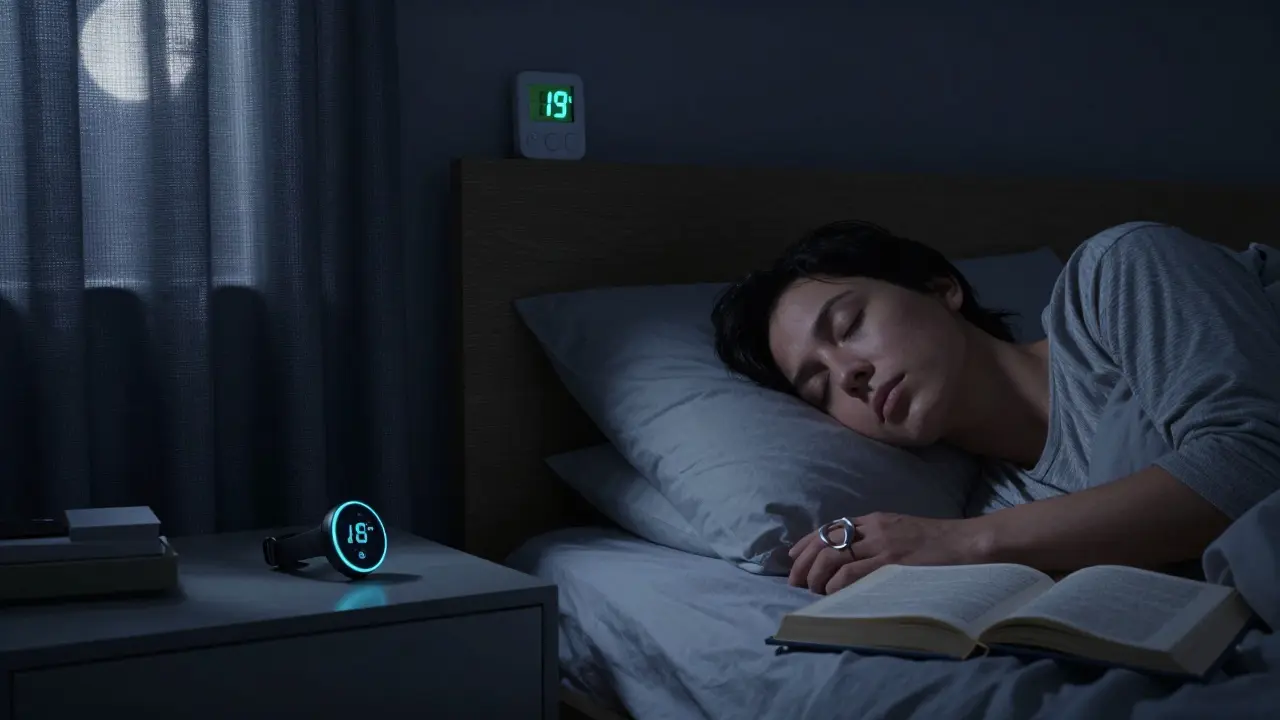
- Why your bedroom temperature needs to be between 18-20°C for deep sleep, and how to measure it without guessing
- How to use sleep trackers (like Oura Ring or Whoop) to spot patterns, not just count hours
- The real reason you wake up at 3 a.m. (it’s not anxiety-it’s blood sugar)
- How to build a wind-down routine that actually lowers your cortisol, not just makes you feel like you’re "trying"
These aren’t vague suggestions. They’re based on peer-reviewed studies from journals like Sleep and Nature Reviews Neuroscience. One 2023 study from Stanford showed that people who followed a personalized sleep protocol improved their deep sleep by 37% in just six weeks-not by sleeping more, but by sleeping better.
How to Choose the Right Course for You
Not all sleep courses are created equal. Some are just repackaged blog posts with a fancy interface. Here’s how to tell the difference:- Look for certified instructors: Check if the lead educator has credentials in sleep medicine, behavioral sleep therapy, or neuroscience. Avoid courses led by wellness influencers without clinical training.
- Check for personalized feedback: The best courses include at least one 1:1 session or a detailed sleep journal review. Generic videos won’t fix your unique sleep issues.
- See if they use objective data: Does the course ask you to track sleep using a validated device (like a Fitbit Sense 2, Oura Ring, or even a simple actigraphy wristband)? If it doesn’t, it’s just opinion.
- Look for science citations: Reputable courses link to studies, not just testimonials. If they say "research shows," ask for the source.
In New Zealand, courses from the Sleep Health Foundation and the University of Auckland’s Sleep Research Group are trusted because they’re grounded in local data-like how seasonal light changes affect circadian rhythms here. Courses from overseas can be useful, but make sure they adapt to your latitude, climate, and lifestyle.
Your 6-Week Learning Path
Here’s a realistic, no-fluff roadmap for anyone serious about fixing their sleep:- Week 1: Baseline-Track your sleep for 7 days using a wearable or a simple sleep diary. Note when you go to bed, wake up, how many times you wake, and how you feel in the morning.
- Week 2: Identify your chronotype-Take the Morningness-Eveningness Questionnaire (MEQ). Most people don’t realize they’re forcing themselves into a schedule that fights their biology.
- Week 3: Audit your environment-Measure your bedroom temperature, light levels (use a free app like Luxmeter), and noise. Fix one thing: get blackout curtains or a white noise machine.
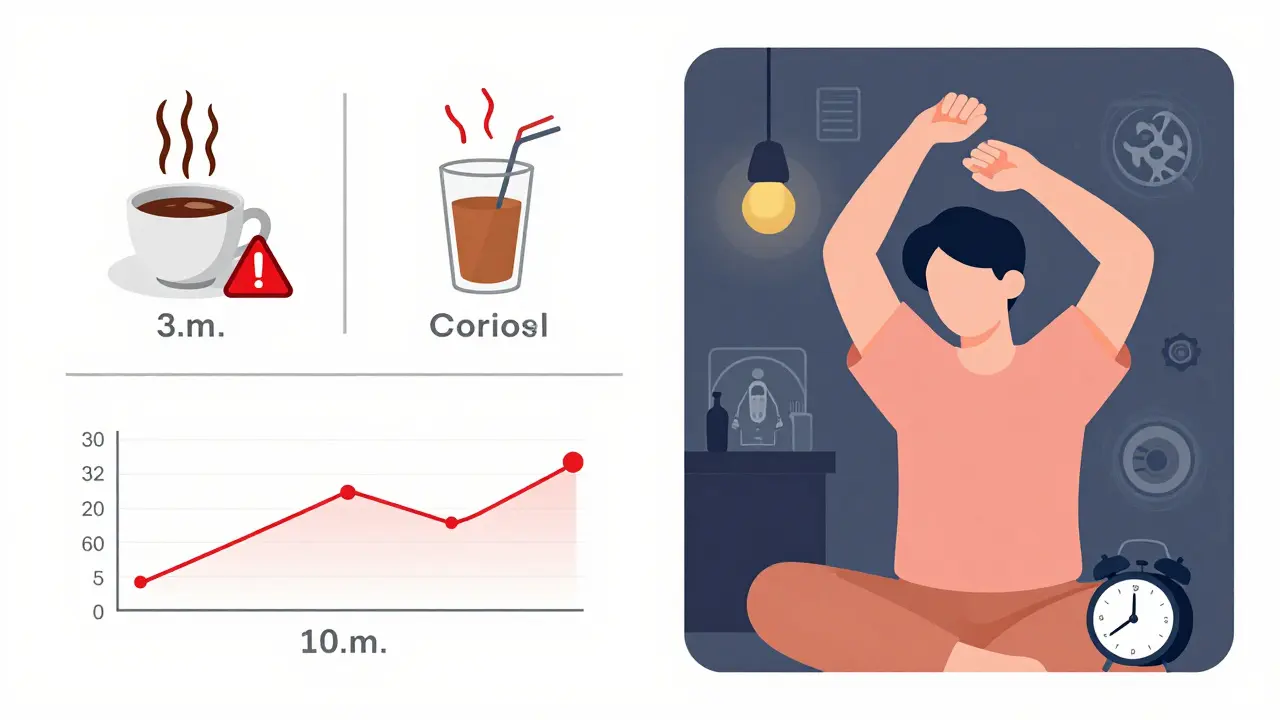
- Week 4: Optimize your pre-sleep routine-Stop drinking alcohol after dinner. Cut caffeine by 2 p.m. Start a 30-minute wind-down ritual: dim lights, read a physical book, stretch.
- Week 5: Tackle the 3 a.m. wake-ups-Eat a small protein snack before bed if you’re waking up hungry. Avoid checking the clock. Your brain learns to panic when it sees 3:02.
- Week 6: Refine and repeat-Use your data to tweak one habit. Maybe you need to go to bed 15 minutes earlier. Or maybe you need more morning sunlight. Keep adjusting until you feel rested without forcing it.
This isn’t magic. It’s biology. And it works-even if you’ve been struggling for years.
What to Avoid
There are a lot of sleep products and courses that prey on desperation. Watch out for:- "Sleep gummies" with melatonin doses over 3 mg-these can throw off your natural rhythm
- Courses that promise "7-day sleep miracles"-sleep adaptation takes time
- Apps that sell you "soundscapes" as a cure-white noise helps mask disruption, but doesn’t fix the root cause
- Over-reliance on sleep trackers that make you anxious about your numbers
The goal isn’t to hit 100% sleep efficiency. It’s to wake up feeling like you’ve been properly restored. That’s the real metric.
Real Results, Real People
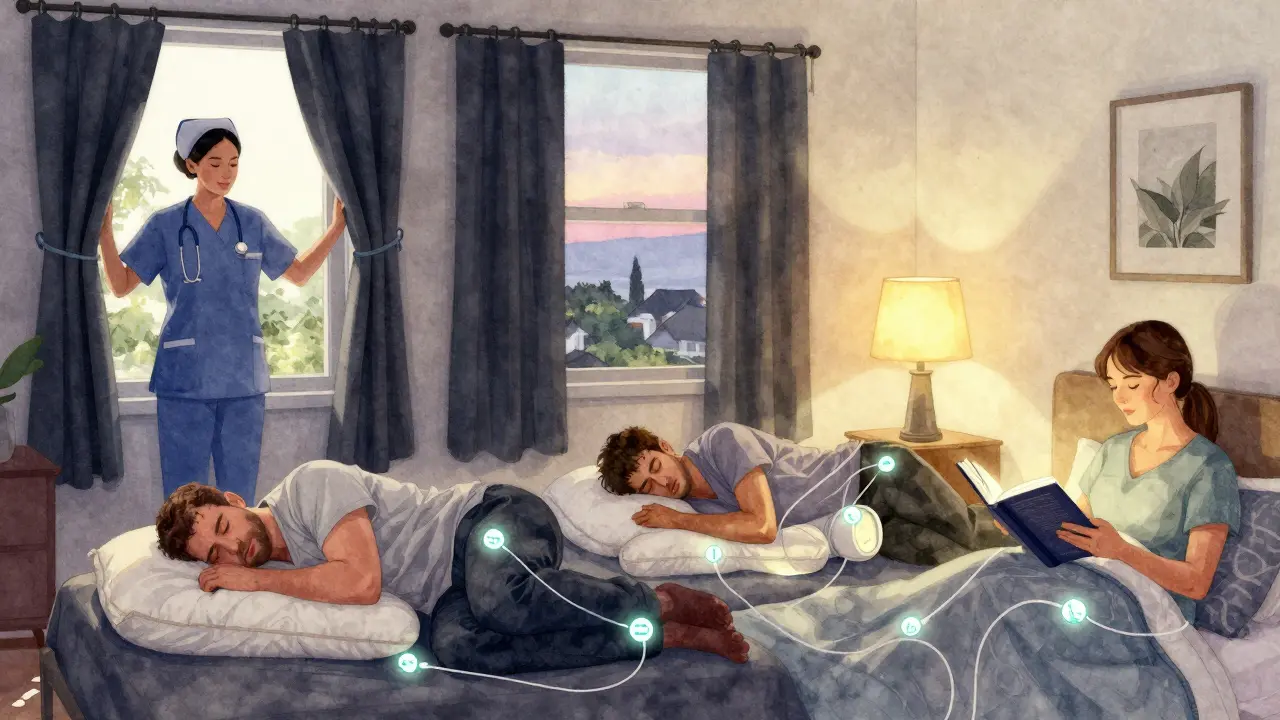
One student from Wellington, a 42-year-old nurse working night shifts, took a sleep optimization course in late 2025. She was averaging 4.5 hours of sleep a night. After six weeks, she was getting 6.8 hours-with 1.9 hours of deep sleep (up from 0.6). She didn’t change her job. She didn’t take pills. She adjusted her light exposure, ate dinner earlier, and started using a dawn simulator alarm. Her cortisol levels dropped. Her anxiety eased. She stopped needing coffee after noon.Another guy from Christchurch, 58, had been told he had "sleep apnea" and was told to use a CPAP machine. He didn’t want to. He took a course instead. He lost 6 kg, cut his evening alcohol, and started sleeping on his side. His apnea events dropped by 80%. He didn’t need the machine.
These aren’t outliers. They’re people who stopped treating sleep like a broken appliance and started treating it like a living system.
Next Steps: Where to Start
If you’re ready to take control:- Download a free sleep diary template from the Sleep Health Foundation website
- Get a basic sleep tracker (even a Fitbit Inspire 3 works)
- Enroll in a course that includes personalized feedback-not just videos
- Start tracking for 7 days before making any changes
You don’t need to buy expensive gear. You don’t need to quit your job. You just need to stop guessing and start learning.
Can sleep courses really help if I’ve tried everything?
Yes-if the course is based on science, not hype. Most people fail because they follow generic advice. Sleep courses that work teach you how to interpret your own body’s signals. You might have tried cutting caffeine, but did you track how it affected your REM sleep? Did you measure your bedtime cortisol? A good course gives you the tools to find your personal triggers, not just follow a checklist.
Do I need a sleep tracker to benefit from a course?
Not strictly, but it helps a lot. You can start with a simple sleep diary: write down when you went to bed, woke up, how many times you woke, and your energy level the next day. But if you want to see patterns-like how alcohol cuts your deep sleep by 40%-a tracker gives you hard data. Devices like Oura Ring or Fitbit Sense 2 are affordable now and give you metrics most doctors don’t even track.
How long does it take to see results?
Most people notice better morning energy within 10-14 days. Deeper, more restorative sleep takes 4-6 weeks. That’s because your circadian rhythm doesn’t reset overnight. It’s like training for a marathon-you don’t run 10 km on day one. You build consistency. The best courses give you small, daily wins so you stay motivated.
Are online sleep courses worth the money?
If they’re based on real science and include personal feedback, yes. A $150 course that helps you stop taking sleeping pills, improve your focus at work, or reduce your anxiety is a bargain. Compare that to the cost of doctor visits, sleep studies, or lost productivity. The real question isn’t whether it’s expensive-it’s whether you can afford to keep struggling.
Can I take a sleep course if I work night shifts?
Absolutely. In fact, shift workers benefit the most from personalized sleep plans. The key is controlling light exposure. Use blackout curtains during the day, wear blue-light-blocking glasses before your shift ends, and get bright light exposure right before you start work. A good course will tailor strategies for shift work, not just assume you work 9 to 5.
What Comes After the Course?
Once you’ve mastered your sleep rhythm, you’ll start noticing changes beyond rest. Your digestion improves. Your cravings for sugar drop. You handle stress better. You don’t need to nap after lunch. You stop dreading Mondays. That’s not hype-it’s what happens when your biology is finally in sync.The next step? Help someone else. Share what you learned. Because sleep isn’t just personal. It’s public health. And the more people who understand it, the less we’ll rely on pills, gadgets, and false promises.
Comments
Diwakar Pandey
Been trying to fix my sleep for years. Tried all the hacks-no screens, cold rooms, melatonin gummies. Nothing worked until I started tracking my actual sleep cycles with a Whoop. Turns out I’m a late chronotype stuck in an early bird world. This post nails it. No fluff. Just science.
Also, the 3 a.m. blood sugar thing? Game changer. Started eating a handful of almonds before bed. No more panic wakes. Just quiet rest.
Geet Ramchandani
Ugh. Another ‘sleep guru’ pushing expensive courses. Everyone’s got a $150 ‘system’ now. Wake up. You don’t need a course to know caffeine at 4 p.m. ruins your sleep. You don’t need a fancy ring to know your room’s too bright. This is just corporate wellness repackaged as neuroscience. The real problem? People are too lazy to just… sleep. Stop buying stuff. Just go to bed earlier. Done.
And don’t get me started on ‘chronotypes’-it’s just an excuse to stay up late.
Sumit SM
Ah, the sacred ritual of sleep optimization… the modern-day yoga of the overworked urbanite. We’ve turned something as natural as breathing into a quantified, tracked, analyzed, optimized… performance metric. What happened to just… being tired? To letting the body decide? Now we need wearables to tell us when we’re worthy of rest. The irony? The more we optimize sleep, the more anxious we become about not sleeping ‘correctly.’
Is this enlightenment… or just another cage with better data?
Also, 18–20°C? In India? Good luck with that without AC. This advice is beautifully written… and utterly privileged.
Bob Buthune
I cried reading this. 🥹
For years I thought I was broken. 4 a.m. wake-ups. Heart racing. No energy. I tried everything. Then I took a course that told me it wasn’t anxiety-it was my blood sugar crashing. I ate a spoonful of peanut butter before bed. And for the first time in 12 years… I slept through the night.
I’m not even kidding. I cried. Not because I’m weak. Because I finally felt seen.
Thank you. From the bottom of my exhausted heart.
Also, the dawn simulator? Best. Purchase. Ever. 🌅
Jane San Miguel
While the general sentiment is commendable, the post exhibits a concerning conflation of correlation with causation. The cited Stanford study (2023) does not, in fact, specify a 37% increase in deep sleep without controlling for confounding variables such as baseline sleep efficiency, caloric intake, or exercise regimens. Furthermore, the recommendation to use the Oura Ring assumes a level of socioeconomic access that is neither universal nor ethically neutral.
Additionally, the term 'sleep hygiene' is outdated and clinically imprecise; the preferred terminology in peer-reviewed literature is 'sleep behavior modification.'
Nevertheless, the emphasis on personalized data over anecdotal advice is a necessary corrective to the wellness industrial complex.
Kasey Drymalla
They don't want you to know this. The sleep industry is a scam. Your body doesn't need a course. It needs to be left alone. The government and big tech are using sleep trackers to monitor your brainwaves. They're selling you data so they can predict when you're vulnerable. That's why they push 'circadian rhythms'-it's a distraction. You're being manipulated to buy gadgets so they can sell your sleep patterns to advertisers. Wake up. Just go to bed. Don't track it. Don't overthink it. They don't want you to sleep naturally.
And why is everyone suddenly an expert? Because they got a $150 course. LOL.
Dave Sumner Smith
Wait. You’re telling me the 3 a.m. wake-ups aren’t because the government is beaming low-frequency waves into our homes to keep us docile? Or that it’s not the fluoride in the water? I’ve been waking up at 3 a.m. for 17 years. I thought it was the aliens. Or maybe the 5G towers. You say it’s blood sugar? That’s what they want you to think. They’re hiding the truth. Why do all these courses avoid talking about EMF exposure? Why no mention of the WHO’s 2011 classified radiofrequency as a possible carcinogen? You’re being manipulated into buying a $200 ring while the real enemy is invisible.
Also, why is the author from New Zealand? Is this a psyop to distract us from the real sleep crisis? The real sleep crisis is that we’re being drugged by the food industry. Stop buying their lies.
Cait Sporleder
What strikes me as profoundly compelling about this framework is its epistemological humility-it eschews prescriptive dogma in favor of iterative, data-informed adaptation. The emphasis on chronotype identification, rather than arbitrary bedtime mandates, aligns with recent findings in circadian biology regarding the heterogeneity of sleep-wake phenotypes. Moreover, the rejection of passive consumption of wellness content in favor of active self-monitoring constitutes a paradigmatic shift from commodified self-help to embodied epistemic agency.
That said, the omission of socioeconomic determinants-such as housing density, noise pollution, and shift work precarity-is a notable lacuna. The advice, while scientifically sound, assumes a baseline of environmental control that is luxuriously inaccessible to a significant portion of the global population. A truly equitable sleep intervention would integrate policy-level advocacy alongside individual behavioral modification.
Paul Timms
Great breakdown. Simple, practical, and backed by real science. I did the 6-week plan last year. Took me 3 weeks to see a difference, but now I wake up without an alarm. No gadgets needed-just consistency. Thanks for sharing.