

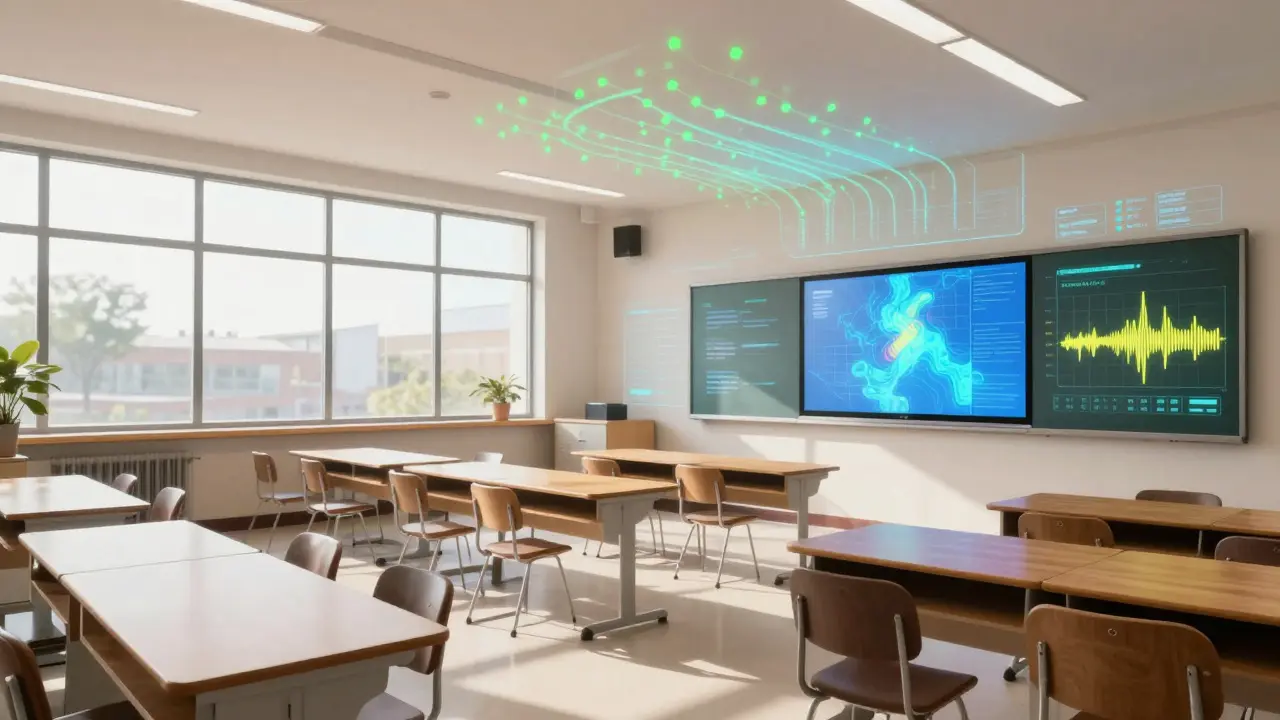
Walk into a traditional classroom, and you see desks, a whiteboard, and students. Walk into a smart classroom equipped with Internet of Things (IoT) sensors, and you see an invisible layer of data pulsing through the walls. This isn't science fiction; it’s the current reality in forward-thinking schools across Auckland and beyond. The shift from static teaching spaces to dynamic, responsive environments is happening now, driven by the need to personalize education at scale.
The promise of these technologies is simple but powerful: use real-time data to improve how we teach and learn. But what does that actually look like on the ground? It means lights that adjust to keep students alert, air quality monitors that ensure cognitive function isn’t hampered by stale air, and attendance systems that free up teacher time for actual instruction. Let’s break down how IoT-enabled learning environments work, why they matter, and how educators can implement them without getting lost in the tech jargon.
What Makes a Classroom "Smart"?
A smart classroom isn’t just a room with a projector and Wi-Fi. That’s a digital classroom. A smart classroom is an ecosystem where physical infrastructure connects to digital networks to collect, analyze, and act on data. At the heart of this system are IoT sensors-small, low-cost devices that measure environmental conditions, user presence, and equipment status.
Think of it like this: your smartphone knows when you’re moving because of its accelerometer. A smart classroom uses similar logic but on a larger scale. Sensors detect light levels, temperature, humidity, CO2 concentrations, noise levels, and even student engagement patterns through anonymized motion tracking. This data flows to a central dashboard, giving teachers and administrators a live pulse on the learning environment.
The key difference between old-school ed-tech and modern IoT integration is responsiveness. In the past, if a room was too hot, someone had to feel it and complain. Now, the system detects the rise in temperature and automatically adjusts the HVAC or alerts facilities management before comfort becomes a distraction. This proactive approach transforms the classroom from a passive container into an active participant in the learning process.
The Core Components of IoT-Enabled Learning Spaces
To build a truly data-informed training environment, you need more than just gadgets. You need a cohesive stack of hardware, software, and connectivity. Here are the essential building blocks:
- Environmental Sensors: These monitor air quality (CO2, VOCs), temperature, humidity, and lighting. High CO2 levels, for instance, are linked to decreased cognitive performance. By keeping CO2 below 800 ppm, schools can directly support better focus and retention.
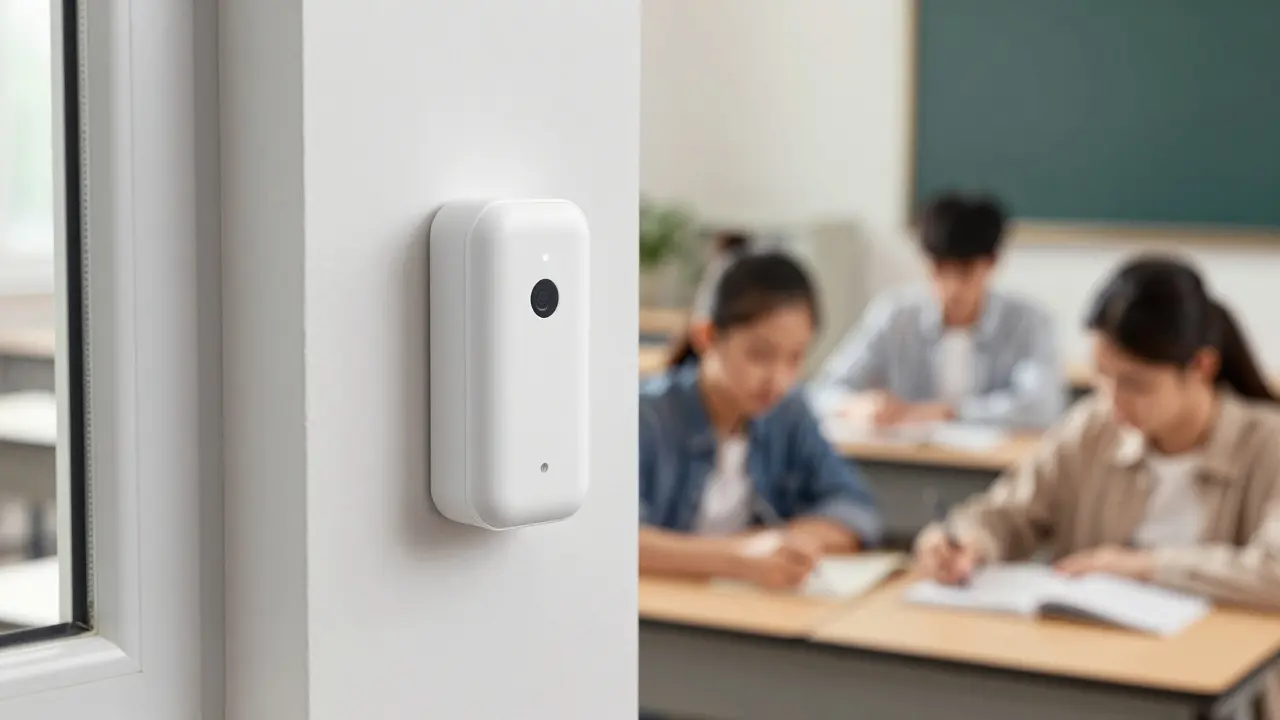
- Occupancy and Motion Detectors: Using infrared or ultrasonic waves, these sensors track how many people are in a room and how they move. This helps optimize space usage and ensures resources aren’t wasted on empty rooms.
- Acoustic Sensors: Noise pollution is a major barrier to learning. Microphone arrays can measure decibel levels and identify disruptive sounds, allowing for automatic adjustments to background noise or alerts to teachers when the class gets too loud.
- Connected Displays and Interactive Panels: These serve as the interface for students and teachers, often integrating with sensor data to display relevant information, such as indoor air quality scores or energy usage stats.
- Edge Computing Hubs: Instead of sending all raw data to the cloud, edge devices process information locally. This reduces latency, enhances privacy, and ensures the system works even if the internet connection drops.
Each component plays a specific role. For example, while occupancy sensors save energy by turning off lights in empty rooms, acoustic sensors protect the learning experience by maintaining optimal sound levels. Together, they create a holistic view of the classroom’s health.
How Data Transforms Teaching and Learning
Data alone is useless without action. The value of data-informed training environments lies in how insights are applied to improve outcomes. Let’s look at three practical scenarios where IoT data changes the game.
Personalized Comfort for Better Focus: Research shows that thermal comfort significantly impacts student concentration. If a classroom is too cold, students shiver and lose focus; if it’s too hot, they become lethargic. Smart thermostats connected to occupancy sensors can zone heating and cooling based on real-time presence. In Auckland, where weather can be unpredictable, this means consistent comfort regardless of the season. Teachers report fewer complaints about temperature and higher engagement during afternoon lessons.
Optimizing Space Utilization: Many schools struggle with overcrowding or underused rooms. Heat maps generated by motion sensors reveal which areas of a classroom are most active. If half the room is never used, furniture can be rearranged to create a more efficient layout. Administrators can also see peak usage times for labs and libraries, allowing for better scheduling and resource allocation.
Enhancing Safety and Security: IoT sensors contribute to safer campuses. Smoke detectors, water leak sensors, and door access controls provide immediate alerts in case of emergencies. In the event of a fire, the system can not only trigger alarms but also guide evacuation routes based on real-time smoke detection data. This level of responsiveness saves lives and reduces panic.
| Feature | Traditional Classroom | Smart Classroom with IoT |
|---|---|---|
| Temperature Control | Manual adjustment by staff | Automated based on occupancy and external weather |
| Air Quality Monitoring | No monitoring until symptoms appear | Real-time CO2 and VOC tracking with alerts |
| Attendance Tracking | Paper-based roll call | Automated via badge scans or facial recognition |
| Energy Efficiency | Lights/AC on fixed schedules | Dynamic adjustment based on real-time usage |
| Teacher Insights | Anecdotal feedback | Data dashboards showing engagement and environment metrics |
Addressing Privacy and Ethical Concerns
With great power comes great responsibility. The collection of biometric and behavioral data in schools raises valid concerns about privacy and surveillance. Parents and teachers rightly ask: Who owns this data? How is it stored? Can it be used to profile students?
Implementing ethical IoT frameworks is non-negotiable. Schools must adopt strict data governance policies. Key principles include:
- Anonymization: Data should be aggregated whenever possible. Individual tracking should only occur with explicit consent and for clear educational benefits.
- Transparency: Stakeholders must know what data is collected and why. Clear signage and open communication build trust.
- Data Minimization: Collect only what is necessary. If you don’t need to track individual movement patterns, don’t.
- Local Processing: Using edge computing keeps sensitive data within the school network rather than uploading it to third-party clouds.
In New Zealand, compliance with the Privacy Act 2020 is mandatory. Schools must conduct privacy impact assessments before deploying new IoT systems. This legal framework ensures that technology serves students, not the other way around.
Implementation Challenges and Solutions
Transitioning to a smart classroom isn’t plug-and-play. Schools face hurdles ranging from budget constraints to technical debt. Here’s how to navigate common pitfalls.
Budget Limitations: IoT infrastructure requires upfront investment. However, costs have dropped significantly. Start small. Pilot one classroom or wing. Use the data from the pilot to demonstrate ROI-such as reduced energy bills or improved test scores-to secure funding for broader rollout.
Interoperability Issues: Not all sensors talk to each other. Choose platforms that support open standards like Matter or Zigbee. Avoid vendor lock-in by ensuring your system can integrate with existing LMS (Learning Management Systems) like Moodle or Canvas.
Teacher Training: Technology fails if users don’t understand it. Provide hands-on training for teachers on how to interpret dashboards and adjust settings. Empower them to use data for pedagogical decisions, not just administrative tasks.
Maintenance and Support: Sensors drift over time. Establish a routine maintenance schedule. Partner with local IT providers who specialize in educational tech. In Auckland, several firms offer managed services for school IoT networks, reducing the burden on internal staff.
The Future of Data-Informed Education
We’re only scratching the surface. As AI matures, smart classrooms will become predictive rather than reactive. Imagine a system that notices a student struggling with a concept based on their facial expressions and posture, then suggests tailored resources to the teacher in real-time. Or a curriculum that adapts dynamically based on aggregate class performance data.
The convergence of IoT, AI, and educational psychology will redefine what’s possible. But the goal remains unchanged: creating environments where every student can thrive. Technology is the tool, not the teacher. By focusing on human-centered design and ethical data use, schools can harness the power of smart classrooms to build a more equitable and effective future for education.
What are the most important IoT sensors for a classroom?
The most impactful sensors are those monitoring environmental factors directly tied to cognitive performance. CO2 sensors are critical because high carbon dioxide levels cause drowsiness and poor decision-making. Temperature and humidity sensors ensure thermal comfort, while acoustic sensors help maintain a conducive learning atmosphere by managing noise levels. Occupancy sensors add value by optimizing energy use and space planning.
How much does it cost to install IoT sensors in a school?
Costs vary widely depending on the scale and complexity. Basic environmental sensors can cost as little as $50-$100 per unit. A full smart classroom setup, including installation, networking, and software licenses, might range from $5,000 to $15,000 per room. However, many schools offset these costs through energy savings and grants focused on educational technology innovation.
Is student data safe in a smart classroom?
Safety depends on implementation. Reputable vendors prioritize data encryption, anonymization, and local processing. Schools must enforce strict privacy policies compliant with laws like New Zealand's Privacy Act 2020. Regular audits and transparent communication with parents are essential to maintaining trust and ensuring data is used solely for educational improvement.
Do teachers need special training to use smart classroom data?
Yes, but it doesn’t require becoming a data scientist. Teachers need training on how to read dashboards, understand basic metrics (like average attention spans or room comfort levels), and apply insights to lesson planning. Professional development should focus on practical application rather than technical details, empowering educators to make informed decisions quickly.
Can smart classrooms work in older buildings?
Absolutely. Most modern IoT sensors are wireless and battery-powered, requiring minimal installation. They connect via Wi-Fi or low-energy protocols like Zigbee, which don’t need extensive rewiring. Retrofitting older buildings is often easier than upgrading legacy wired systems, making smart technology accessible to schools with limited renovation budgets.